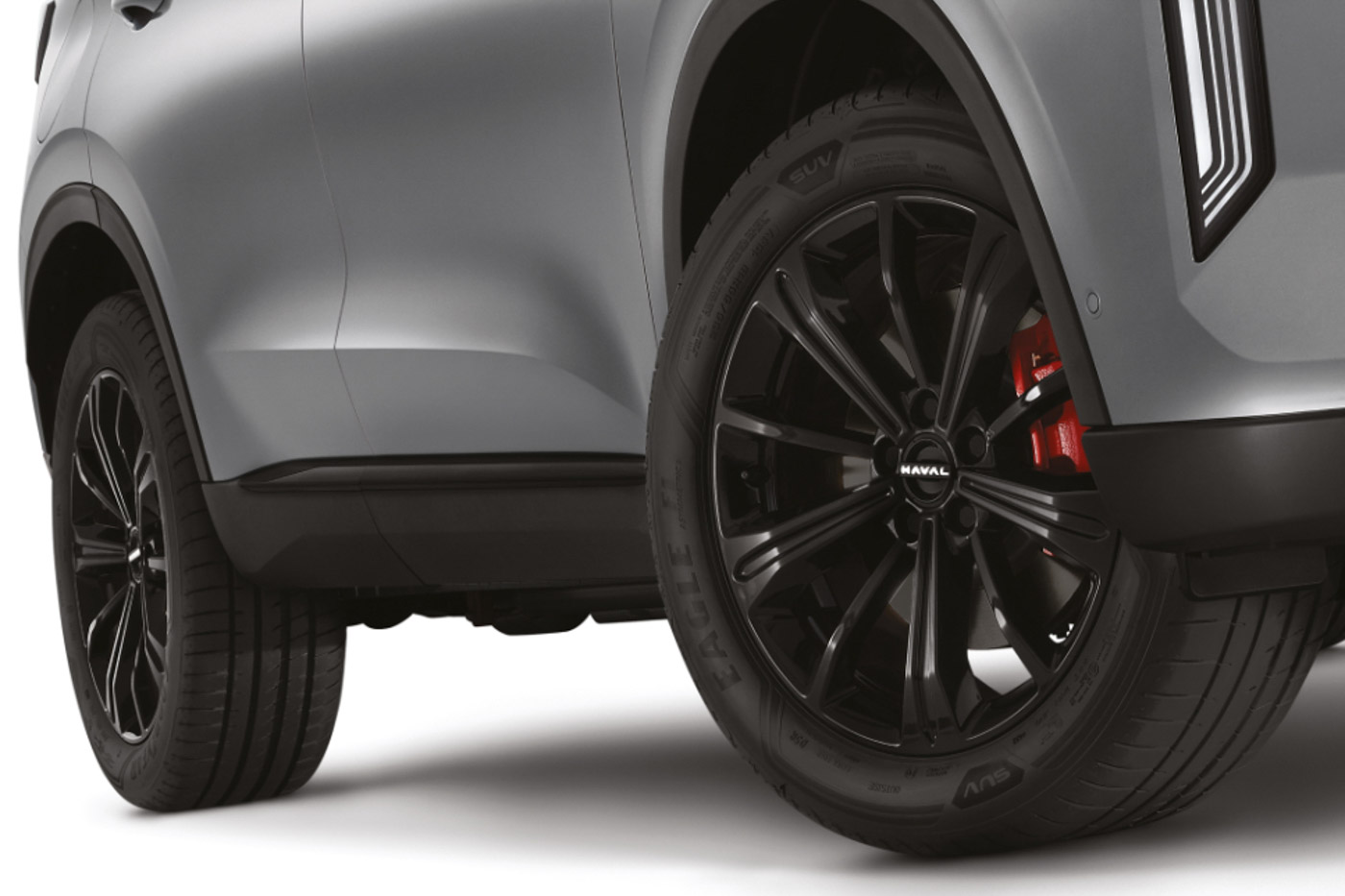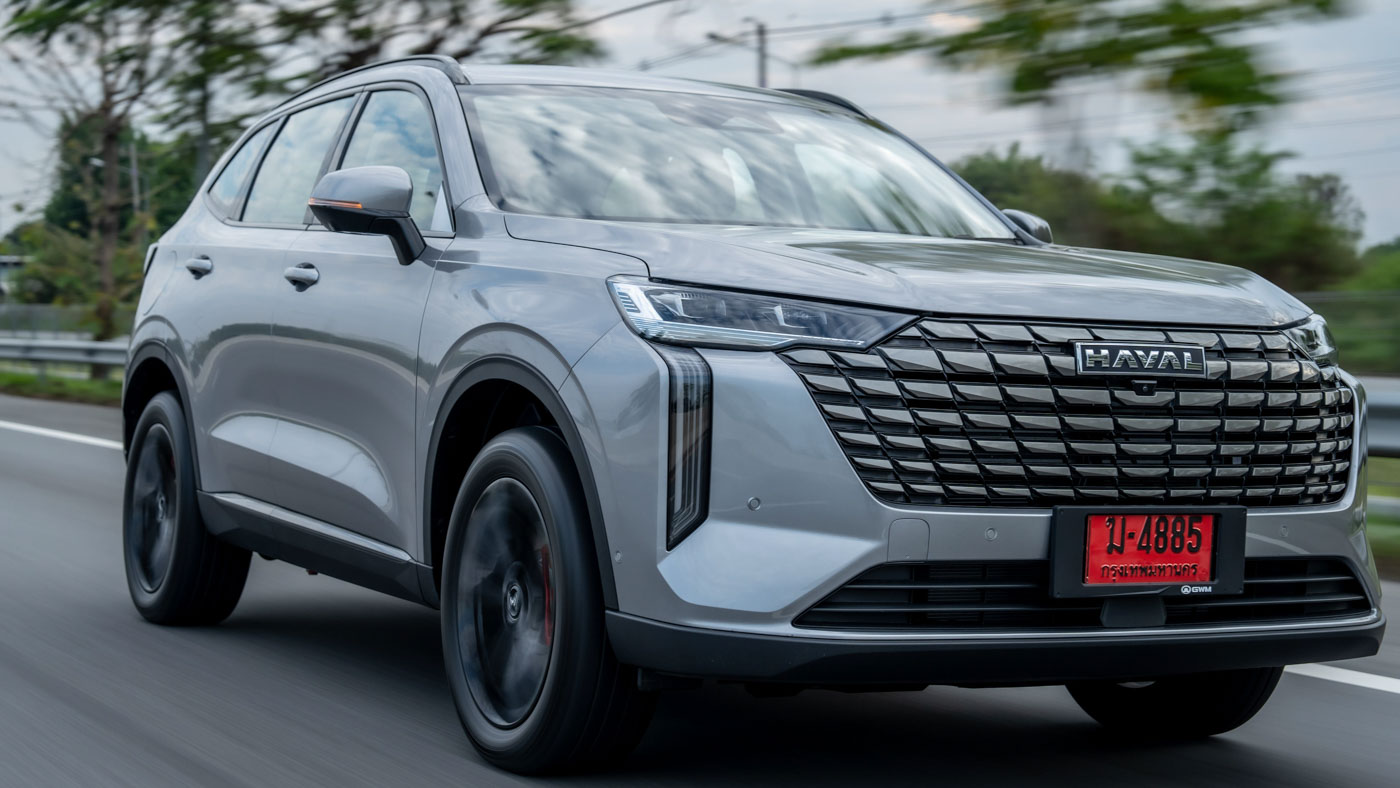
The updated 2025 GWM Haval H6 has made its regional debut in Thailand today, launching in three variants: H6 HEV Pro, H6 PHEV Pro, and H6 PHEV Ultra. Prices range from THB929,000 (approx. RM122k) to THB1.149 million (approx. RM150k), according to Headlight Magazine.
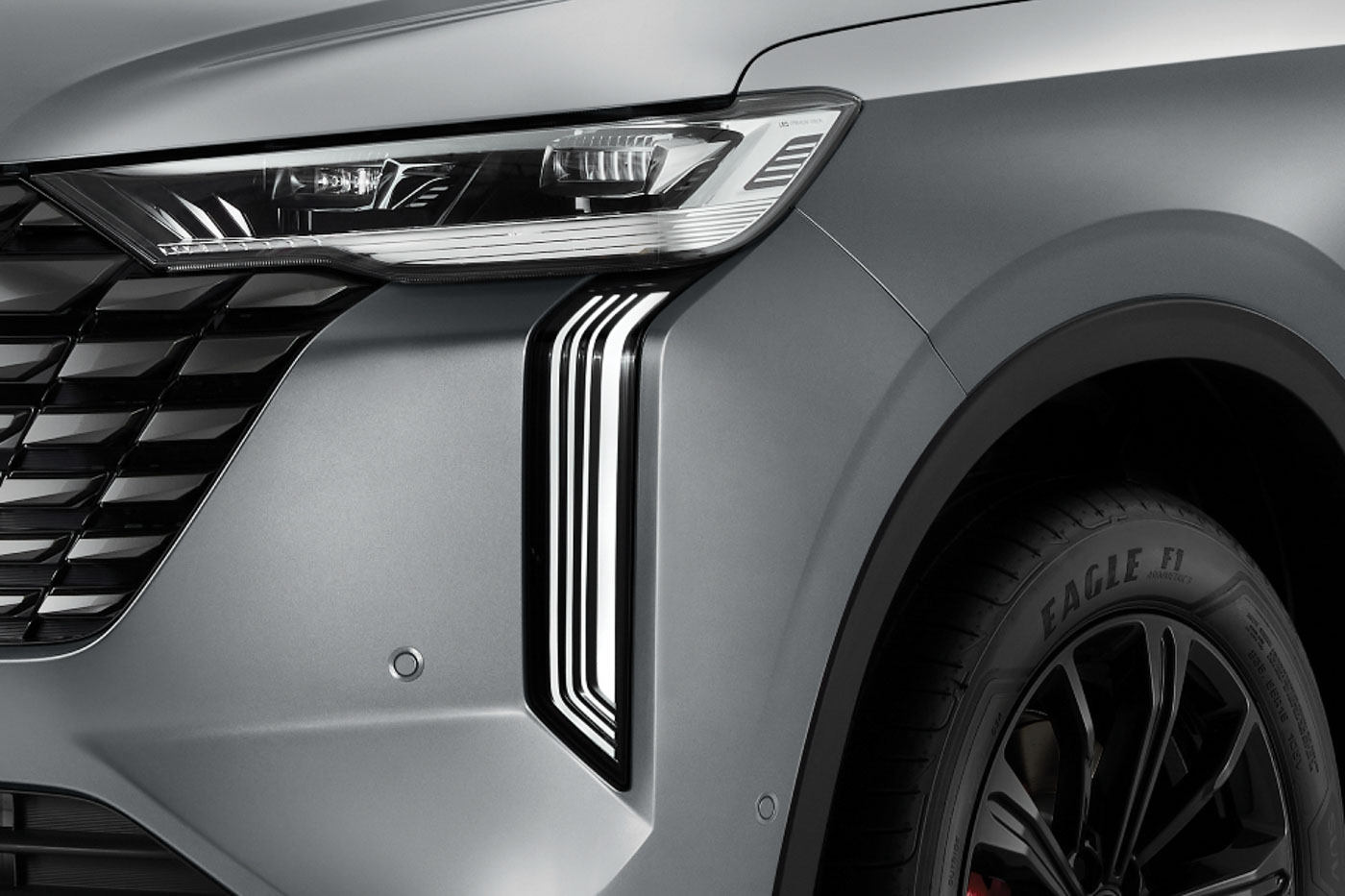
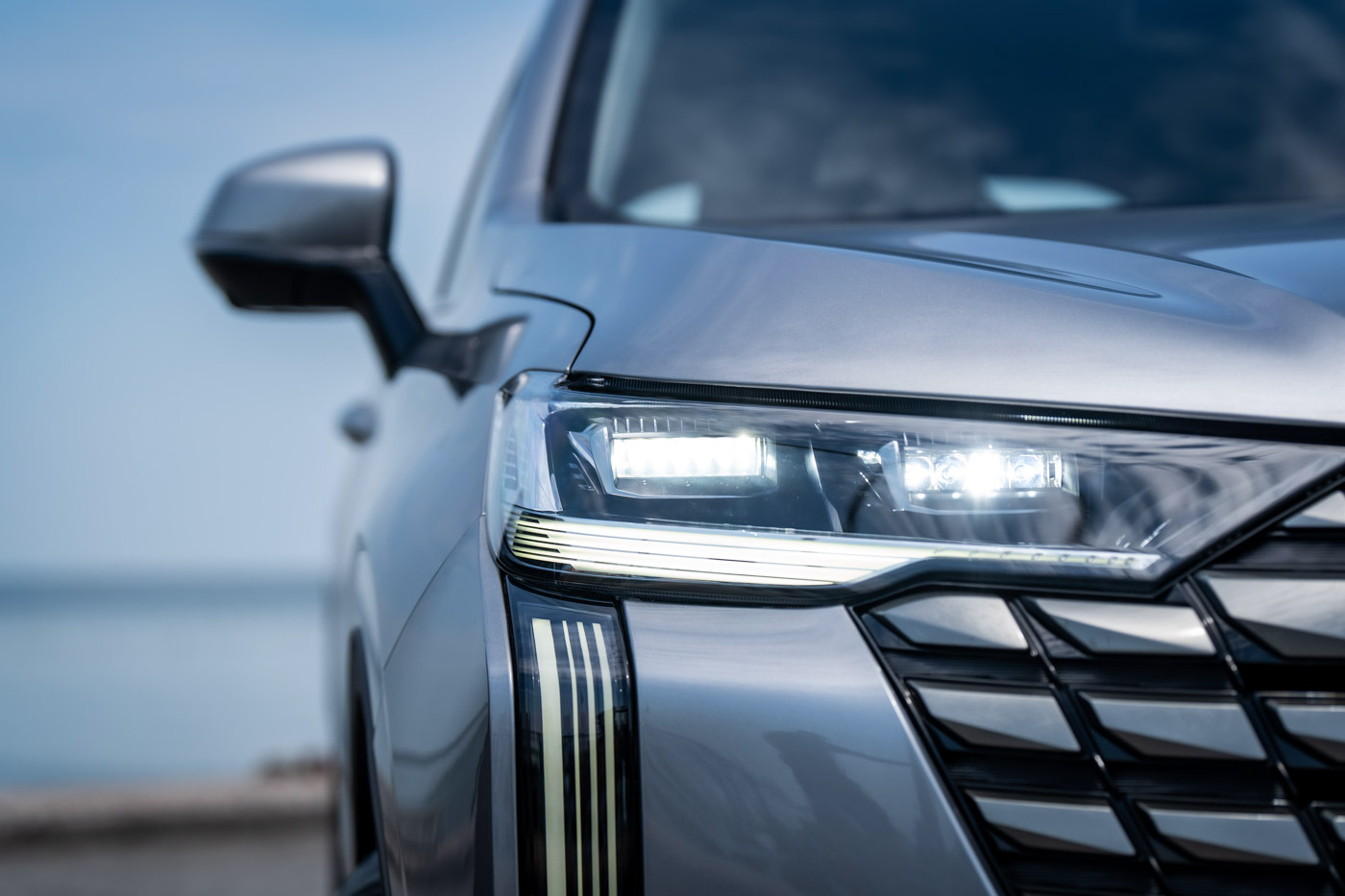
Similar to the mid-cycle facelift unveiled in China last year, the new GWM Haval H6 in Thailand receives a new front-end design, showcasing a restyled grille, headlights, and ‘Starlight Waterfall’ daytime running lights.


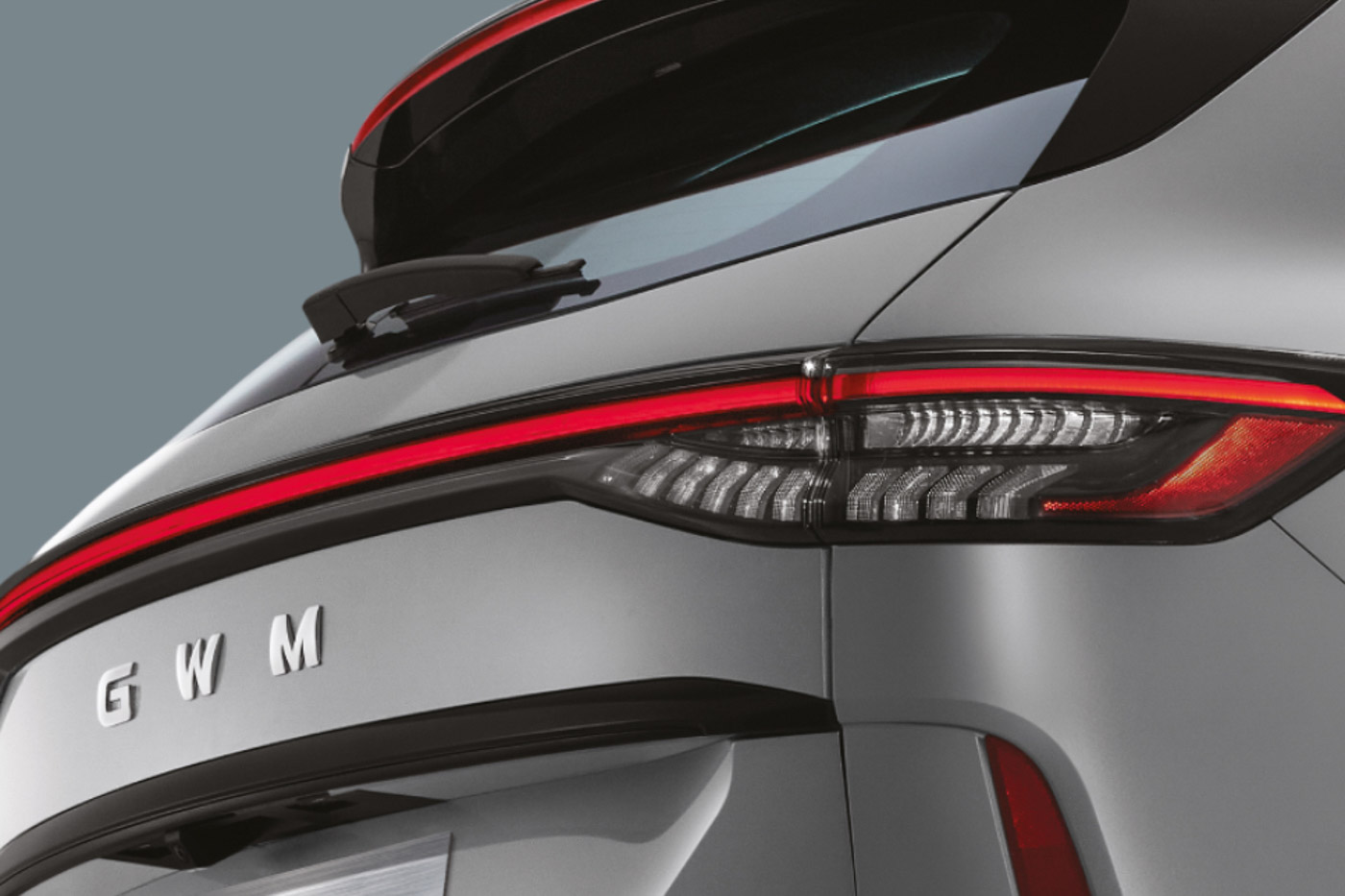
Interestingly, though, the rear design of the new GWM Haval H6 in Thailand differs from the facelift model in China, and remains largely unchanged to the pre-facelift model, save for the new ‘GWM’ emblem in place of ‘HAVAL’, and a new black trim replacing the previous chrome strip, giving the rear end of the GWM Haval H6 a ‘moustache’ appearance.
In the China facelift model, the rear fascia now features two individual taillight clusters separated by a smaller ‘Haval’ script, and the chrome strip has been removed entirely for a much cleaner design.
RELATED: Updated 2025 GWM Haval H6 facelift to make regional debut in Thailand this March
We are not sure why GWM decided to go with this approach in Thailand instead of following the design in China, and in the process creating yet another model variant in their already-convoluted line up. Perhaps full-width light bars are preferred over separated taillights in Thailand? It’s not the first time a facelift’s kept some old design bits, though. Remember the Proton X70 facelift? New front, same old rear.
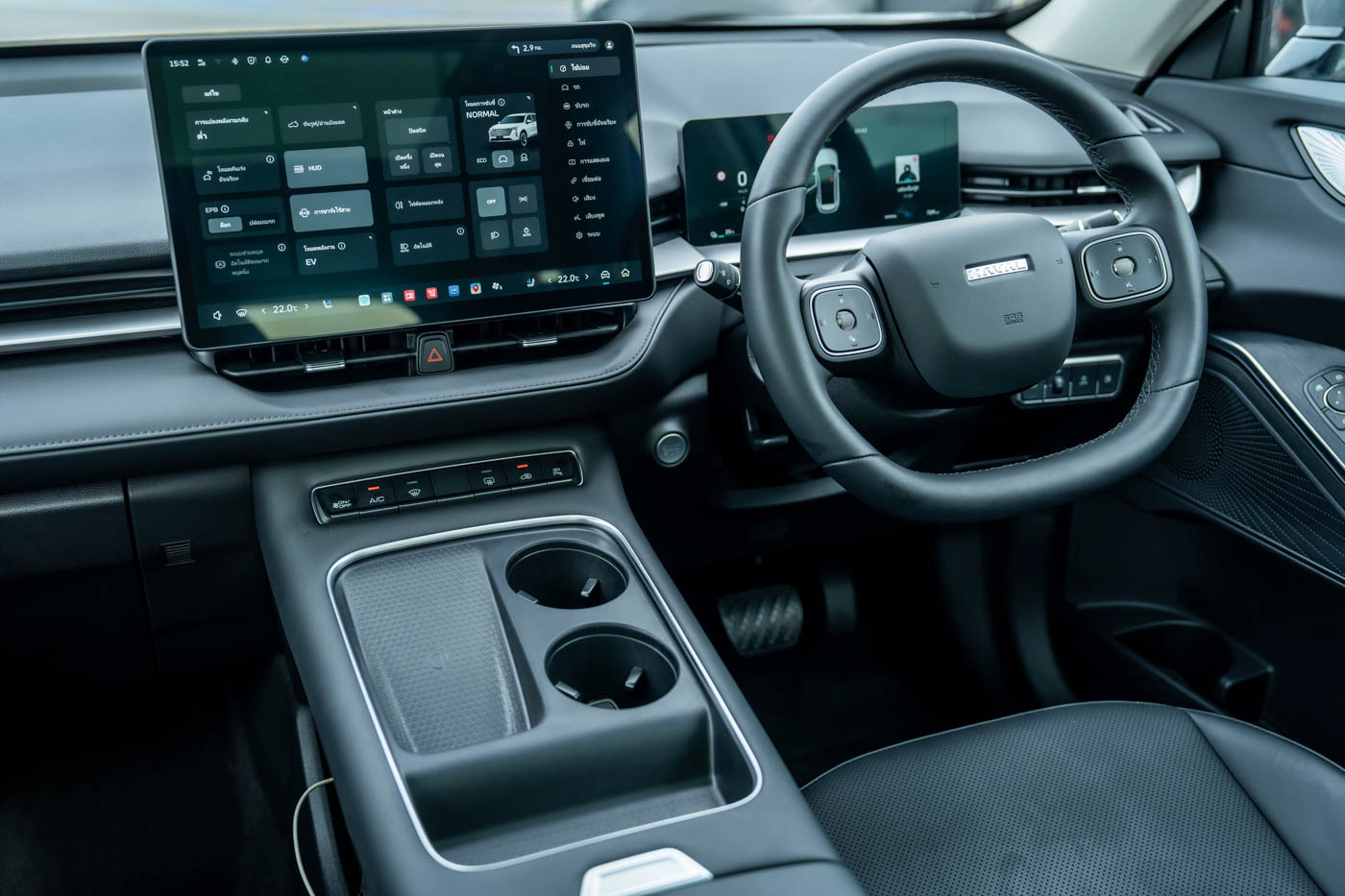
Inside, a 14.6-inch touchscreen infotainment system with ‘Coffee OS 3.0’ dominates the dashboard, while the driver benefits from a 10.25-inch digital gauge cluster. Unlike the rotary gear selector as seen in our Malaysian pre-facelift H6, the updated Thai GWM Haval H6 features a redesigned centre console with a wireless phone charger, a column shifter, and a new two-spoke steering wheel.

As before, the GWM Haval H6 in Thailand continues to be offered in both hybrid (HEV) and plug-in-hybrid (PHEV) guises. For the HEV variant, it gets a 1.5-litre turbocharged four-cylinder that’s paired with a dedicated hybrid transmission (DHT) and a 1.77 kWh Lithium-ion NMC battery pack. Combined, the powertrain in the GWM Haval H6 HEV produces 243 hp and 530 Nm, the same output as the pre-facelift H6 currently on sale in Malaysia.

On the other hand, the PHEV variant of the new GWM Haval H6 in Thailand also uses a 1.5-litre turbocharged four-cylinder producing 150 hp and 230 Nm, but this is paired with a more powerful DHT system and a larger 27.4 kWh lithium-ion LFP battery pack, resulting in a combined system output of 326 hp and 530 Nm and a pure electric (EV) range of 150 km (NEDC).
It’s worth noting that the 2025 GWM Haval H6’s electric range is reduced compared to the pre-facelift PHEV Haval H6, which featured a 34 kWh nickel manganese cobalt (NMC) battery pack that provides 201 km (NEDC) of EV range.
Being a PHEV, charging is supported with 6kW AC charging and 41 kW DC charging. The latter allows a 0% to 80% charge within 35 minutes. Vehicle-to-load (V2L) is also supported at 3.3 kW.
Given that the pre-facelift GWM Haval H6 HEV only launched in Malaysia last year, we probably won’t be seeing the facelift model here in Malaysia anytime soon – especially since the model is locally assembled in Melaka. But when it does arrive, will Malaysia get the new Chinese-spec design, or will it follow the Thai’s Haval H6 with a more ‘traditional’ facelift?
ALSO READ: EPMB builds 1,000th GWM Haval H6 HEV – Haval Jolion, Wey 80 to begin CKD next year
GALLERY