We’re here in Bangkok to witness the launch of the Volvo ES90 in Thailand today, marking its regional debut in the Asia Pacific (excluding China) region, ahead of its arrival in Malaysia in the early part of 2026.
Despite our proximity to Thailand, though, the specifications for the sedan-crossover model here will not directly mirror what would arrive in Malaysia next year, as Volvo Car Malaysia Managing Director, Chris Wailes, confirmed yesterday during a media dinner that the model will make its debut in our market in 2026 as a locally assembled (CKD) model, built directly at the company’s assembly plant in Shah Alam.
Nevertheless, the Thai Volvo ES90 will still serve as a preview for the model in right-hand drive guise.

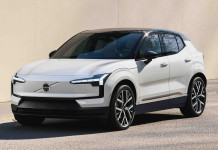
Volvo says the ES90 is in a class of its own, particularly due to its design that incorporates elements from a variety of different body styles. While its three-box shape is akin to a traditional sedan, the sloping roofline round the back borrows from a fastback, and the ride height from an SUV, at 203 mm (178 mm ground clearance).
The unique shape is built atop the marque’s EV-only SPA2 architecture, shared with the EX90 and Polestar 3, with a wheelbase that spans 3,102 mm. Thanks to its sleek silhouette, Volvo says the ES90 boasts a drag coefficient of 0.25 Cd, its most aerodynamic model to date, translating to more range – more on this later.
RELATED: Volvo ES90 set for Malaysia launch in early 2026

You’ll find many familiar styling touches on the outside, including the iconic Thor’s Hammer headlights with discrete driving lamps below, as well as the C-shaped tail lights at the back with separate LED elements book-ending the rear windscreen, similar to the Volvo EX30.
Here in Thailand, the Volvo ES90 will come standard with High Definition Pixel headlights up front, soft-close doors, a powered tailgate, and a set of 22-inch five-spoke diamond cut wheels, which are staggered in size for 285-profile tyres at the back and 255 in front.

Inside, the Volvo ES90 largely mirrors its 90-class SUV sibling with a clean Scandinavian dashboard design, accentuated by the portrait-oriented 14.5-inch touchscreen infotainment display and a letterbox-style nine-inch instrument cluster for crucial driving information. Drivers also get an additional head-up display up ahead.
These displays run on the next-generation Volvo Car UX software with Google Built-in features, and is powered by dual Nvidia Drive AGX Orin SoCs, which the company claims is its most powerful to date in terms of computing power, supporting the ES90’s myriad of safety features as well.
ALSO READ: The Volvo ES90 is the most powerful Volvo yet – but not the way you’re thinking…

The Thais will be treated to a range of luxury features inside, including heated and ventilated front and rear seats with massage function for the front, power-reclinable rear seats with lounge armrest, a four-zone climate control equipped with advanced PM2.5 air cleaner, a 25-speaker, 1,610W Bowers & Wilkins sound system, as well as the electrochromic glass roof that Volvo says effectively blocks up to 99.9% of harmful UV rays.
Volvo says the ES90 offers interior space in abundance, courtesy of its long wheelbase that translates to generous legroom for the second-row passengers, adding to the luxurious and comfortable atmosphere inside in what the company calls “one of Volvo’s quietest cabins ever”. Boot space is also rated at 446 litres, expandable up to 904 litres with the seats folded down.

The Volvo ES90 is offered in Thailand at launch in just a single Ultra Single Motor Extended Range variant, powered by a single motor on the rear axle. Outputs are rated at 333 hp and 480 Nm of torque, enabling a century sprint in 6.6 seconds – although top speed, as per Volvo standard, is restricted to 180 km/h.
It’s the first Volvo model to feature an 800V electric architecture, which the Swedish carmaker says translates to faster charging (up to 300 kW DC), higher outputs, and also higher efficiency for more range. With a 92 kWh NMC battery pack (88 kWh usable), the ES90 is capable of up to 755 km of range (Thai-specific test cycle, 650 km WLTP).

Charging takes 22 minutes to go from 10-80% using the aforementioned 300 kW DC fast charger, while AC charging is supported at 11 kW, taking approximately 10 hours for a full charge.
The Thai-market Volvo ES90 will also come equipped with active air suspension, which should also help with the model’s comfort and handling properties.
ALSO READ: 2025 Volvo XC60 facelift pricing confirmed for Malaysia – 2 variants, from RM329k

Looking at the ES90 in person, it’s indeed a model unlike any other, standing out from the crowd in the most Volvo way possible. With a taller sillhouette, the unique sedan-crossover could potentially win over some traditional SUV fans too, although as always, it’ll be the pricing that does the talking at the end of the day.
Here in Thailand, the Volvo ES90 is priced from THB2,990,000, making it significantly cheaper than other EV D-segment sedans such as the BMW i5 eDrive40 here, and more importantly, a whole 30% cheaper than its 90-class SUV sibling, the EX90 in Thailand.

With the ES90 set to be launched as a CKD model in Malaysia, it could also see a similarly attractive price when it arrives in Malaysia, as it will continue to benefit from EV tax exemptions from 2026 onwards.
Of course, we’ll only know it’s actual pricing in Malaysia when it launches back home sometime next year, but the fact that Volvo Car Malaysia brought a whole gaggle of local press over to Thailand for the launch should tell you how confident they are feeling with this model…
GALLERY