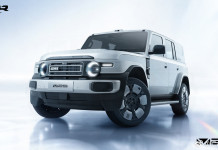
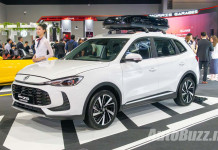
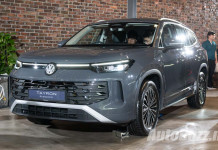
Big, D-segment SUVs are not the flashiest cars you could buy. And unless you are looking at something like the Mercedes-Benz GLE, chances are, your purchase decision is most likely dictated by functionality, price, or both. And that’s why cars like the Proton X90 and newcomer Omoda C9 have mostly dominated the market.
But amongst the sea of big hitters lies the 2024 Hyundai Santa Fe facelift. Still with a sedate design and dated interior, the seven-seater SUV from Korea is certainly not one for the vain. But can its brand-new parallel hybrid system help it stand out amongst the crowd?

Compared to its counterparts in the same segment, especially the Omoda C9 with its futuristic and minimalist design, the Hyundai Santa Fe certainly looks a little dated. It’s perhaps more apparent when you realise that there’s actually already an all-new, next-generation Santa Fe, that was actually unveiled before this current facelift model was even launched in Malaysia. Such is the oddities of a global product rollout roadmaps.
But despite its somewhat dated design, the Santa Fe is still undeniably stylish. Its split T-shaped daytime-running lights merges into the main headlight assembly within the wider grille, and when lit, oddly resemble Volvo’s DRLs but in a portrait orientation.
Towards the back, the new light signature is a welcome change, too, giving the rear fascia a much more modern appearance. We found the red trim above the number plate to be a little out of place, however. This might be placed to create an illusion of full-width taillights, but replacing this with chrome might clean up the design.

Ditto the interior, which looks outdated at first glance, especially when compared to today’s standards of massive infotainment displays. But where it lacks in style, it makes it up in usability. If you prefer physical buttons over fancy touchscreens, the Hyundai Santa Fe has you covered.
The controls are laid out in a way that makes it easy to figure out key functions like climate control and drive modes – all without the need for touchscreen acrobatics. Ventilated seats, there’s a button for it. Want to change the drive mode? Just use the large rotary knob on the centre console.
Continuing on the usability tack, the driver’s digital gauge cluster also shows you a camera feed of the Santa Fe’s blind spot when activate the turn indicators, giving you a clear, direct view, instead of loud beeps and flashing lights.
RELATED: 2024 Hyundai Santa Fe (CKD) launched in Malaysia, from RM196k

And then there’s the drive. While its rated outputs of 230 hp and 350 Nm output from the 1.6-litre hybrid powertrain is nothing to shout about, in actual driving conditions, the Hyundai Santa Fe actually feels surprisingly nimble and easy to drive, almost as if it were a smaller vehicle.
When overtaking or merging onto the highway, the Santa Fe’s hybrid powertrain delivers a surprising surge of power, making it feel much quicker than you’d expect for a large SUV.


Being a big SUV, the Hyundai Santa Fe – naturally – is not particularly exciting to chuck into corners. However, it is comfortable, smooth, effortless, and soaks up the bumps on the roads quite nicely – exactly what you’d expect from a family SUV like this.
In traffic jams, the Santa Fe can also be surprisingly quiet, as it’s able to run solely on electric power from its 1.49 kWh battery. When the battery gets low, the engine automatically kicks in to recharge it – but you’ll barely notice unless you’re really listening for it.

And the hybrid powertrain also means that the Santa Fe can be frugal too. We recorded a fuel economy averaging between 7.5-8L/100km in mixed city and highway driving conditions, which is quite decent for an SUV that’s almost five metres long and seats seven people.
With prices ranging from RM195,888 to RM209,888, the Hyundai Santa Fe is undoubtedly a more expensive option than the Proton X90 or the Omoda C9. However, it may appeal to buyers seeking a unique blend of technology, practicality, and comfort in a D-segment SUV. Ultimately, the decision rests with you and your priorities.
GALLERY