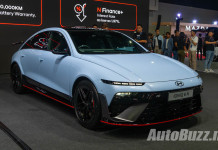
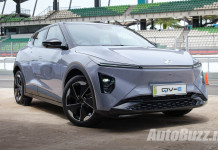
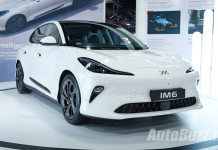
The introduction of fully electric vehicles (EVs) has brought many changes for drivers, from planning trips around charging stops, to getting used to one-pedal driving – a feature that uses the electric motor’s regenerative braking to slow the car without touching the brake pedal.
However, it seems the era of one-pedal driving may be coming to a premature end, as the Chinese government is set to regulate the feature due to safety concerns. According to a report by CarNewsChina, the Middle Kingdom has now introduced a new national standard for passenger car braking systems that will place new restrictions on one-pedal driving modes.

While one-pedal driving simplifies the driving process and can increase an EV’s range, it has also brought up safety concerns. Regulators have noted that it could lead to a delayed driver response when needing to use the physical brake pedal in an emergency, potentially increasing the risk of accidents.
Approved by China’s key regulatory bodies, the new standard will be implemented in phases. It will officially take effect on 1 January 2026, with specific rules for one-pedal driving modes becoming mandatory on 1 January 2027.
All existing models must also comply with the 2027 deadline. Key requirements of the new standard include the mandatory installation of an anti-lock braking system (ABS) and ensuring brake lights activate during significant regenerative braking.
RELATED: Proton eMAS 7 now with Apple CarPlay, tonneau cover, Obsidian Black colour – pricing unchanged

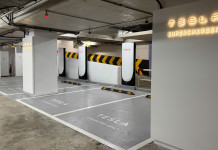
Acknowledging these concerns, Tesla has already introduced an update in China to remove the one-pedal mode on its vehicles—a feature famously advocated by the company’s CEO, Elon Musk.
Ultimately, the move to regulate one-pedal driving highlights a key challenge in the EV transition: the conflict between technological innovation and the need for universal safety standards. While carmakers continue to push the boundaries of EV development, whether by cramming in thousand-horsepower powertrains or developing advanced autonomous systems, the new regulation is a reminder of a simple truth.
It seems that before we reach the time where computers can be fully trusted as our drivers, for the time being, the best driver is still the human behind the wheel.
ALSO READ: Tesla updates Model 3 and Model Y in China with longer range as headwinds continue