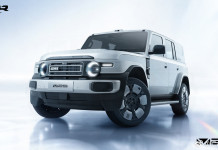
As the saying goes, imitation is the sincerest form of flattery. In that case, the all-new SAIC Z7 and Z7T are clearly head-over-heels for the Porsche Taycan. If these cars were parked together, one would likely struggle to tell them apart without checking the badges first.
These cars are the result of a partnership between SAIC Motors and Huawei’s HIMA (Harmony Intelligent Mobility Alliance). Sold under the Shangjie marque, the Z7 series acts as a tech-focused sibling to the likes of Aito and Luxeed; however, it swaps the usual SUV-heavy lineup for a more sportier, youth-oriented design language.


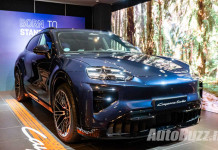
On the outside, it really is a high-stakes game of “spot the difference.” The Z7 sedan and its Z7T shooting brake sibling, which happens to be HIMA’s first-ever wagon, mirror the Porsche Taycan and Taycan Cross Turismo so closely that it borders on the uncanny. Right down to the taillights, side profile, and alloy wheels, the resemblance is unmistakable. The only real giveaway is the roof-mounted LiDAR sensor, which the Porsche lacks.
While the exterior pays tribute to German design, the interior is thankfully distinctive. It features a two-tone colour scheme, a three-spoke steering wheel, and a sleek digital gauge cluster for the driver. However, the true centrepiece is the “4D Sunflower” display; this unique centre screen can swivel both left and right to face the occupants.
There is even a dedicated display for the front passenger. Although these features are now confirmed, official specifications, including the exact sizes of those displays, have not yet been released.
ALSO READ: MG Finally steps up to the Tesla Model Y with all-new MG S6 EV

The official powertrain details for the SAIC Z7 and Z7T remain under wraps for now, with a full announcement expected at the end of March. However, according to reports from CarNewsChina citing Mydrivers, the duo is expected to be offered as battery-electric vehicle (BEV) models with both rear-wheel drive (RWD) and all-wheel drive (AWD) powertrains available. These could be paired with 80 kWh and 100 kWh batteries, with pricing estimated to start between RMB250,000 and RMB350,000 (approx. RM143k to RM200k).
One has to wonder how the board in Stuttgart is taking the news. Porsche is already navigating rough waters in China as it battles a steep sales slump; local buyers are increasingly pivoting toward domestic EVs over the Porsche Taycan, which the brand is considering to entirely stop the sales of its EV models in the Middle Kingdom. With the Z7 series offering the “Taycan look” paired with Huawei’s proprietary technology for a fraction of the cost, Porsche’s prestige and its future in China are being tested like never before.
ALSO READ: China to ban concealed car door handles under new safety regulations