Kia president and CEO Song Ho-Sung has confirmed that the next wave of the marque’s electric vehicles (EVs) are in the works, led by a new entry-level compact model. Alongside that, development continues for all manners of powertrains – not just EVs – which will be pertinent in meeting global demand for its models.
Speaking to Autocar, Song also stated that designers are penning the next design evolution with a focus on integrating that signature into its lower price bracket models.

The next-generation 800V architecture that underpins the EV6 and EV9 replacements is set to be launched by the end of the decade as they shift towards software-defined vehicles (SDVs).
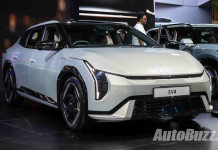
Nonetheless, a new entry-level compact that slots beneath the EV2 slated for a 2026 launch, takes precedence. Kia is hoping to price the entry-level EV – possibly dubbed the EV1 – below the EUR25,000 mark (approx. RM 124k).
RELATED: Kia EV9 – The SUV with MPV practicality, and much more

Song reiterated the marque’s commitment towards affordable and accessible cars. The popular Picanto currently occupies that slot, and the strength of its EV range means that the little compact won’t fall foul of CO2 regulations and will remain on sale until the new compact EV is ready.
However, it isn’t a given that the new compact EV will replace the Picanto. Rather, the possibility of an EV and ICE entry-level model being sold alongside each other is on the table.

On that front, Kia continues with development of all powertrain options, including a new range extender (REx) hybrid alongside hybrids and ICE. Song maintained that Kia is a global carmaker meeting the requirements of vastly different markets.
EVs will be the focus for Europe, while the REx will be used in larger, heavier vehicles that electric alone would be unsuitable. Emerging markets like North Africa will continue with ICE models as they lack the infrastructure to support EVs.
RELATED: Kia Picanto facelift unveiled with EV9-like front end, retains 5-speed manual

The next generation of larger models will also embrace SDVs that moves away from multiple subsystems and integrates most of the functions into a few core systems.
Benefits include stability on the software side. Furthermore, as more models share the same ‘brain’, it will be easier to update with shorter development times due to the shared resources.
RELATED: Kia EV3 wins 2025 World Car of the Year award – 1 year after the EV9 was crowned champion

Song confirmed that work on Kia’s new SDV architecture has been in the works and a concept could pop up as soon as 2026, likely the ‘SDV Pace Car’ that Kia used as a development mule. The shift to SDVs will also see the introduction of a Kia AI assistant to better control the car’s wider functions.
“Customers are expecting more innovation in our vehicles. They are experiencing all-new functions from smartphones. They want the same in our vehicles,” said Song, adding that the carmaker wants to improve innovation and is working with the likes of Samsung to achieve that.
RELATED: Kia is developing a new, more powerful petrol engine

Lastly, a Kia isn’t a Kia without design that appears a decade ahead of its time. This aspect has become synonymous with the brand and it understands the necessity of continuing to be ahead of the curve. Kia design director Karim Habib shared the most unlikely of inspirations for his latest work, Japanese retailer Muji, known for its minimalist design and high-quality products.
In a similar fashion, Kia strives to deliver the same with its new models. The goal is simple, focus on reducing things to their very essence and still retain a desirability to them. Part of that includes integrating customisation into their designs.
“How you design something super-basic that you can customise or individualise for different types of customers? In our view, that’s where it can be really interesting in a lower-end price bracket,” mused Karim.