Hyundai has become Indonesia’s fourth-largest carmaker, with its share of local car production in the archipelago now higher than both Honda and Suzuki, Maeil Business reports.
This achievement is the result of a long-term strategy that began with the construction of the Hyundai Motor Manufacturing Indonesia (HMMI) plant back in 2019. The facility, which has an annual capacity of 150,000 units, has been rapidly ramping up production since it began operations in the second half of 2021 as a key part of the company’s Southeast Asian export strategy.

To put its growth into perspective, Hyundai Motor’s Indonesian production number was just at 770 units before the plant began operation in 2021. This figure quickly grew to 82,000 units in the next year, which made it the country’s sixth-largest producer in 2022. By 2024, the company produced 85,600 units, ranking it fifth.
As of the first quarter of 2025, the plant’s utilisation rate stands at about 56%, leaving significant room for increased production in the future.
Between January and May of this year, Hyundai produced 29,600 vehicles, which accounts for 6.4% of Indonesia’s local vehicle production. This market share places Hyundai firmly in fourth position, behind Toyota (44.5%), Mitsubishi (13.8%), and Daihatsu (12%), but ahead of both Suzuki (6.3%) and Honda (5.3%).
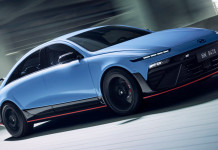
RELATED: The all-new Hyundai Ioniq 6 N is a 650 hp corner rascal

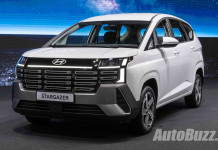
This rapid growth is largely attributed to exports to neighbouring Southeast Asian countries. The main drivers of this export strategy are the Indonesian-produced Hyundai Creta and Hyundai Stargazer. Of the total vehicles produced, 16,492 units were the Creta and 3,946 units were the Stargazer. Combined, these two models account for 67% of the plant’s total production, highlighting their importance.
Furthermore, the company plans to increase its competitiveness in the Southeast Asian market by focusing on the volume of electric vehicles produced in Indonesia. To achieve this, Hyundai has established HLI Green Power, a local battery manufacturing joint venture in Indonesia with LG Energy Solution. The strategy is to use this localised production to lower the prices of battery packs, which will then be installed in models like the Hyundai Kona Electric.

While the Korean marque’s production numbers are going strong, Hyundai’s sales in the region have been relatively weak, as it faces intense pressure from the entry of low-cost electric vehicles from Chinese competitors. To illustrate, BYD, which only entered the Indonesian market in the second half of 2024, has already managed to secure sixth place in overall sales this year, according to the publication.
Furthermore, BYD is also establishing an assembly plant in the archipelago worth RM 4.5 billion, which is set to be completed by the end of 2025. This significant investment will not only intensify local competition for brands like Hyundai, but also contribute to Indonesia’s national goal of producing 600,000 EVs domestically by 2030.
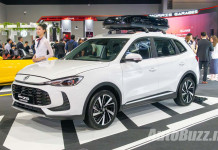
RELATED: 2025 Hyundai Tucson facelift launched in Malaysia – 4 variants, priced from RM144k