This week has been an exciting shakeup for the electric vehicle (EV) MPV space in Malaysia. Denza has opened its bookings for the Denza D9, followed shortly after by XPeng for the XPeng X9.
Both cars are Chinese in origin, both cars are EV MPVs, both cars can seat up to seven people, and both cars are obviously an EV stab to the beloved Toyota Alphard and Vellfire we see endlessly on Malaysian roads today. So let’s compare the two head-to-head and see what these cars have in common and differ from each other.
Keep in mind that we still do not have the exact Malaysian specification for both model yet, so we will be basing some of the details from their global right-hand drive export guises already found in Hong Kong.


Size – XPeng X9 is bigger in every way, except for height
Size-wise, the XPeng X9 is the larger of the two in every way shape and form, except for height. That includes its length and width, as well as the longer wheelbase. The Denza D9 comes in only slightly narrower than the XPeng X9, but it is quite a fair bit taller, which should mean easier entry and exit without any heads bumping.
That said, both cars are still significantly bigger than the Toyota Alphard and Vellfire duo, and are also slightly longer than the Zeekr 009 – the other EV MPV competitor here in Malaysia.
RELATED: 2024 Zeekr 009 luxury EV MPV launched in Malaysia – 2 variants, from RM350k


Exterior design and features – Tradition vs the future
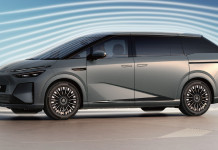
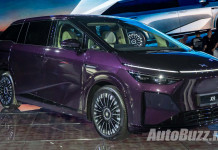
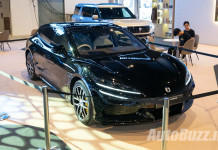
Both EV MPVs have taken radically different directions when it comes to designing their cars. For the Denza D9, it stays true to the conventional designs that you would mainly see on the Toyota Alphard and Vellfire twins; still retaining the large gleaming grille at the front, the relatively traditional-looking LED headlights, and even down to how the rear taillights look.
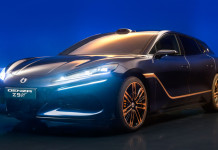
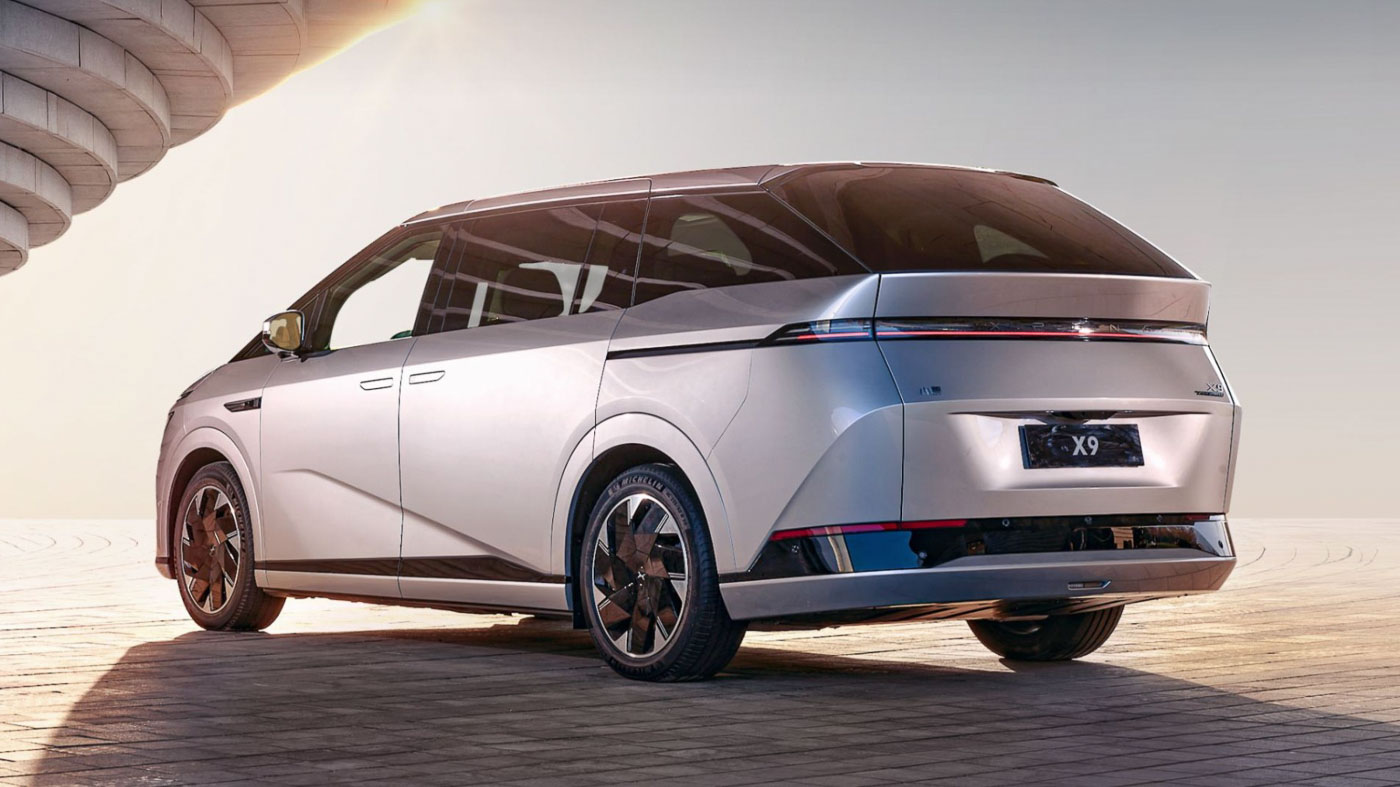
Meanwhile, the exterior of the XPeng X9 is much more “futuristic” than its rival. Every part of the exterior body screams spaceship with smooth panels and unique angles – check out the rake on the rear windscreen! The lighting here also takes a different approach (still LED, mind), utilising full-width light bars for the front daytime-running lights and rear light signature, both of which seemingly line up together when viewed from the side.
For wheels, the Denza D9 is dressed with 18-inch wheels, whereas the XPeng X9 has larger 20-inch rims.
READ: Denza D9 now open for booking in Malaysia – Q1 2025 launch


Interior – Work and play
Moving to the inside, we can see that the two cars are built for fundamentally different type of passengers.
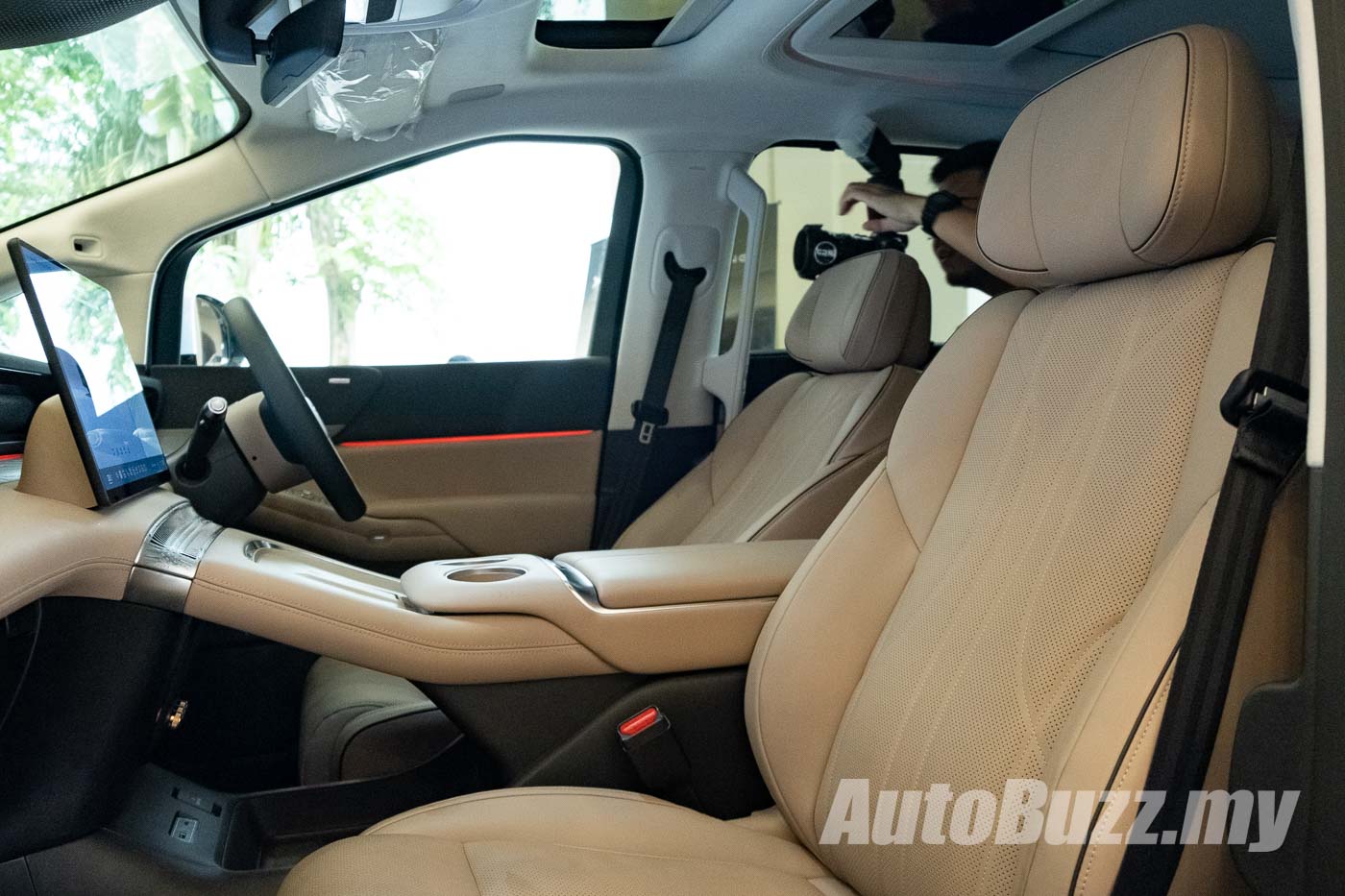
That’s not to say they’re that differently equipped, though. Both cars have the same 2-2-3 seating configuration that seats seven people, with captain seats in the second row upholstered in quilted Nappa leather from top to bottom; both cars come with a panoramic glass roof that gives passengers a view of the open sky above them, and both also have a little fridge behind the centre console where you can keep your beverages cool – and even warm.


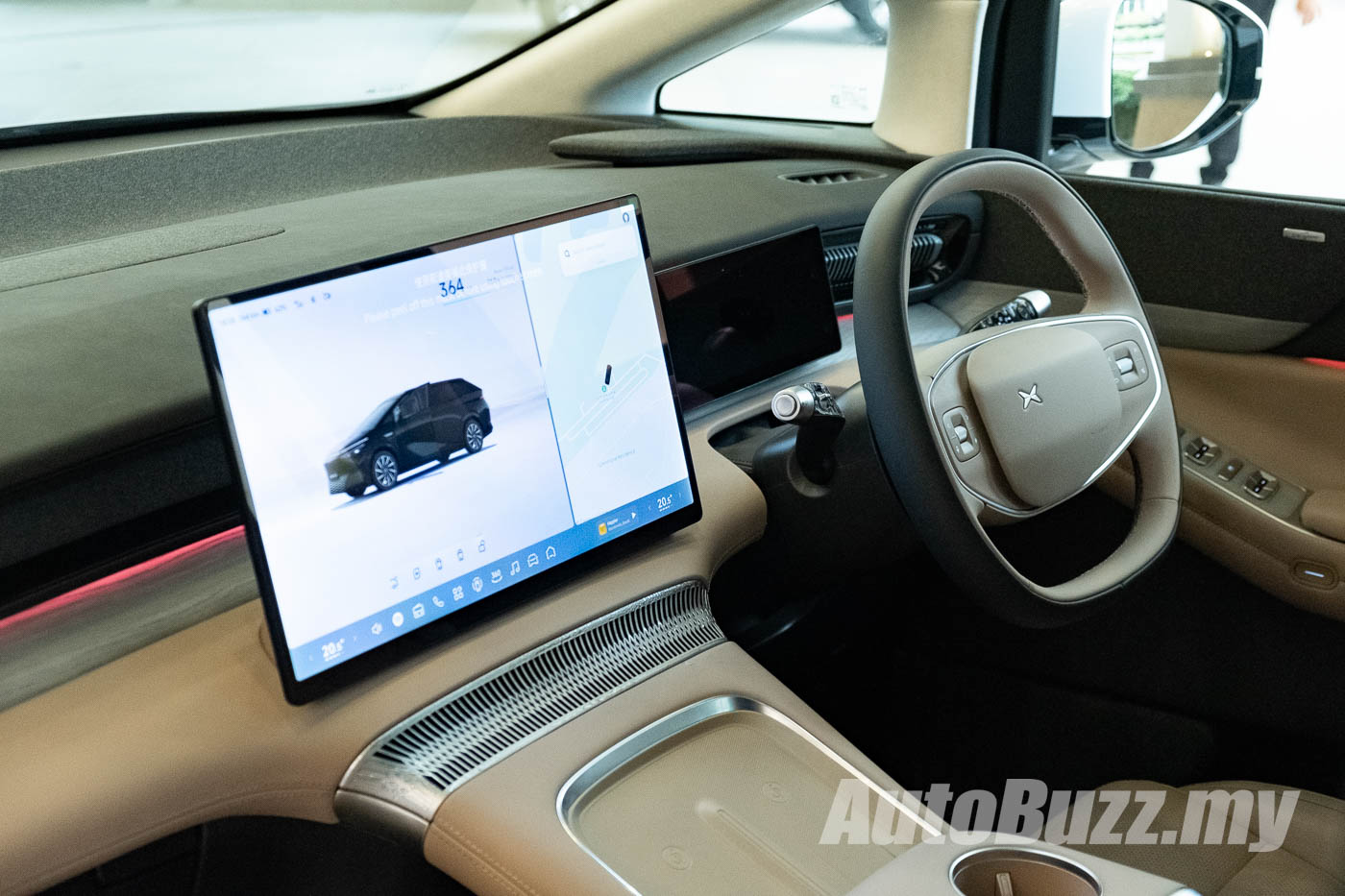
The main difference between the two is really their design ethos. Again, the Denza D9 goes with a more ‘traditionally classy’ look, while the XPeng adopts a more futuristic approach, with the entire cabin dominated by clean lines and massive screens.
On that note, the XPeng X9 does get larger screens all around, including a 17.3 inch central touchscreen on the dashboard that controls almost every aspect of the vehicle, compared to the D9’s 15.6-inch touchscreen. The XPeng X9 also gets an additional 21.4-inch touchscreen-enabled TV for the second row, with access to streaming services such as Apple TV and Spotify.
ALSO READ: 2025 XPeng X9 previewed in Malaysia – now open for booking, cheaper than Zeekr 009?


Powertrain – Denza D9 goes faster, XPeng X9 goes further
The Denza D9 is the faster and most powerful of the lot, with the range-topping all-wheel drive variant offering up to 374 hp and 470 Nm, enabling a century sprint time of 6.9 seconds. The less-powerful variant meanwhile sports a single motor on the front axle offering 313 hp and 360 Nm, translating to a 9.5 second 0-100 km/h sprint.
Both variants are equipped with the same 103 kWh BYD Blade lithium iron phosphate (LFP) battery pack, enough to provide a driving range of 520 km (WLTP) and 480 km (WLTP) respectively for the front- and all-wheel drive variants.
The XPeng X9 on the other hand will only be available in a front-wheel drive configuration in Hong Kong, offering up to 320 hp and 450 Nm, for a century sprint time of 7.7 seconds. Two batteries are available; the Standard Range comes with a 84.5 kWh lithium-iron phosphate (LFP) pack for a WLTP-rated range of 480 km, while a Long Range variant packs a larger 101.5-kWh nickel manganese cobalt (NMC) battery, translating to a range of 575 km (WLTP).
The standard suspension setup is also different, with the Denza D9 using a more “traditional” coilover setup (with variable damping on the more expensive all-wheel drive variant), and the X9 coming with dual-chamber air suspension. The XPeng also comes with rear-wheel steering to make it that little bit more convenient to navigate around tight city streets.

Safety equipment – Protection all around
While both companies claim that their cars are designed specifically with safety in mind, boasting the use of reinforced chassis parts, high-strength steel construction, and advanced driver assistance features, it’s the XPeng X9 that pulls out ahead thanks to its more advanced autonomous driving capabilities.
Like the G6, the XPeng X9 will be able to park itself remotely; instead of being seated inside the car, the driver will just have to hold on a button within the mobile app, and the car will do the rest automatically. In fact, the XPeng X9 (Max variant with LiDAR sensors) in China can also essentially drive itself, thanks to its City Navigation Guided Pilot (“City NGP”) functionality, although that feature is currently reserved for its home country only.

XPeng X9 vs Denza D9 – which to choose?
So you’re in the market for a EV MPV, which of the two should you choose? Based on preliminary specifications, both cars will definitely ‘disrupt’ the market, so to speak, with their impressive offerings when it comes down to specs.
The main question then is, how much will they cost? Could they undercut even the Zeekr 009, that has set the market ablaze with its RM349,000 starting price tag? If even that can’t set the two apart, then it’ll all come down to who the person seating in the second-row captain seats is…