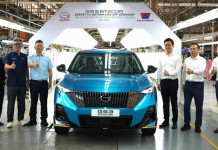
The Toyota Gazoo Racing Festival is back for its seventh season, and this year’s biggest highlight is undoubtedly the all-new 2024 Toyota Vios race car, which will be making their sporting debut in the Vios Challenge this weekend.
Season 7 will consist of three rounds, with six individual races to be held at the Petronas Sepang International Circuit beginning in August. And not only is it still the most lucrative racing series in Malaysia with a bigger prize pool this year, totalling RM630,000 across three classes (Sporting, Super Sporting, TGR Rookie), the race series will also see participation from Singaporean, Thai, and Indian racers for the first time!

The opening round of the Toyota Vios Challenge is happening this weekend, from 9-11 August, running concurrently with the Malaysia Championship Series (MCS), while Round 2 is scheduled for 27-29 September. The first two rounds will not be open to public, but race fans and enthusiasts can still tune in to the action via live streams on all of Toyota Gazoo Racing Malaysia’s social media channels.
For the ultimate fans, the Grand Finale event, happening 3-5 January 2025 at the Petronas Sepang International Circuit, will be open to the public – so be sure to keep your eyes out when ticket registrations open!

Returning to the Super Sporting Class in Season 7 is the former three-time overall champion Tengku Djan Ley Tengku Mahaleel, alongside defending class champion Mitchell Cheah, and veterans in the Malaysian racing scene including Eddie Lew, William Ho, Tom Goh, and Freddie Ang.
The Super Sporting Class will also see the participation of young drivers Putera Adam alongside brothers Naquib and Nabil Azlan, all three of whom were former Rookie Class drivers and champions, Bradley Benedict, Ady Rahimy, as well as Aman Nagdev from India.

The Sporting Class meanwhile will see familiar names like Dato’ Dr Ken Foo, Kenneth Koh, Dannies Ng, Shafiq Samsudin, Ricky Tan, and Lim Chun Beng returning to the grid, joined by young drivers Elson Lew who was last year’s Rookie Class runner-up, Amirul Haikal, Timothy Yeo, and Ashen Arumugan.
Panithan Rakpaibulsombut from Thailand, and Singaporean Daniel Inosuke Ooi will also be making their Toyota Vios Challenge debut in the Sporting Class this year.

As a champion of talent development in motorsports, the Toyota Vios Challenge Season 7 will see a total of 24 young drivers spread across all three classes.
The latest batch of graduates from the Gazoo Racing Young Talent Development Programme, including recreational karters Brandon Ho, Amirul Afiq, and Kingston Tan, pro karter Adam Mikail and Audrey Leong, and simulator racer Raja Amirul who was discovered during the 2023 Toyota GR GT Cup Campus Tour, will also take the wheels of the all-new Vios race car in the Rookie Class this season, racing alongside the Super Sporting Class for invaluable saloon car racing experience alongside seasoned drivers. Among the six rookie racers, the eldest is only 22-years-old!

“Our involvement from the very beginning has been with the objective of contributing to Malaysian motorsports and we have embarked on numerous initiatives over the past six seasons. This included bringing motorsports to the masses via street racing circuits; making the series more accessible to participants in the form of retaining the one-make race format; establishing the series as the most lucrative racing event in Malaysia; and introducing the Toyota GR Young Talent Development Program for young drivers who are transitioning from karting and simulator racing to saloon car racing,” said UMW Toyota Motor President, Datuk Ravindran K.
“Toyota is equally pleased that the series has immensely contributed towards producing a new generation of talented drivers who have since progressed to the higher classes of racing both domestically and abroad,” he added.

The seventh season of the Toyota Vios Challenge promises to be an even more exciting spectacle, particularly thanks to a much more racey Vios race car based on the all-new NGC102 Toyota Vios that was first unveiled here last year.
While engine outputs likely hasn’t increased by a considerable margin, the more rigid chassis, revised aerodynamics, and enhanced platform based on the DNGA architecture has all helped the new race car be more agile and planted around the bends, and more responsive to driver input, leading to faster lap times and more close racing.
ALSO WATCH: 2023 Toyota Vios 1.5 G, the new benchmark for B-segment saloons
GALLERY