Regenerative, or recuperative braking, is one of the key features that truly sets an electric vehicle (EV) apart from a normal internal combustion car, and it’s for good reason: it’s one of the main reasons why EVs can have better energy efficiency in city streets than on highway, and it’s also why brake pads seem to last a lifetime on them. Just imagine having a little fuel added back into your tank whenever you step on the brake pedal – who in their right mind wouldn’t want that?
Clearly then, regenerative braking is the EV Gods’ gift to the world and we should all drive around with it set at maximum, right? Well, as most things in life, the answer is usually much more complicated than just a binary yes or no.
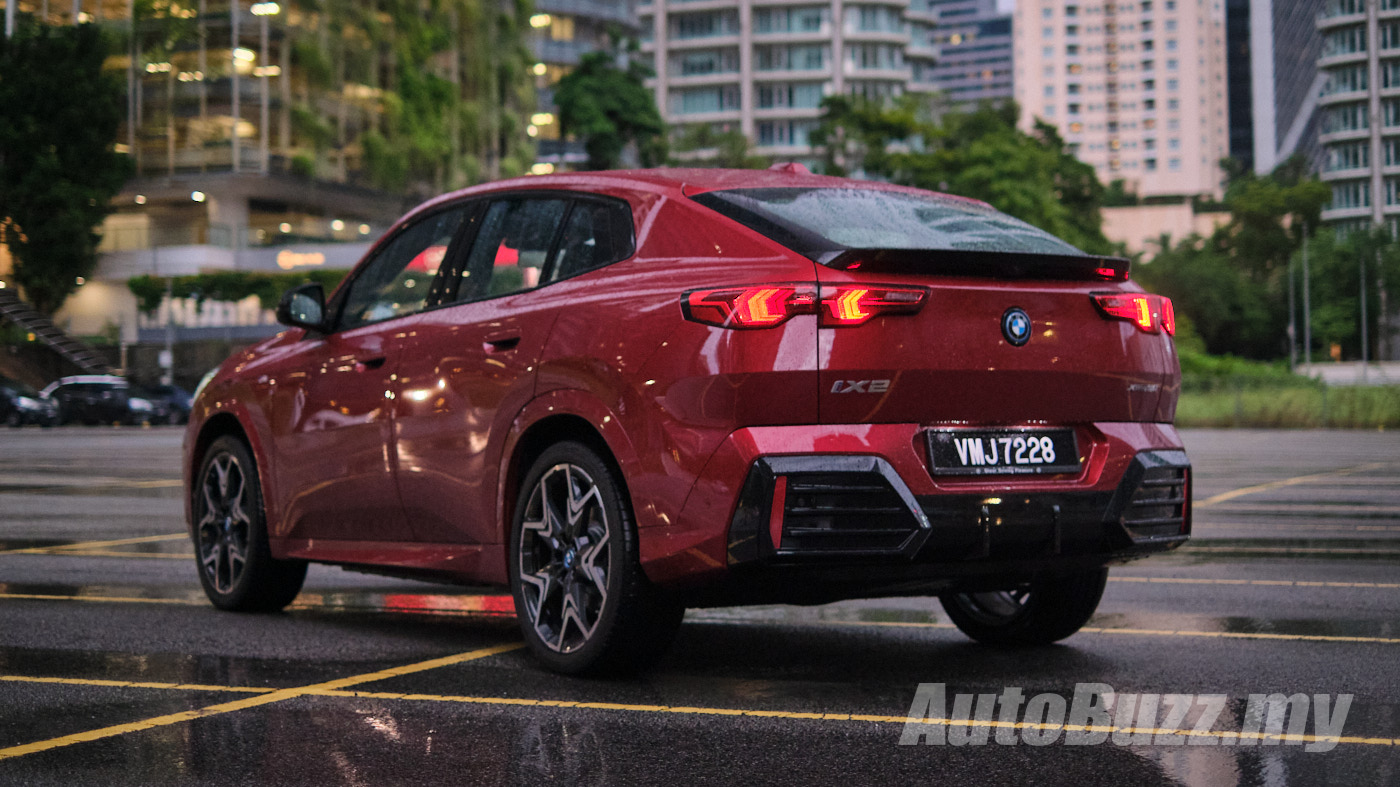
We recently spent some time in the BMW iX2 xDrive30, and noticed that in its default “Adaptive” recuperation mode, the car will always opt to coast off-throttle whenever possible, and only uses regenerative braking to slow itself down when it detects another slower vehicle ahead.
The behaviour was particularly interesting to us, as it’s the complete opposite of Tesla’s approach of all-time-full-regen on its newer cars, like in the Model 3. So is regenerative braking or coasting more efficient on an EV? Let’s dive in and find out!

Regenerative braking in EVs – unlimited free energy?
Thanks to the magic of Faraday’s Law and electromagnetic induction, the motors in an EV can actually work in reverse to generate electricity. Most EVs use this principle to help slow down the vehicle, while at the same time generating power which can then be stored back into the car’s battery for later use. This is known as regenerative braking.
While that might sound like the dream scenario, it’s important to always remember that no energy transformation (in this case, kinetic to electric) is perfect. There will always be some energy efficiency losses to the system, and on top of that, many other factors such as ambient temperature can also affect how effective your motors can recuperate energy.
All that means is that your car will never be able to recuperate all of the energy used to bring it up to speed in the first place. But still, the ability to recuperate any little bit of kinetic energy is already better than letting them all go to waste as heat when you use the brakes!

Coasting on EVs – travelling with zero consumption
Coasting, on the other hand, essentially means letting your vehicle roll forward using its own inertia. Without any moving pistons under the bonnet, an EV is able to continue rolling for a considerably longer distance without engine braking, thus minimising any energy losses to the drivetrain – the only significant factor slowing the vehicle down is the friction generated between the tyres and the road surface (We’re massively oversimplifying things here, but that’s the gist).
An EV’s inherent heavy weight also helps them to coast even further thanks to the extra momentum, all while using virtually zero energy. Although, of course, you won’t be topping off your battery by doing so.

Regen braking vs coasting on EVs – which is better?
As much as commenters online like to fight about it, it really shouldn’t be a question of whether one is better than the other for your EV range. In an ideal scenario, they are both tools in an EV’s arsenal that should be used together to maximise driving range.
When there’s no need to slow down, coasting will naturally be more efficient, as it is using virtually zero energy. But when it comes time to slow down, the use of regenerative braking will help eke out a couple of extra kilometres, too.
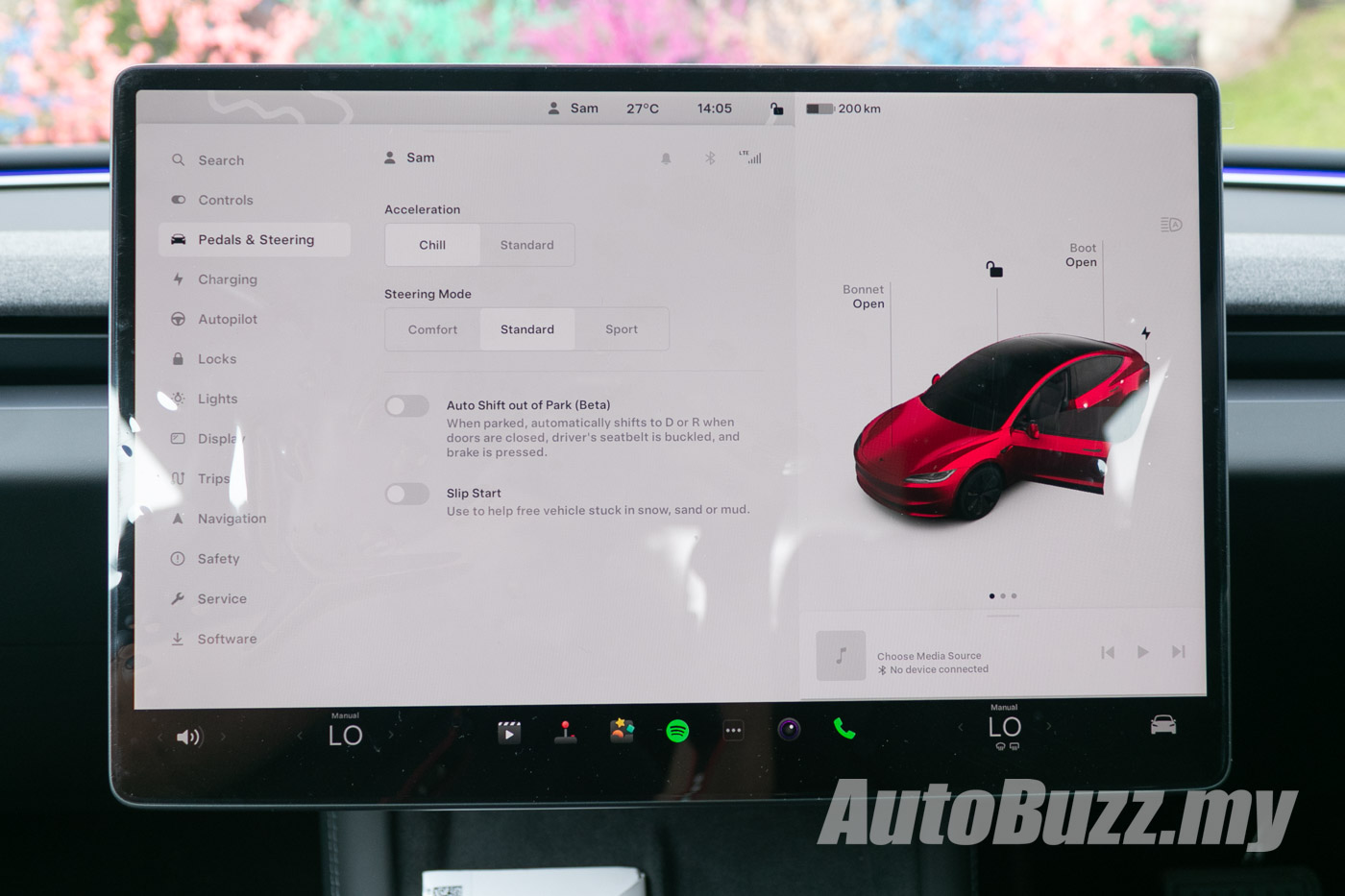
The debate arises, we think, because of cars like the Tesla Model 3 that has recently removed the ability for owners to select their recuperation strength, defaulting to essentially “single-pedal” driving. The high regenerative strength could pose a challenge for drivers, especially those who are new to EVs, as it could be hard to find the throttle pedal’s sweet spot in order to coast, resulting in the car unnecessarily slowing down and speeding up again.
And as we’ve discussed earlier, that all results in needless wastage due to energy losses during repeated recuperation and acceleration, when you could’ve covered the distance just by coasting in the first place!
RELATED: AC/DC? Common EV terms and jargons explained

The best of both worlds: brake blending
Fortunately, many modern EVs these days (but not Tesla, unfortunately) come equipped with a feature commonly known as “brake blending”, which essentially uses a computer to automatically split the braking workload between regenerative braking, and actual friction braking using your car’s hydraulic brakes, whenever you step on the brake pedal.
In other words, you’ll be able to enjoy the benefits of both coasting and regenerative braking, all without having to alter the way that you drive. Brake blending systems provide a more consistent driving experience with the majority of cars we have driven, which can be helpful especially when many EV owners currently still require access to other ICE-powered vehicles.
And when paired to other features, like the recuperation strength adjustment paddles behind the steering wheel on Mercedes-Benz EVs, or BMW’s adaptive system that utilises external sensors to automatically adjust regenerative strength on the fly, you’ll also be able to fine tune your driving experience to maximise range.
Additional tips for better EV range
No matter if your EV allows for adjustable regeneration strength or not, the most important tip to maximise range is by anticipating the traffic ahead and drive smoothly. If you are coming up to a traffic light, try to come off the throttle early and let the vehicle coast towards the junction, and only applying regenerative braking at the end to slow the vehicle to a stop.
On downhill sections, use a stronger level of recuperation to help charge the battery up, while letting gravity do its work and pull you down the hill.
Whatever it is, always remember to not speed up and slow down abruptly and unnecessarily. You might have heard racing drivers telling you that smooth is fast, but smooth is also efficient – especially on EVs!
ALSO WATCH: AC & DC Charging – Which one to charge your EV?