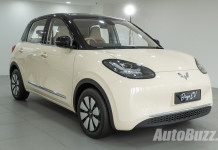
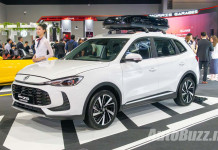
Tan Chong Motor Holdings (TCMH) has announced that the locally-assembled (CKD) TQ Wuling Bingo now comes equipped with a suite of ADAS features as standard. When the TQ Wuling Bingo was initially launched in Malaysia, it lacked this full ADAS suite and only offered basic safety features.
The updated safety kit now includes lane change assist, rear cross traffic alert, rear collision warning, and door opening warning. These automated features are joined by a low-speed pedestrian warning, a tyre pressure monitoring system, rain-sensing auto wipers, blind spot monitors, and a walk-away auto lock and unlock function.
However, it is important to note that the suite does not include autonomous emergency braking or forward collision warning, though the Wuling Bingo does feature impact-sensing automatic door unlocking to assist in the event of a collision.

These active systems complement the existing safety hardware, which includes a high-tensile steel structure and a six-airbag configuration. Notably, Malaysia is the first market to receive this specific six-airbag setup for the Wuling Bingo, which was previously unavailable in other regions.
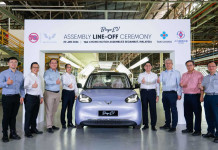
The addition of these ADAS features coincides with the official delivery of the first batch of locally-assembled (CKD) units to Malaysian customers. These vehicles are produced at the Tan Chong Group’s manufacturing facility in Segambut.
RELATED: TQ Wuling Bingo EV launched in Malaysia — retro-style city runabout, 68 hp, 2 variants from RM68k

Despite the expanded safety specifications, the TQ Wuling Bingo’s pricing in Malaysia remains unchanged. Two variants are available, Pro and Max, with prices starting from RM67,800 and RM72,800, respectively, on-the-road without insurance.
TQ Manufacturing Sdn Bhd, Head of Business, Wan Wei Sun, “This moment is about more than handing over vehicles – it represents trust, confidence and the beginning of many ownership journeys. We sincerely thank our first customers for believing in TQ Wuling and for being part of our EV journey in Malaysia.”


Both variants are powered by a front-mounted electric motor, making 68 hp and 150 Nm, with the main difference lying in their battery packs. The entry-level Pro variant is equipped with a 31.9 kWh lithium iron phosphate (LFP) battery, delivering a CLTC-rated range of 333 km, while the Max variant features a larger 37.9 kWh LFP battery that extends the range to 410 km (CLTC).
Charging is supported via AC charging at 7kW, enabling a full charge in 4.5 hours for the Pro variant and 5.5 hours for the Max variant. DC charging at 50kW enables a 30-80% recharge in under 35 minutes for both variants.
ALSO READ: TQ Wuling Bingo EV CKD production begins in Segambut