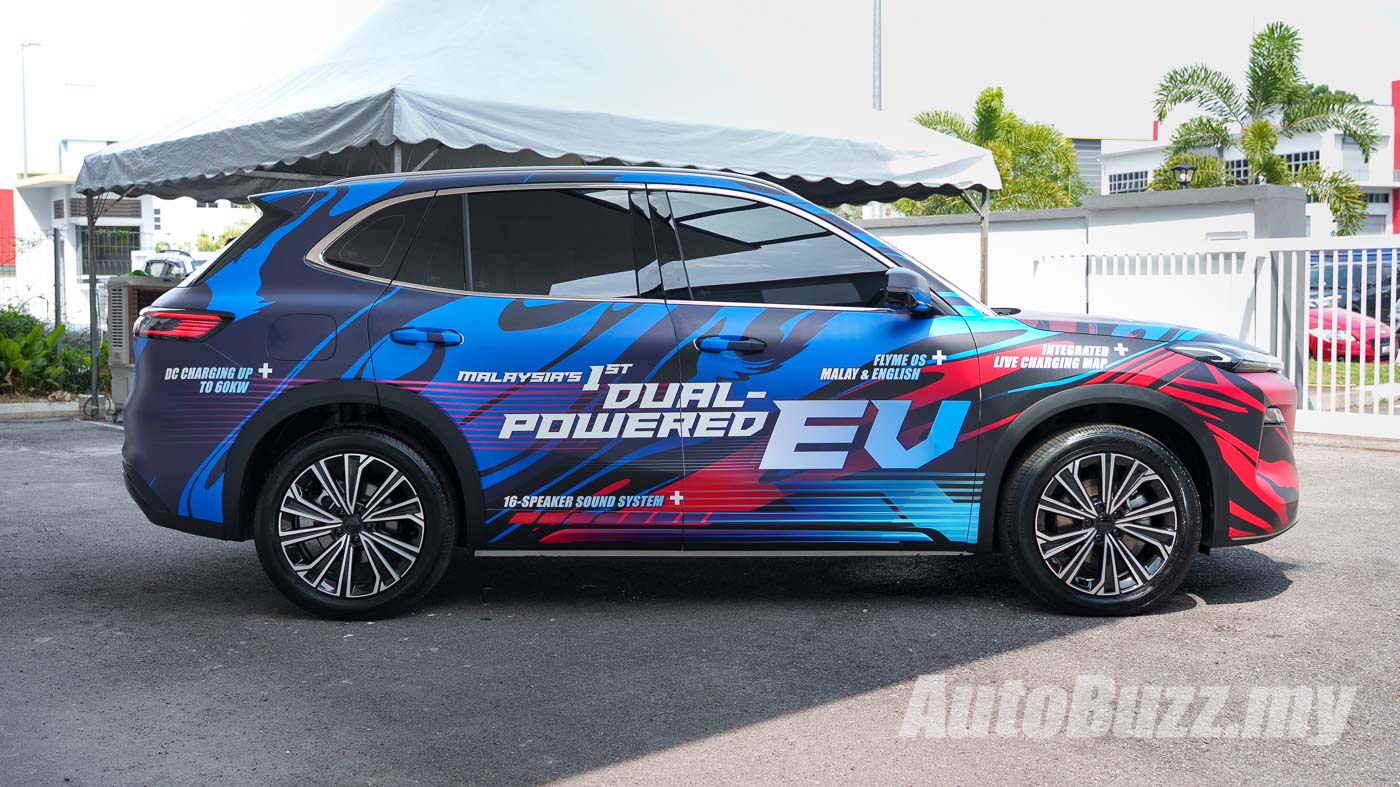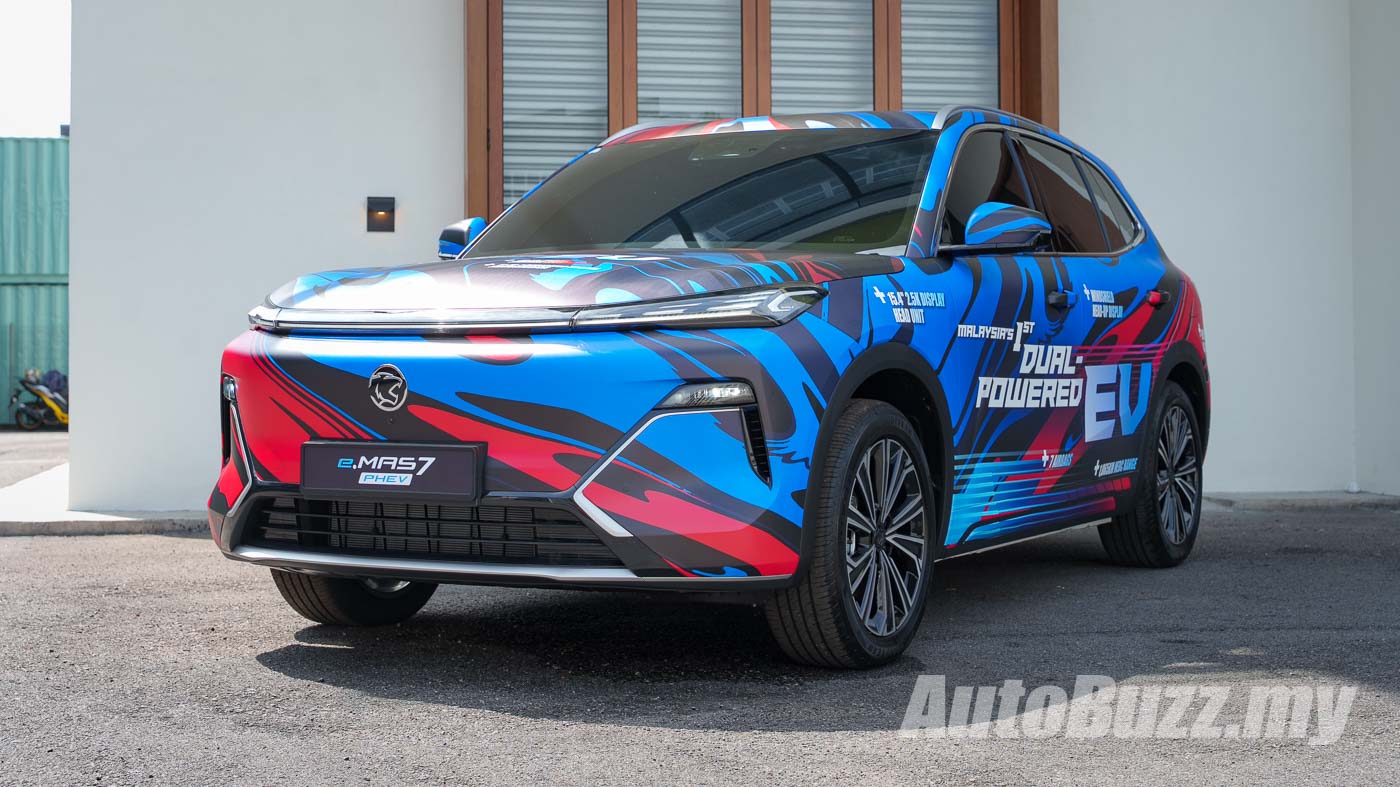
Proton has previewed its first plug-in-hybrid electric vehicle (PHEV) ahead of its official launch, revealing full specifications for what is now officially called the Proton eMAS 7 PHEV (stylised as e.MAS 7 PHEV). The national carmaker claims the upcoming model to be Malaysia’s first “dual-powered EV”, combining plug-in hybrid capabilities with extended electric-only driving range.
The upcoming Proton eMAS 7 PHEV will sit alongside its electric vehicle (EV) sibling, the eMAS 7, both built on the same Global Modular Architecture (GMA) platform that the company says is built from the ground up with electrification in mind. It’ll be offered in three variants at launch, namely Prime, Premium, and Premium Plus, although no pricing information has been released yet.
Perhaps the star of the show is what sits beneath the bonnet. Just like its Chinese counterparts, the Geely Starship 7 and Geely Galaxy EX5, the Proton eMAS 7 PHEV will be powered by a BHE15PFI 1.5-litre naturally aspirated four-cylinder dedicated hybrid engine, itself producing 99 hp and 125 Nm of torque.
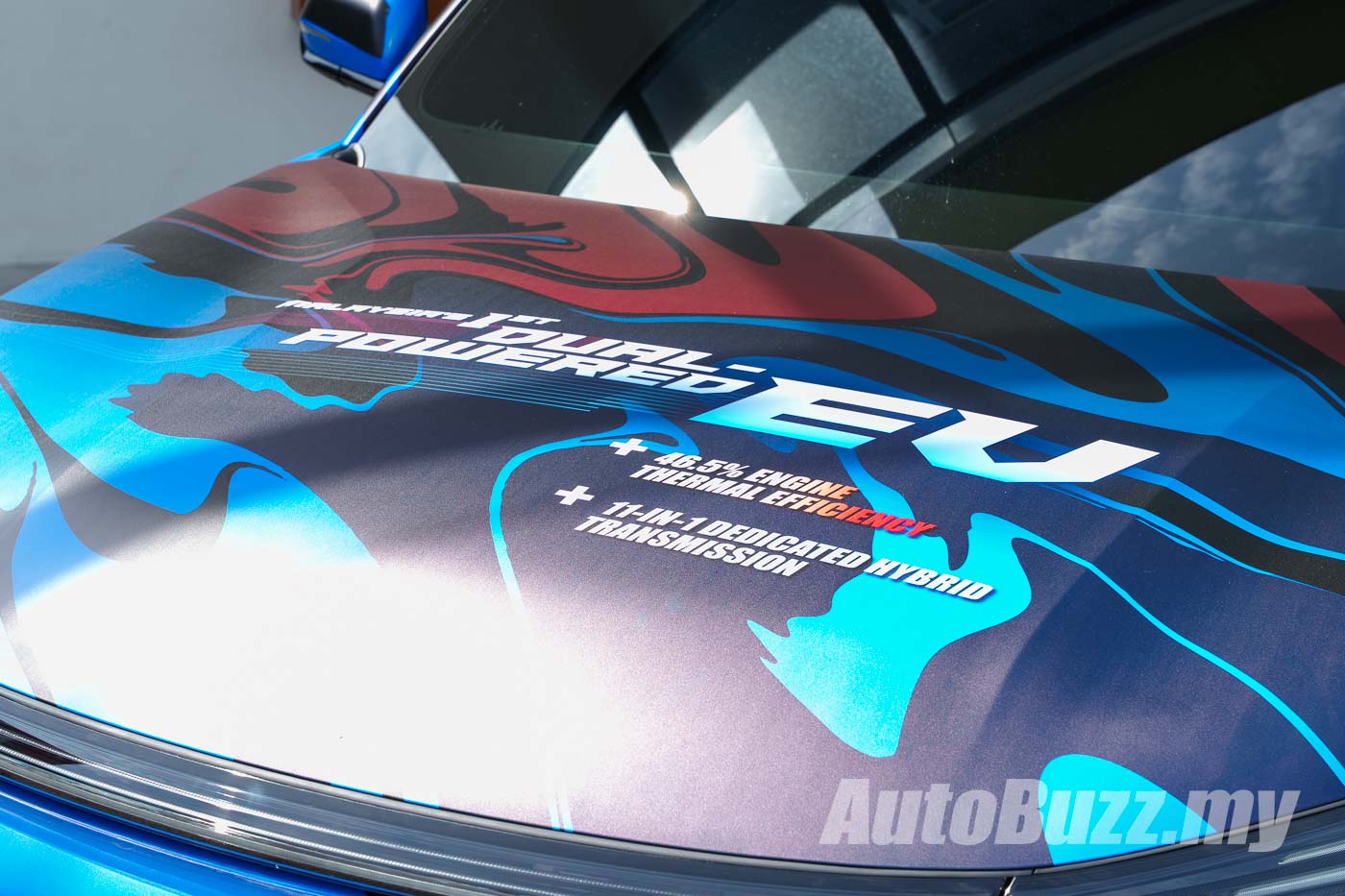
The engine is similar to that found in the all-new Proton Saga, but running on a different tune here, which Proton claims it is capable of achieving up to a leading 46.5% thermal efficiency.
This is then paired with an 11-in-1 integrated dedicated hybrid transmission (DHT), enabling series-parallel hybrid operation. A traction electric motor is integrated into the DHT, offering 218 hp and 262 Nm, bringing total combined system output to 262 hp.
ALSO READ: New 2026 Proton X70 launched in Malaysia – 1.5TD inline-4, only 2 variants, from RM107k
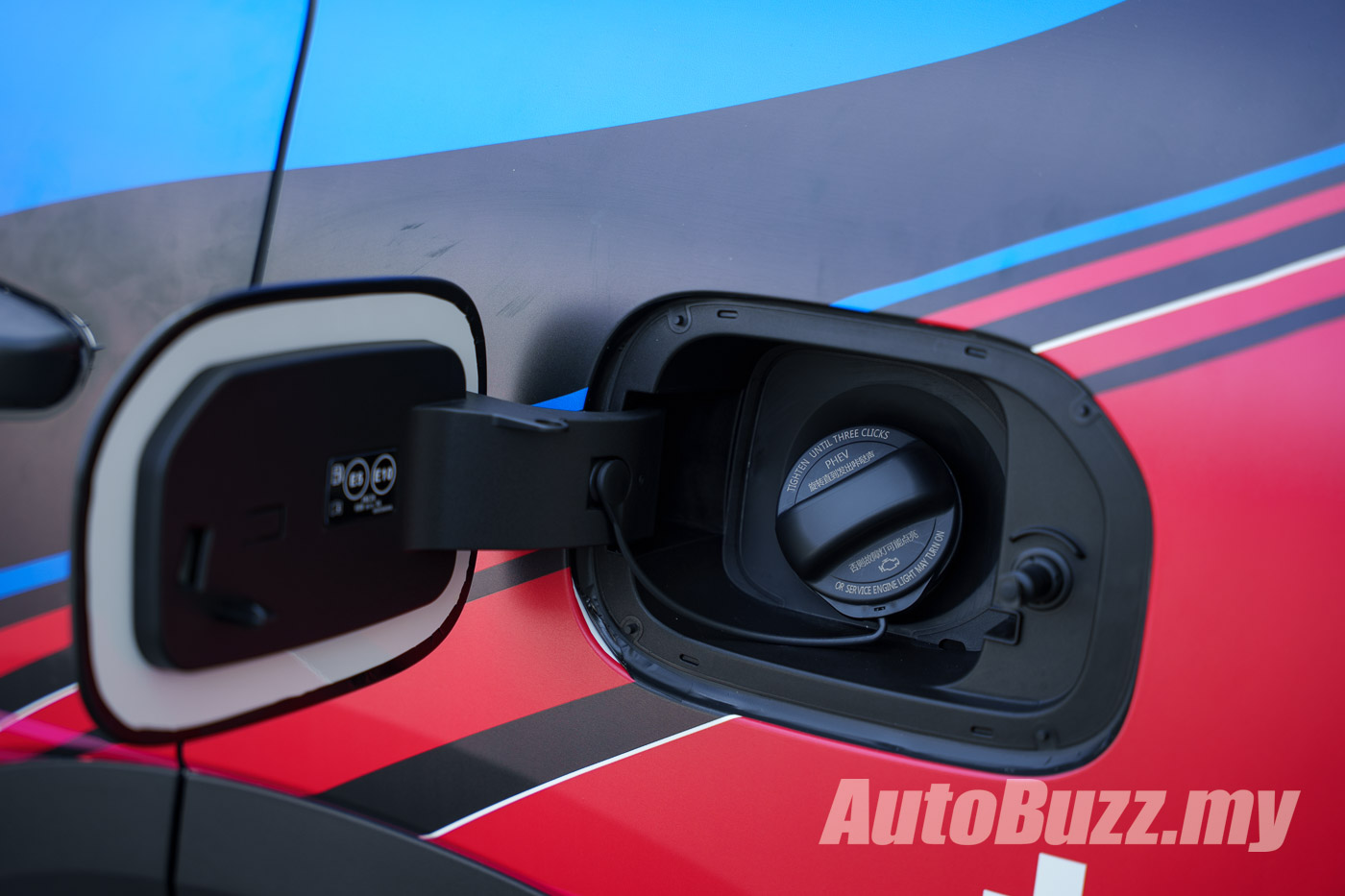
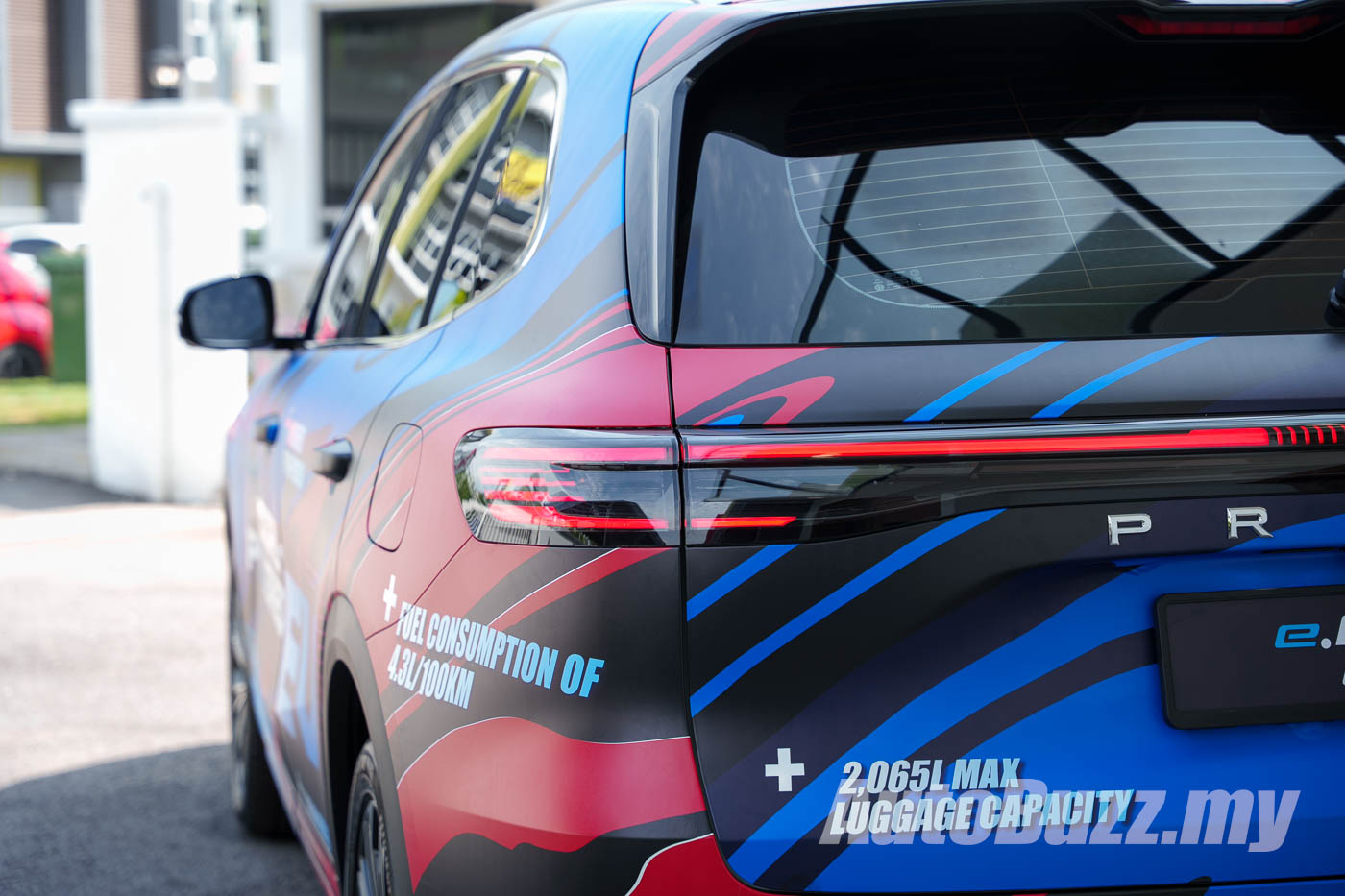
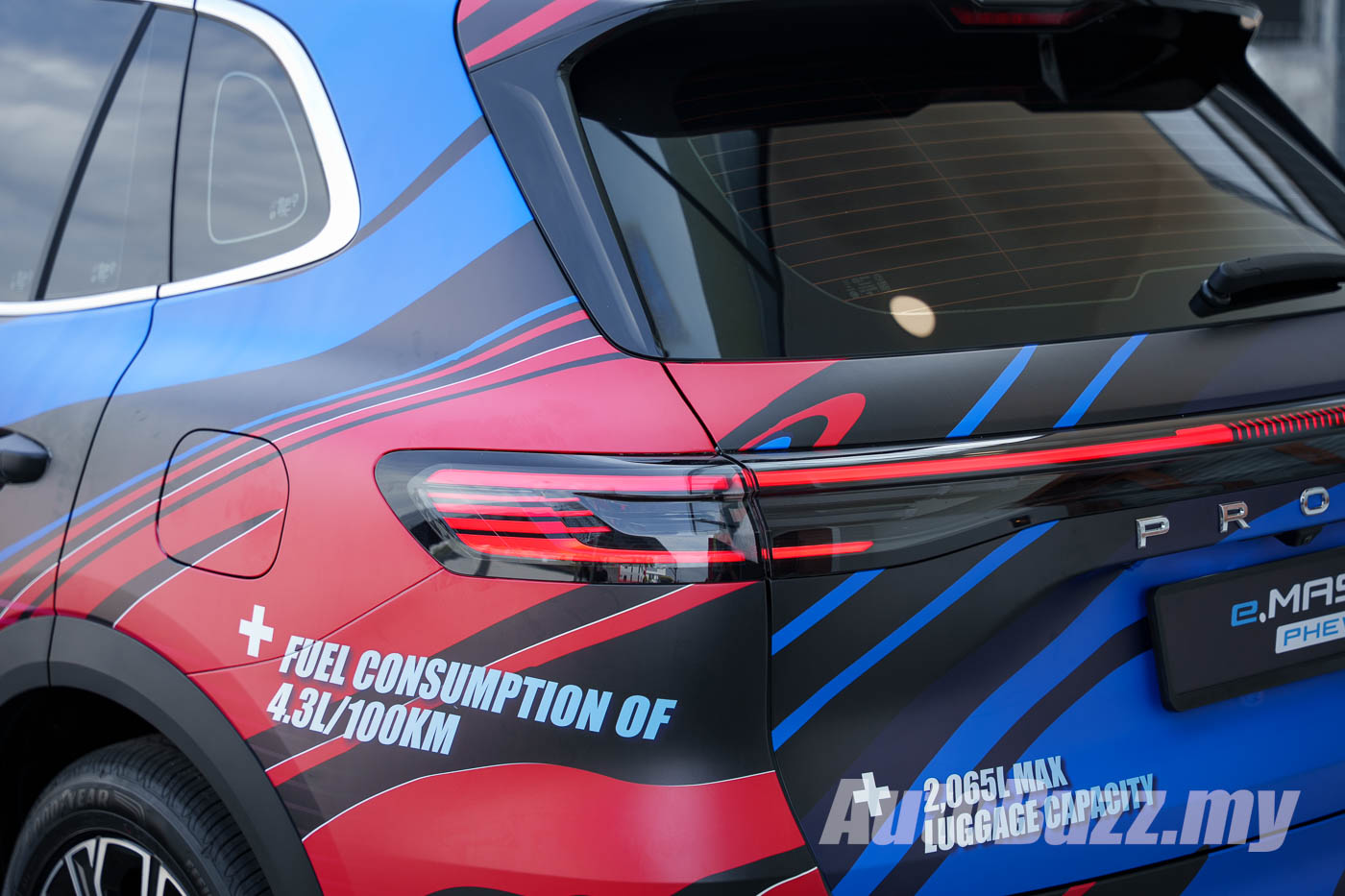
Battery capacity varies depending on the variant. The Prime and Premium variants are equipped with a CATL-sourced 18.4 kWh LFP battery, offering a claimed 83 km (WLTP, 105 km NEDC) of EV-only driving range, and a total combined driving range of up to 943 km (WLTP, 1,000 km NEDC). Fuel efficiency for these two variants are rated at 4.3 litres per 100 km.
Sitting at the top of the range, the Premium Plus features a significantly larger 29.8 kWh Aegis Short Blade LFP battery, which extends the electric-only range to 146 km (WLTP, 170 km NEDC) and increases the total combined range to 996 km (WLTP, 1,065 km NEDC). Despite the larger and heavier battery, efficiency remains competitive at a claimed 4.4 litres per 100 km.
The Prime and Premium variants complete the 0-100 km/h sprint in 8.0 seconds, while the Premium Plus variant, which carries a larger battery pack, does the same run in 8.2 seconds. All variants of the Proton eMAS 7 PHEV will reach a top speed of 170 km/h.
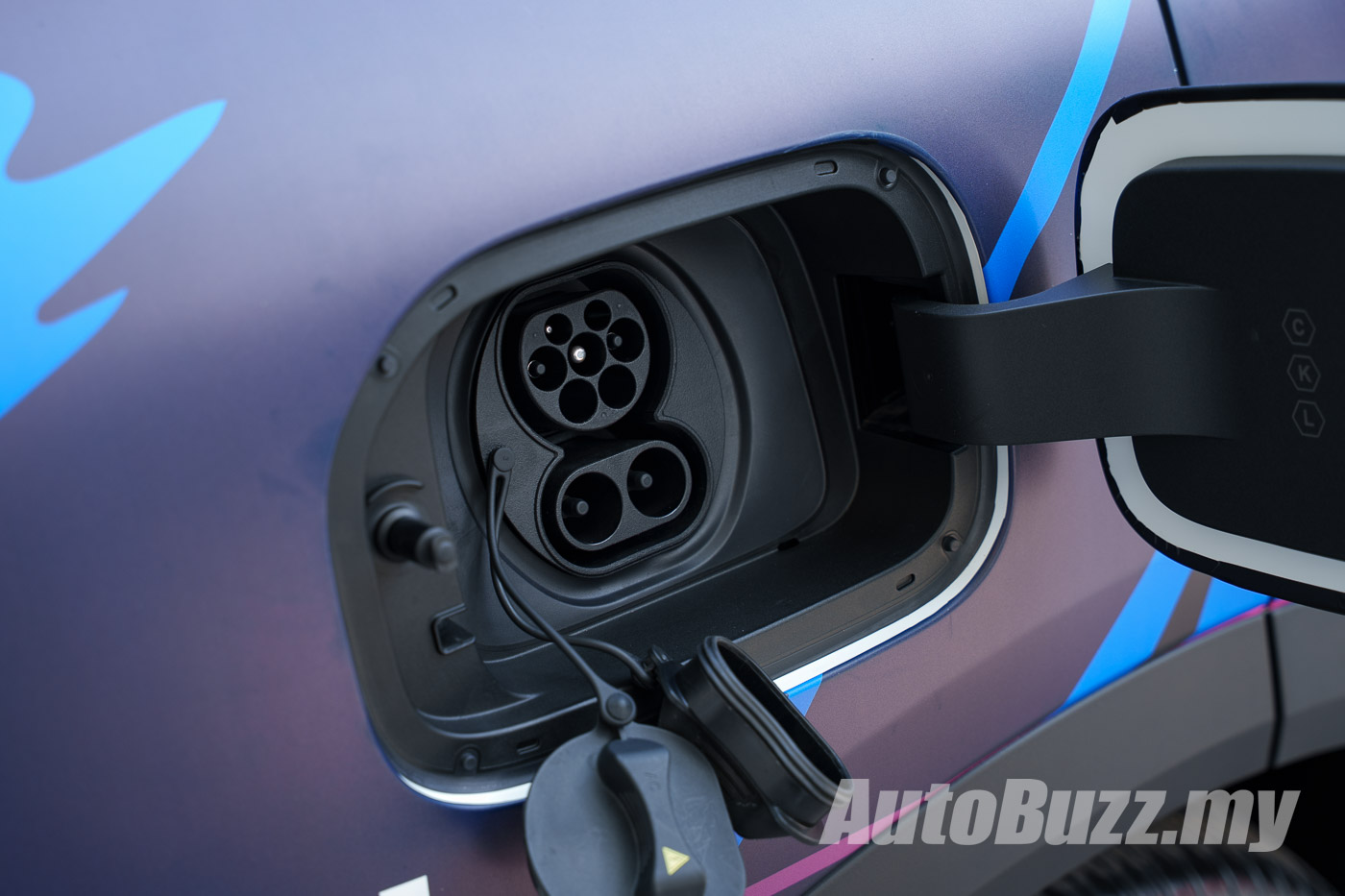
Charging capabilities are equally comprehensive across the range. The Prime and Premium variants support 30 kW DC fast charging, allowing the battery to be charged from 30-80% in under 20 minutes. The Premium Plus benefits from an upgraded 60 kW DC charging rate, completing the same charge in under 16 minutes.
All variants support 6.6 kW AC charging and are equipped with Vehicle-to-Load (V2L) and Vehicle-to-Vehicle (V2V) functionality, allowing owners to power external devices or supply electricity to another compatible vehicle.
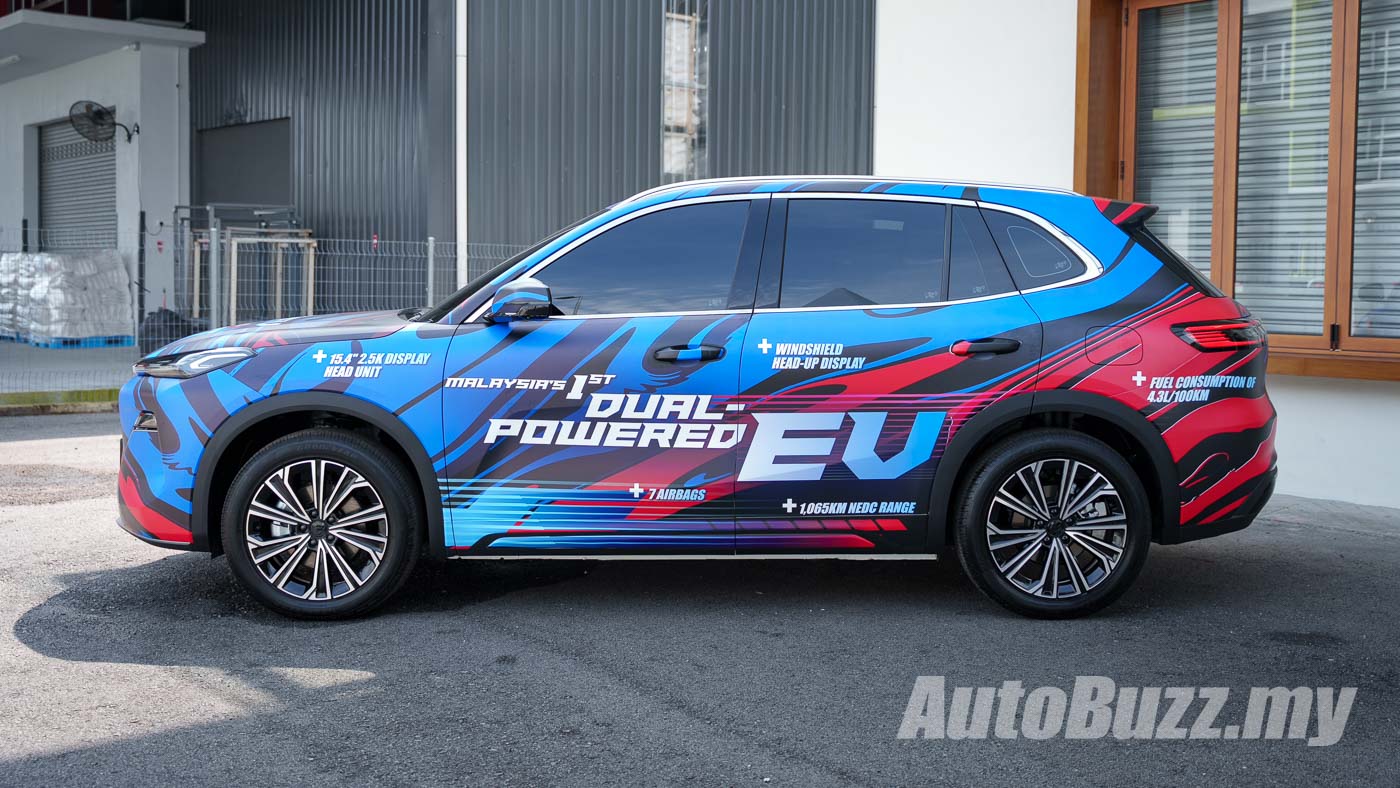
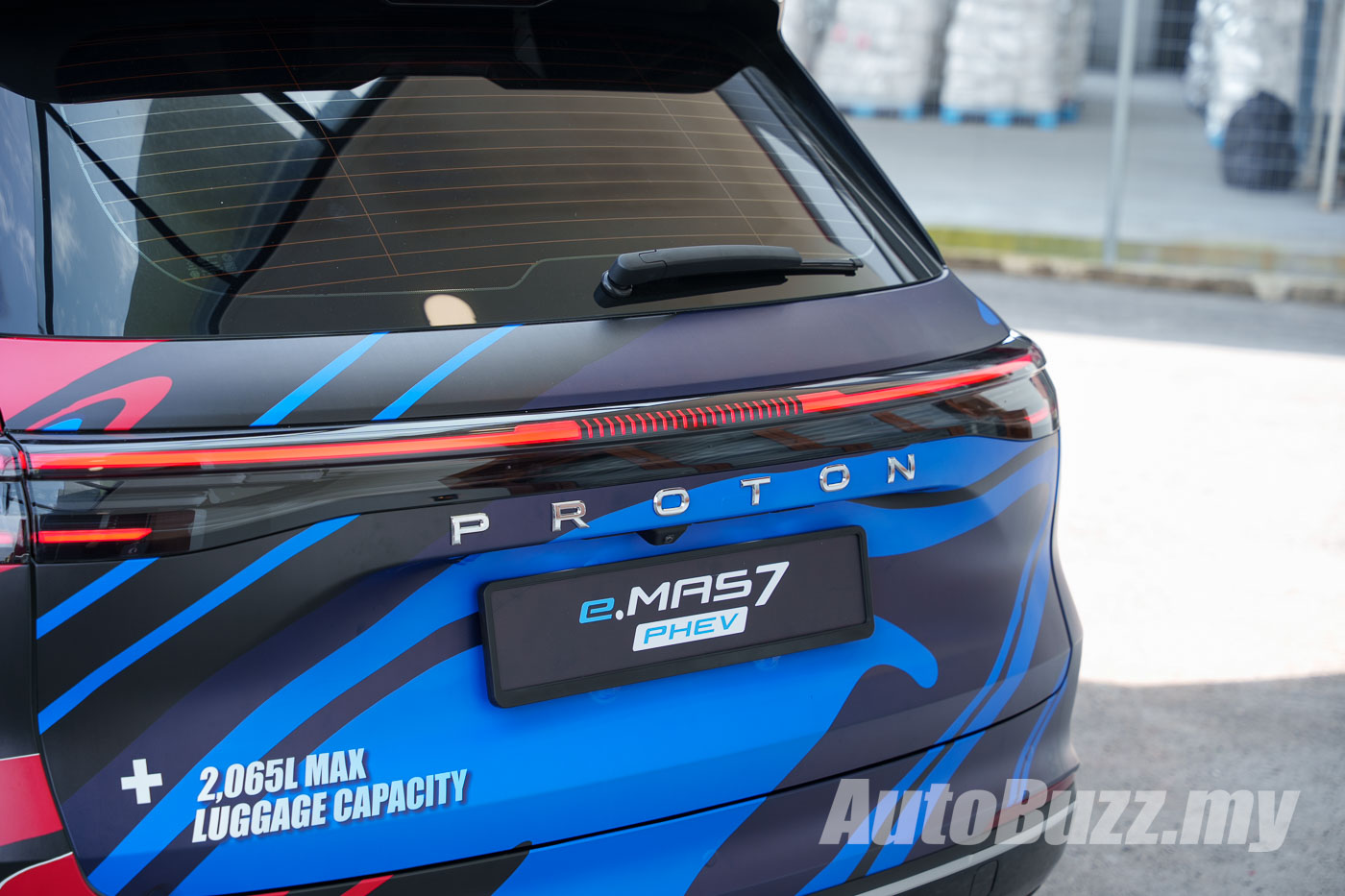
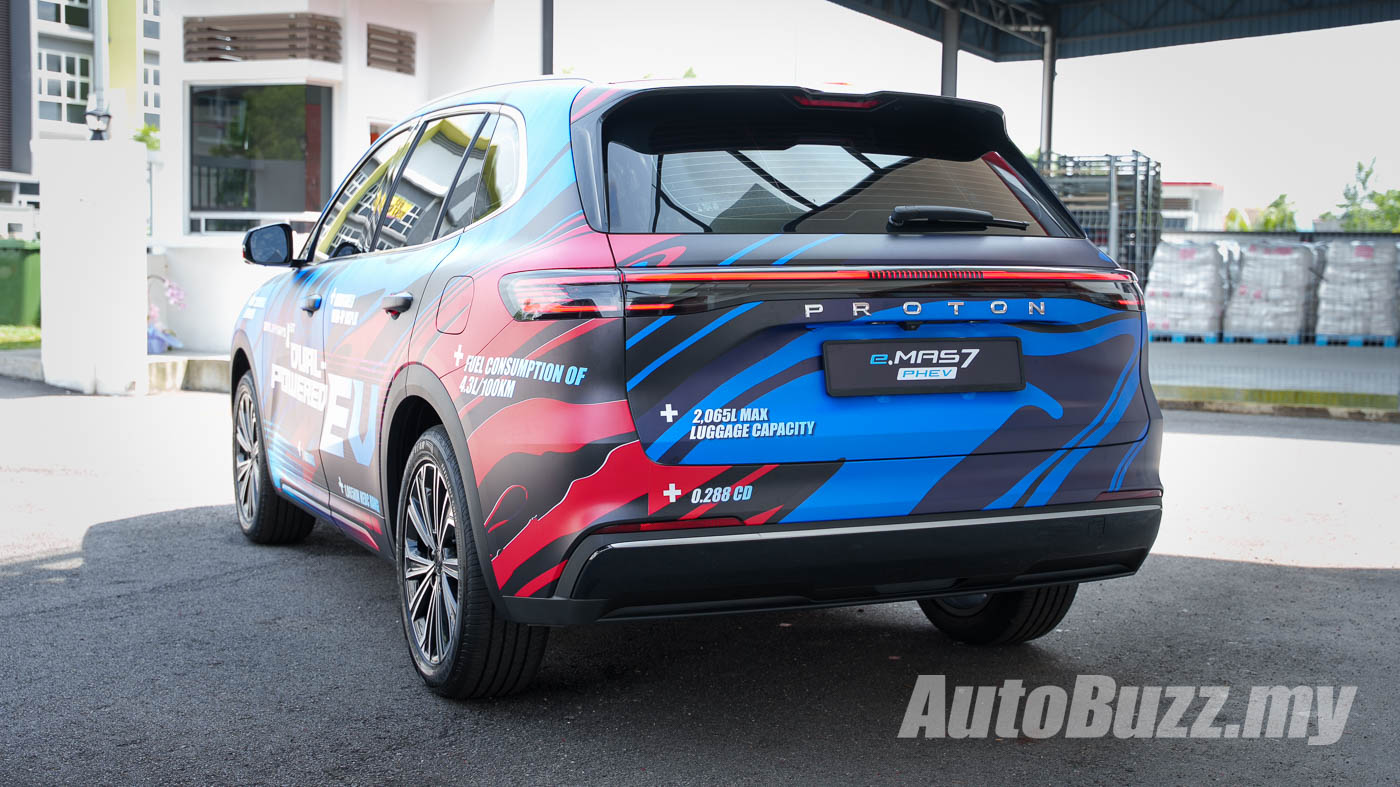
In terms of size, the Proton eMAS 7 PHEV measures 4,740 mm in length, 1,940 mm in width, and 1,685 mm in height, riding on a 2,755 mm wheelbase. This makes it marginally bigger than its fully electric sibling, placing it on the larger side of the C-segment SUV category. Boot capacity stands at 528 litres, which can be expanded to 2,065 litres with the rear seats folded.
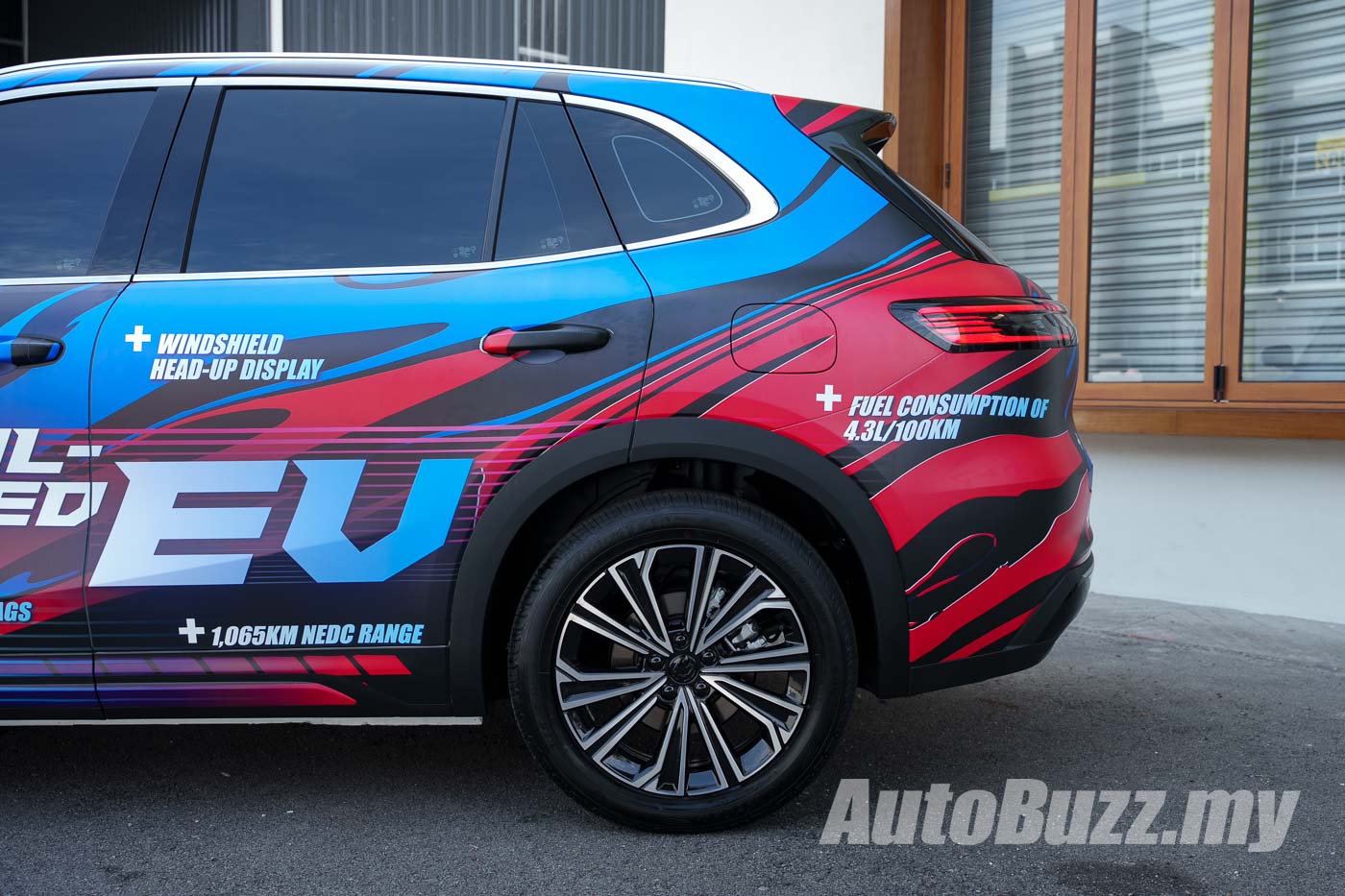
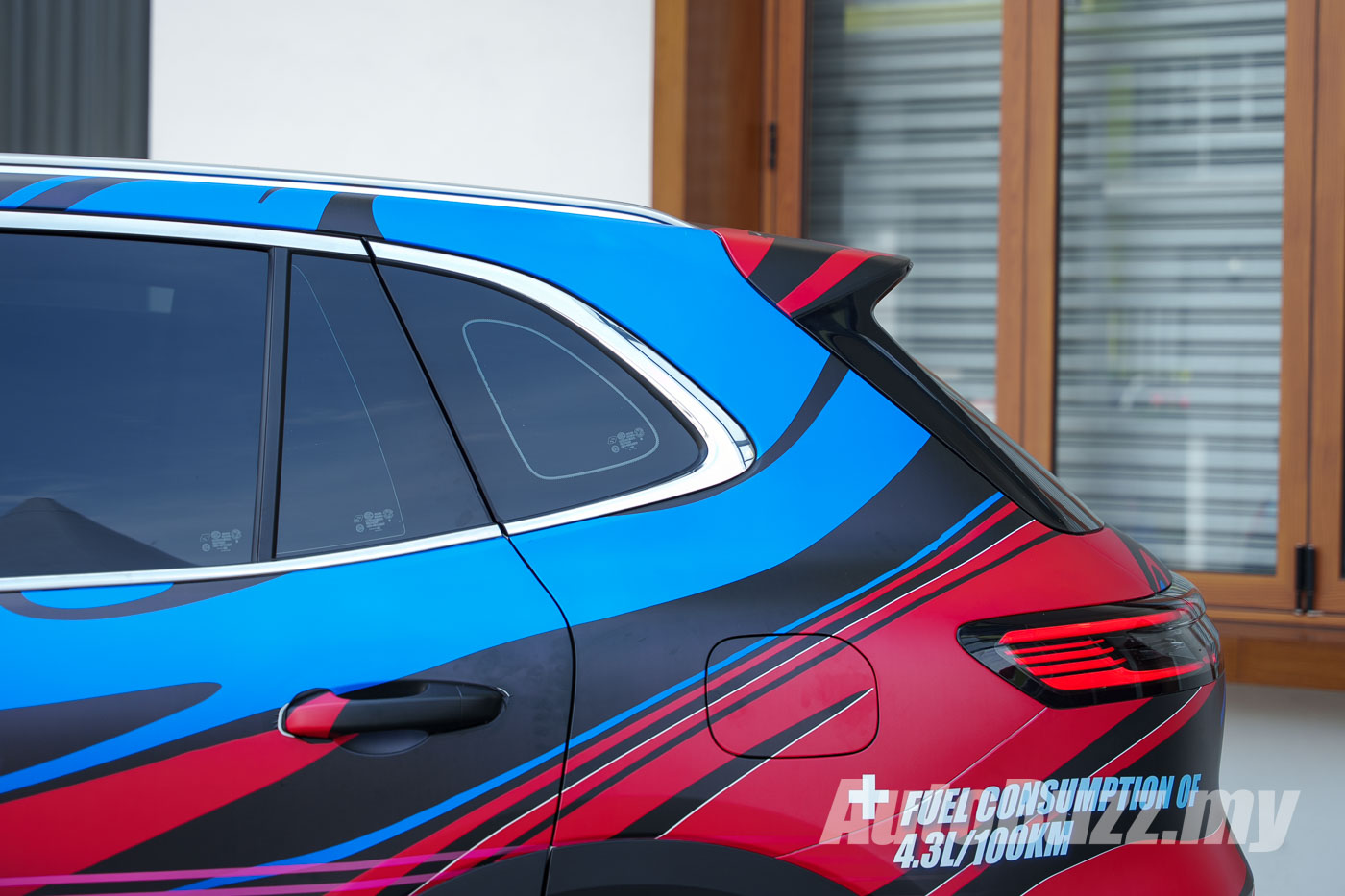
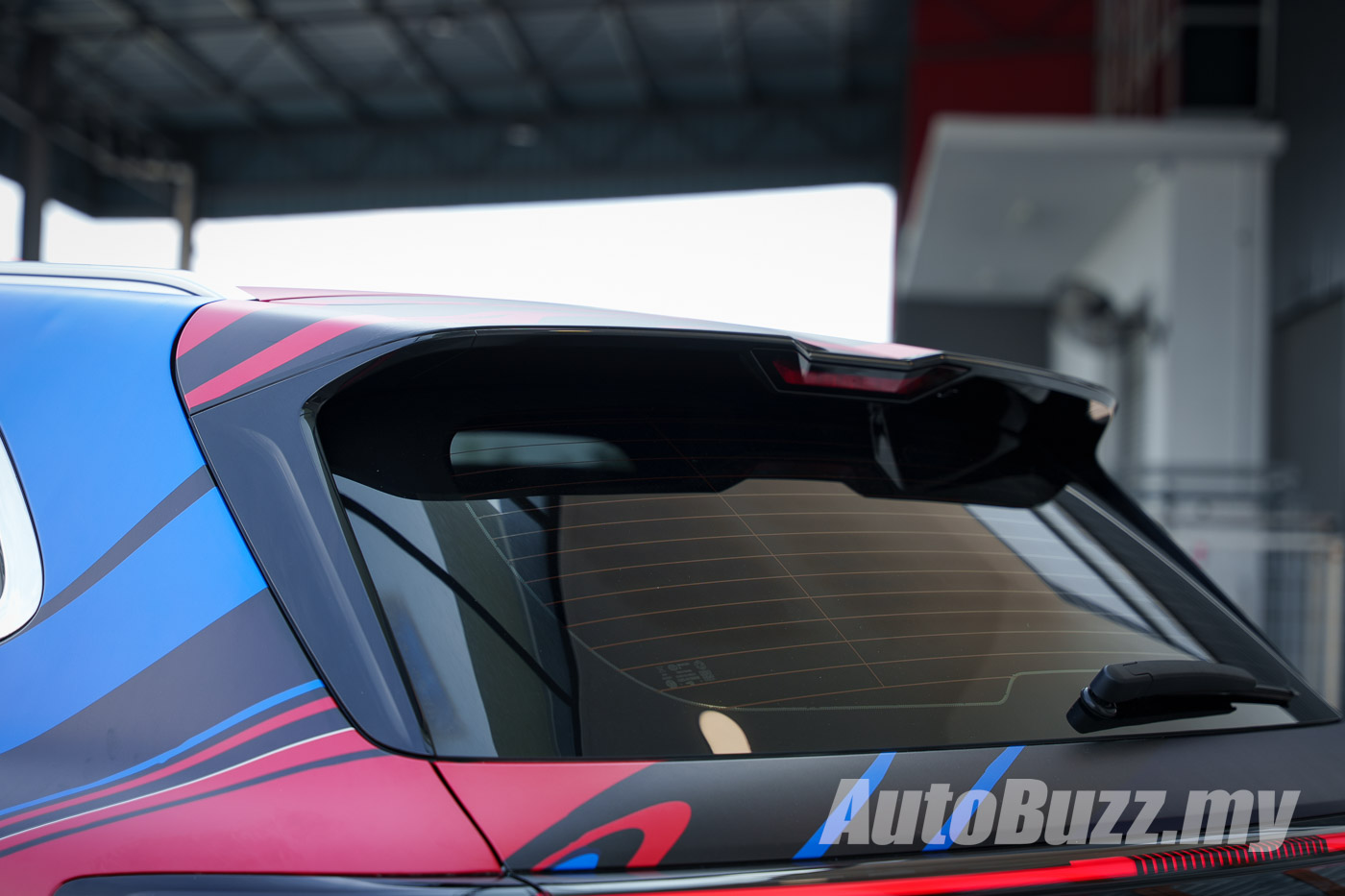
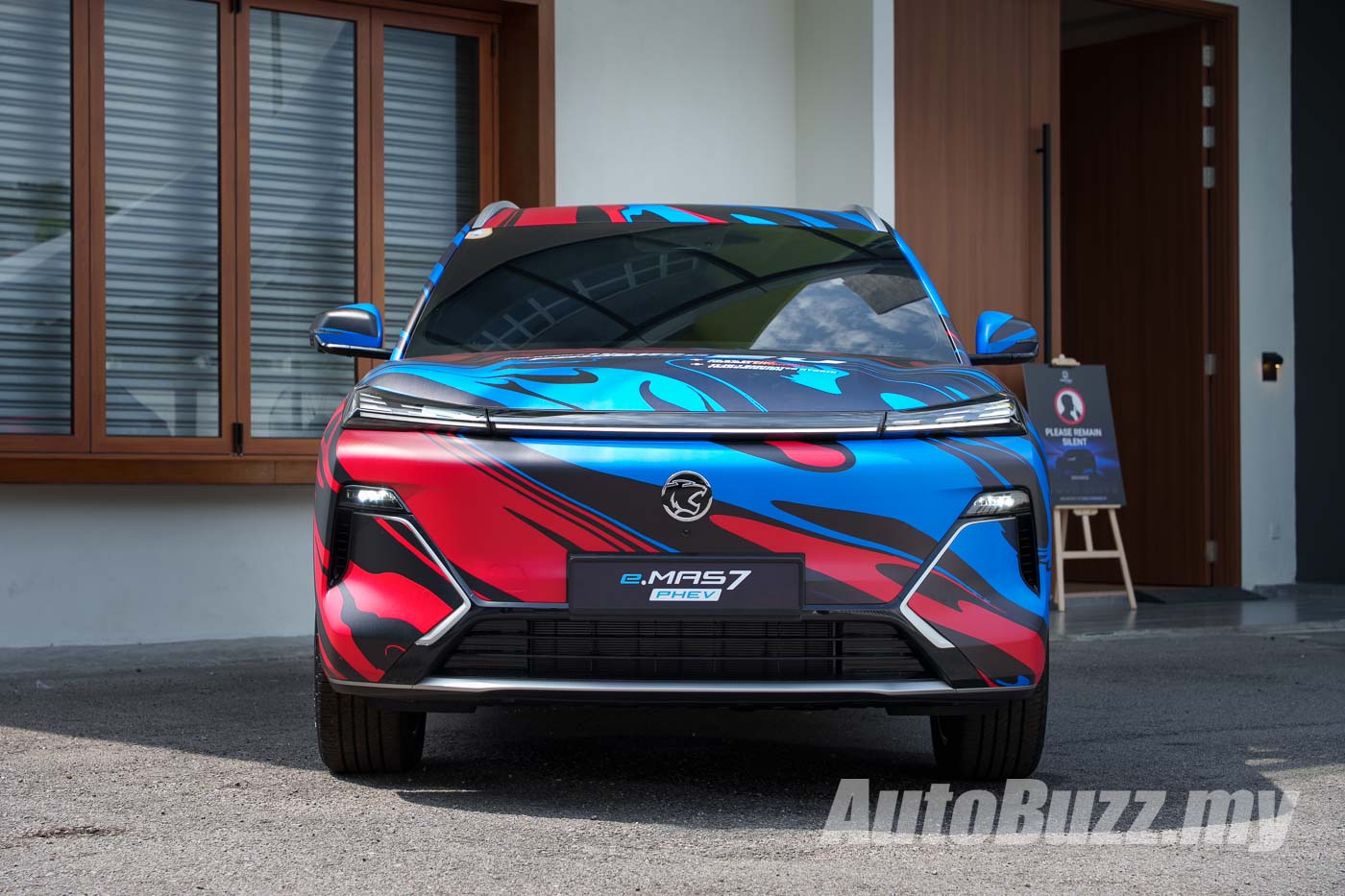
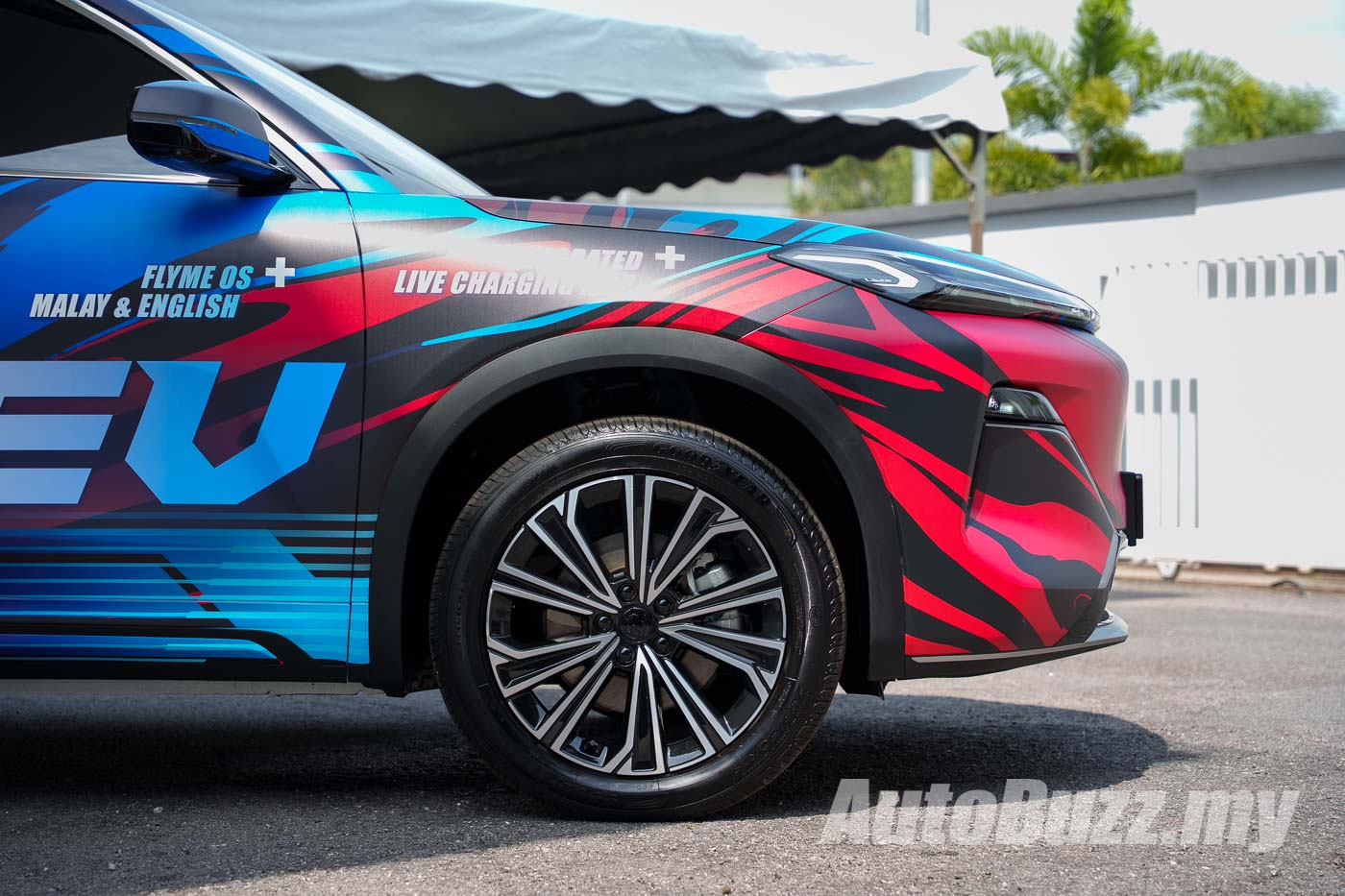
Although the preview units remain fully wrapped in camouflage, the exterior design appears identical to the version shown at last year’s Proton Tech Showcase, albeit wearing a different decal.
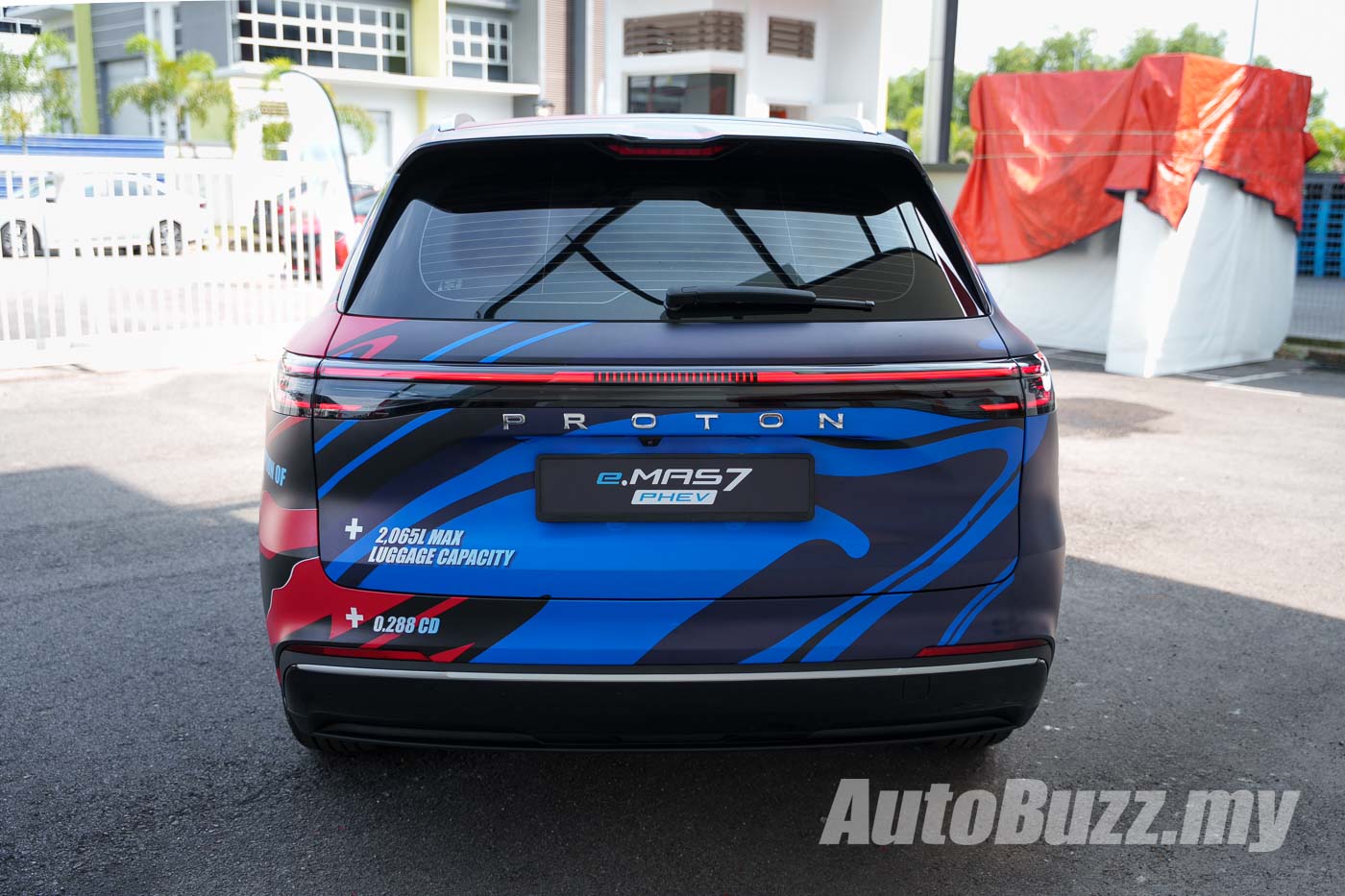
Visually, it maintains the same clean, modern proportions expected of the eMAS lineup, although it differentiates itself from the eMAS 7 with a model-specific split headlight design, a different tail light graphic, as well as unique bumpers and rear hatch – the latter integrating the number plate recess, whereas the EV’s number plate is mounted on the rear bumper.
Proton claims that the eMAS 7 PHEV boasts a drag coefficient rating of 0.28 Cd, translating to better range.
ALSO READ: Proton eMAS 7 finally adds Android Auto support via OTA update
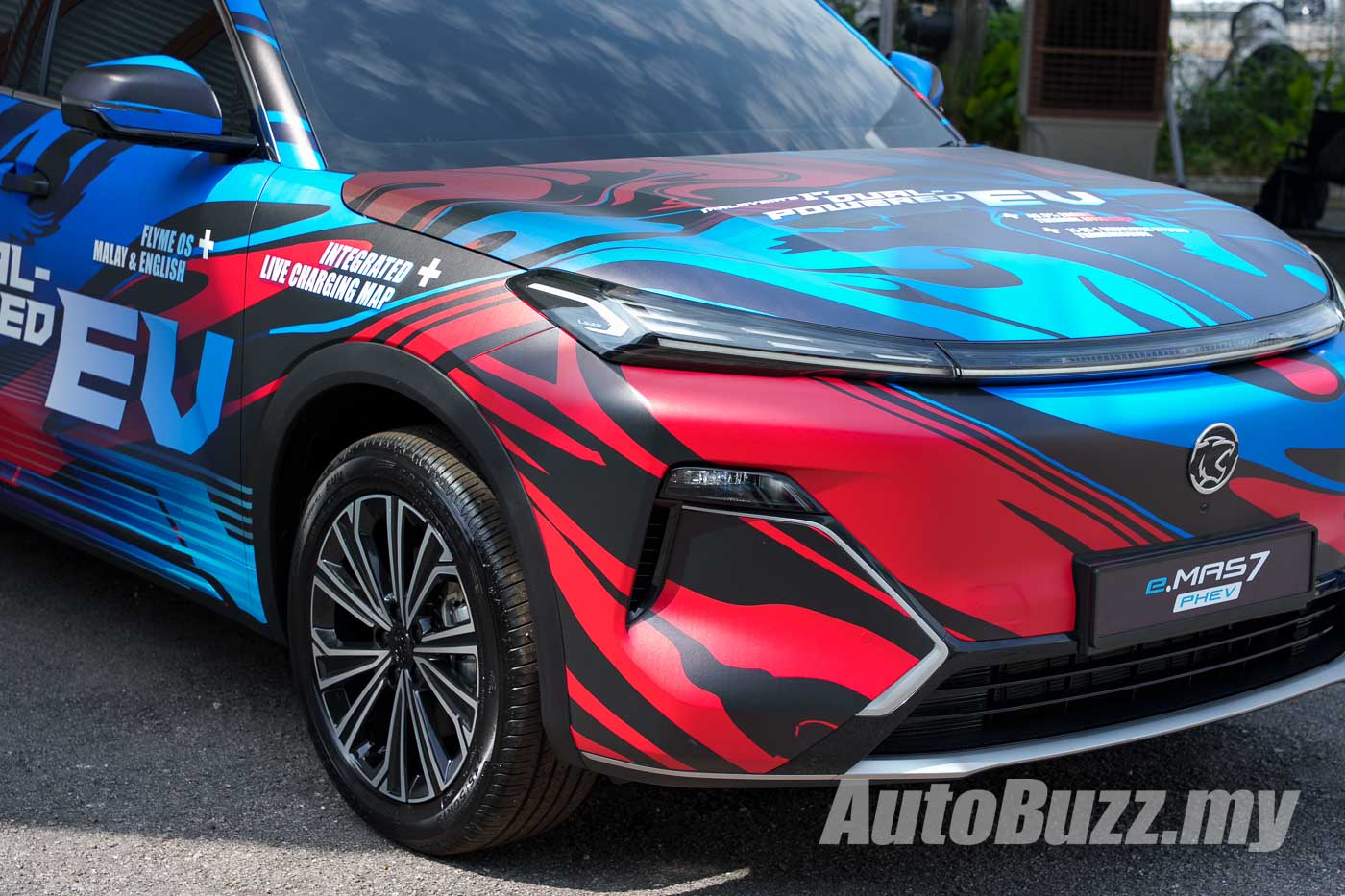
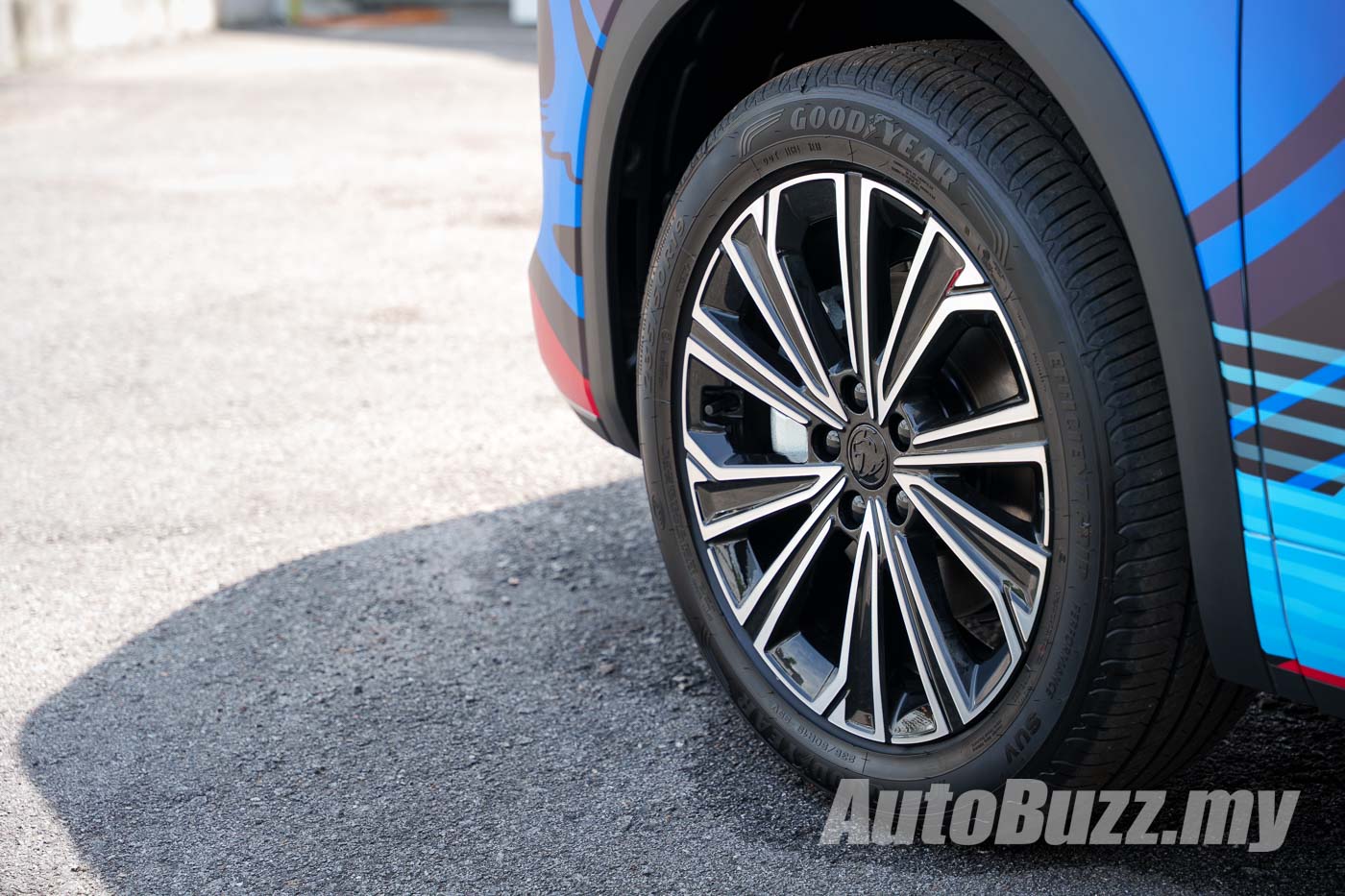
Equipment-wise, the Prime variant comes standard with LED headlights with daytime running lights, automatic headlights with follow-me-home function, LED turn indicators, roof rails, a 3D full-width LED rear light bar, 18-inch wheels, rain-sensing wipers, and power-adjustable heated door mirrors.
Stepping up to the Premium will net you a set of larger 19-inch wheels, a front full-width LED light bar, a powered tailgate, and auto-folding door mirrors, while the range-topping Premium Plus is distinguished by an additional panoramic sunroof with an integrated sunshade.
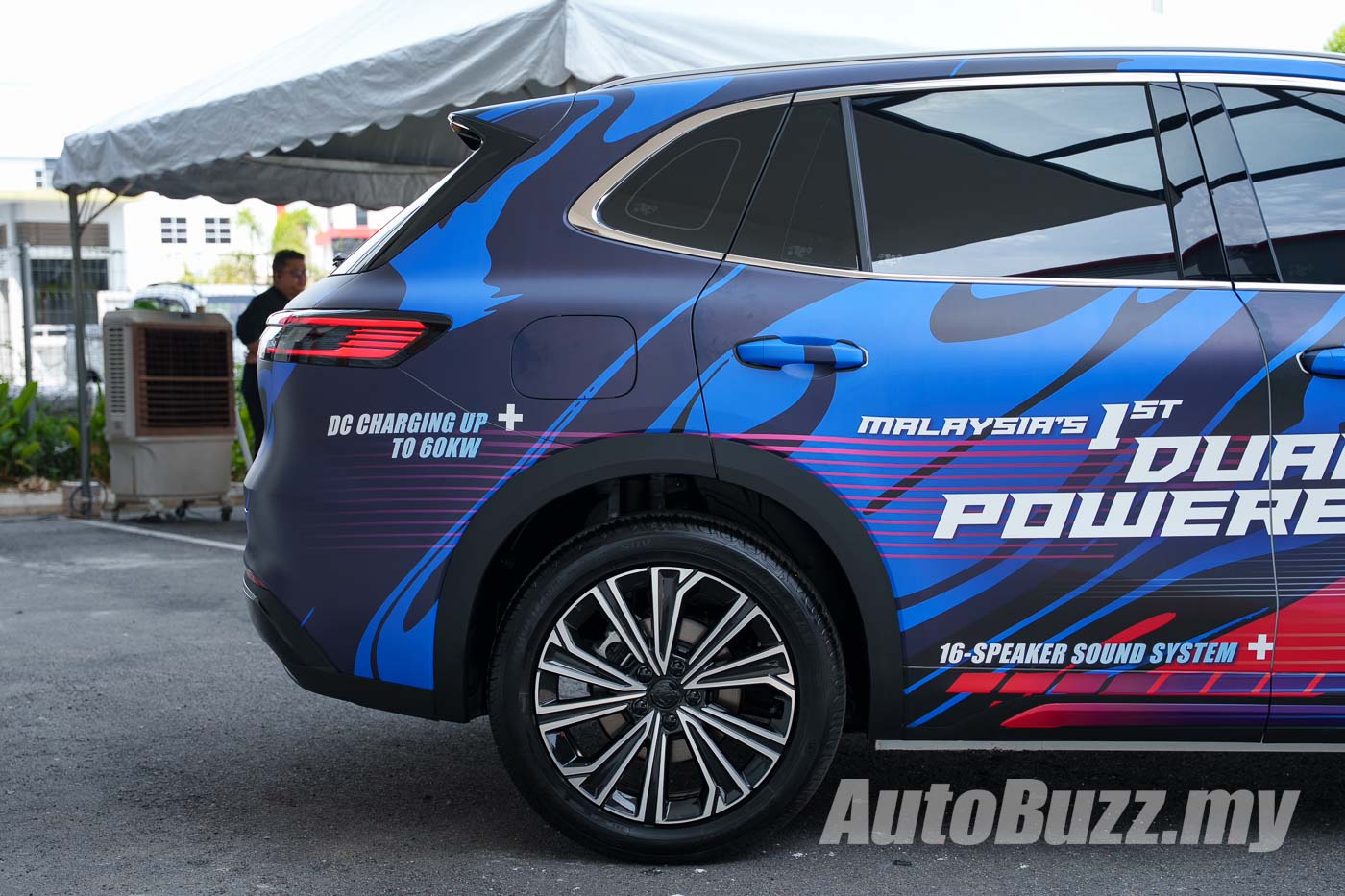
Proton has yet to fully reveal the interior design, but key cabin specifications have been confirmed. Inside, the eMAS 7 PHEV will feature a 10.2-inch digital instrument cluster paired with a 15.4-inch central infotainment display, mirroring the layout found in its EV sibling. The system runs on Flyme Auto OS, with support for English and Malay languages, wireless Android Auto and Apple CarPlay, and over-the-air software updates.
Standard interior equipment includes a six-speaker sound system, a multi-function leatherette steering wheel with tilt and telescopic adjustment, leatherette upholstery, and USB Type-A and Type-C charging ports.
The two higher-end variants add a substantial list of upgrades, including a 13.8-inch head-up display, a 16-speaker Flyme sound system, an auto-dimming rear-view mirror, and power-adjustable front seats with memory and ventilation. Additional comfort features for the Premium and Premium Plus also include a rear centre armrest with cupholders, a 256-colour ambient lighting system, a retractable tonneau cover, and most notably, a 360-degree surround view camera.
ALSO READ: Proton S70 ‘MC1’ update spied – 1.5L four-cylinder turbo engine, mild facelift, new Ruby Red colour
Safety is another key highlight. The Prime variant comes standard with seven airbags and a Level 2 ADAS suite, which includes features such as Adaptive Cruise Control, Automatic Emergency Braking, Lane Departure Warning and Prevention, Forward Collision Warning, Traffic Sign Recognition, and Leading Vehicle Departure Alert.
The Premium and Premium Plus variants receive an expanded safety suite, adding systems such as Emergency Lane Keep Assist, Rear Cross Traffic Alert and Braking, Blind Spot Detection, Lane Change Warning, Rear Collision Warning, and Door Open Warning.
While the Proton eMAS 7 PHEV remains in preview form for now, the amount of information revealed paints a clear picture of what’s to come. Final confirmation of its pricing, interior and, of course, its uncovered exterior will be revealed closer to its official debut, so stay tuned for further updates.
RELATED: Proton eMAS 7 PHEV previewed in Malaysia – up to 1,065 km range!
GALLERY