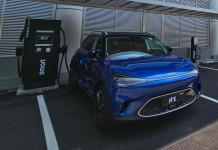
An alleged policy document from the Ministry of Investment, Trade, and Industry (MITI) has been circulating on LinkedIn, revealing new requirements for fully-imported (CBU) electric vehicles (EVs).
If the document is indeed genuine, all new CBU EVs from brands yet to enter the Malaysian market must be priced above RM250,000, with a minimum powertrain output of 272 hp (200 kW), to be eligible for Franchise APs starting 1st January 2026.
This new directive specifically targets new market entrants and does not affect existing EV brands or models already on sale in Malaysia. A similar directive applies to internal combustion engine (ICE) vehicles imported via Franchise APs; starting January 2026, new passenger car brands seeking entry must ensure their CBU models feature an engine capacity exceeding 1.8-litre and priced above RM250,000.

The directive arrives just as the tax-free status for CBU electric vehicles in Malaysia comes to an end. From 1st January 2026, CBU EV models will no longer enjoy exemptions on import and excise duties – a shift expected to result in a significant increase in retail prices for CBUs EVs, although no new tax structure for these vehicles have been announced yet.
That said, CBU EV stock that have entered Malaysia before December 28 are still eligible for the tax exemptions, and can be sold at their lower prices.

In preparation of the change, many brands have now committed to local assembly (CKD) of their EVs here in Malaysia. These include EV sales leader BYD, whose new EV assembly plant in Tanjung Malim is currently under construction, Volvo, Mercedes-Benz, Chery, and TQ Wuling.
XPeng and MG Motor have enlisted the help of EP Manufacturing Berhad, with assembly operations expected to begin sometime next year, while national marques Proton and Perodua both now have their own EV assembly facilities here in Malaysia too.

In tandem with the removal of duty exemptions, the multi-year road tax waiver for EVs also officially expires today, 31st December 2025. From January 2026, it will be replaced by a new, motor output-based road tax structure. Calculated based on motor output in kilowatts (kW), the new rates are more affordable than before, starting as low as RM20 per year.
In related news, the Ministry of Finance has announced that the implementation of the P.U.(A) 402/2019 Excise Tax Regulation, commonly referred to as the Open Market Value (OMV) excise tax revision, has been deferred to 30th June 2026. As a result, prices for locally assembled (CKD) vehicles are expected to remain for the first half of the year.
RELATED: CKD car prices to remain until June 2026 as OMV excise tax revision gets postponed again