The Buzzword is our new column on the latest pulse and insights of the Malaysian automotive industry, where we aim to educate and discourse on a wide range of automotive topics, all without interference from advertisers and sponsors.

The opinions expressed in The Buzzword belong solely to the author; they are not sponsored, nor are they for sale.
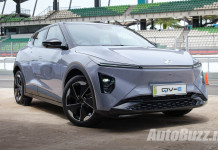
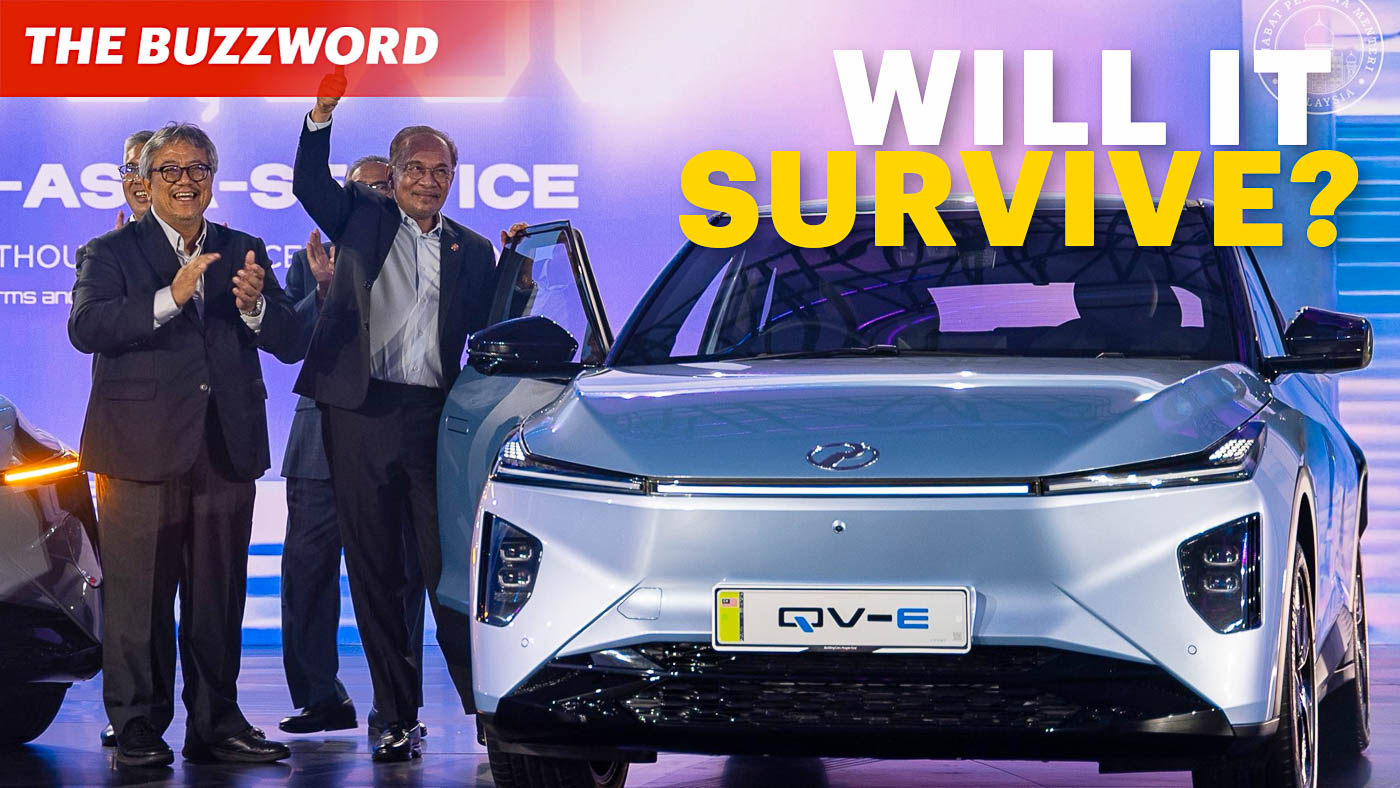
When Perodua was tasked by the government to produce its first electric vehicle (EV) and ‘lead the local manufacturers in developing an EV ecosystem’ under the New Industrial Master Plan (unveiled in September 2023), many within the industry were sceptical as Perodua had no Daihatsu/Toyota platform to leverage on, nor a partner to share the development costs.
The 28 months which the QV-E took to rise from the drawing board to the showroom were commendably rapid, and the targeted MSRP of RM80,000 seemed attractive enough for what is a stylish B-sized crossover. But over that same period, a slew of affordable EV models entered the market priced around the RM100,000 mark, and though the government mandated floor price of RM100K were adhered to, many of these cars were sold below their MSRP due to aggressive discounting.

Then there’s the QV-E’s battery leasing bombshell, adding almost RM300 to the monthly payments (over nine years), purportedly to address the fears of battery degradation and resale value, but without the option to purchase the battery outright. What?
Battery leasing isn’t new; Renault launched the Zoe electric hatchback back in 2012 with battery leasing (this eventually ended in 2019 when EV residues in UK remained stable), but it also subsequently gave buyers the choice to purchase the battery along with the vehicle.
ALSO READ: EV prices might not be going up after all

So why doesn’t Perodua offer the option to purchase the QV-E with battery? The simple deduction is that the high-voltage battery pack likely costs significantly more than what many have postulated, more than the maths of multiplying 108 instalments of RM300, or around RM32,000.
The battery leasing scheme buys time for Perodua to ramp up production and pare down costs, it also works on the assumption that the cost of batteries from supplier CATL of China would lower over time, thus allowing Perodua to then sell the QV-E (with battery pack) at a more competitive price down the road.

This may sound plausible on paper, but to illustrate how challenging it is for carmakers to competitively price an EV, let’s look at some of the all-electric models Japanese brands introduced over the tax holiday period in Malaysia:
June 2022 – Mazda MX-30 at RM199,000 (Japan CBU)
March 2023 – Nissan Leaf (facelift) at RM169,000 (Japan CBU)
May 2025 – Honda e:N1 at RM150,000 (China CBU)
When the likes of Honda and Nissan struggle to compete in the EV space against Chinese carmakers, the reality is that it’ll be many times harder for Perodua – a low-volume manufacturer that mainly serves the domestic market. As locally assembled EVs aren’t subject to any floor price, the competition can only get more intense as far as affordable EVs go. And we haven’t even addressed the battery leasing solution nobody asked for. Good luck, Perodua.
READ MORE: Perodua QV-E launched in Malaysia as nation’s first homegrown EV – RM80k with battery leasing