Like so many brands, Bentley is also rethinking their electrification strategy. While its first electric vehicle (EV) is still due to make its debut sometime this year, the rest of its planned models has essentially been put on ice.
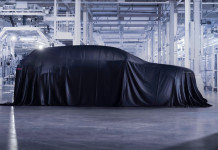
The British luxury carmaker previously outlined an ambitious plan with five EVs set to be unveiled by 2035. But now, only the first one – an SUV rumoured to be called the Barnato – is still on the cards, while the rest of the programme have essentially been delayed and replaced by plug-in hybrid or ICE models until 2035, as part of the company’s revised Beyond100+ strategy it revealed late last year.

The news comes as Bentley reports its seventh straight year of profitability – albeit with a stark 42% drop in that figure year-on-year, and a 5% reduction in deliveries. The company will also be initiating layoffs on up to 10% of its non-factory workforce.
“We have to rethink and recalculate our complete product line, and all future offers,” Bentley CEO Frank-Steffen Walliser told media at a recent roundtable. “If you compare our planning with what it was two years ago, it looks completely different.”

Nevertheless, Bentley is still adamant that its first EV will be just that – an EV only, with no plans to transplant an engine into the bonnet. Walliser told the media, “I strongly believe we have a very interesting offer, and we have no intention of adding an ICE engine or plug-in hybrid drivetrain. First, it’s technically not feasible, and second, it’s not part of our strategy.”
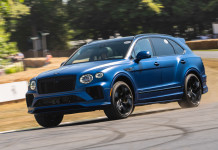
“Part of the Bentley strategy is not to replace a car,” he added, stating that the purpose of the new EV is to target new customers. “So Bentayga will continue, so we don’t have to, let me call it, force people to change from a combustion engine or plug-in hybrid car to an electric car.”
RELATED: Bentley’s first EV will be an SUV, to launch in 2026 with first deliveries coming in 2027

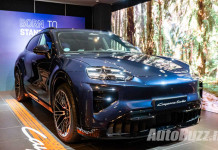
The Bentley SUV EV due this year will be built on Volkswagen Group’s Premium Platform Electric (PPE) platform, which also underpins some other EVs within the VW Group including the Porsche Cayenne Electric and the Audi Q6 e-tron. While no technical specifications have been revealed thus far, the other models could give us some hints about what to expect.
On the Cayenne, the range-topping Turbo variant makes upwards of 1,156 hp from its dual motors with launch control activated, translating to a 0-100 km/h sprint in just 2.5 seconds. A 113 kWh battery pack offers up to 623 km (WLTP) of range on the Turbo, and 642 km on the single motor base variant.
ALSO READ: Bentley’s latest winged emblem is the “biggest change” in its 106-year history