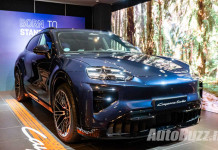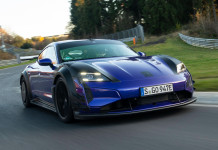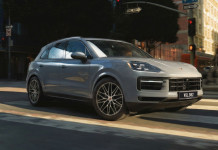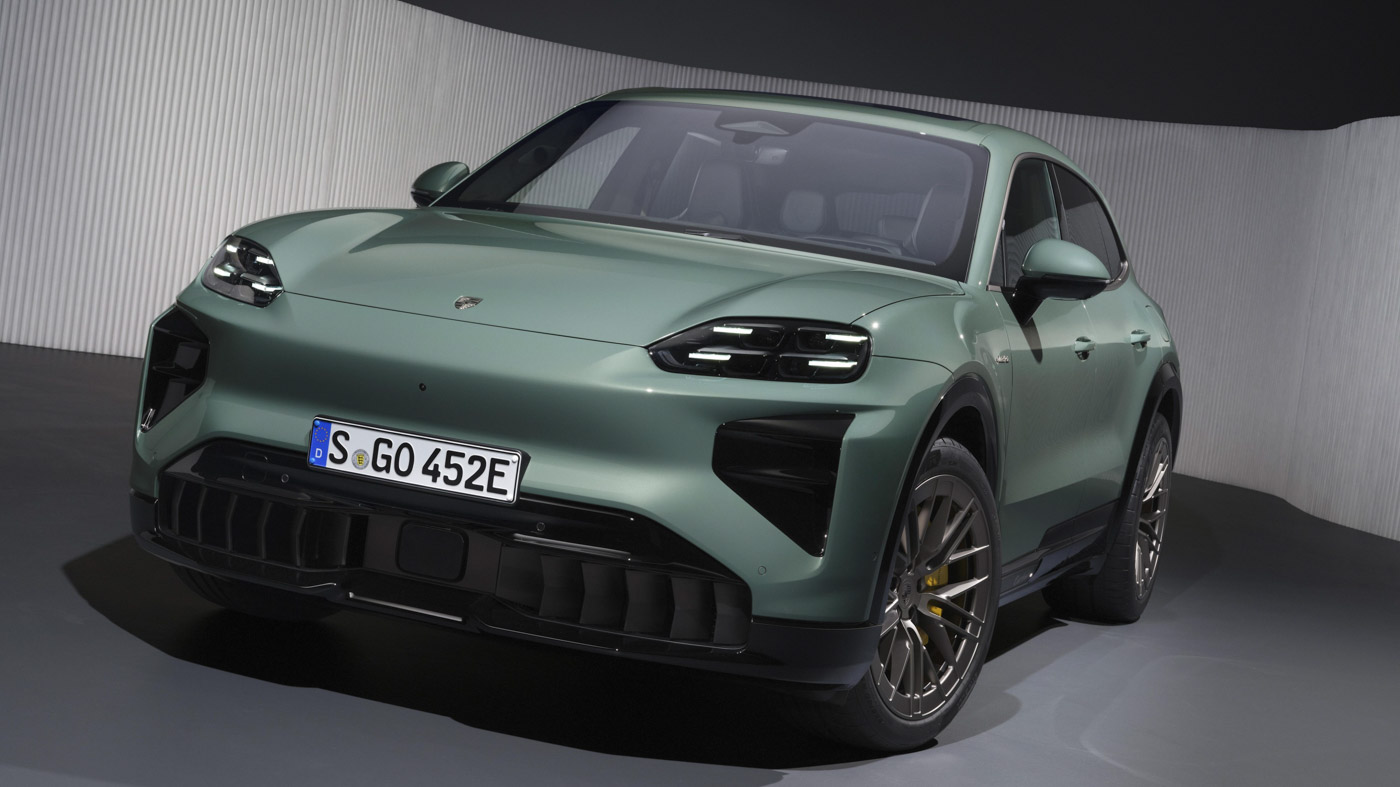
After months of teasing, Porsche has finally unveiled the all-new fourth-generation Porsche Cayenne, now dubbed the Cayenne Electric. As its name suggests, it’ll be a fully electric model from the outset, marking its third EV model to date.
Like the Macan Electric, the all-new Porsche Cayenne Electric will also be sold alongside the existing internal combustion engine-powered Cayenne models, rather than replacing the existing lineup.
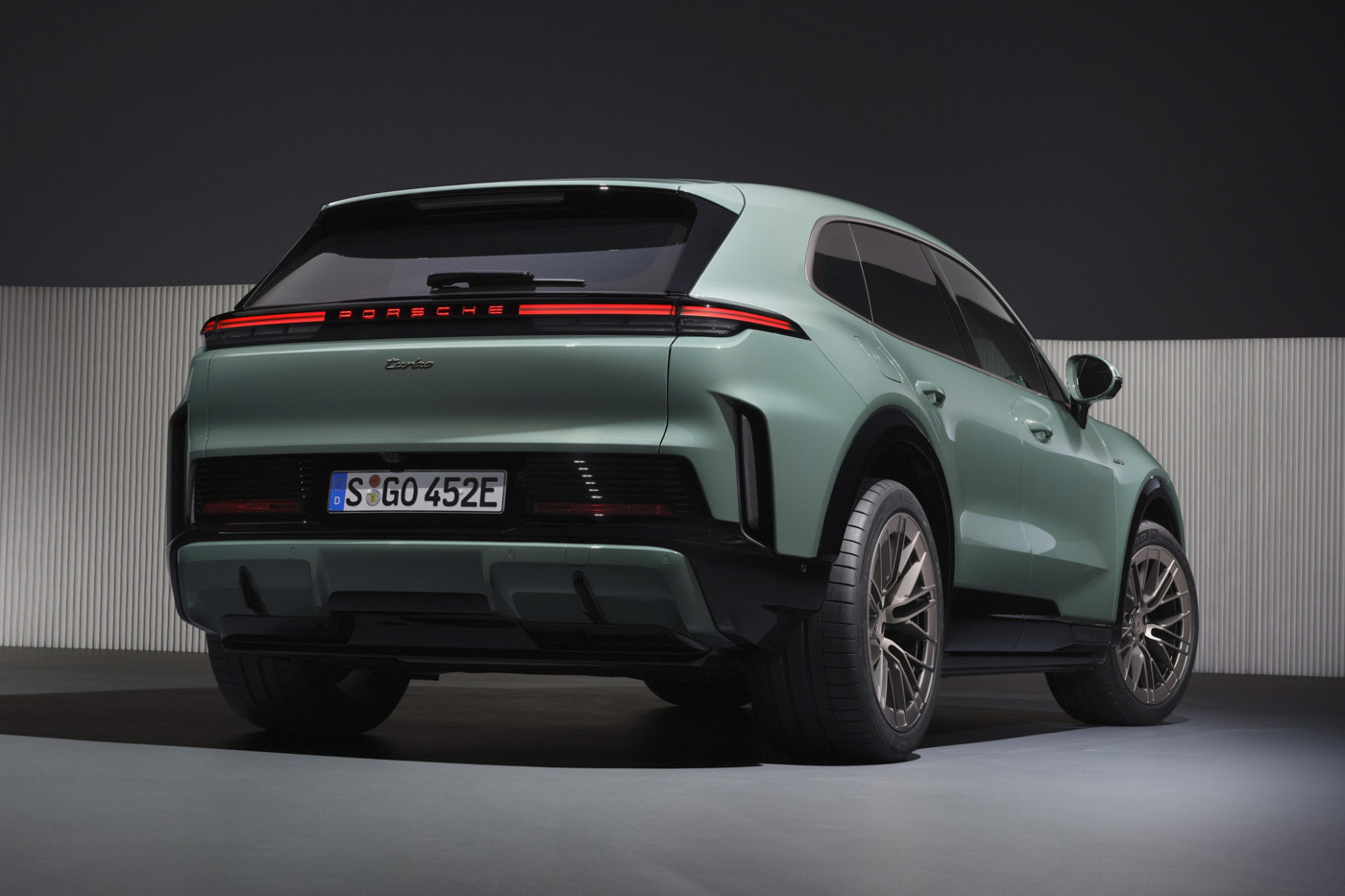
As with all car launches, Stuttgart too made grandiose marketing statements for its latest model, stating that the all-new Cayenne Electric – in the “Turbo” guise – is the most powerful production car in its history.
That’s courtesy of the headlining 1,156 hp (850 kW) and up to 1,500 Nm of torque outputs with launch control activated – or 857 hp (630 kW) in normal operation modes. The former enables 0-100 km/h in 2.5 seconds, 0-200 km/h in 7.4 seconds, and a top speed of 260 km/h.
Even the base Porsche Cayenne Electric is not too shabby either, offering 408 hp (300 kW) in normal operation, and up to 442 hp (325 kW) and 835 Nm with launch control, translating to a 0-100 km/h in 4.8 seconds and a top speed of 230 km/h.
According to Stuttgart, this bonkers performance is possible thanks to a newly developed powertrain that features direct oil cooling in the electric motor on the rear axle to ensure high continuous output and efficiency.
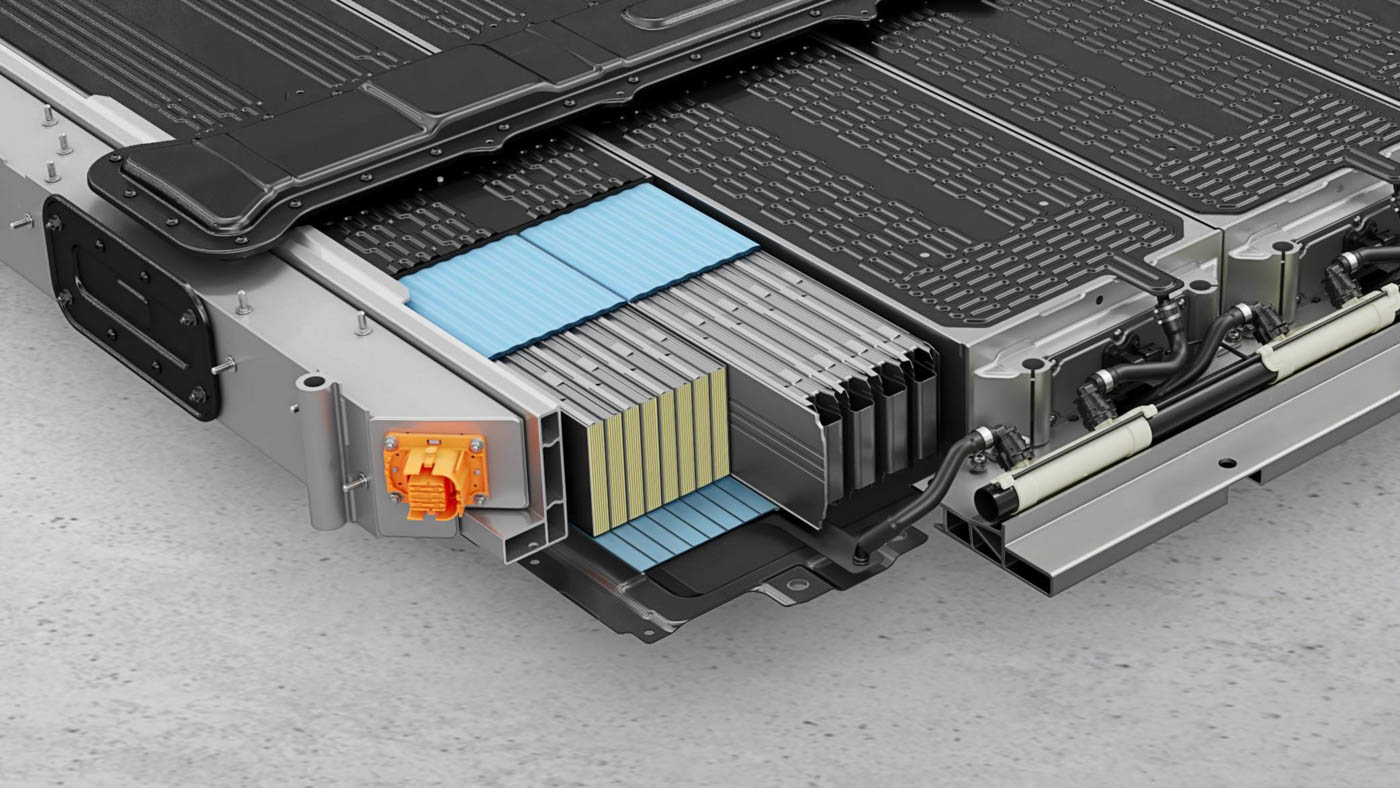
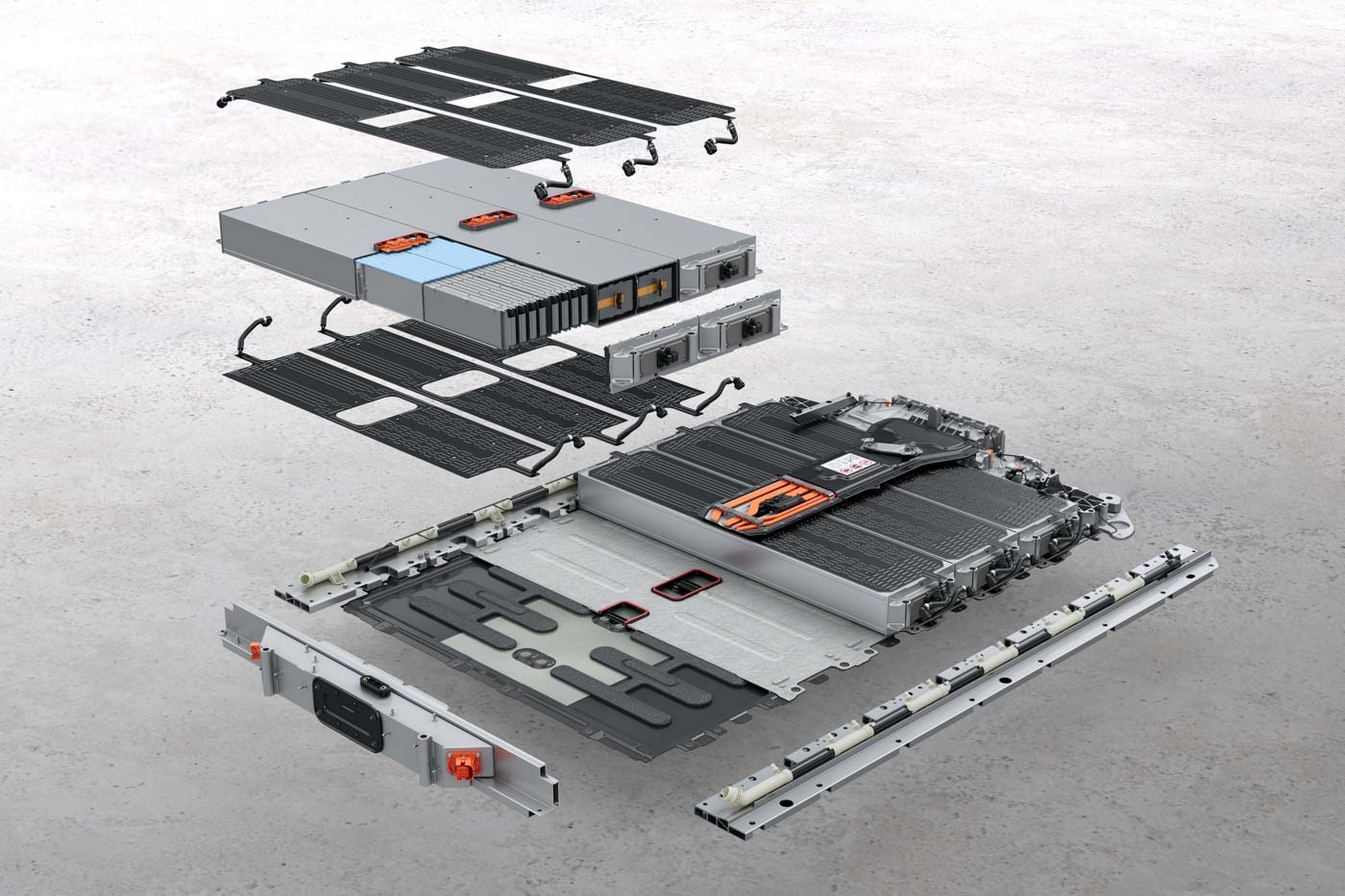
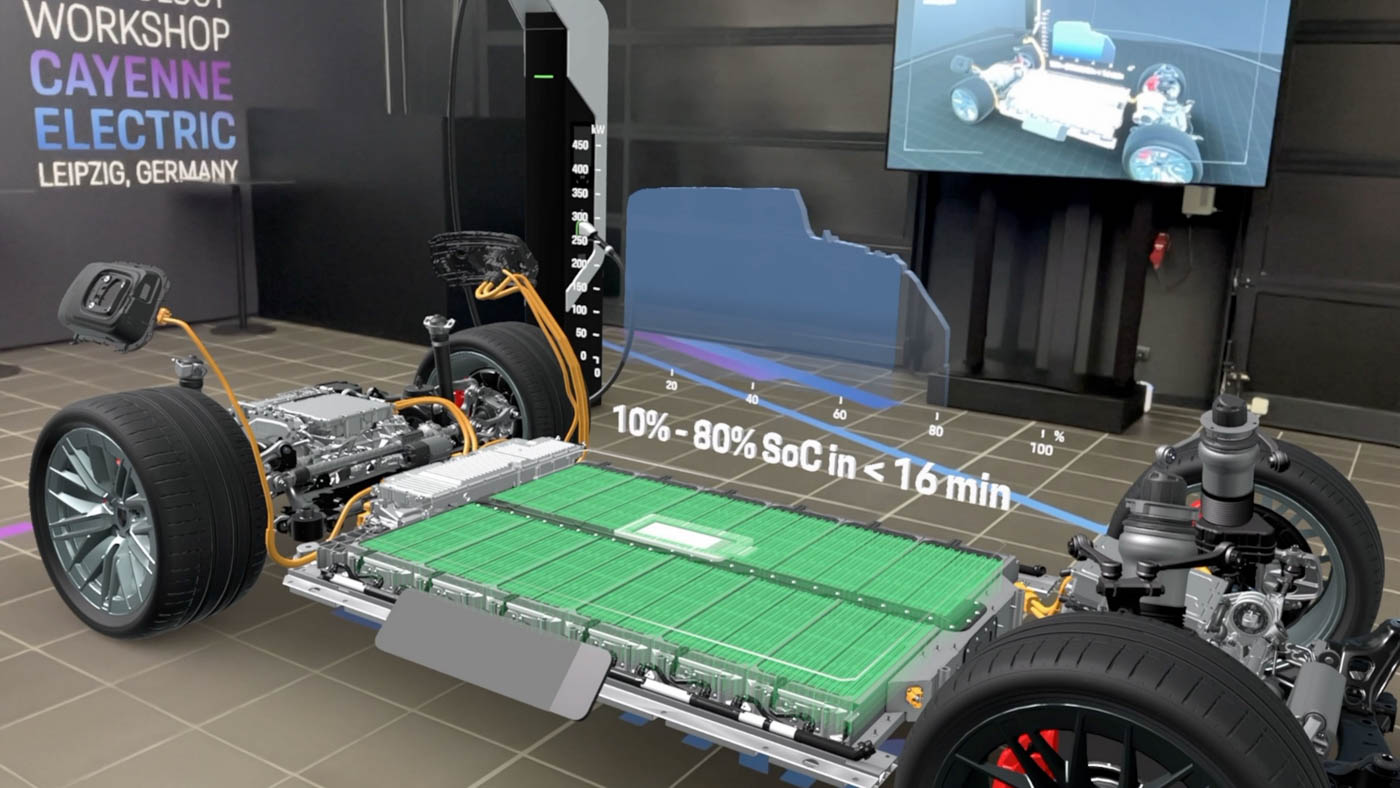
Juicing the powertrain of the Porsche Cayenne Electric is a newly developed 113 kWh battery pack, which enables a WLTP range of 642 km for the Cayenne Electric and up to 623 km for the Turbo variant.
Featuring an 800-volt architecture, the Cayenne Electric supports DC charging at up to 400 kW. This enables a 10–80% recharge in under 16 minutes. Porsche claims that 325 km of range can be regained in just 10 minutes at a suitable charger for the base model, and 315 km for the Turbo.
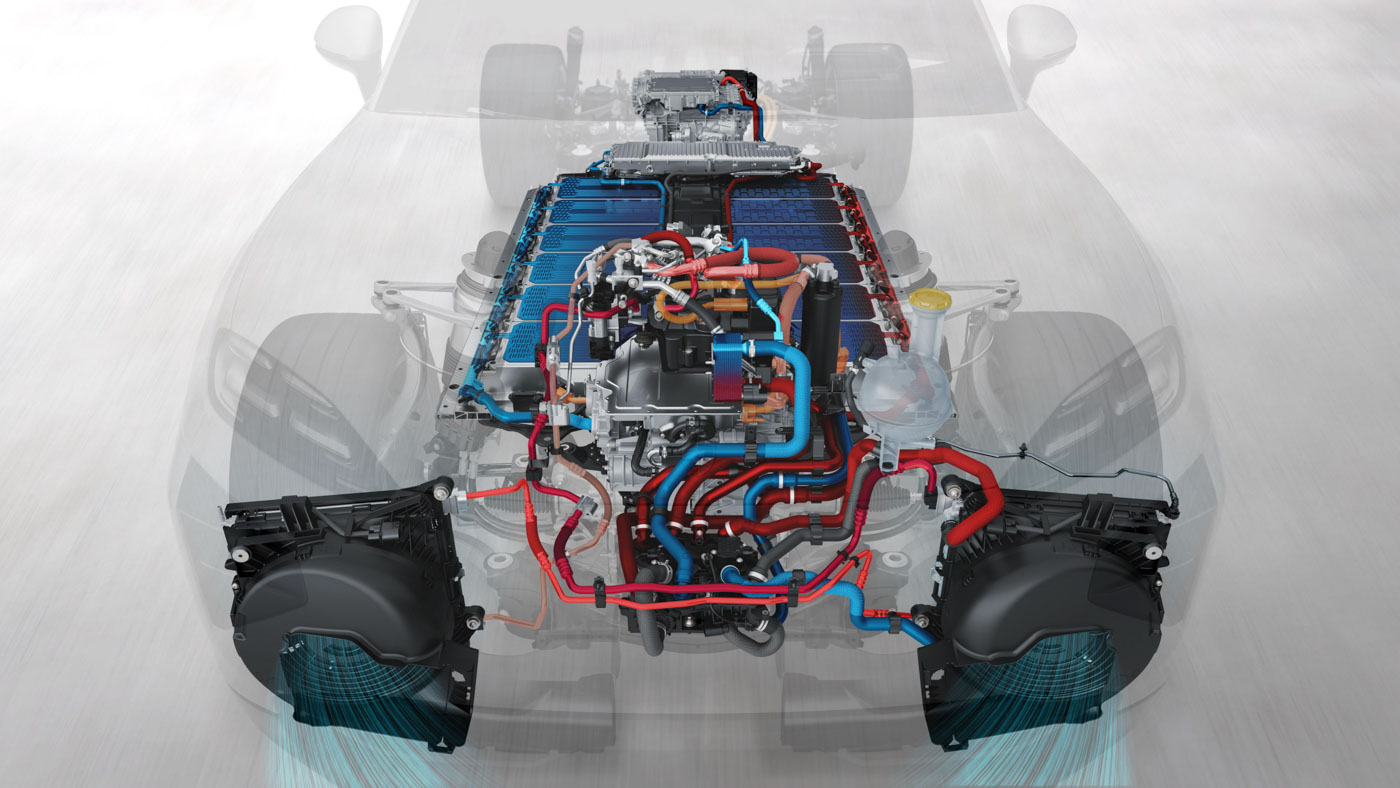
Crucially, keeping everything cool during charging and operation is a powerful thermal management system. This system, which we talked about previously, is reportedly as effective as 100 large household fridges—a necessary measure to handle the high continuous output and rapid charging speeds.
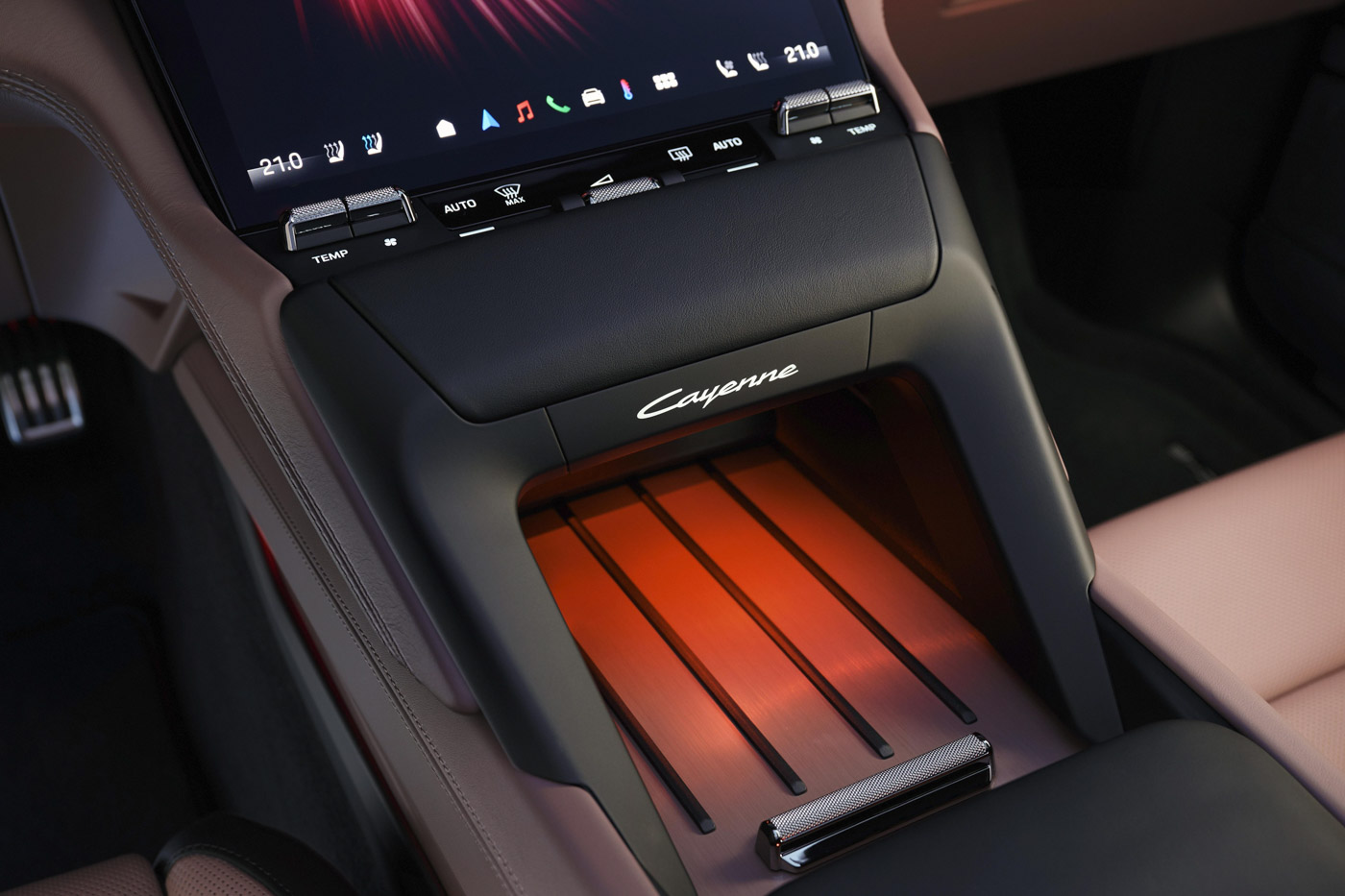
There’s even an optional wireless charging system, which enables the SUV to charge wirelessly at 11 kW with up to 90% charging efficiency.
For a taste of motorsport in your Cayenne Electric, Stuttgart states the SUV is capable of 600 kW of recuperative power, matching the level of its Formula E race cars. Porsche claims that 97% of every-day braking is handled purely by the electric motors alone.
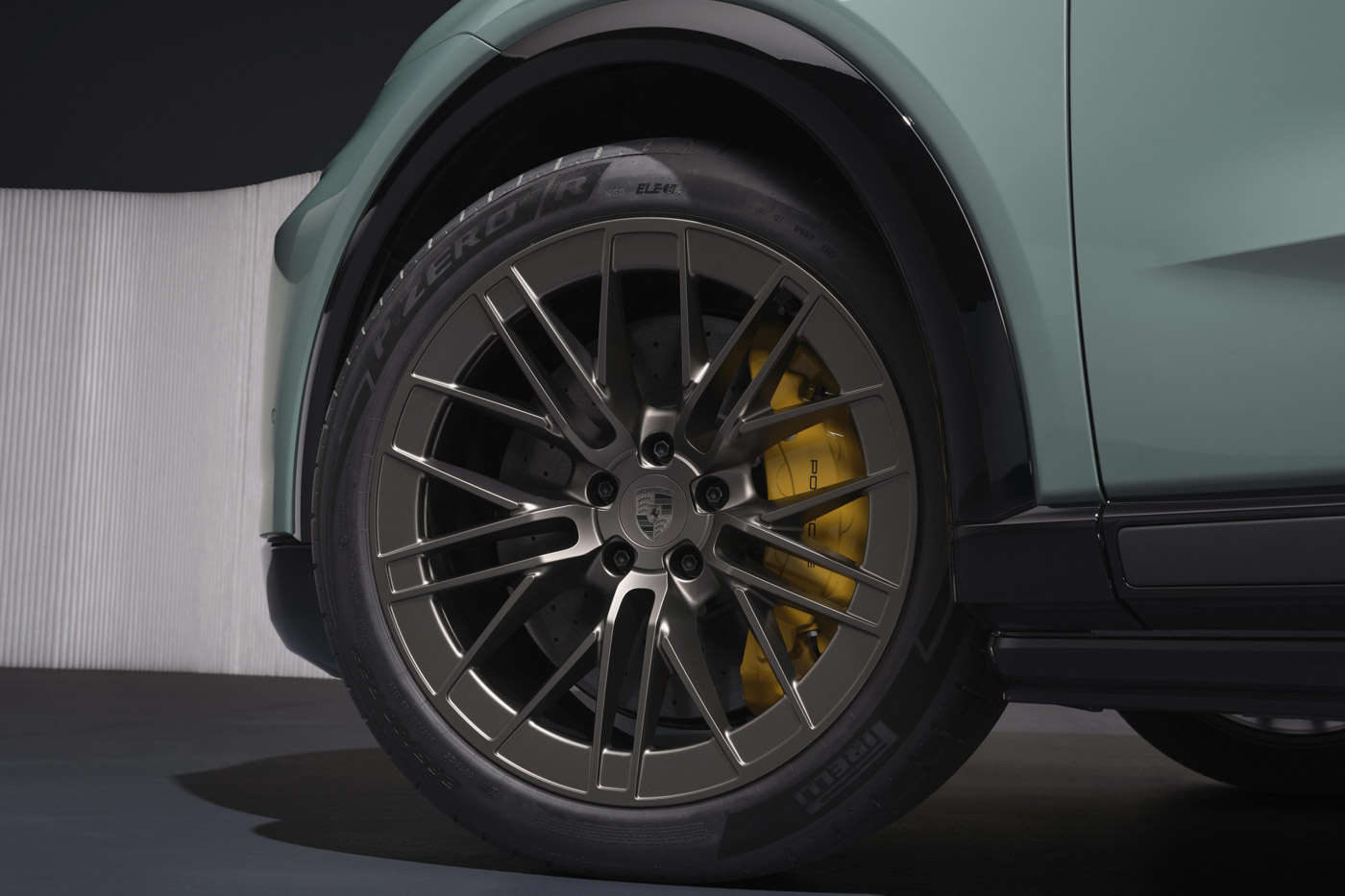
Since the mechanical brakes rarely need to intervene, it is amusing to see the Porsche Ceramic Composite Brake (PCCB) still being offered as an option on the Cayenne Turbo Electric… but we digress.
RELATED: EV charging without cables? Porsche shows how the upcoming electric Cayenne does it
Adaptive air suspension with Porsche Active Suspension Management (PASM) is standard on both Cayenne Electric variants: the Cayenne Electric and the Cayenne Turbo Electric. The Turbo Electric also comes equipped with the Porsche Torque Vectoring Plus (PTV Plus) limited-slip rear differential.
Optional equipment includes rear-axle steering, which enables the rear wheels to turn up to five degrees. Additionally, the Porsche Active Ride system is available for the Cayenne Turbo Electric for the first time, which enhances the stability, dynamics, and control of the SUV.

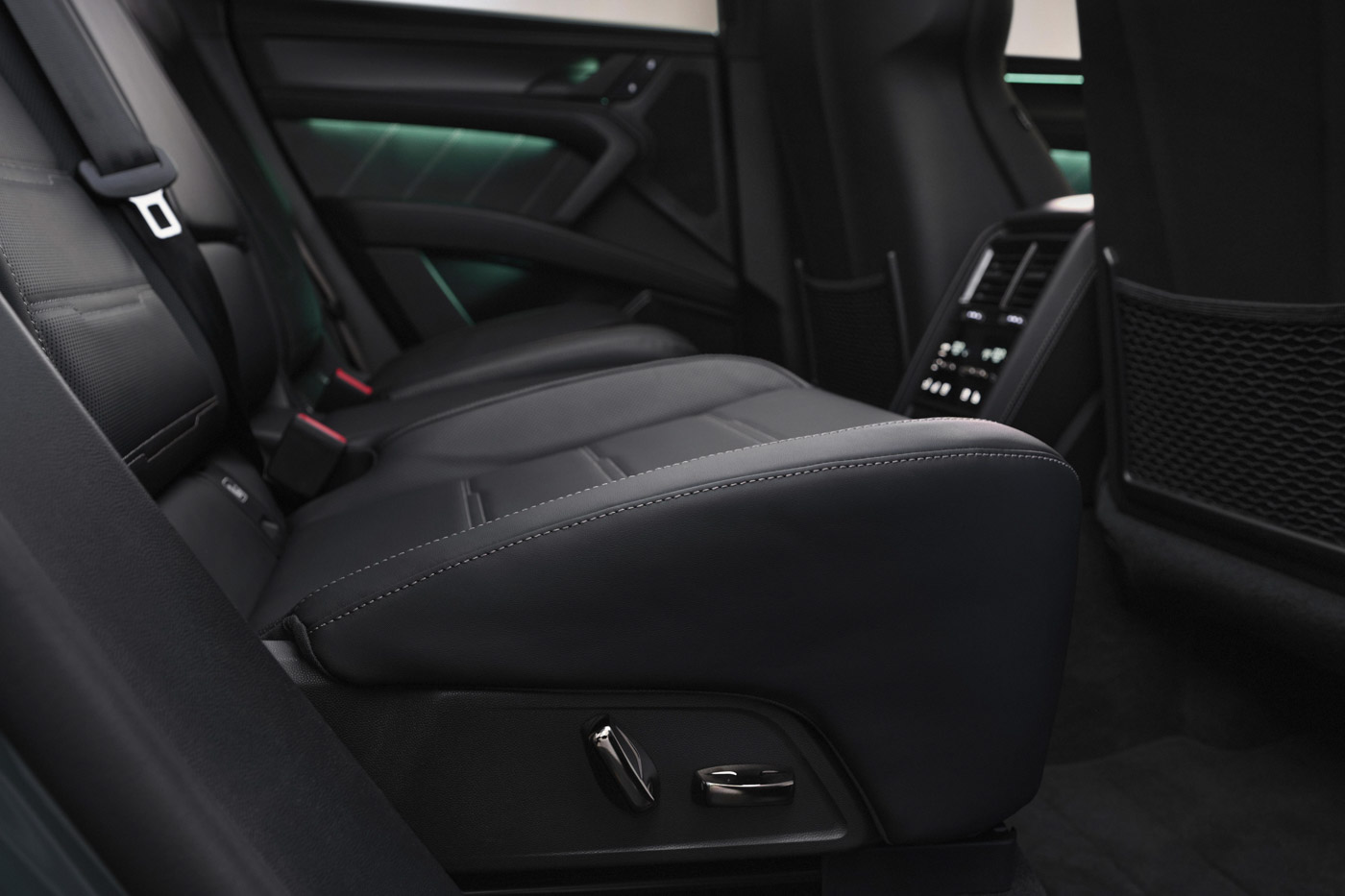
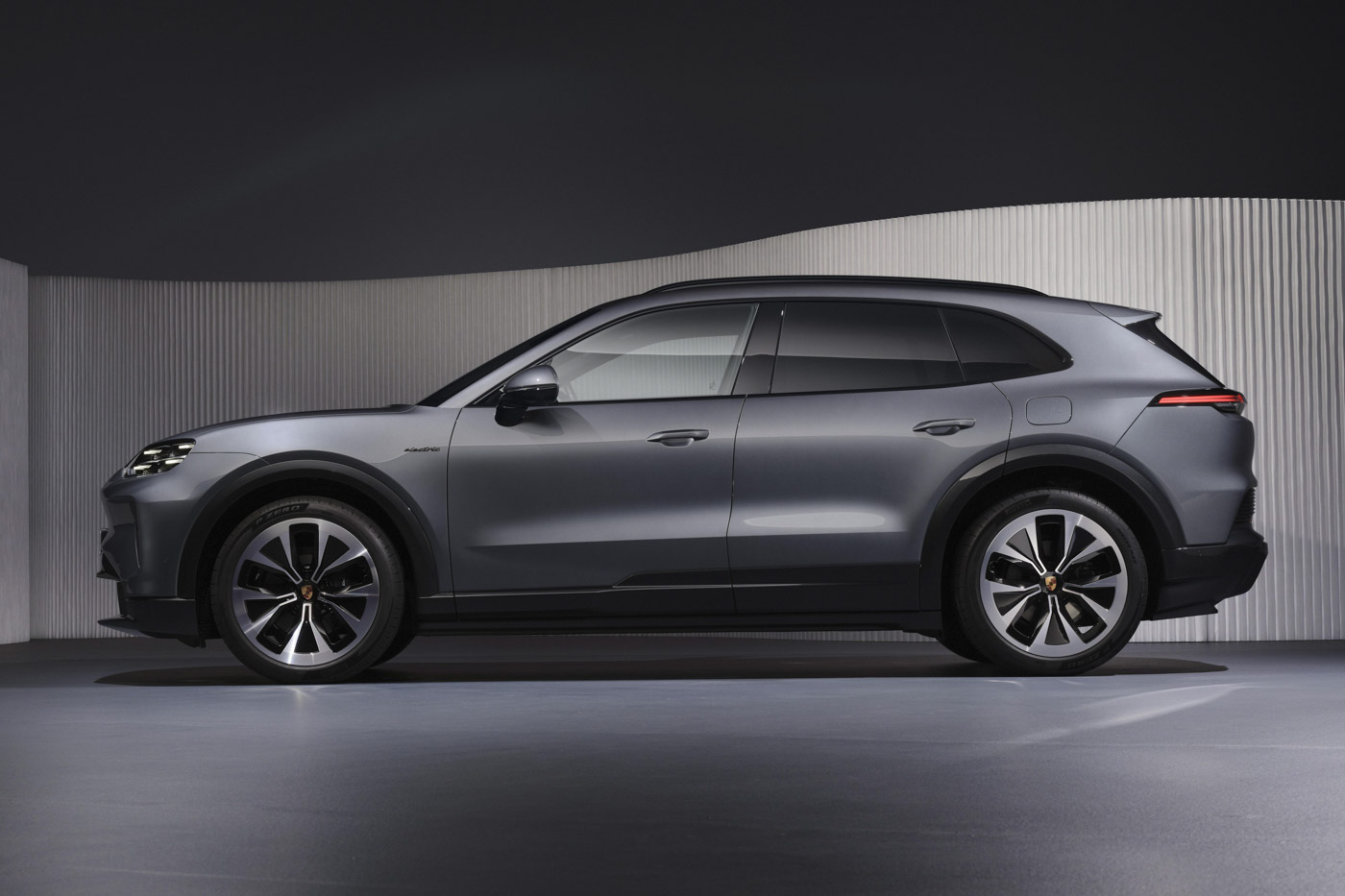
And all that, is in a big, brand-new SUV bodywork that Porsche claims is “more versatile than ever”. The new Cayenne Electric measures 4,985 mm long, 1,980 mm wide and 1,674 mm high, with a wheelbase of 3,023 mm. This makes it 55 mm longer than its combustion-engineered counterpart, which enables an increase of almost 13 cm in legroom for rear passengers. Bootspace includes 781 litres of rear bootspace, expandable to 1,588 litres, alongside a frunk with 90 litres of capacity.
And as always, the Cayenne Electric is designed, unsurprisingly, to look exactly like a Cayenne. This commitment to visual consistency is, perhaps, what makes the subsequent claim so German: Porsche says its new Cayenne Electric is both “unmistakably Porsche and unmistakably Cayenne.”
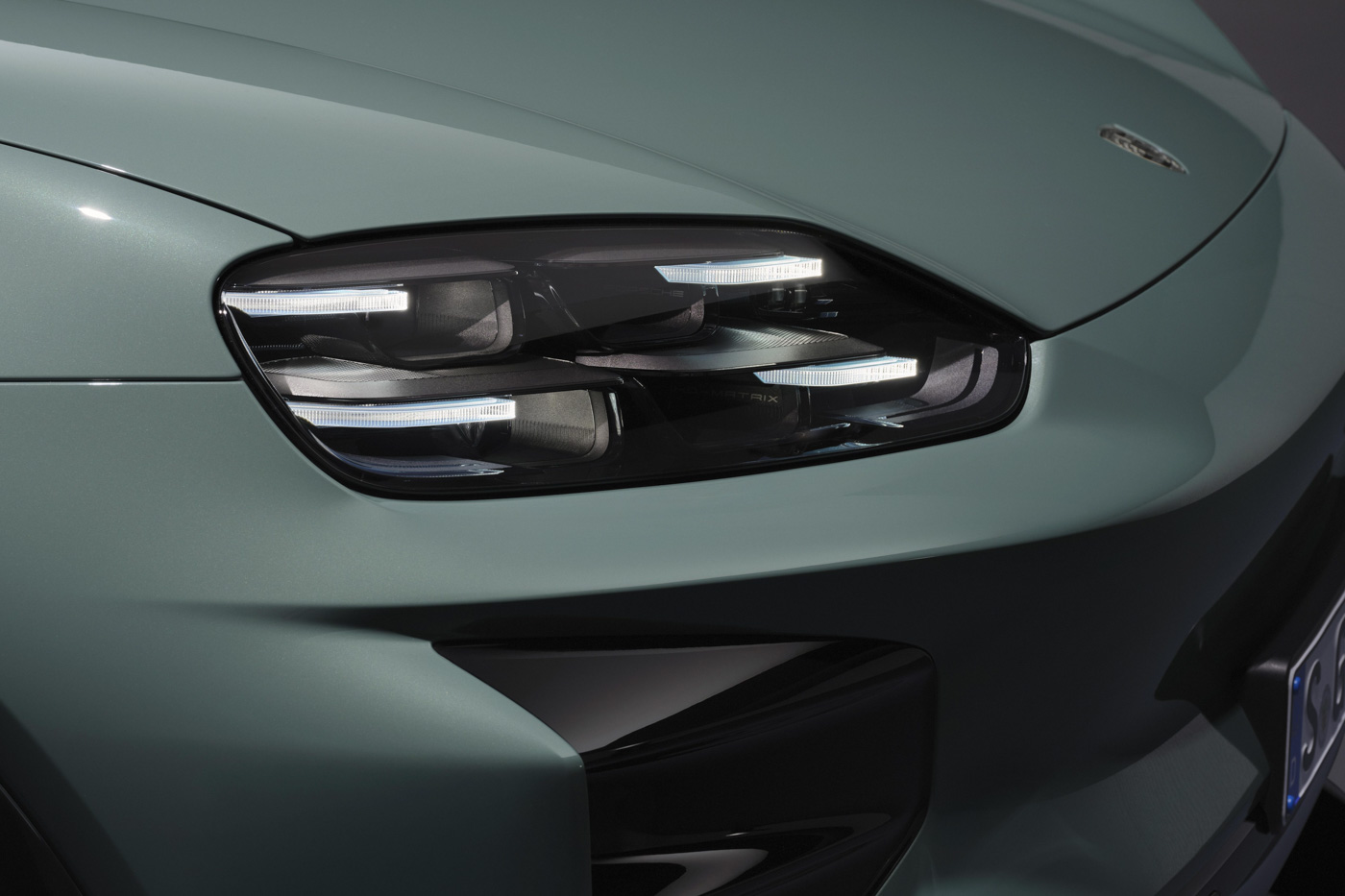
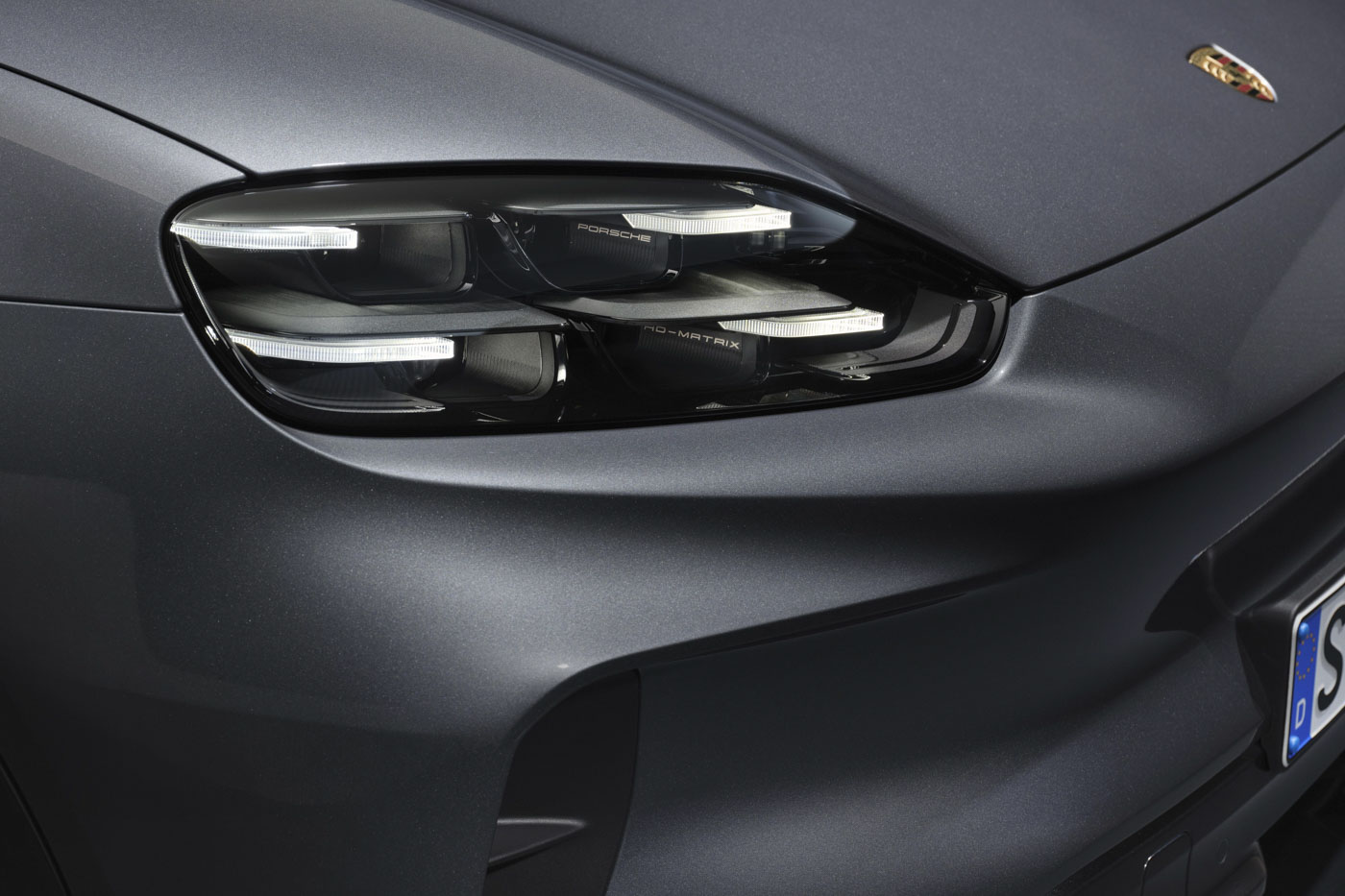
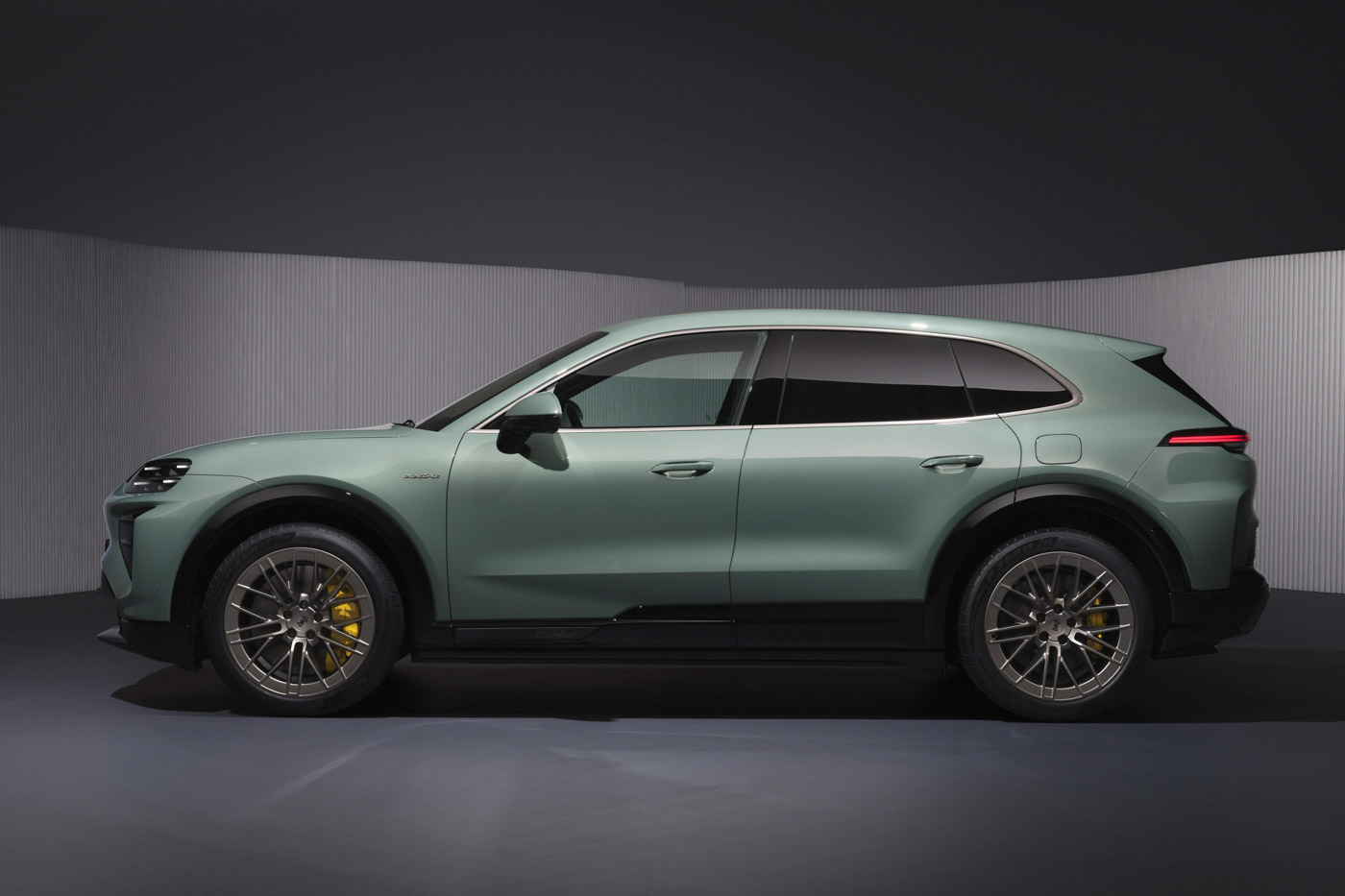
Nonetheless, the Cayenne Electric does still feature some of the marque’s more modern design touches first debuted on the Macan, featuring the low bonnet and slim Matrix LED headlights. These elements, along with the iconic, gently sloping roofline, are standard Porsche design language. The SUV is equipped with frameless doors that feature a striking crease on the panels.
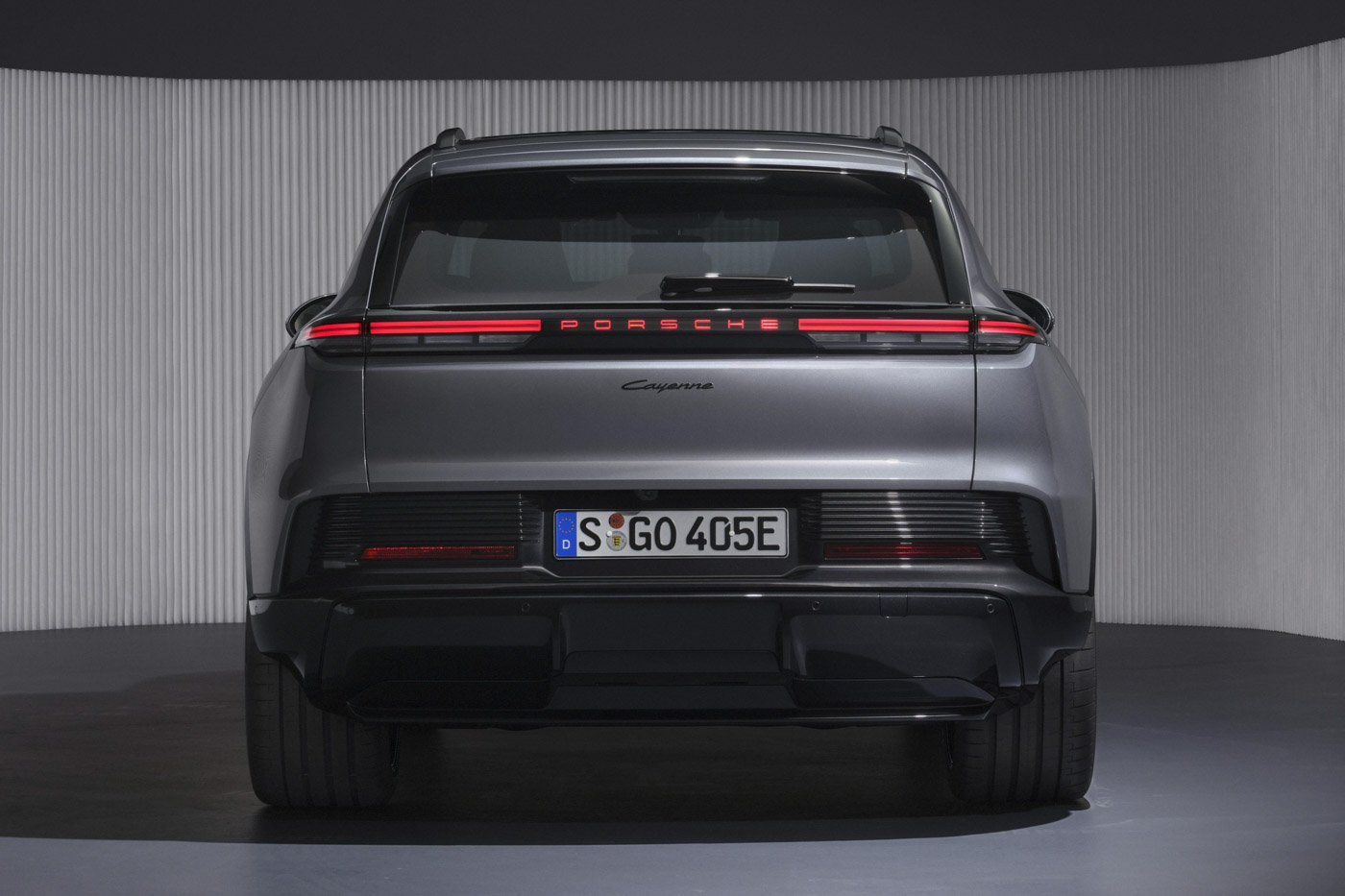
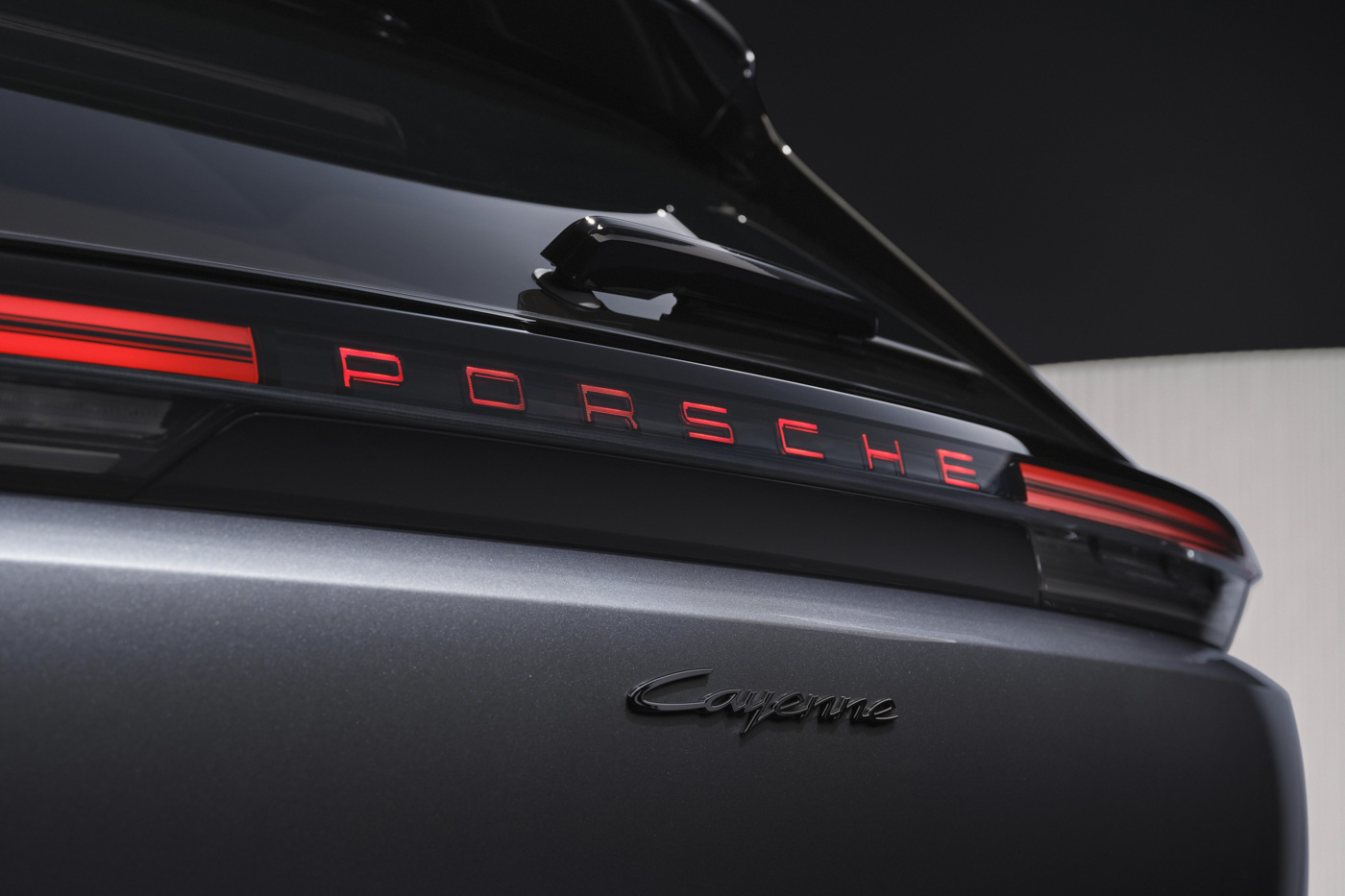
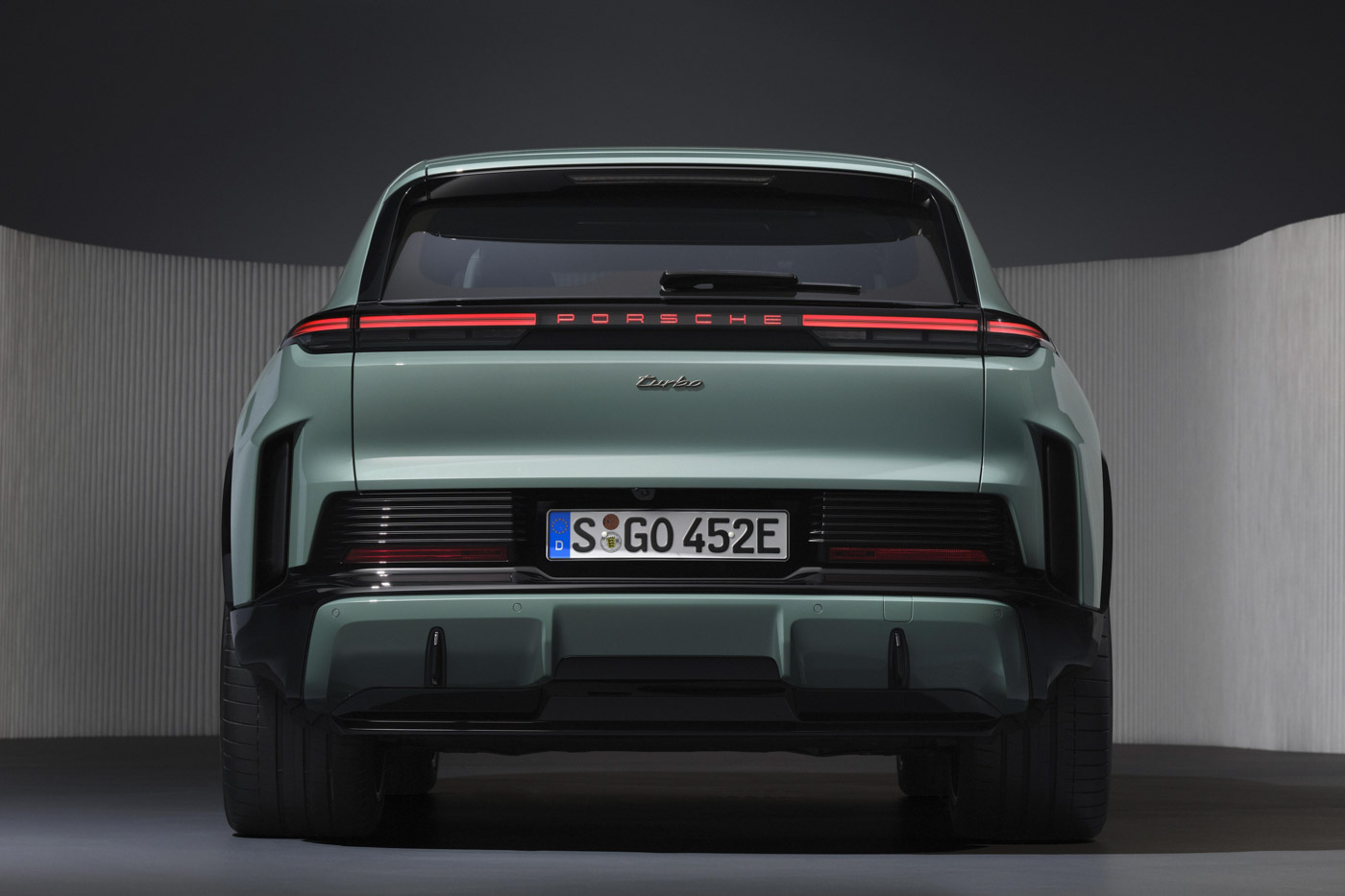
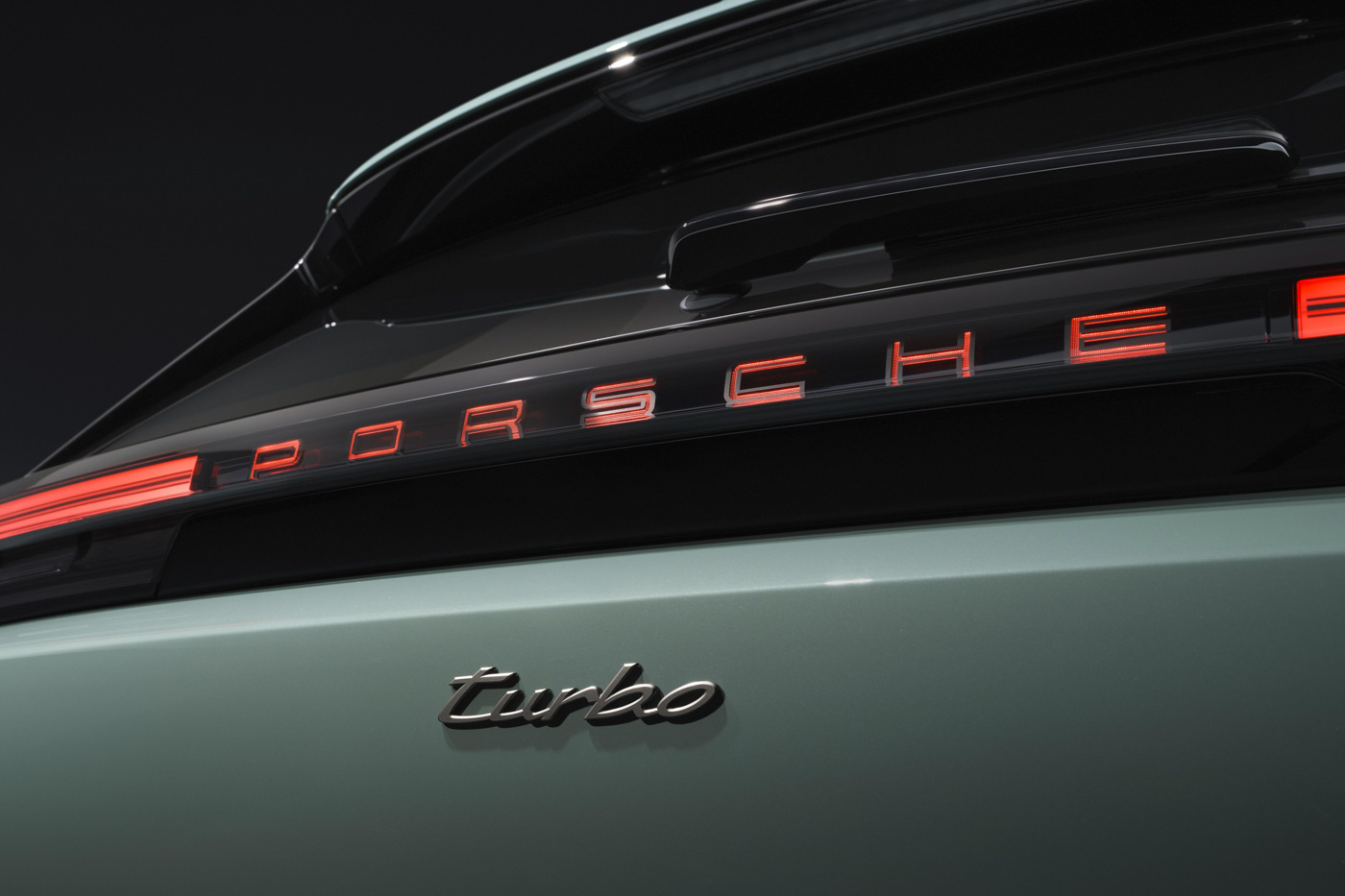
Stuttgart says it created a three-dimensional design for the side skirts, which are painted in Volcanic Grey Metallic and, on the Cayenne Turbo, in high-gloss black. Porsche claims this two-tone concept highlights the SUV’s sporting proportions. For the rear facade, Porsche included a full-width taillight with a 3D look and animated graphics, as well as an illuminated ‘PORSCHE’ wordmark in the centre.
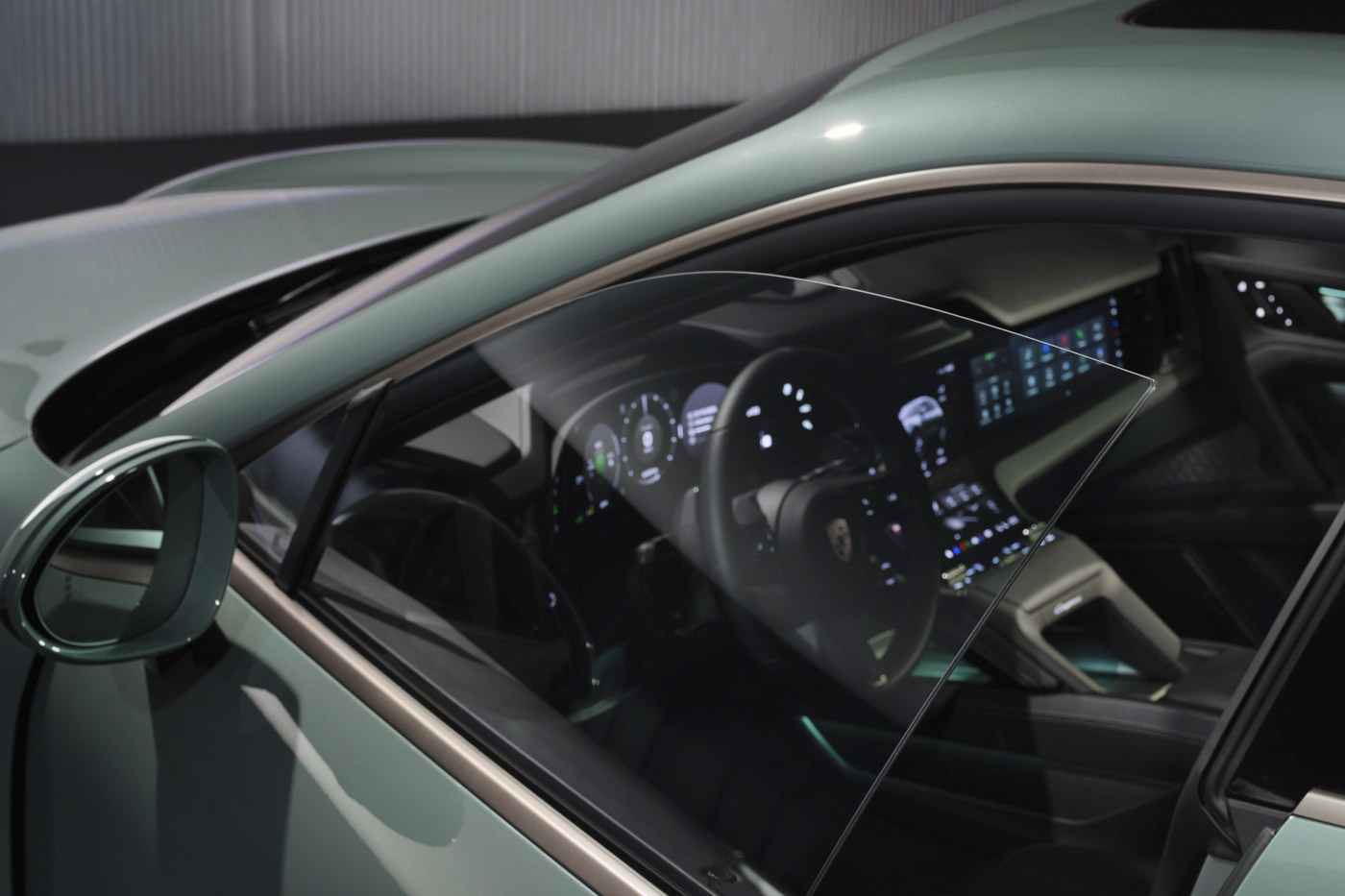
If you want to take your Porsche Cayenne off-road, Porsche is also offering an exterior off-road package, which sees the front facade with ‘modified geometry’ that helps to safely navigate through rough dirt roads, steep slopes, and difficult terrain.
The company did not explain further what this ‘modified geometry’ means, but we guess this is a front bumper specifically designed to improve the approach angle for off-road use.
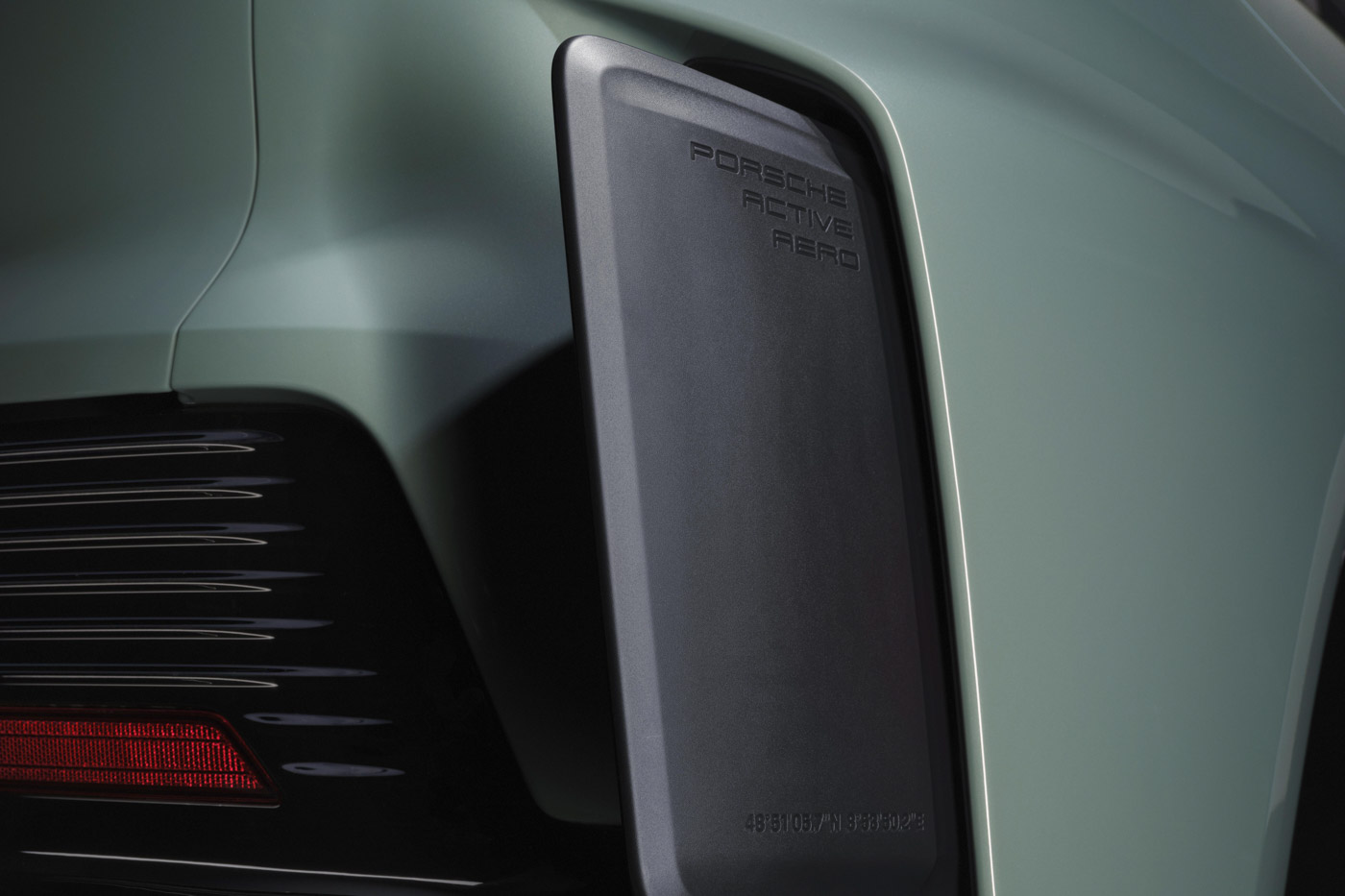
Despite being a bulky SUV, Porsche claims the Cayenne Electric drag coefficient is only 0.25 Cd, which makes it one of the most aerodynamic SUVs in its class, thanks to the Porsche Active Aerodynamics (PAA) system working to adapt the SUV’s aerodynamic profile according to the driving situation and speed.
These PAA elements include active cooling flaps in the front facade, active roof spoiler, and active aeroblades, which the Turbo variant is equipped with. These are flaps on the corners of the rear bumper that extend from outwards to improve aero, which leads to more range at higher speeds.
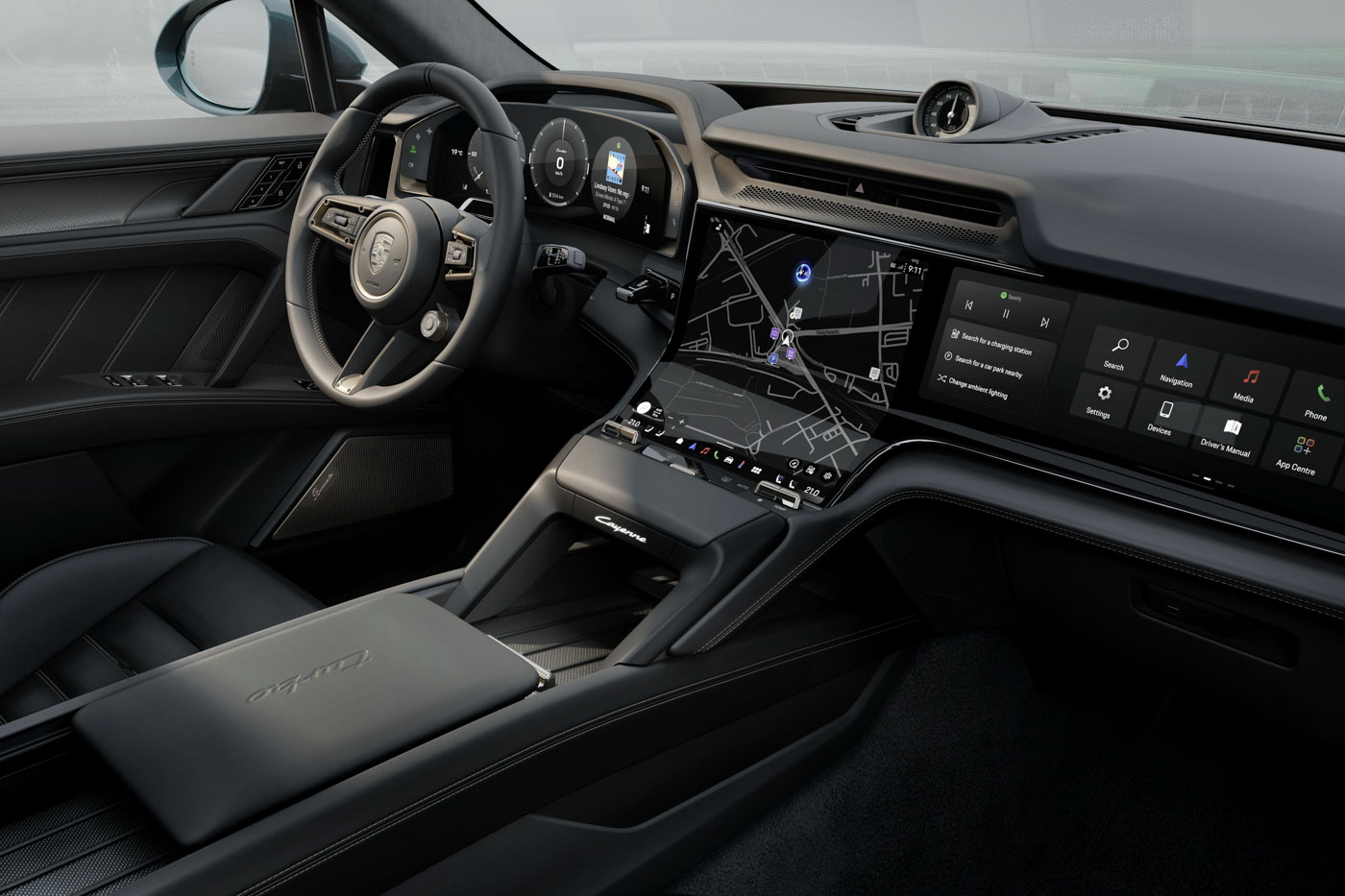
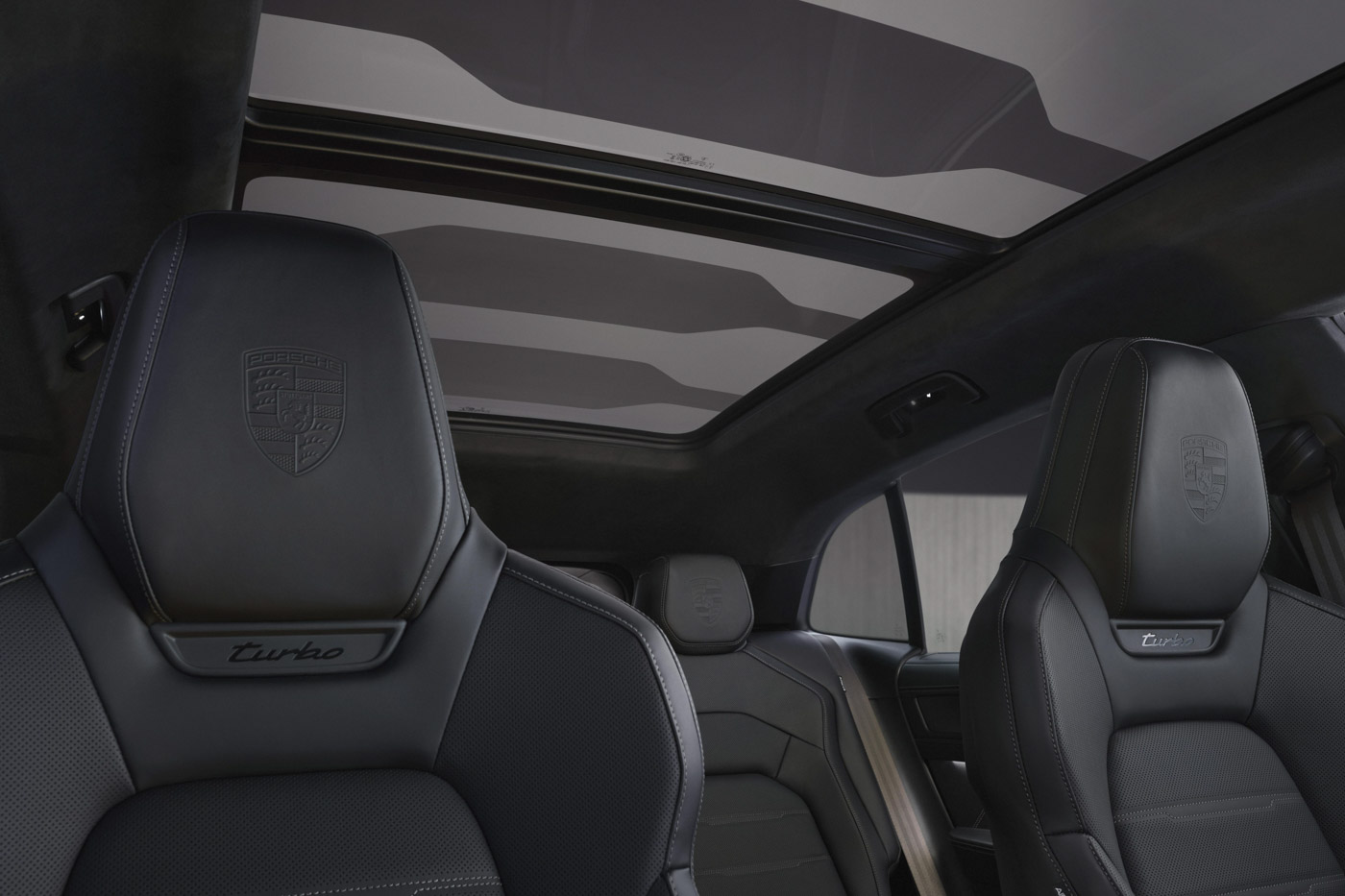
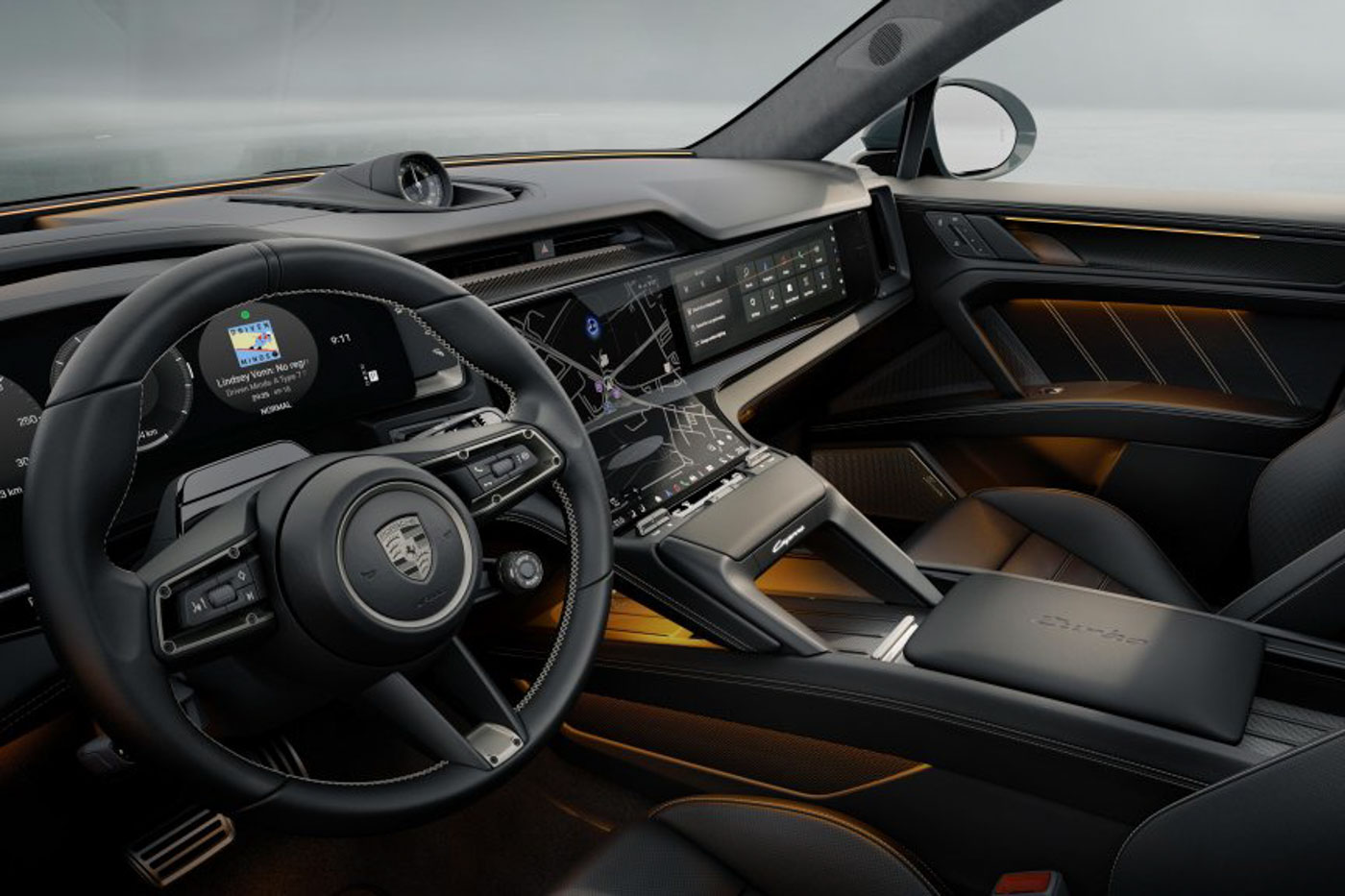
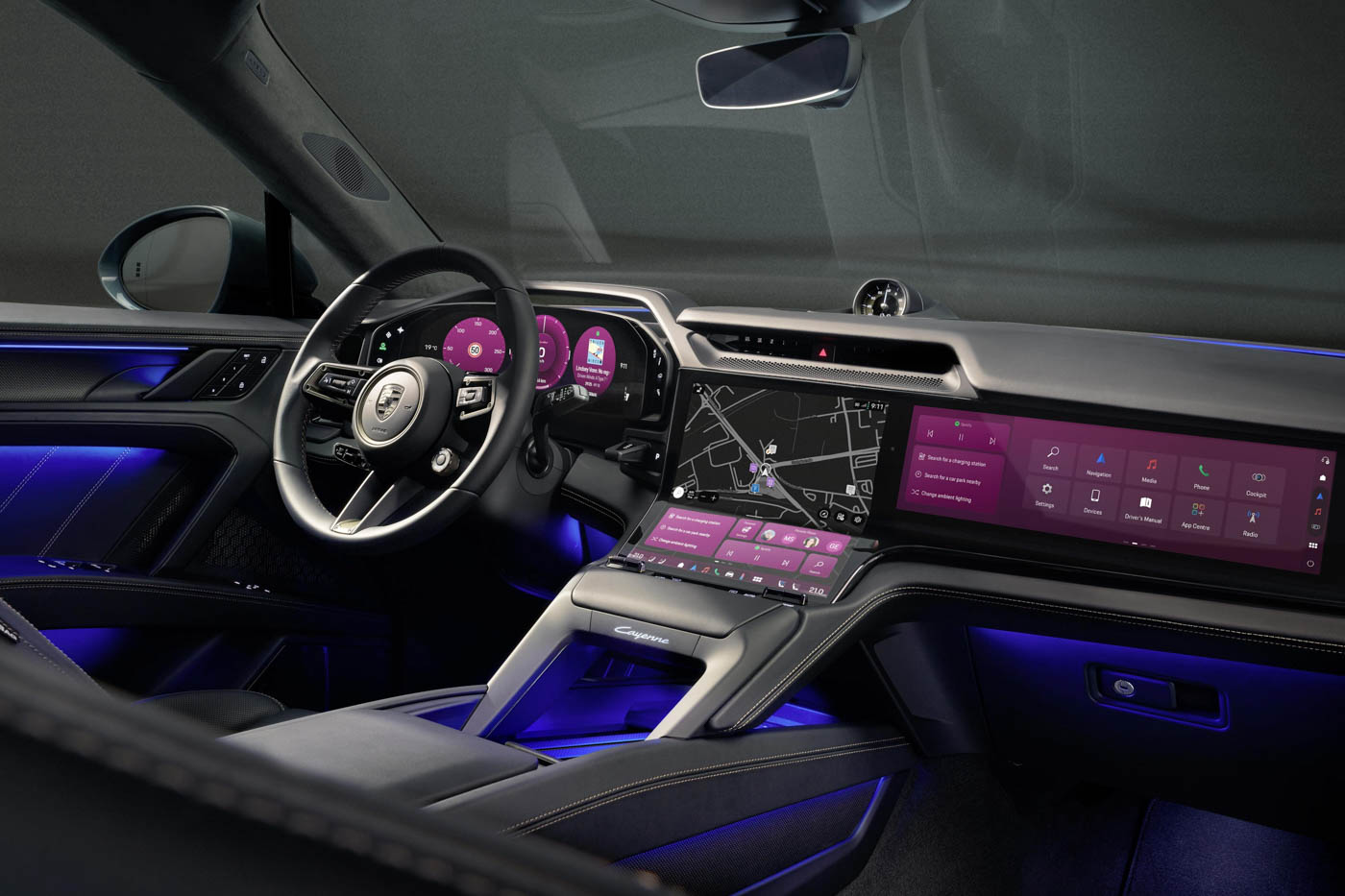
Inside, the Porsche Cayenne Electric is equipped with what Porsche calls its new “Flow Display”, which is the largest display ever fitted to a Porsche, that we explored in depth previously.
Basically, this Flow Display features a curved OLED panel featuring shortcuts for multimedia, GPS navigation to charging stations, contacts, and vehicle settings. Climate controls are also found here, accompanied by a welcome row of physical switches and capacitive controls.
RELATED: The all-new electric Porsche Cayenne’s interior is a techie’s dream come true
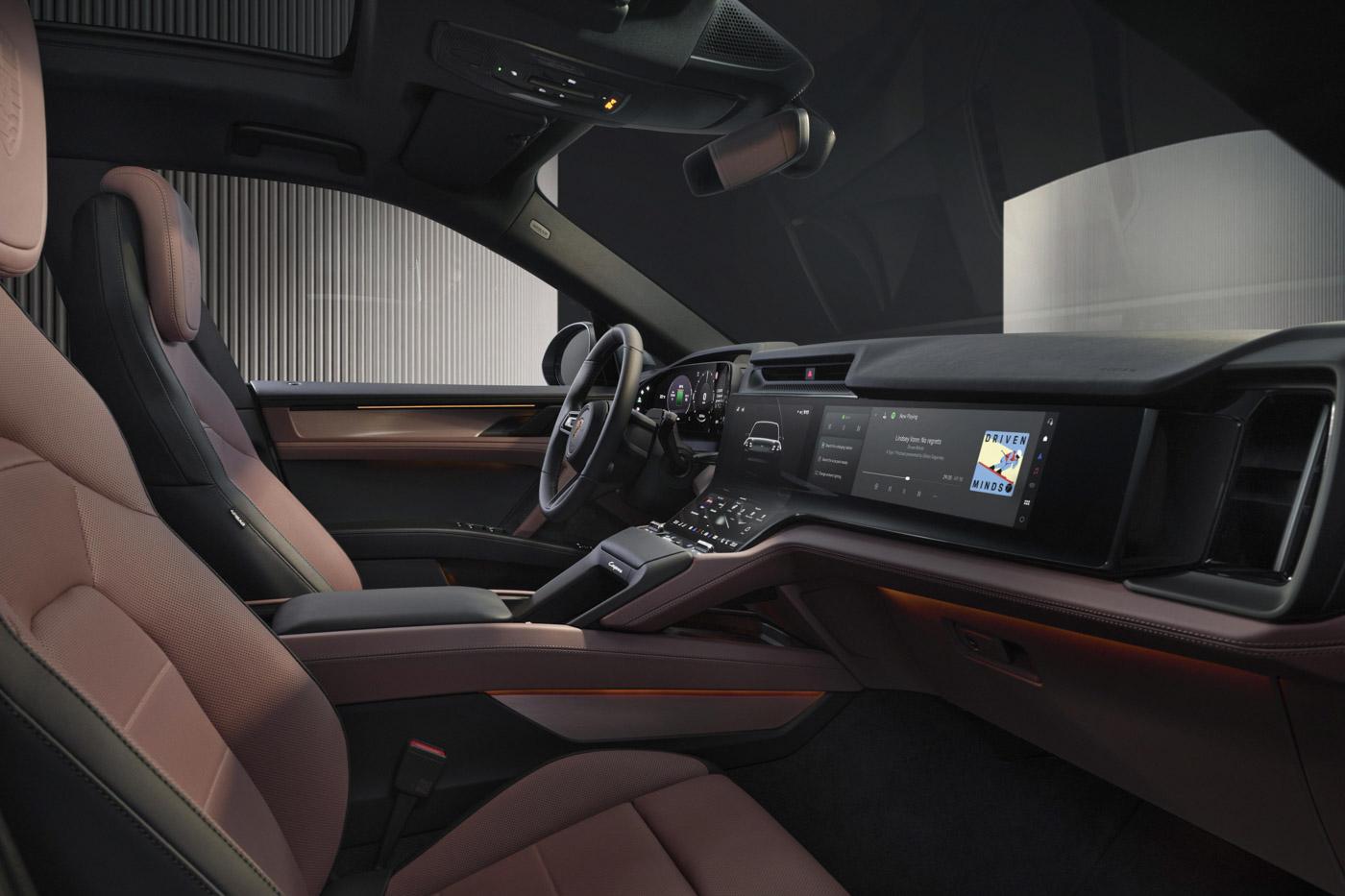
It is complemented by a 14.25-inch OLED digital gauge cluster, with an optional 14.9-inch front passenger display. Continuing the real estate of displays is a heads-up display with AR tech, enabling an 87-inch display area 10 metres in front of the vehicle.
The all-new Porsche Cayenne Electric is now available to order in Germany with a starting price of EUR122,400 (approx. RM588k) for the base model, and EUR165,500 (approx. RM796k) for the Turbo variant, InsideEVs reports.
ALSO READ: The electric Porsche Cayenne has a battery cooling system as powerful as 100 fridges
GALLERY