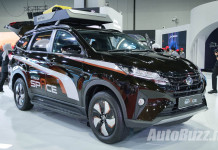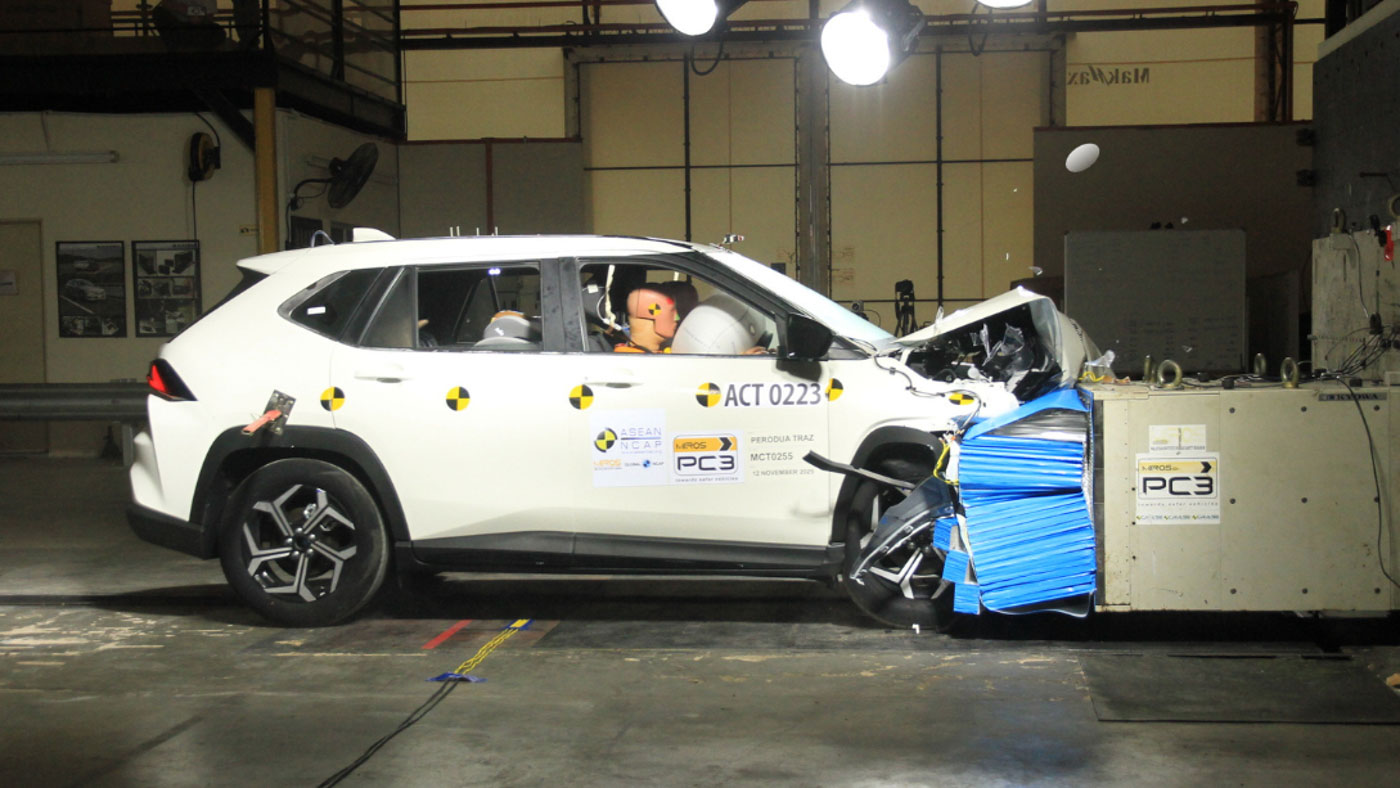
Perodua’s latest B-segment crossover, the Perodua Traz, has received a full five-star rating from ASEAN NCAP (New Car Assessment Program for Southeast Asian Countries), as tested under the 2021–2025 assessment protocol.
The Perodua Traz achieved an overall score of 86.86 points out of a possible 100. This is broken down into 38.57 points for Adult Occupant Protection (AOP), 17.21 points for Child Occupant Protection (COP), 18.57 points for Safety Assist (SA) and 12.50 points for Motorcyclist Safety (MS).

ASEAN NCAP stated in its report that the Perodua Traz performed well throughout the assessment. The report highlighted that the vehicle’s frontal occupant compartment remained stable during the frontal offset test, providing adequate protection to the chests of both the driver and the passenger.
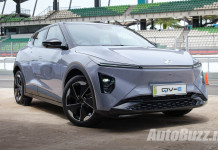
For comparison, the Traz outscored Perodua’s own electric QV-E in the Adult Occupant Protection category, receiving 30.86 unweighted points against the EV’s 29.31 points. This is attributed to the Traz providing “adequate” protection to the chests of both the driver and the passenger, whereas the QV-E was rated as “marginal” for the front passenger.

Intriguingly, the Perodua Traz also outperforms its mechanical sibling, the ASEAN-region Toyota Yaris Cross, with a higher overall score compared to the Toyota’s 83.02. The Traz also boasts higher scores in all categories but Child Occupant Protection, with the biggest differences being its Adult Occupant Protection score of 30.86 (unweighted, out of a possible 32) compared to the Yaris Cross’s 29.28, as well as 19.50 (unweighted, out of a possible 21) in the Safety Assist category compared to the Cross’s 17.74.
The higher scores in the Adult Occupant Protection category were largely contributed by its performance in the frontal offset test, which suggests that Perodua has reworked or reinforced the chassis structure on the Traz compared to the Yaris Cross, despite Perodua Manufacturing, Director of R&D, Jehan Adnan, claiming that exclusive changes compared to its donor car were “minimal”.

In the Safety Assist category, the Perodua Traz achieved perfect scores in the City and Inter-Urban autonomous emergency braking (AEB) tests. Similarly, the blind spot monitoring feature on the Perodua has also outperformed that of the Toyota Yaris Cross in the Motorcyclist Safety tests.
Nevertheless, the Perodua Traz’s omission of the adaptive cruise control (ACC) feature has become a point of contention since its debut, as the feature is present already on cheaper models, including the Ativa AV. However, under the 2021–2025 assessment protocol, ASEAN NCAP does not award or deduct points for the presence of convenience-based systems like ACC.
RELATED: No Adaptive Cruise Control on the Perodua Traz? P2 explains ADAS feature’s omission

Launched in two variants, priced from RM76,100 to RM82,000. Both variants of the Perodua Traz are equipped with the P2’s Advanced Safety Assist (ASA) systems, which include:
- Pre-collision warning
- Pre-collision assist braking with support for pedestrians and vehicles
- Front departure alert
- Pedal mis-operation control
- Lane departure warning (LDW)
- Lane departure prevention (LDP)
- Blind spot monitors (BSM)
- Front and rear parking sensors
- Reverse camera
- Rear cross traffic alert (RCTA)
Both variants of the Perodua Traz are powered by a 1.5-litre naturally aspirated four-cylinder engine, making 106 hp and 138 Nm. This is paired with a D-CVT gearbox that drives the front wheels. Claimed fuel consumption figures according to the Malaysian Driving Cycle (MDC) are 21.3 km/L.
ALSO READ: Next all-new Perodua model will feature a hybrid powertrain