The Malaysian government has announced recently that the RON95 petrol subsidy rationalisation will be based on a quota mechanism, where all Malaysians with a valid driving licence will be entitled to 300 litres of subsidised RON95 fuel, priced at RM1.99 per litre. The programme, dubbed Budi Madani RON95 (BUDI95), will be implemented fully on September 30, 2025.
According to the Department of Statistics (DOSM), over 99% of privately owned vehicles do not exceed 300 litres of fuel usage per month. However, the announcement was still met with criticisms online, with some claiming that 300 litres is not sufficient for their daily usage.

As you’d expect, most of these claims are not backed up by any data for proof – but that got us wondering: just how much do you actually need to drive on a daily basis to consume 300 litres of petrol in a month?
To find out, we crunched the numbers from Malaysia’s top 10 best-selling petrol models in 2025, according to data from JPJ. And just for fun, we’ve also included two fuel guzzlers to see what it’s like at the extreme end.
We took the worst-case scenario (highest fuel consumption) for each model that has multiple powertrain options on offer. For a more accurate real-world use case, we also calculated a separate figure based on an estimated real-world fuel consumption, which is 25% lower than the official figures provided by the respective marques.

For ease of calculation, a month is defined as 30 days.

Perodua Bezza (1.3 X) – 210 km per day
| Official fuel consumption | 21 km/l |
| Real-world estimated fuel consumption (75%) | 15.8 km/l |
| 300L range, official fuel consumption | 6,300 km |
| 300L range, real-world estimated fuel consumption | 4,725 km |
| distance per day, official fuel consumption | 210 km |
| distance per day, real-world estimated fuel consumption | 158 km |
The best-selling car in Malaysia, and a favourite amongst the e-hailing drivers. With an official fuel consumption rating of 21 km/l on the 1.3 X variant (without eco-idle), it’ll take someone driving over 210 km – or nearer to 158 km in the real world – to use over 300 litres of petrol in a month.
An e-hailing driver operating the Perodua Bezza could realistically exceed that figure, although they will be eligible for an exemption from the 300 litres-per-month quota.

Perodua Axia (1.0 X) – 253 km per day
| Official fuel consumption | 25.3 km/l |
| Real-world estimated fuel consumption (75%) | 19 km/l |
| 300L range, official fuel consumption | 7,590 km |
| 300L range, real-world estimated fuel consumption | 5,693 km |
| distance per day, official fuel consumption | 253 km |
| distance per day, real-world estimated fuel consumption | 190 km |
Perodua’s smallest car is also unsurprisingly their most fuel efficient. At an official fuel consumption rating of 25.3 km/l, the Perodua Axia can travel for up to 7,590 km using 300 litres of fuel, or up to 253 km a day – although we expect it to be nearer to 190 km per day in real-world use.
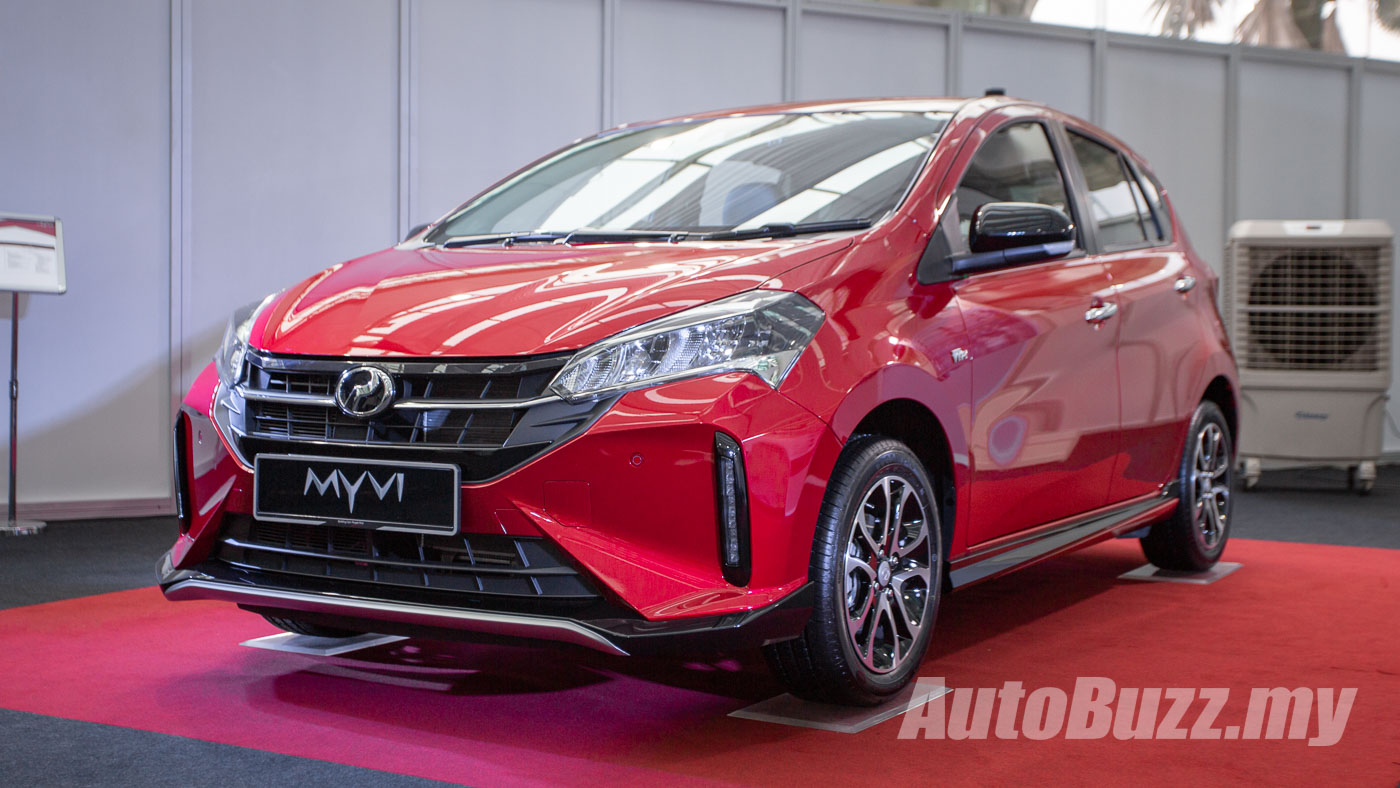
Perodua Myvi – 211 km per day
| Official fuel consumption | 21.1 km/l |
| Real-world estimated fuel consumption (75%) | 15.8 km/l |
| 300L range, official fuel consumption | 6,330 km |
| 300L range, real-world estimated fuel consumption | 4,748 km |
| distance per day, official fuel consumption | 211 km |
| distance per day, real-world estimated fuel consumption | 158 km |
The venerable Perodua Myvi will require over 211 km travelled per day in order to exceed 300 litres of fuel per month. We estimate it to be closer to 158 km per month in real-world scenarios, although if you are someone who drives it like the Malaysian Supercar, expect that figure to be lower…
Its electric counterpart, rumoured to be called the QV-E, is due to make its debut sometime this year, and could mean more cost savings due to cheaper electricity costs – even with RON95 petrol prices subsidised to RM1.99 per litre.

Proton Saga – 175 km per day
| Official fuel consumption | 17.5 km/l |
| Real-world estimated fuel consumption (75%) | 13.2 km/l |
| 300L range, official fuel consumption | 5,263 km |
| 300L range, real-world estimated fuel consumption | 3,947 km |
| distance per day, official fuel consumption | 175 km |
| distance per day, real-world estimated fuel consumption | 132 km |
The Proton Saga is not known to be particularly fuel efficient, but even then, it’ll take someone over 175 km (132 km based on estimated real-world fuel consumption) of driving per day to exceed 300 litres of fuel.
With a new, more efficient 1.5-litre four-cylinder engine, the all-new fourth-generation Proton Saga – set to launch before the end of 2025 – will most likely see that figure rise even higher.

Perodua Alza – 220 km per day
| Official fuel consumption | 22 km/l |
| Real-world estimated fuel consumption (75%) | 16.5 km/l |
| 300L range, official fuel consumption | 6,600 km |
| 300L range, real-world estimated fuel consumption | 4,950 km |
| distance per day, official fuel consumption | 220 km |
| distance per day, real-world estimated fuel consumption | 165 km |
Despite its larger size and MPV silhouette, the Perodua Alza is surprisingly economical to run – sipping just 4.5 litres of fuel for every 100 km travelled. Realistically, you’ll have to travel for more than 165 km per day over an entire month to even consume 300 litres of fuel.
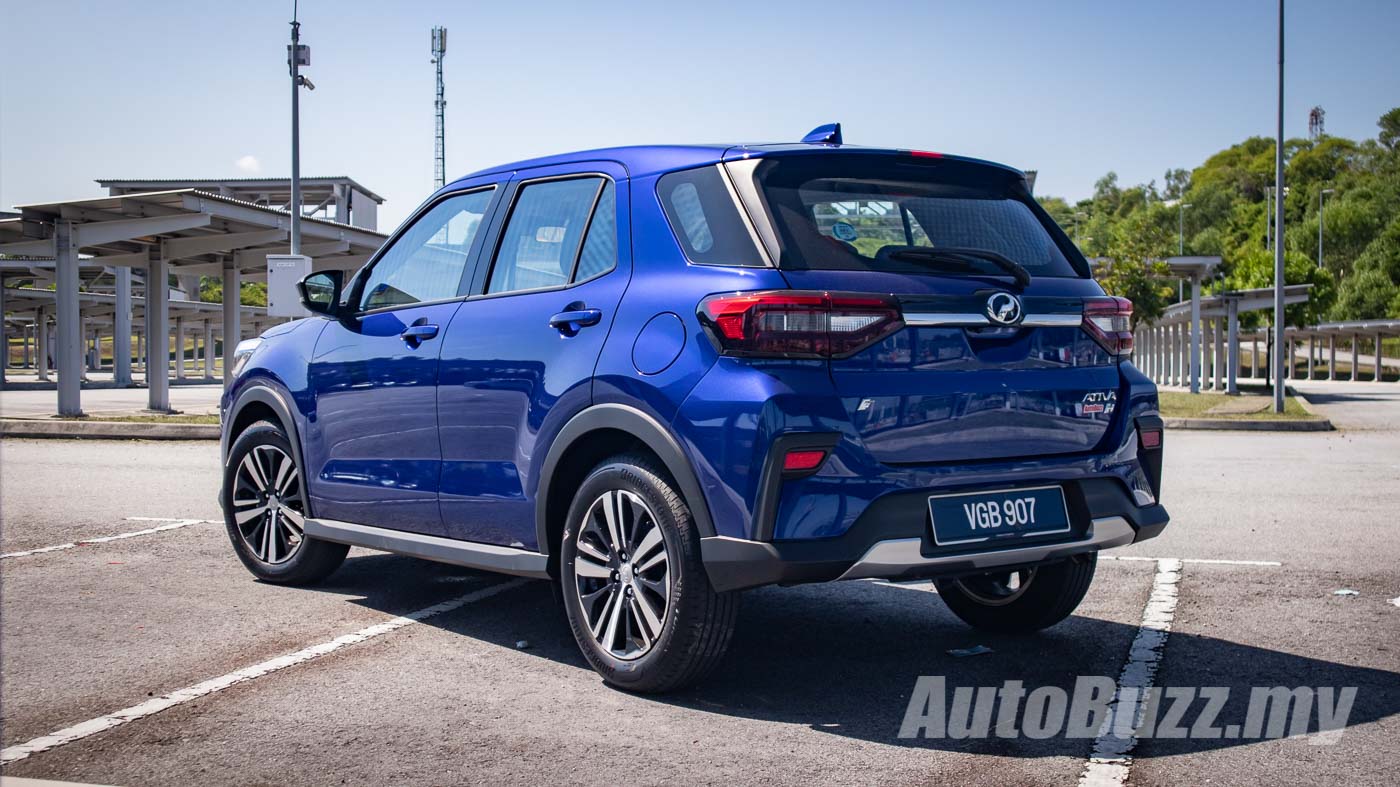
Perodua Ativa – 189 km per day
| Official fuel consumption | 18.9 km/l |
| Real-world estimated fuel consumption (75%) | 14.2 km/l |
| 300L range, official fuel consumption | 5,670 km |
| 300L range, real-world estimated fuel consumption | 4,253 km |
| distance per day, official fuel consumption | 189 km |
| distance per day, real-world estimated fuel consumption | 142 km |
Despite its turbocharged 1.0-litre powertrain, the Perodua Ativa is the second-least fuel efficient model in the national carmaker’s lineup currently, with only the ageing Aruz coming in worse. Even then, 300 litres of fuel will still net you 5,670 km of range, or more realistically, 4,253 km – which translates to 142 km per day.
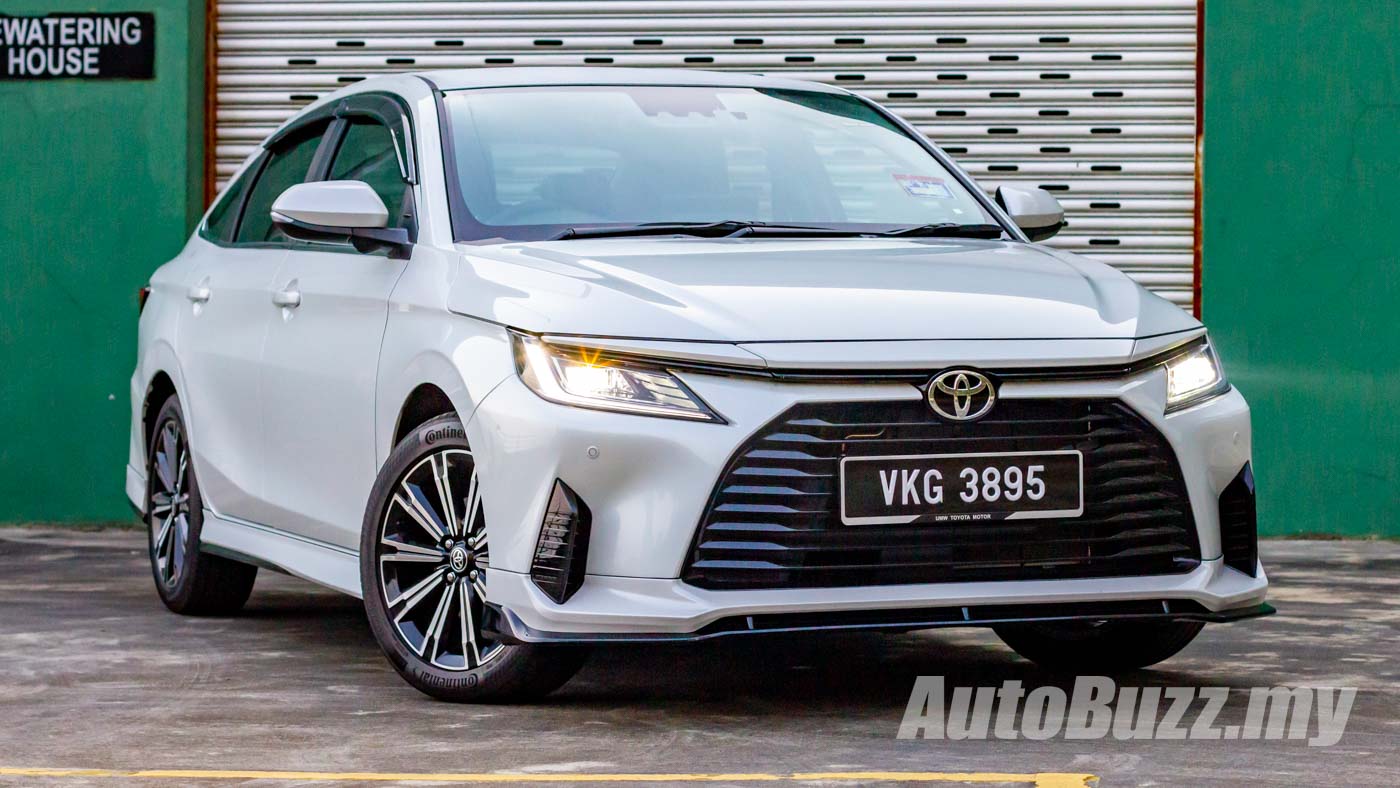
Toyota Vios – 192 km per day
| Official fuel consumption | 19.2 km/l |
| Real-world estimated fuel consumption (75%) | 14.4 km/l |
| 300L range, official fuel consumption | 5,769 km |
| 300L range, real-world estimated fuel consumption | 4,327 km |
| distance per day, official fuel consumption | 192 km |
| distance per day, real-world estimated fuel consumption | 144 km |
The best-selling non-national model on the Top 10 list so far this year goes to the Toyota Vios, with 18,802 units sold as of the end of August 2025. With an official fuel consumption rating of 19.2 km/l, it’ll travel for over 5,769 km (or closer to 4,327 km in real-world scenarios) before you’ll need to fork out around RM2.60 for a litre of unsubsidised RON95 petrol.

Honda City (1.5 RS) – 179 km per day
| Official fuel consumption | 17.9 km/l |
| Real-world estimated fuel consumption (75%) | 13.4 km/l |
| 300L range, official fuel consumption | 5,357 km |
| 300L range, real-world estimated fuel consumption | 4,018 km |
| distance per day, official fuel consumption | 179 km |
| distance per day, real-world estimated fuel consumption | 134 km |
We’ve deliberately chosen the non-hybrid variants of the Honda City (both sedan and hatchback) in order to give our friendly keyboard warriors the best chance. Even then, you’ll have to travel for more than 179 km (or around 134 km in real-world scenarios) per day to exceed 300 litres of fuel used.
With the more efficient e:HEV hybrid powertrain, you’re looking at 8,333 km (or 6,250 km using more conservative estimates) of total range with the 300 litre quota!

Proton X50 – 164 km per day
| Official fuel consumption | 16.4 km/l |
| Real-world estimated fuel consumption (75%) | 12.3 km/l |
| 300L range, official fuel consumption | 4,908 km |
| 300L range, real-world estimated fuel consumption | 3,681 km |
| distance per day, official fuel consumption | 164 km |
| distance per day, real-world estimated fuel consumption | 123 km |
The all-new Proton X50 now comes with the new 1.5-litre four-cylinder turbocharged engine, which the national carmaker claims offers up to 4.7% of fuel savings over its predecessor.
While Proton has not published the model’s official fuel consumption rating just yet, based on the outgoing model’s figures, it should be around the 16.4 km/l mark, which translates to a total distance of 4,908 km (3,681 km in more realistic scenarios) with 300 litres of fuel.

Toyota Vellfire/Alphard (2.5L) – 110 km per day
| Official fuel consumption | 11 km/l |
| Real-world estimated fuel consumption (75%) | 8.2 km/l |
| 300L range, official fuel consumption | 3,297 km |
| 300L range, real-world estimated fuel consumption | 2,473 km |
| distance per day, official fuel consumption | 110 km |
| distance per day, real-world estimated fuel consumption | 82 km |
Surprised to see the Toyota Alphard/Vellfire duo listed here? That’s because JPJ’s vehicle registration data combines both new car and imported recon cars together. A quick cursory glance on Facebook marketplace shows that most of these imported units come with the 2.5-litre 2AR-FE engine, which is what we based these calculations on, rather than the 2.4-litre turbocharged mill our local-specification Toyota Alphard has. Nevertheless, the fuel consumption figures between the two engines are not significantly different.
For the tauke-mobile, you’ll have to drive for over 110 km daily for an entire month to exceed 300 litres of fuel. That said, if you can afford the Alphard or Vellfire, you can also definitely afford paying a little bit more for fuel…

Mercedes-AMG G63 – 64 km per day
| Official fuel consumption | 6.4 km/l |
| Real-world estimated fuel consumption (75%) | 4.8 km/l |
| 300L range, official fuel consumption | 1,911 km |
| 300L range, real-world estimated fuel consumption | 1,433 km |
| distance per day, official fuel consumption | 64 km |
| distance per day, real-world estimated fuel consumption | 48 km |
The Mercedes-AMG G63 is one of the biggest fuel guzzlers you can still buy today, thanks to its 4.0-litre bi-turbo V8 engine. Now, the G-wagen does technically require high-octane RON97 fuel at a minimum, which is unsubsidised and currently priced at RM3.21 per litre at the time of writing. But just for a bit of fun, we decided to include it as an example of the absolute worst-case scenario – in case you have an old luxobarge-SUV that you’re still driving around daily.
With an official fuel consumption of just 6.4 km/l (not l/100km, mind), you’ll still be able to travel for up to 1,911 km with 300 litres of fuel.

Ford Ranger Raptor (3.0L V6) – 73 km per day
| Official fuel consumption | 7.3 km/l |
| Real-world estimated fuel consumption (75%) | 5.5 km/l |
| 300L range, official fuel consumption | 2,190 km |
| 300L range, real-world estimated fuel consumption | 1,643 km |
| distance per day, official fuel consumption | 73 km |
| distance per day, real-world estimated fuel consumption | 55 km |
For a modern fuel guzzler that can take RON95 petrol, you’re looking at the Ford Ranger Raptor 3.0L V6, which has an official fuel consumption rating of just 7.3 km/l, or about 35% of the Perodua Axia’s efficiency. Still, with 300 litres of fuel, you’ll be able to travel for up to 2,190 km.
Again, if you can afford a car like this, chances are you can also afford to pay more for fuel… not that you’ll need to, anyway, if you drive within the 15,000 km/year standard.

Based on our calculations, it truly isn’t easy to exceed 300 litres of fuel use per month – for the average Joe, at least. Because while it’s not surprising to drive over 250 km in a single day, not many would do so for all 30 days in a month.
What if one travels for work between Seremban to Kuala Lumpur, some may ask? That’s roughly an 180 km commute per day, or 3,960 km in an an average 22-work-day month. If you’re driving a modern, normal vehicle from the past decade, 300 litres of fuel should still give you enough leeway for your weekend leisurely drives.
Disagree? We’d love to hear your thoughts in the comments.