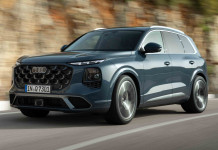
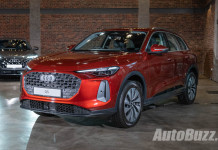
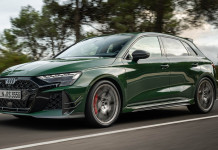
That was unexpected. Audi, the German luxury carmaker known for its extravagant design and luscious cabins, has admitted that the interiors quality of its recent models haven’t quite lived up to expectations.
This surprising admission came from Audi’s Head of Product and Technology Communication, Oscar da Silva Martins, who told journalists at a recent drive event that “[Audi has] certainly been better in terms of quality in the past, but we will get there again”, Motor1 reports.

As one of the top three German luxury carmakers, alongside BMW and Mercedes-Benz, Audi cars command premium pricing. Naturally, customers expect the interiors to reflect this premium positioning. However, recent models from Ingolstadt have fallen short of these expectations.
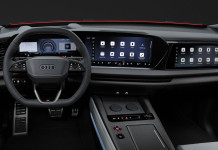
Remember our review of the Audi Q8 e-tron 50 last year? While it boasts impressive tech like high-resolution infotainment displays and a digital gauge cluster, the over-use of hard plastics in the interior felt out of place in a car priced at RM360,790. This mismatch between technology and material quality was a letdown for a brand known for its premium image.
The Audi Product and Technology PR boss was surprisingly frank in his comments, admitting that Audi has perhaps underestimated its customers and media’s demands when it comes to the famed “Audi quality”.
RELATED: JPJ issues vehicle recall – 41,688 cars affected, including Honda, Kia, Ford, Audi, Mercedes-Benz

The upgraded interior won’t be the only area where Audi is making changes. The company recently reversed its naming strategy, going back to its old system of using numbers to reflect a car’s size rather than identify its powertrain configuration.
It seems Audi realised that its current naming strategy, which uses odd and even numbers to differentiate between internal combustion engine (ICE) and fully-electric (EV) models, was too confusing for customers. The next-generation Audi A6 will be the first model to use this ‘new/old’ naming scheme, although it won’t be retroactively applied to current models.

Additionally, despite announcing plans to become a pure electric brand by 2033, Audi will maintain flexibility by continuing to offer ICE models alongside its expanding EV range.
These recent developments suggest that Audi is listening to feedback and taking steps to address its shortcomings. It’s a positive sign for the brand, and we’re hopeful that it will lead to even better cars in the future.
RELATED: Audi realises their naming strategy is too confusing, so they are going back to their old one