Honda has just held a press briefing on its business and product plans for the next decade. Among the plans mentioned include the company’s decision to maintain its target of making battery-electric vehicles (BEVs) and fuel-cell electric vehicles (FCEVs) represent 100% of its global vehicle sales by 2040. The brand is also planning to launch a total of seven global EV models by 2030.
The seven global BEV models will be launched under the recently debuted Honda 0 Series, and will be made based on the Saloon and Space-Hub concept models. Honda says the 0 Series will play a key role in its EV strategy, and will include various models of various sizes. Initial models of the Honda 0 Series BEVs will be first introduced in North America by 2026, with global releases planned after that for markets such as Japan, Asia, Europe, Africa, the Middle East, and South America.

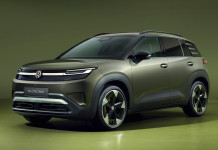
As for China, Honda is planning to introduce a total of 10 BEV models by 2027 and make EVs represent 100% of its automobile sales in the country by 2035. Honda recently unveiled the Yé Series BEV SUVs for the Chinese market, which will follow the presently available e:N Series models.
Honda also has plans to introduce its small-size EV lineup in Japan. The lineup will start with the N-VAN e:, a commercial-use mini-EV that will go on sale in Japan this fall.
RELATED: Honda shows new logo for upcoming EVs, Zero Series concepts debut at CES 2024

The Japanese carmaker says it will also make sequential introductions of small-size EVs in regions where there is a need for them. This will also include the introduction of personal-use mini-EV models in 2025, along with two small EVs in 2026. Together with two electric motorcycle models due in Japan this year, these mini EVs will be powered by Honda’s Mobile Power Pack e: (MPP).
To pave the path for its future EV plans, Honda has recently been strengthening its external partnerships to hold down production costs of its liquid lithium-ion batteries in each respective region. In the US in 2025, Honda’s joint venture EV battery plant with LG Energy Solution will begin production with a capacity of 40 GWh of batteries per year.
As a result, Honda says the lightweight and compact battery packs will be produced with its high-density packaging technologies and will be installed in the Honda 0 Series models. By building a solid value chain with its partner, Honda will be able to lower its battery cost, which will have the largest scale in North America. The carmaker says the lightweight and compact battery packs will be produced with its high-density packaging technologies and will be installed in the Honda 0 Series models.

Honda will also be further expanding its scope of battery business by building a vertically integrated and comprehensive EV value chain with a central focus on batteries. This will include all aspects of EV production, from procurement of raw materials mainly for batteries, through the production of finished EVs.
In Canada, Honda will begin in-house production of the EV battery being co-developed with GS Yuasa. As for key battery materials, in Canada, the company will proceed to internalise production by producing cathode materials with Posco Future M, and separators with Asahi Kasei, at its respective new joint venture plants to be constructed.
In addition to EV production, Honda will expand the scope of its business into the battery life cycle business, which includes the areas of charging service, energy service and reuse/recycle. With these initiatives, in 2030, Honda will reduce the cost of the battery to be procured in North America by more than 20% compared to the cost of current batteries.

As for batteries necessary for the production of approximately 2 million units of EVs planned for 2030, the firm has a positive outlook to secure enough batteries. By adopting a more efficient production method, the company should be able to reduce overall production costs by approximately 35%.
Aside from EVs, Honda’s hybrid-electric system, namely e:HEV, as well as the brand’s other hybrid electric vehicle (HEV) platforms will be renewed. Honda promises the e:HEV system to be lighter and more efficient after the renewal, contributing to improved fuel economy and enhancing the driving experience.
To enable its future EV plans, Honda is planning to invest approximately 10 trillion Yen in resources. This investment will be spread out over the 10-year period through FY2031.
RELATED: The Honda Yè GT Concept looks like a hot EV Civic from the future