We’ve all heard that electric vehicles (EV are cheaper to run than petrol cars, but is it even true? And just how cheap can it be? To answer that question and more, BMW Malaysia has teamed up with MyZEVA (Malaysia Zero Emissions Vehicle Association), a non-government organisation, to share some insights on the state of EV ownership in Malaysia.


How many EVs are there in Malaysia?
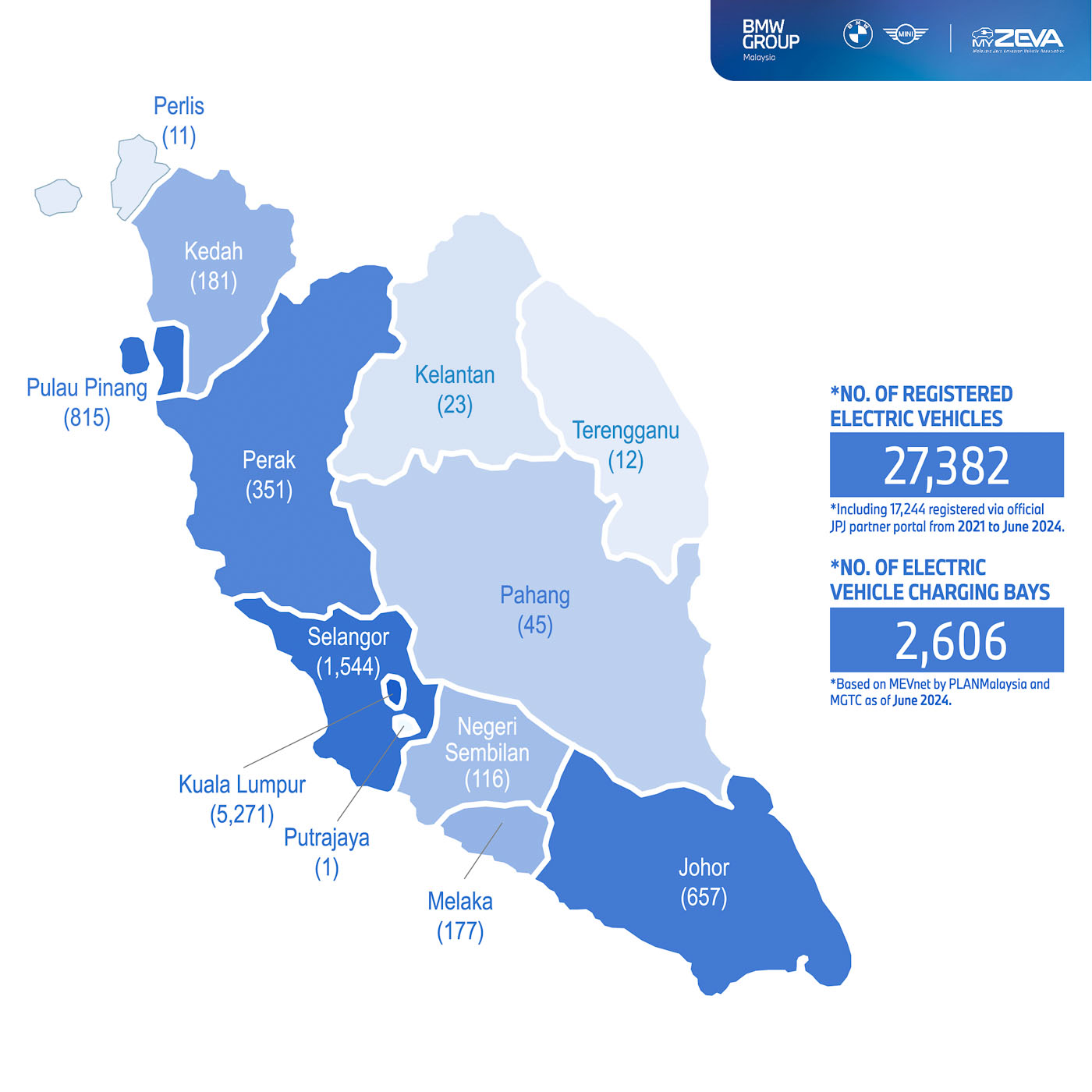
According to MyZEVA data, which itself was extracted from JPJ statistics, a total of 27,382 EVs have been registered in Malaysia from 2021 to June 2024. Of those, 17,244 were registered online via the official JPJ portal, which means they do not have locale information tied to their registrations.
For the rest, though, 5,271 units were registered in Kuala Lumpur, representing the biggest share of EVs in Malaysia, followed by Selangor (1,544 units), Penang (815 units), Johor (657 units), Perak (351 units), Sabah (326 units), Sarawak (268 units), Kedah (181 units), Melaka (177 units) and Negeri Sembilan (116 units), Pahang (45 units), Kelantan (23 units), Labuan (22 units), Terengganu (12 units), Perlis (11 units), and Putrajaya (1 unit).
The data also showed that a majority (above 90%) of EVs in Malaysia were registered since the commencement of EV tax incentives in 2022, with most of those recorded in 2023 with 13,266 registrations – more than four times the number of units registered in 2022.
Is public EV charging infrastructure keeping up in Malaysia?
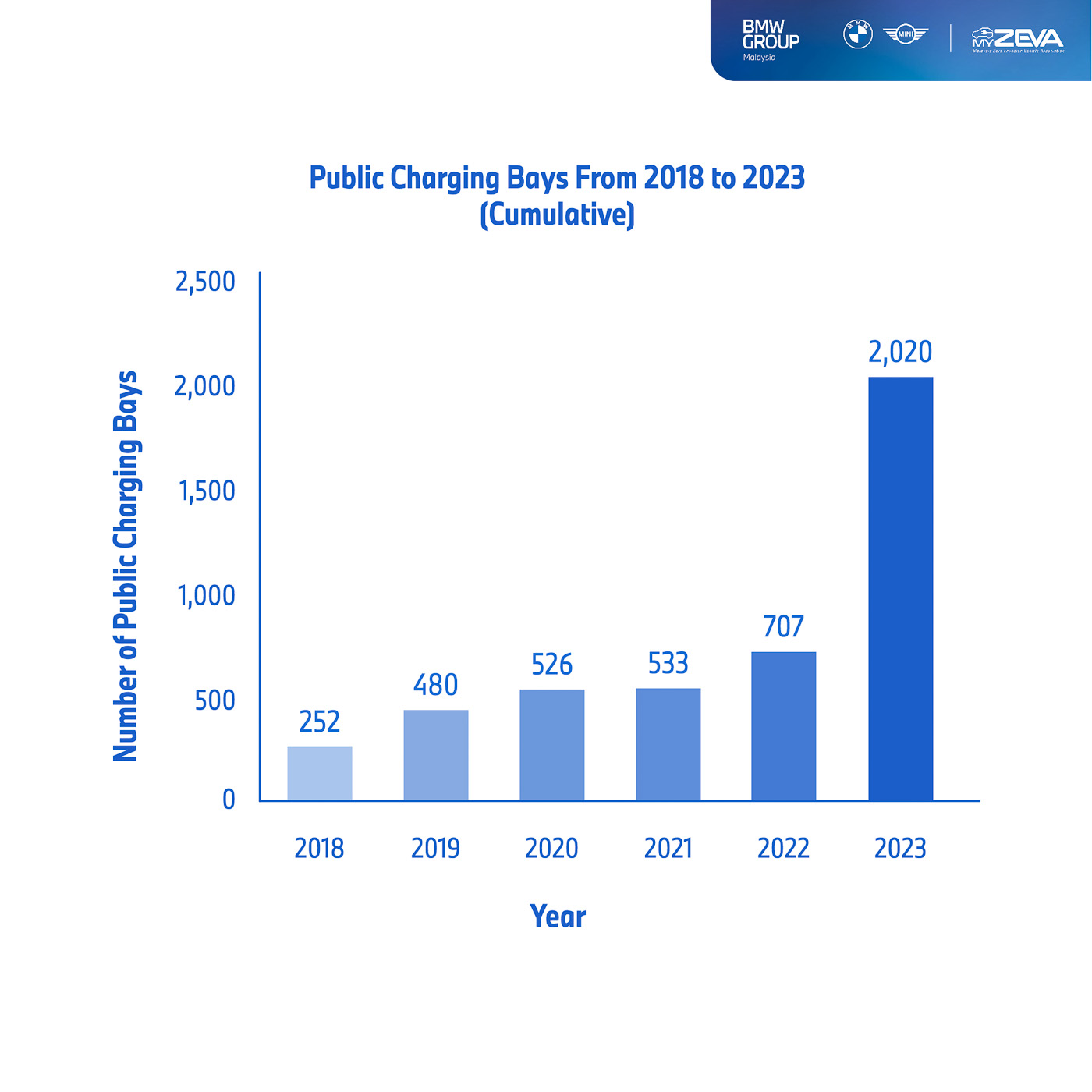
With the rise in EVs in Malaysia, the demand for public charging stations have also increased concurrently. Fortunately, according to PLANMalaysia’s data through its MEVNet public dashboard, there are now 2606 public chargers available nationwide, and has been rising exponentially since 2022.
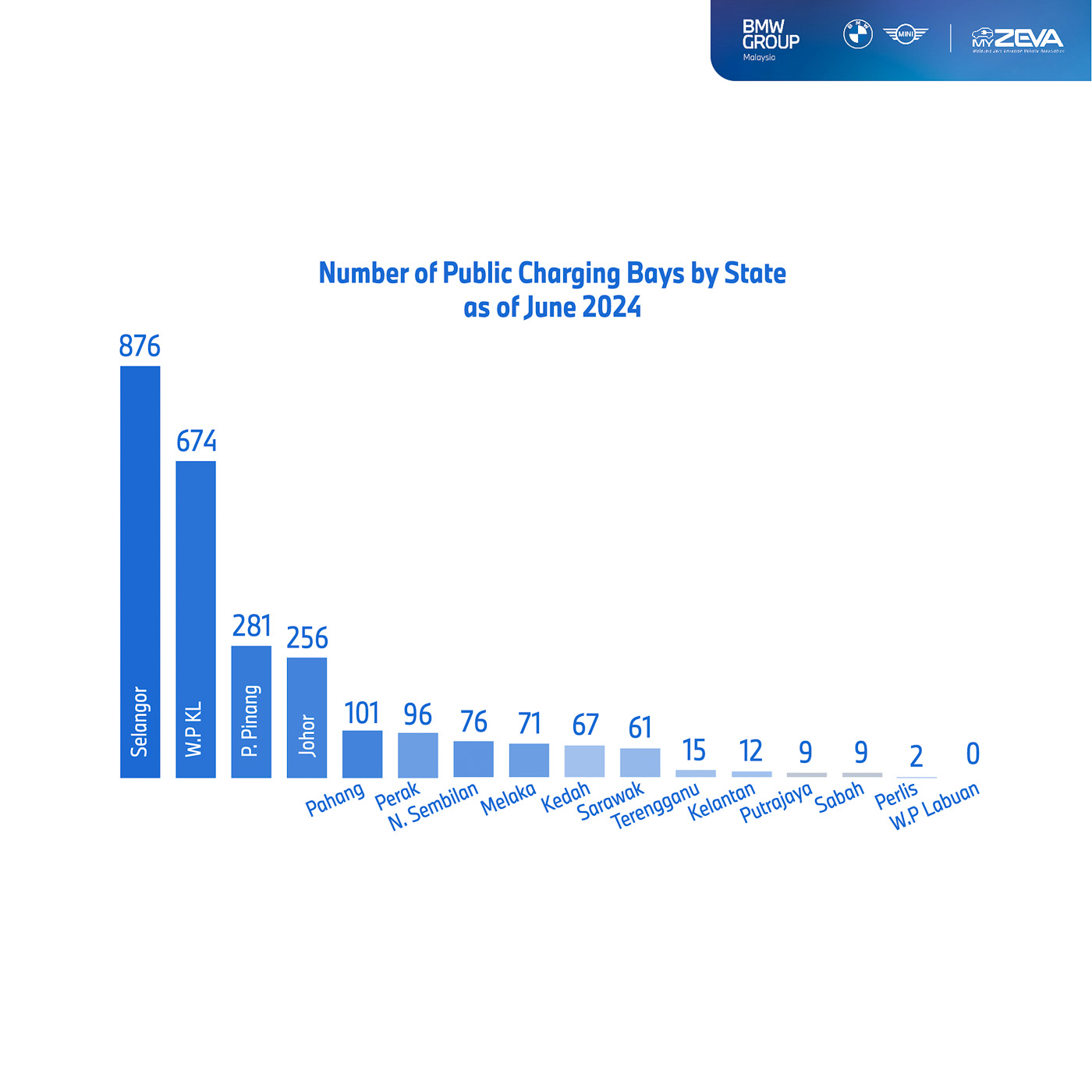
Among those, Selangor has the most number of public chargers available at 876, followed by Kuala Lumpur at 674, and Penang at 281. While these numbers are certainly encouraging, it is still a far cry off the 10,000 EV chargers by 2025 targets, as laid out in the Low Carbon Mobility Blueprint (LCMB) 2021-2030. The Ministry of Investment, Trade, and Industry (MITI) has since said that they will revise the “aggressive” target, but we haven’t heard of any updates since.
RELATED: BMW Group Malaysia unveils 4 new EV chargers in Klang Valley, Negeri Sembilan, Pahang
Is it cheaper to drive an EV in Malaysia?
So here comes the big question that Malaysian netizens love to squabble about: is it actually cheaper to drive an EV in Malaysia? According to BMW Malaysia and MyZEVA, it definitely is.
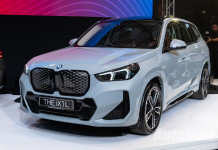
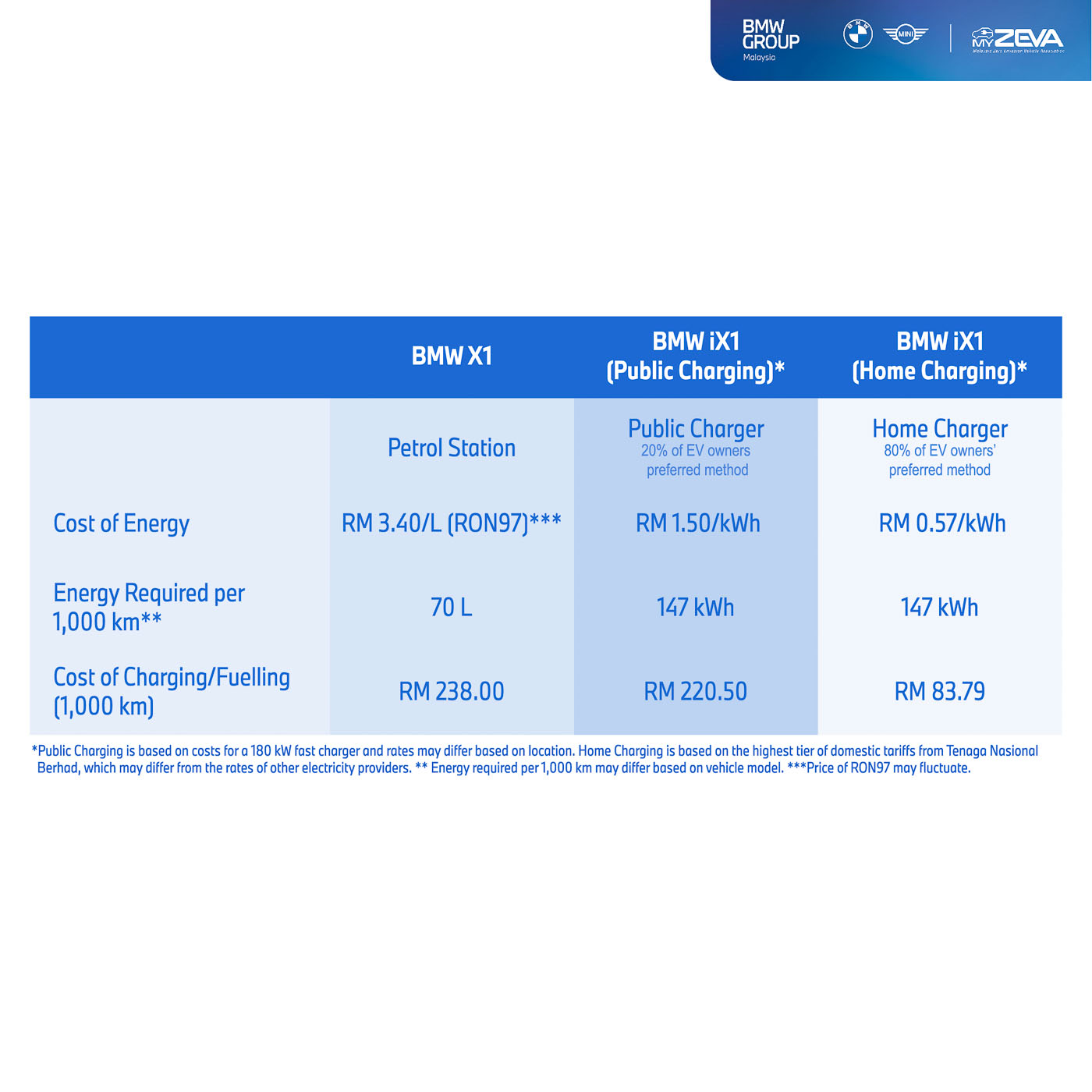
Using the BMW X1 and iX1 for comparison, the former requires an estimated 70 litres of fuel to travel 1,000 km, which will cost RM238 of fuel (RON 97, assuming RM3.40 per litre). Meanwhile, the iX1 requires 147 kWh of energy to travel the same distance, and with public charging at RM1.50 per kWh (based on 180 kW DC fast charger rates at certain charging stations), it would only cost RM220.50.
Those numbers are, of course, a little disingenuous, because most Malaysians (and iX1 owners, we presume) are fuelling up with RON 95 petrol instead. And with our subsidised petrol prices, it’ll only cost RM143.50 of fuel to complete the journey, based on the same fuel efficiency assumptions.
That said, there are still ways that makes driving an EV significantly cheaper than petrol cars, and that is by charging at home. The national electric utility company Tenaga Nasional chargers RM0.57 per kWh at its highest tariff, which means for a 1,000 km road trip, the iX1 should only cost RM83.79 to recharge (assuming 0% energy loss, of course), which is 65% less than an X1 refuelling with RON 97 (or about 41% for RON 95) at a petrol station.
Luckily, it seems most EV owners in Malaysia understands that home charging is the most economical, as MyZEVA data says 80% EV owners prefer to charge at home, while 20% prefer public charging facilities.
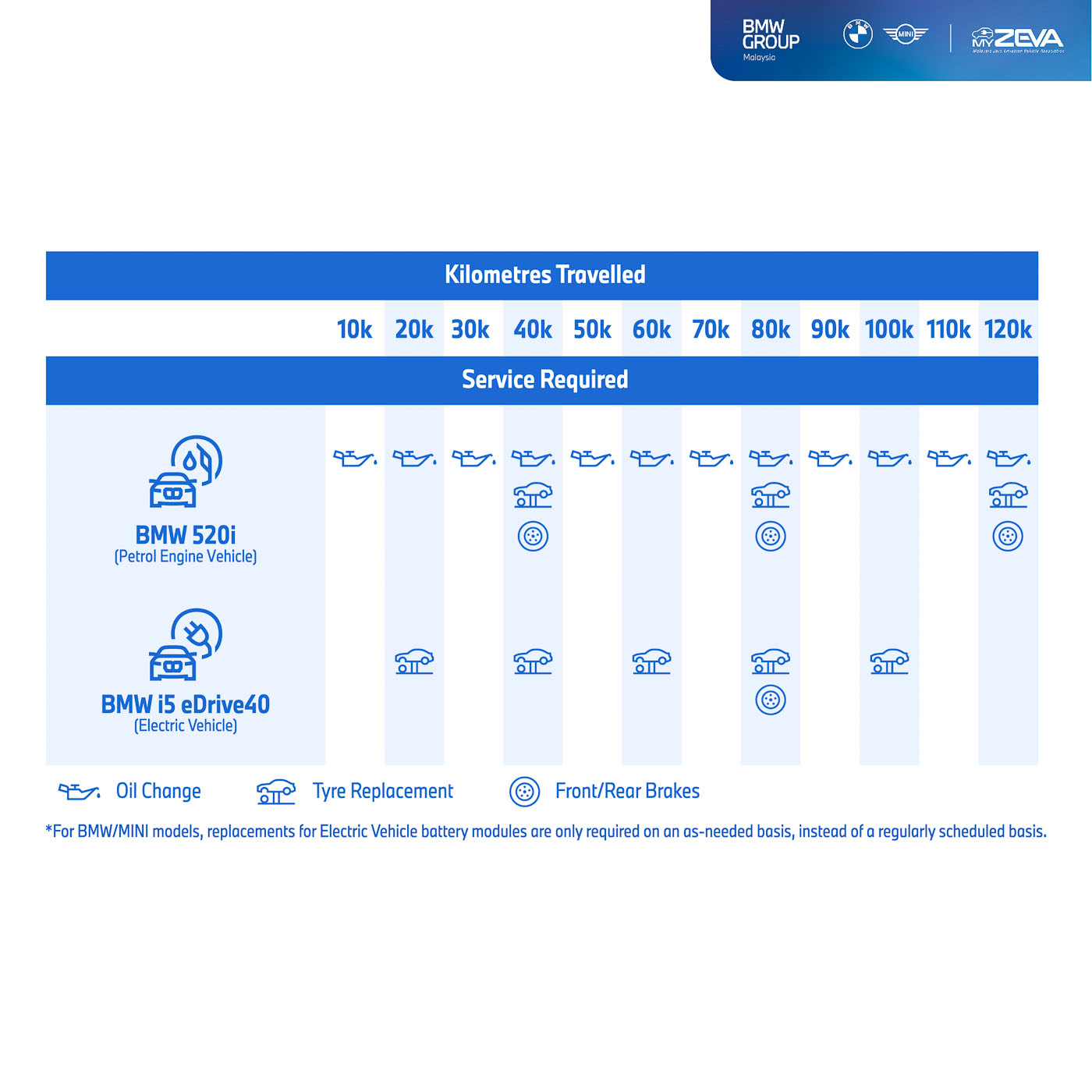
And if fuel costs are not enough to convince you, BMW Malaysia and MyZEVA also says that maintaining an EV is also cheaper than traditional ICE vehicles, as there’s no need for oil changes, and there are also fewer moving parts to replace (but you’ll be changing your tyres more often, though).
As for batteries, BMW and MINI EVs’ batteries are also made up of modules, which means you’ll only have to replace a faulty module when needed, rather than an entire battery, thus lower costs.
ALSO READ: Regen braking or coasting – which is better for your EV range?
Range anxiety is a thing of the past
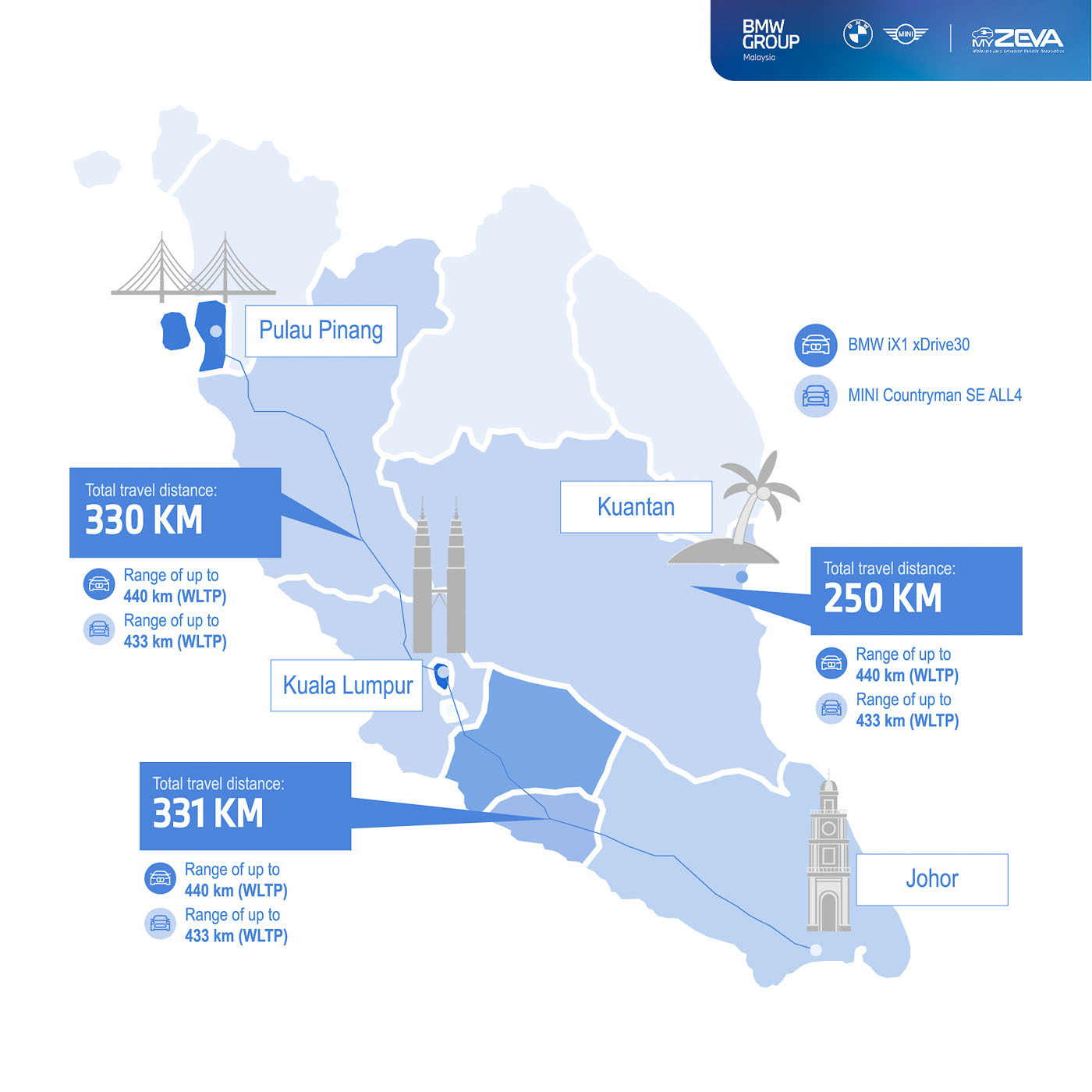
The report also highlights the fact that EVs are now more than capable for long distance interstate journeys. Cars like the iX1 xDrive30 and MINI Countryman SE All4 all have WLTP-rated driving ranges exceeding 400 km, which means trips from Kuala Lumpur to Penang (330 km), Johor (331 km), and Kuantan (250 km) can all be completed without needing to stop for charging along the way.
Of course, that will all depend on how you drive your car, as EVs become less efficient the faster they travel. On a side note, that is actually true for ICE vehicles as well – but because they are so inefficient in stop-go and low-speed traffic, we tend not too notice it that much!

It’s clear that EVs these days are more than capable for most road users in Malaysia. But there are of course reasons to still be apprehensive about EVs, such as the long charging times compared to refuelling, driving enjoyment, and the favourite topic of Malaysian car buyers, residual or resale value down the road, which still remains to be seen.
With all these insights and data, are you convinced to make the switch to electric yet, or are you still team dinosaur juice? We’d love to hear your thoughts in the comments!