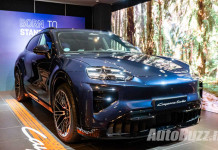
Following a vague teaser last week, BYD Malaysia has finally pulled the wraps off the mystery model, confirming our initial suspicions that it is the 2026 BYD Atto 3 facelift update. Interestingly, details shared in the post suggest that Malaysia could be receiving a version similar to the one introduced in the UK earlier this year, featuring a new rear-wheel-drive (RWD) platform and an 800V electrical architecture.
One clue lies in the quoted 0-100 km/h time of 5.5 seconds, suggesting Malaysia could be receiving the same updated BYD Atto 3 already introduced in the UK.

In the UK, the refreshed model is offered in a rear-wheel-drive (RWD) configuration producing 313 hp and 380 Nm of torque. It matches the claimed 5.5-second century sprint time and carries a top speed of 180 km/h. Despite the performance boost, range remains impressive at up to 510 km (WLTP), with energy supplied by a 74.8-kWh Blade Battery.
The updated Atto 3 is also available in a more potent all-wheel-drive (AWD) variant in the UK. An additional front-mounted motor raises output to 449 hp and 560 Nm, slashing the 0–100 km/h sprint time to just 3.9 seconds — only 0.1 second slower than the BYD Seal Performance. Top speed also increases to 200 km/h.
ALSO READ: The BYD Dolphin G is the brand’s smallest PHEV yet – but can still travel 1,000 km in one tank

Range drops slightly to 470 km (WLTP) in AWD guise, though that is still significantly higher than the current Atto 3 Ultra sold in Malaysia, which is based on the Extended Range version.
Both variants share the same aforementioned 74.8-kWh Blade Battery. However, the updated Atto 3 adopts a new 800V electrical architecture, enabling DC fast-charging rates of up to 220 kW. This allows the battery to charge from 10% to 80% in just 25 minutes. AC charging is rated at 11 kW, allowing a full charge in around eight hours, while vehicle-to-load (V2L) functionality is supported at up to 3.3 kW.
It’s worth noting that the image and model used in the social media post by BYD Malaysia closely resembles one featured on BYD Hong Kong’s website. However, the specifications suggest that Malaysia is unlikely to receive the same version.

In Hong Kong, the updated Atto 3 retains a front-wheel-drive (FWD) layout with a single motor producing 204 hp and 310 Nm, identical to the current Malaysian model. Charging performance has been improved, with DC fast-charging now rated at up to 105 kW, while energy is supplied by a 60.48-kWh Blade Battery that delivers up to 420 km of WLTP-rated range.
The biggest clue lies in its performance figures. The quickest Hong Kong-spec Atto 3 completes the 0-100 km/h sprint in 7.3 seconds, significantly slower than the 5.5-second figure quoted on the Facebook teaser post.
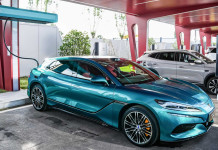
Alright, enough of powertrains and figures. The 2026 BYD Atto 3 facelift update, regardless of where it’s coming from, will feature new and slightly more simplistic looks. The front and rear bumpers have been revised, while the rear sports a new rear spoiler with two vertically mounted brake lights. Completing the exterior updates is a new set of 18-inch alloy wheels, finished in grey on the UK-spec model and a dual-tone dual-five-spoke design in Hong Kong.
ALSO READ: BYD Atto 3 gets a new facelift in China with 326 hp and new RWD platform

Inside, the Atto 3 also receives several updates to bring it in line with newer BYD models. The gear selector has been relocated to the steering column, freeing up space for a cleaner and more minimalist centre console layout. Practicality has also been improved, with boot capacity increasing from 440 litres to 490 litres. With the rear seats folded, cargo space expands to 1,360 litres.
As for the displays, the updated model retains its 8.8-inch digital instrument cluster and 15.6-inch rotating central infotainment touchscreen, complete with Apple CarPlay and Android Auto connectivity.
The 2026 BYD Atto 3 facelift is set to launch in Malaysia on 5 June. While BYD has yet to reveal pricing, the updated model is expected to cost more than the outgoing version. With the exemption for fully imported (CBU) EVs having ended and local assembly (CKD) plans not yet in place, BYD may have little room to maintain the current pricing structure.
READ MORE: Plan derailed: Can BYD and MITI rebuild the dream?