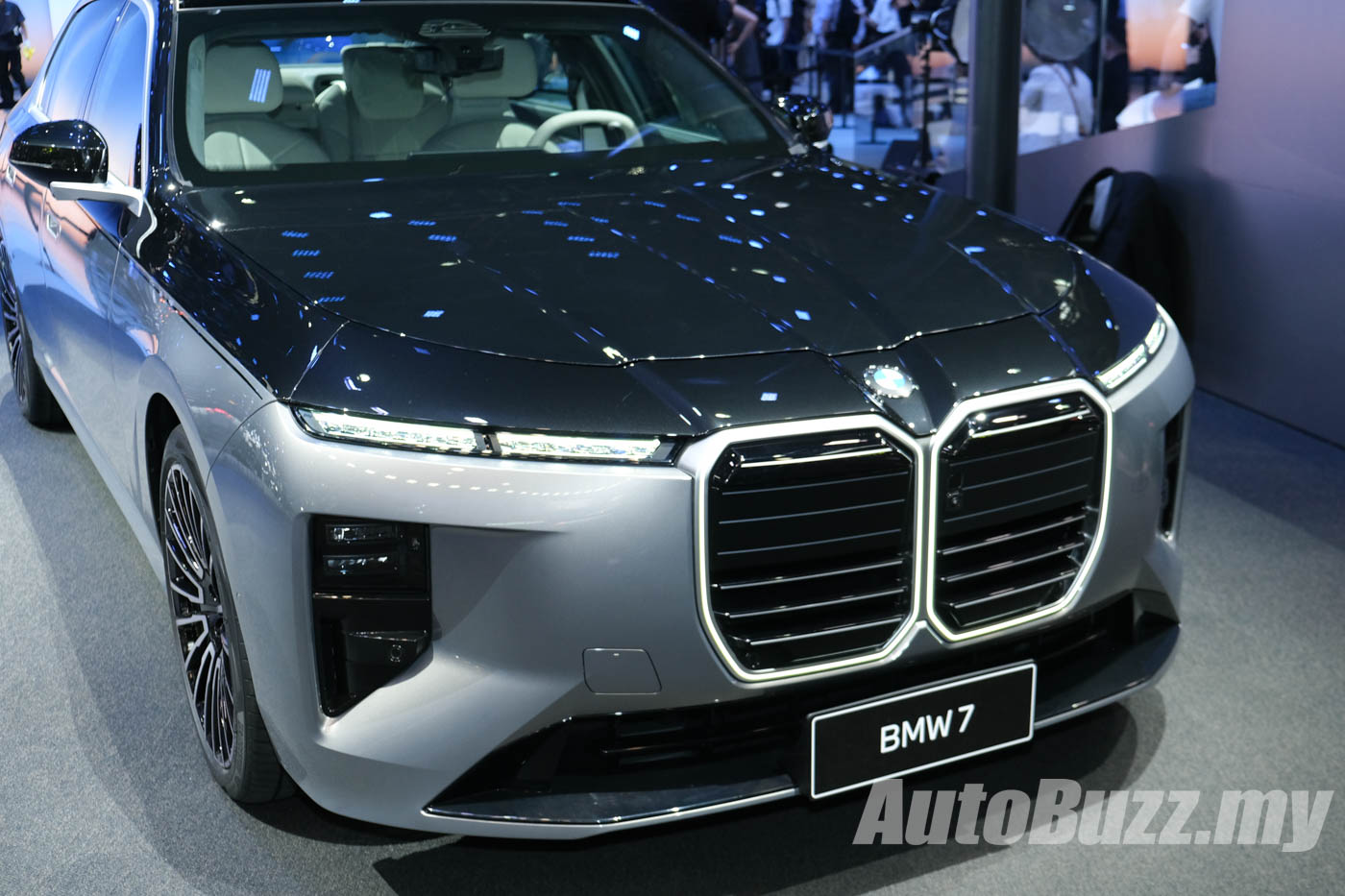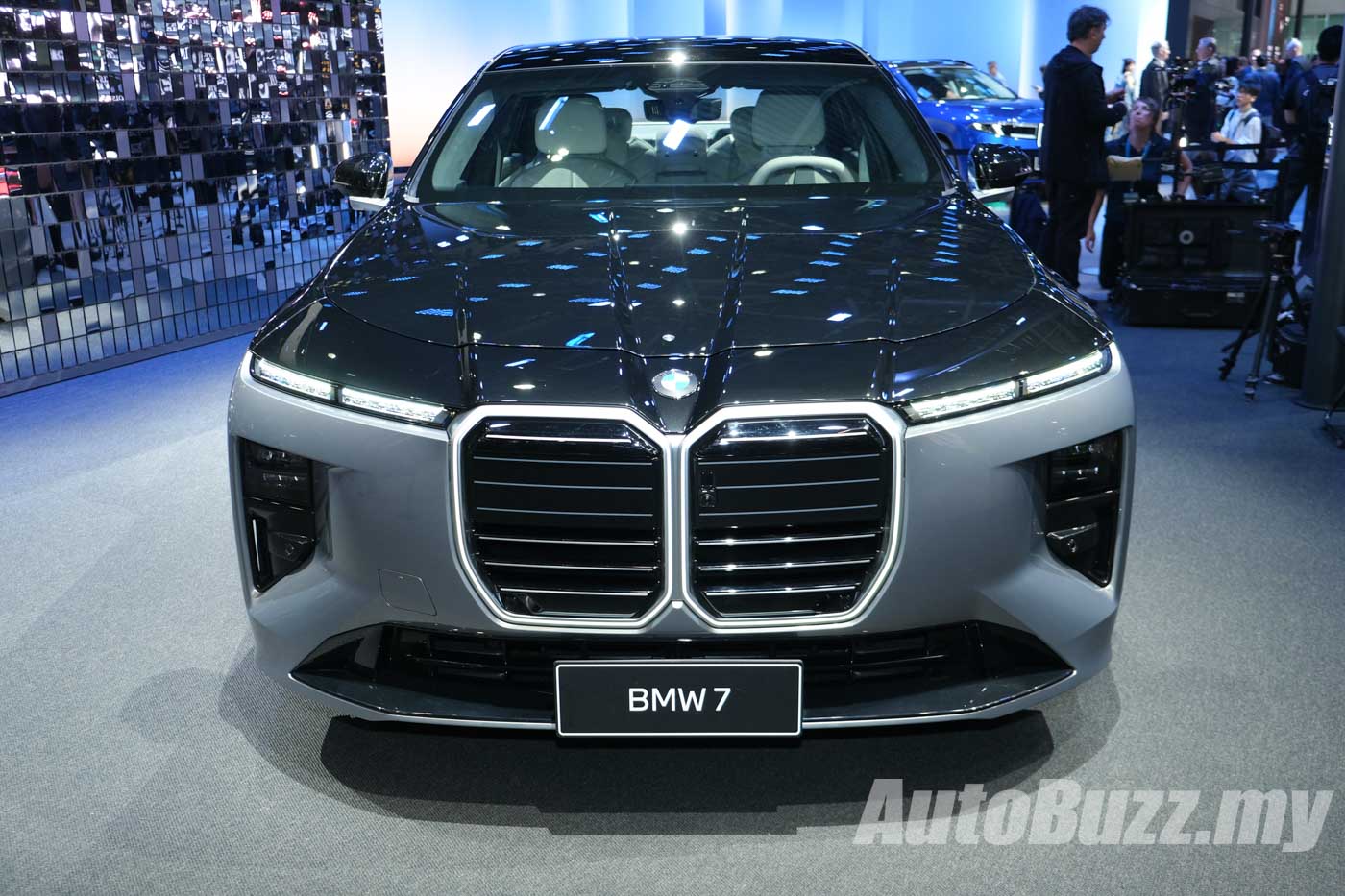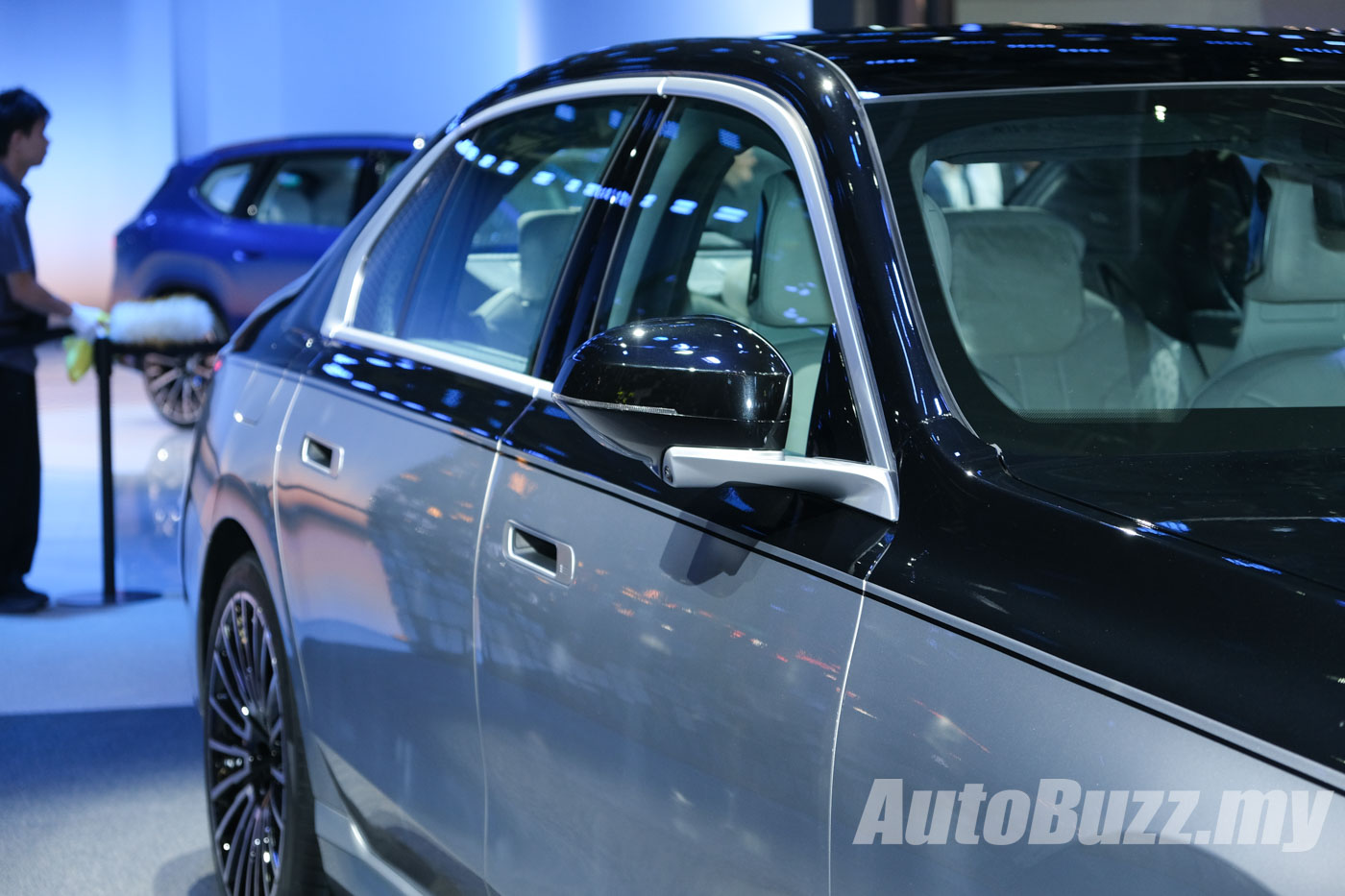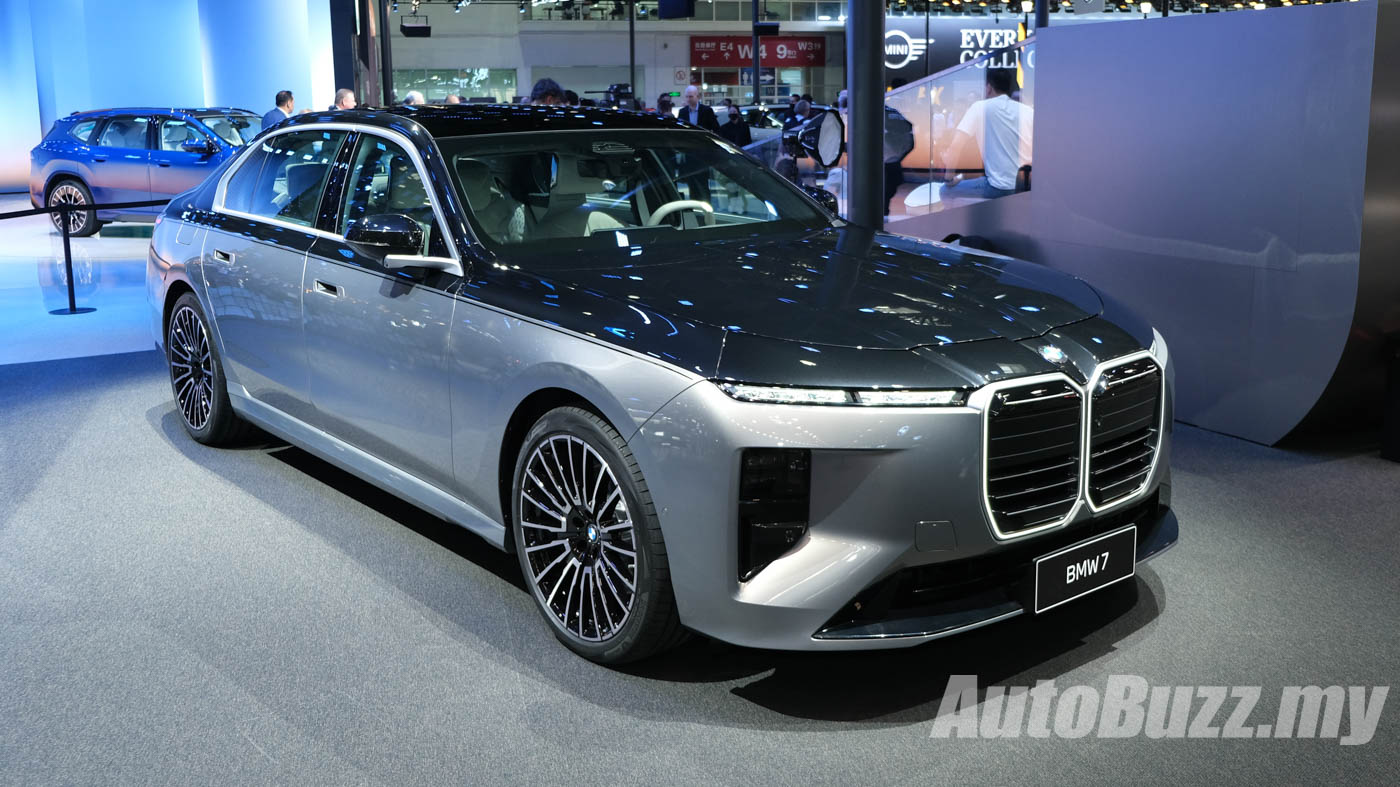
Just days after its official unveiling, the updated BMW i7, or Life Cycle Impulse (LCI) in BMW terminology, has made its first public appearance at the 2026 Beijing Autoshow. While officially classified as a mid-cycle facelift, it receives far more extensive changes than a typical LCI update, incorporating next-generation technologies from BMW’s latest Neue Klasse models.
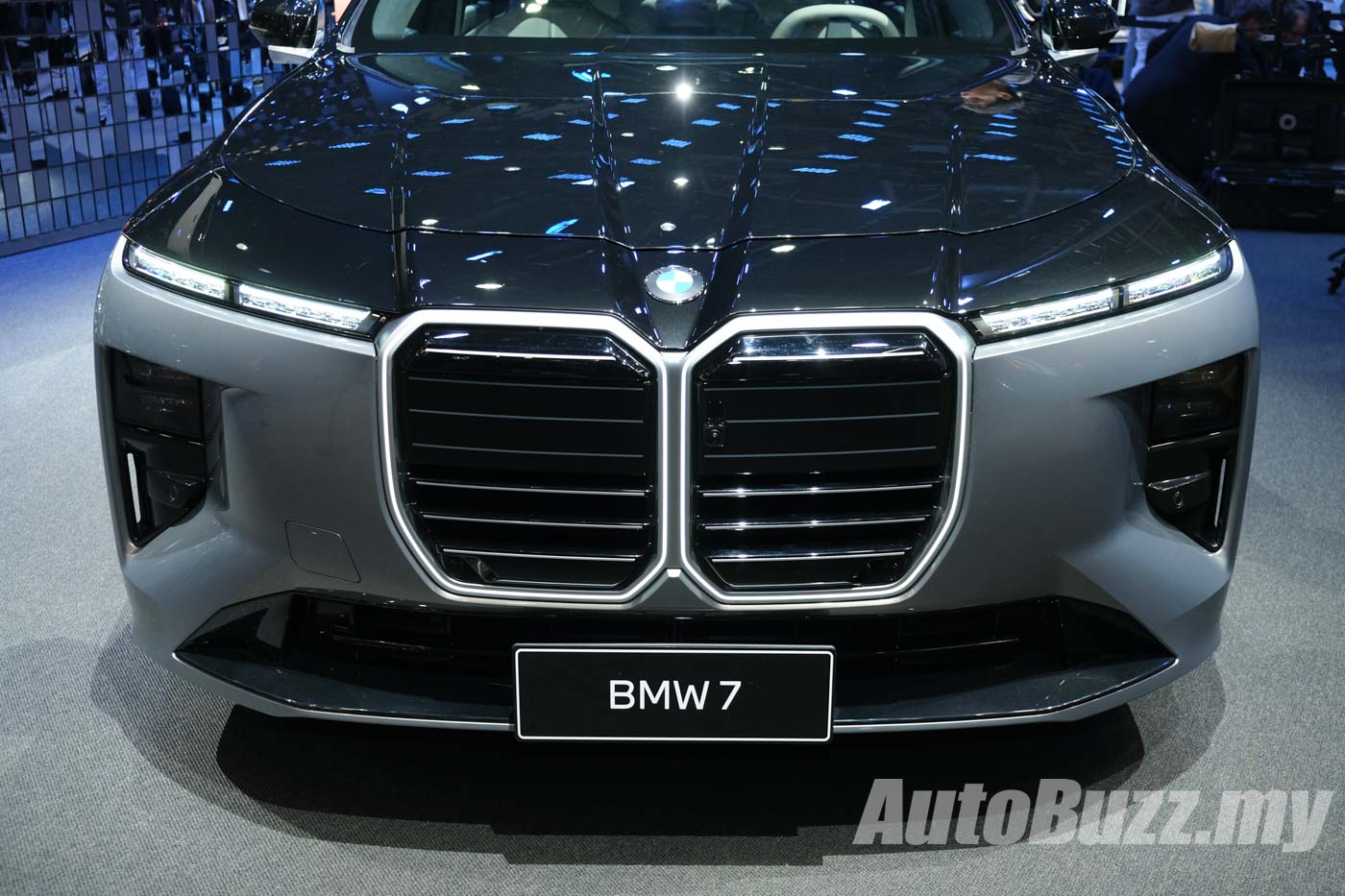
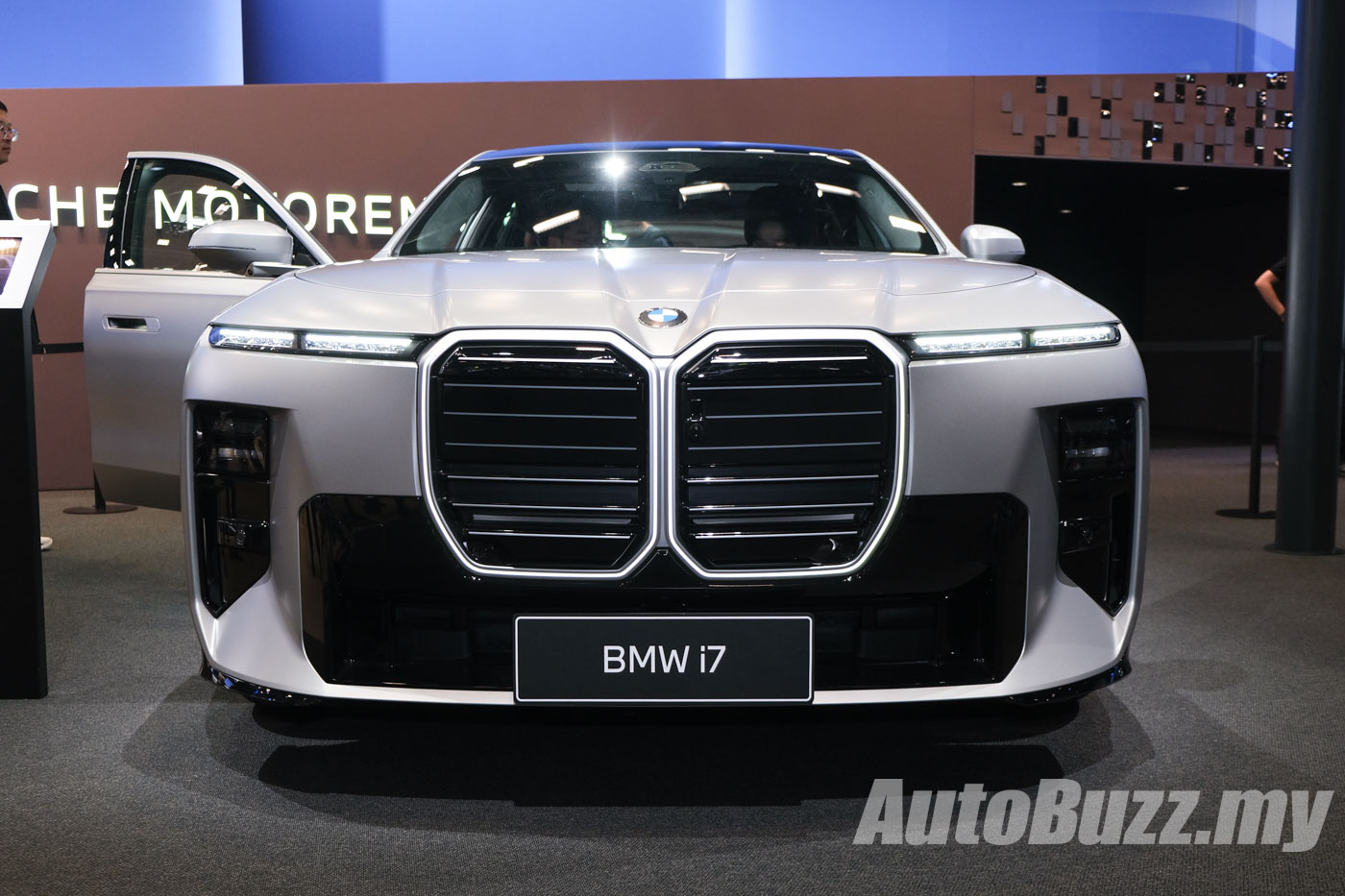
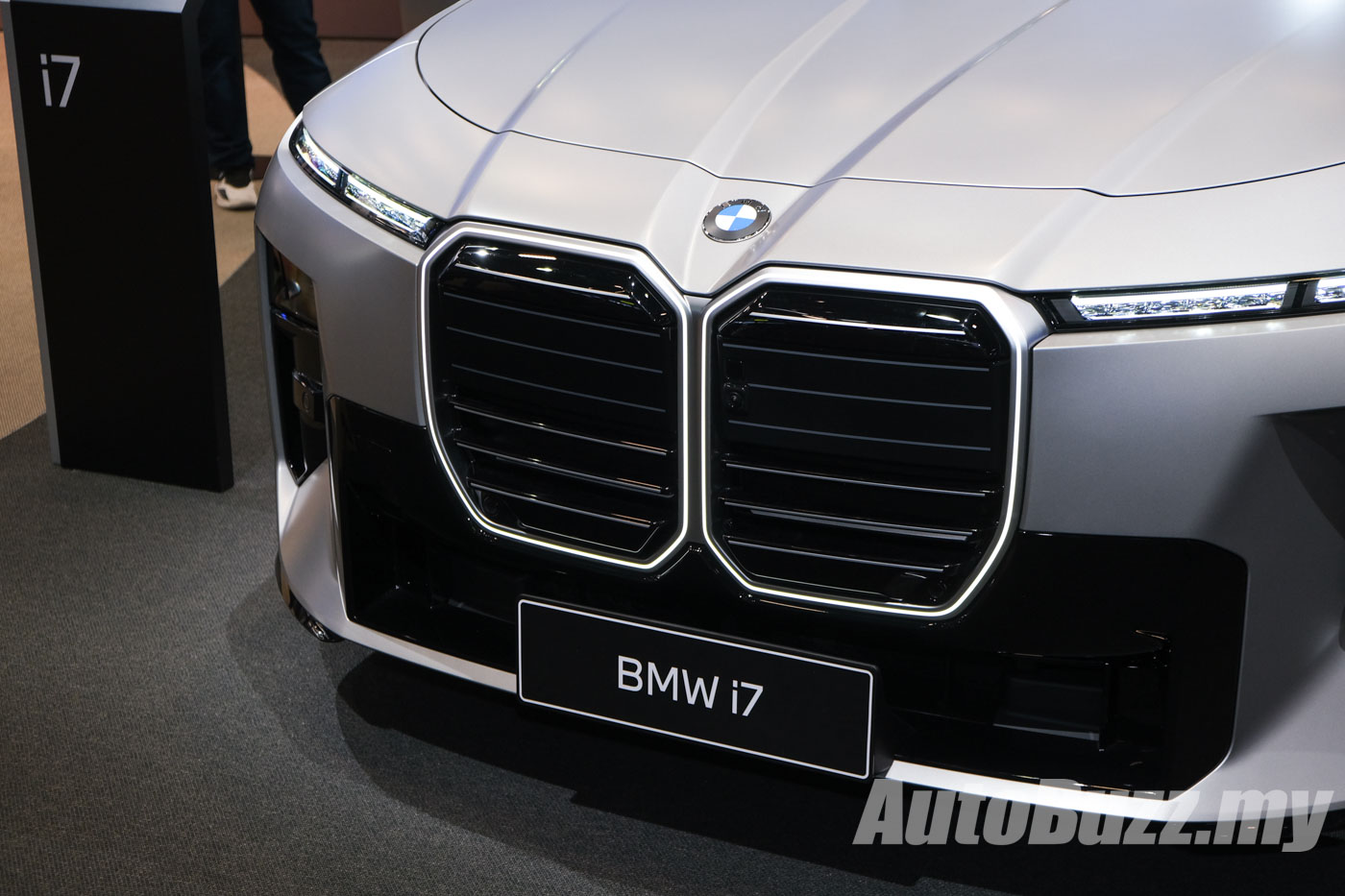
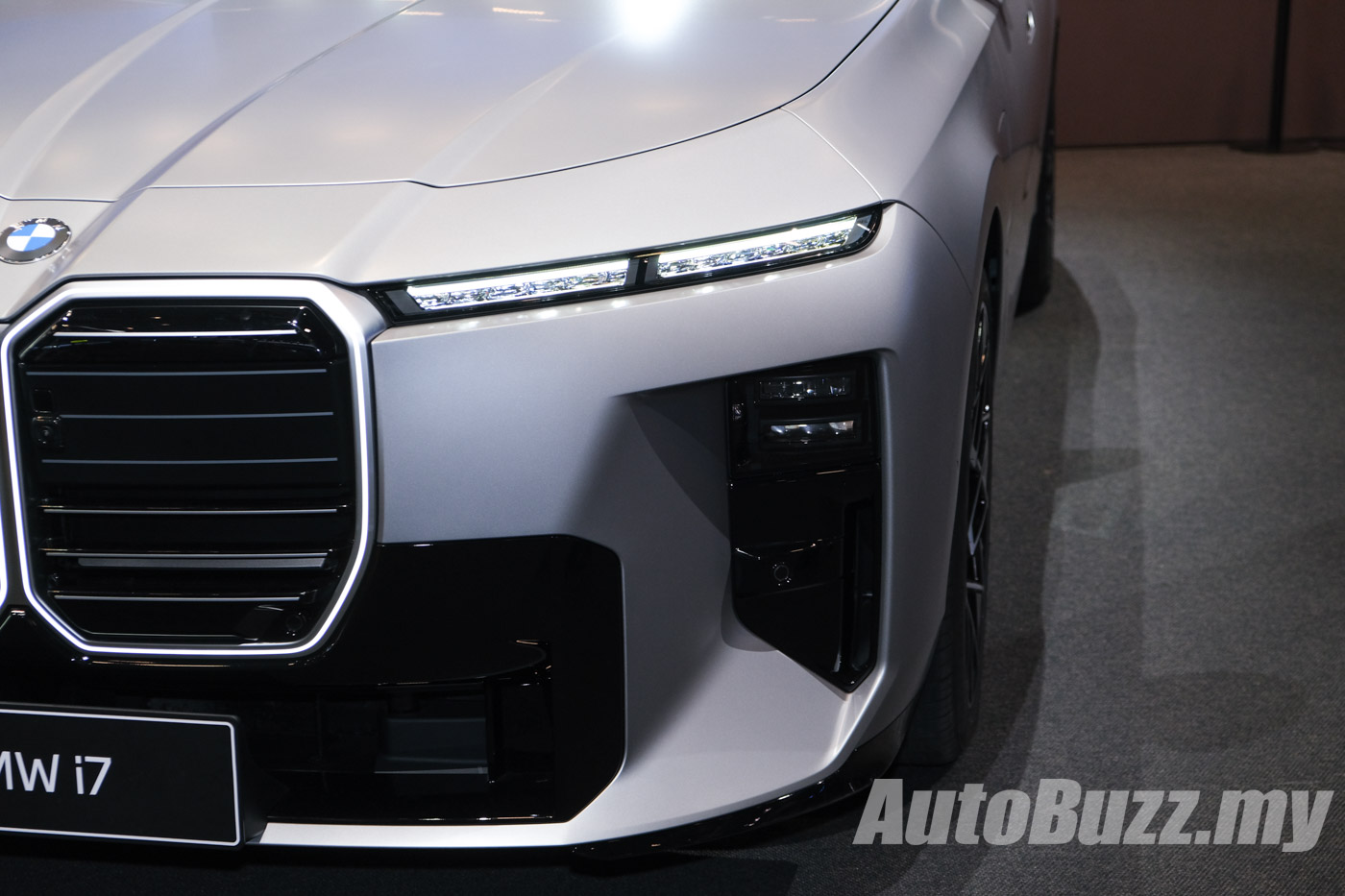
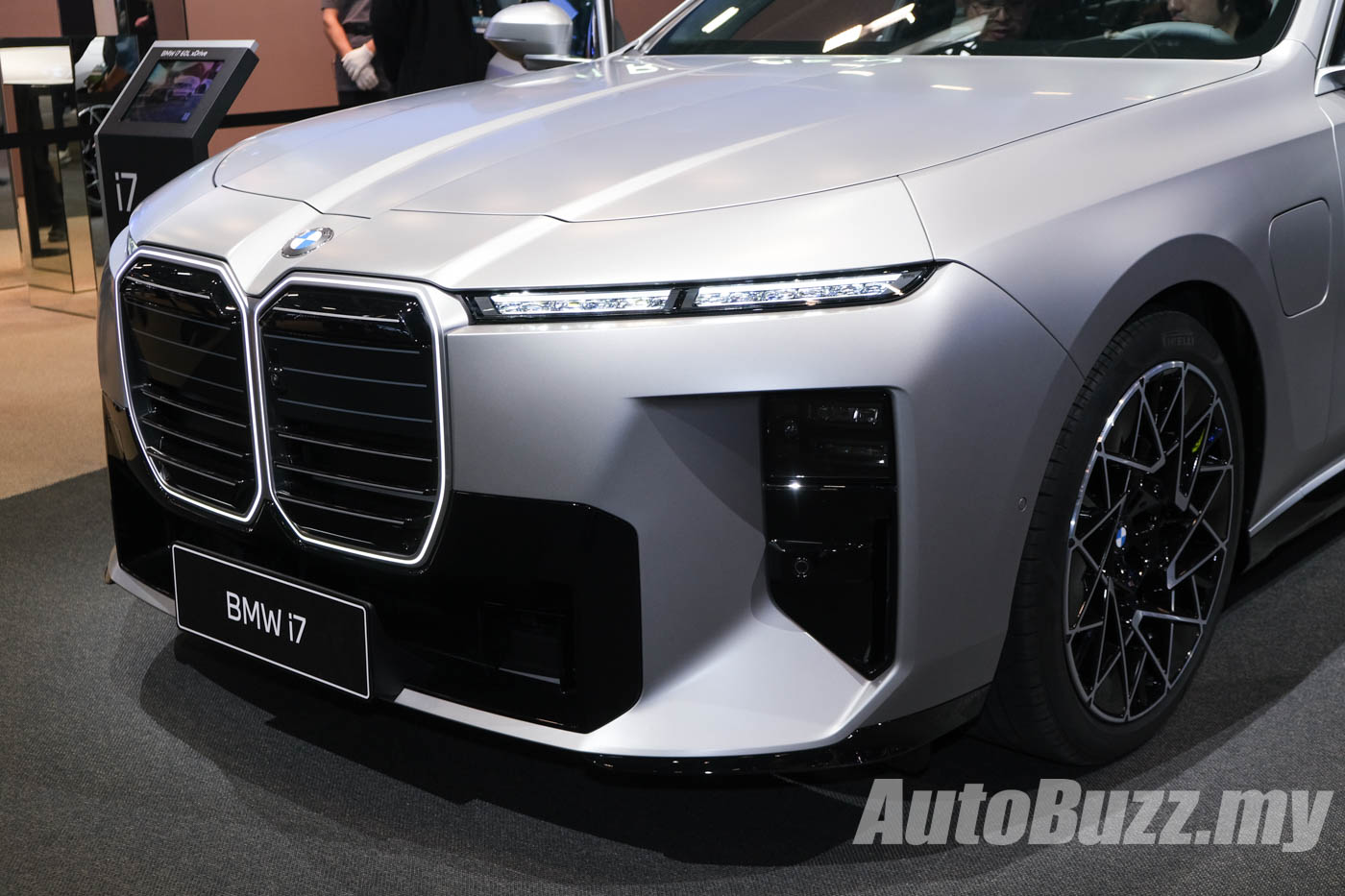
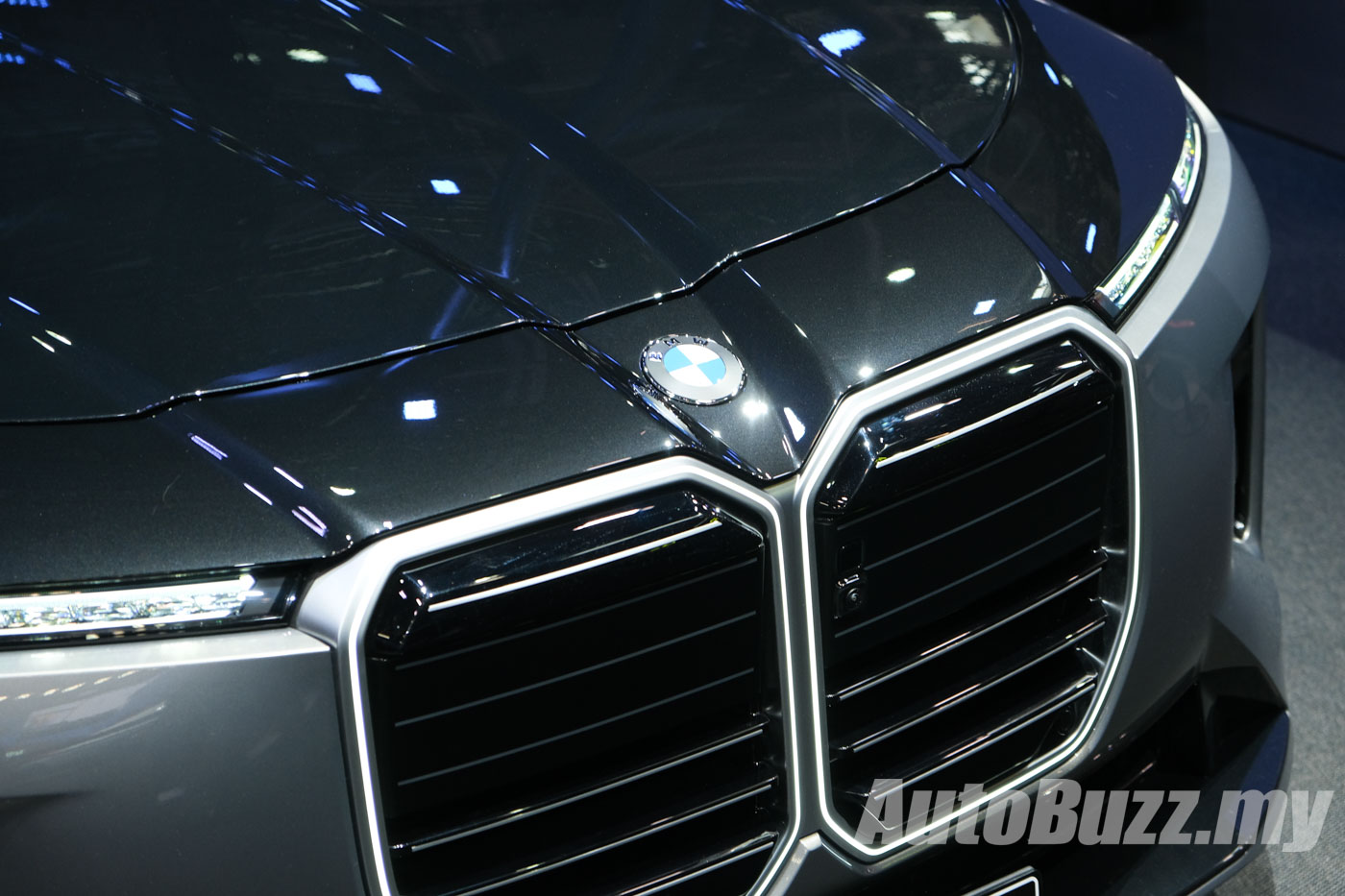
Let’s start with the design. Up front, the new BMW i7 receives a completely redesigned kidney grille with illuminated LED surrounds tracing each nostril. While the grille itself appears more upright and prominent, its reshaped design, along with the squared-off lower grille feels slightly less “in your face” than before, giving the car a more commanding rather than aggressive presence.
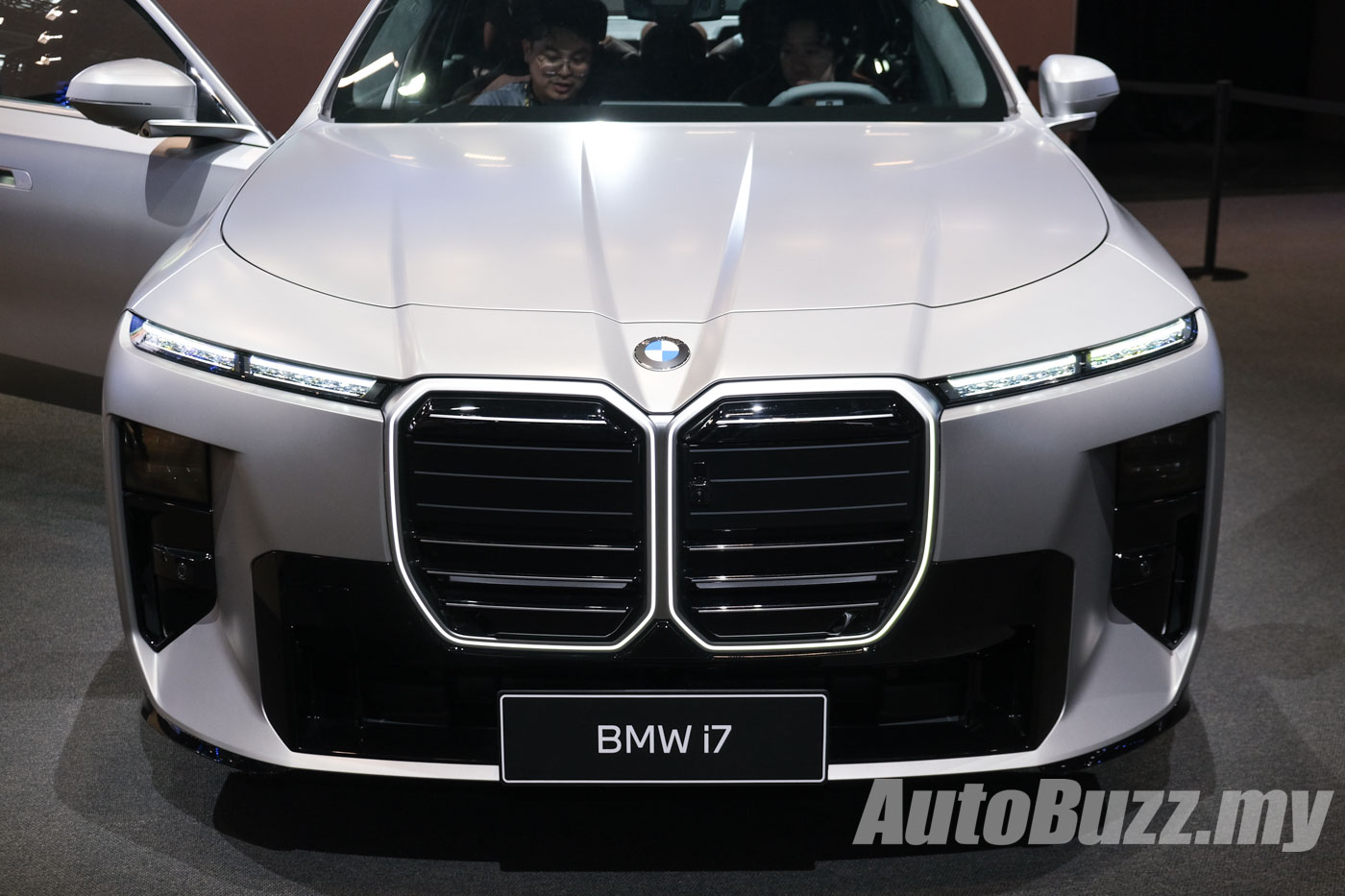
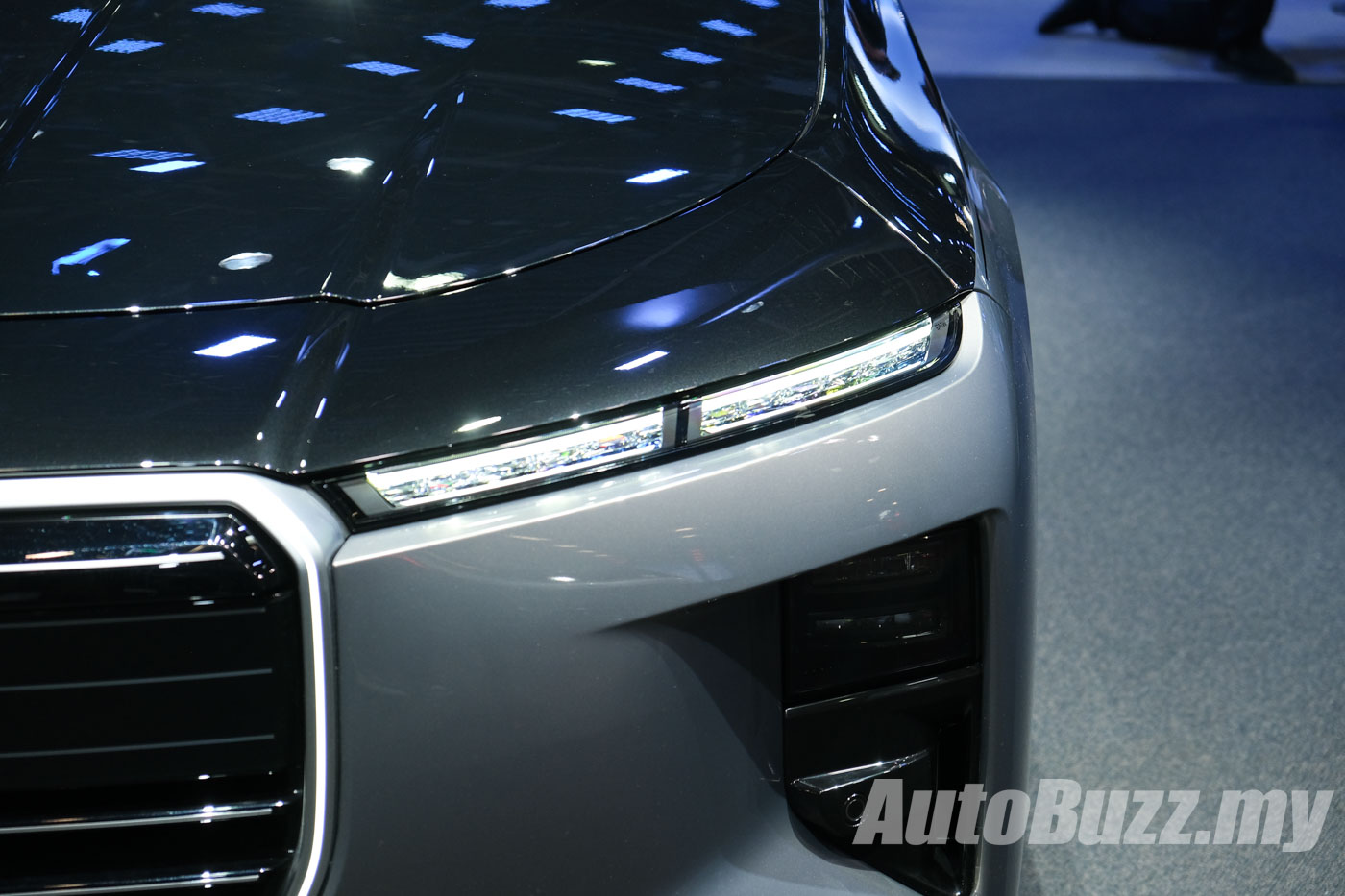
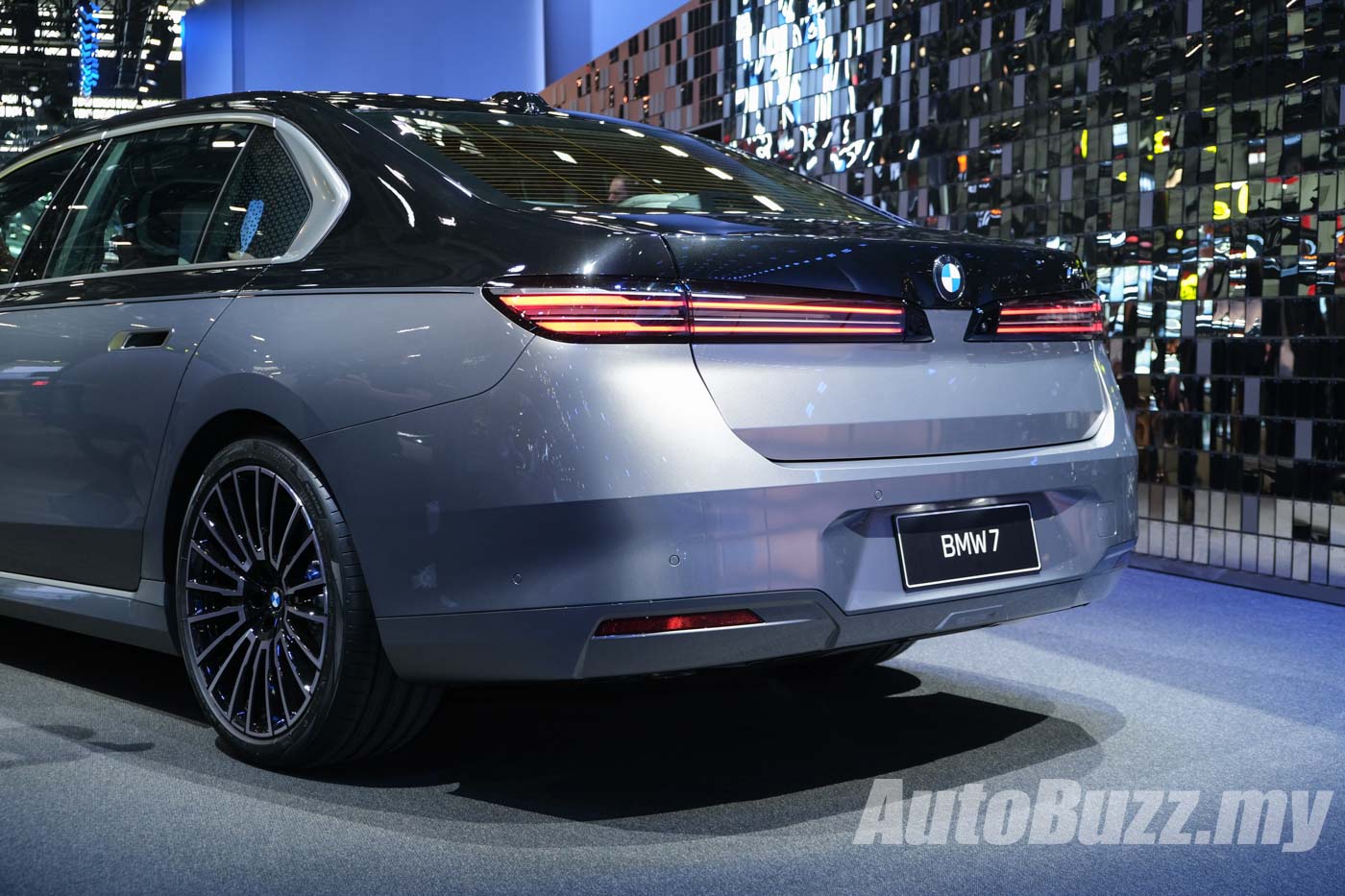
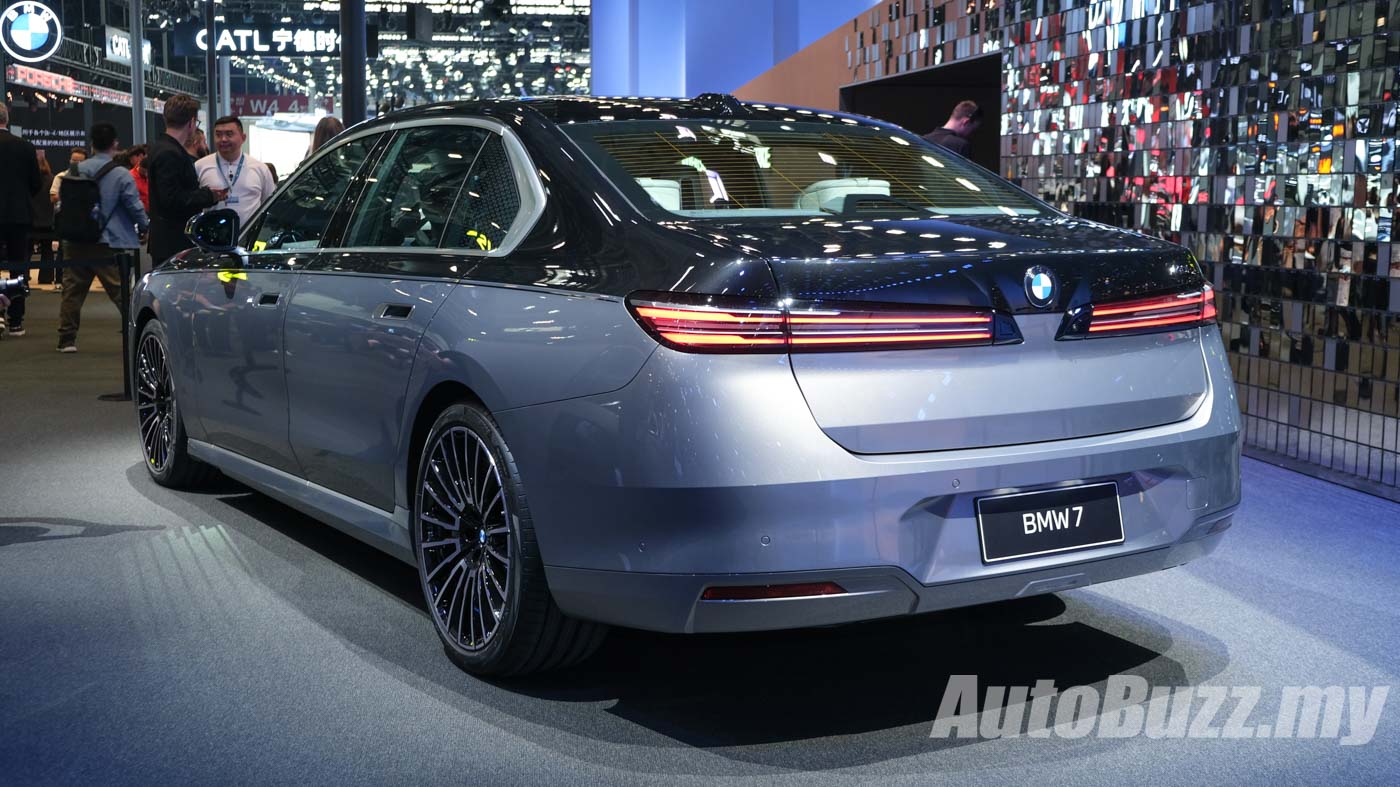
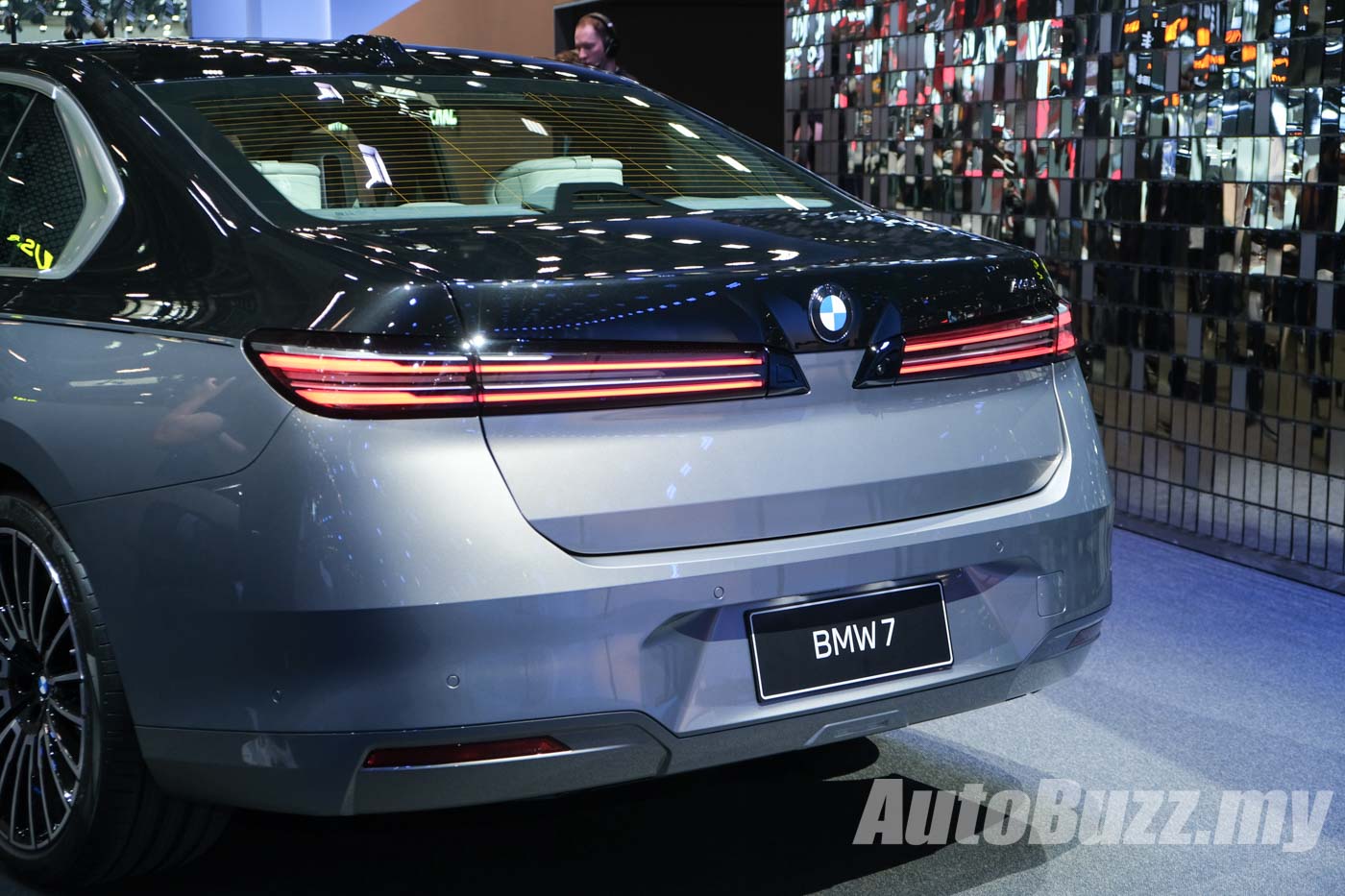
This is paired with new headlights that retain the model’s signature split-light arrangement, although the lower main beam units are now more seamlessly integrated into the side vent design for a cleaner and more discreet appearance. The rear, on the other hand, receives a far more noticeable redesign. The taillights now feature dual parallel LED light strips that extend almost the full width of the tailgate, giving the new BMW i7 a wider and more high-tech appearance.
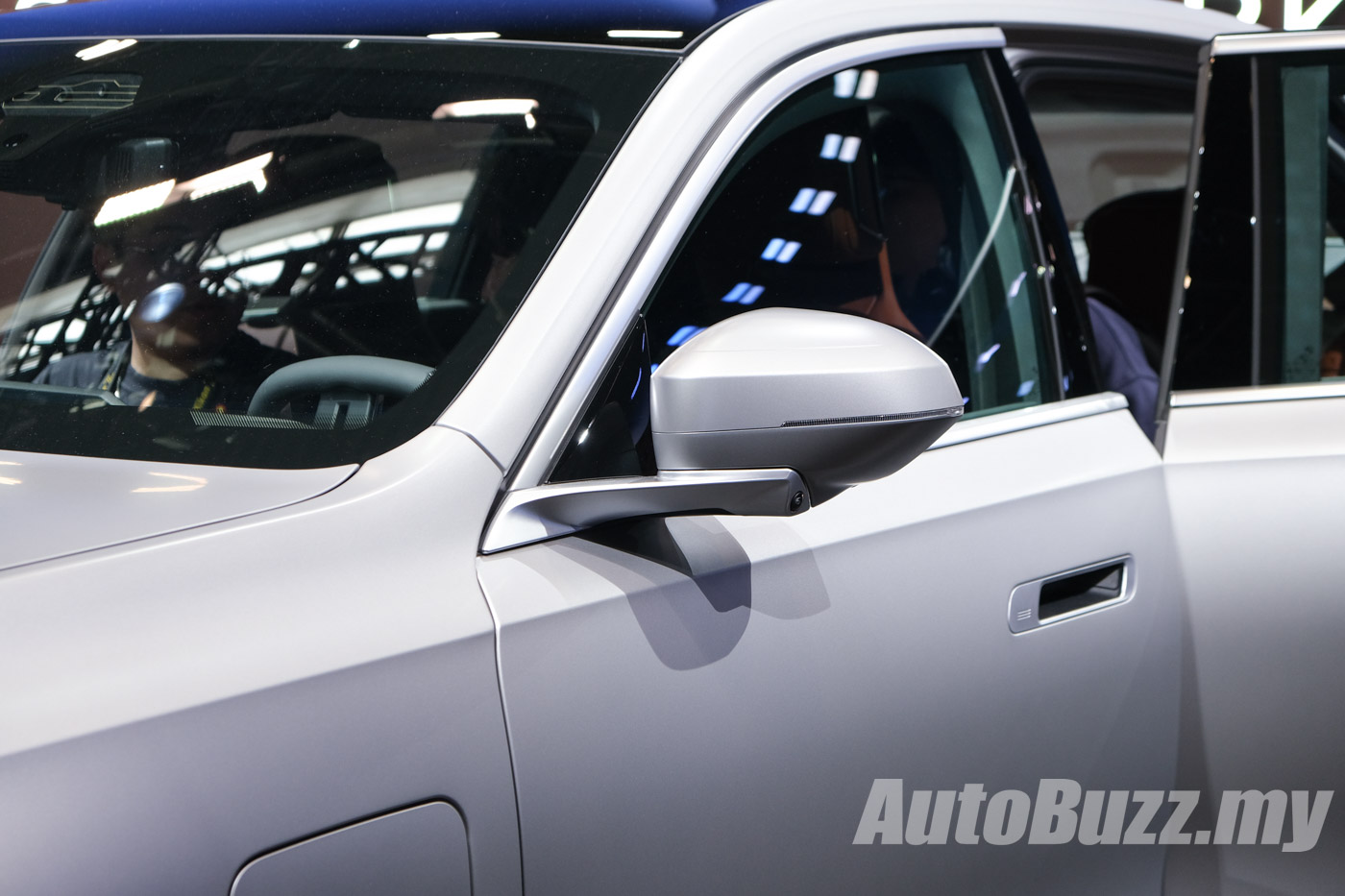
In line with its more matured styling, the rear bumper has also been cleaned up considerably. The black plastic trims from the previous model are gone, replaced by subtler body-coloured elements and more refined contours along the lower section. Completing the updated look are newly designed alloy wheels, which can be specified in sizes of up to 22 inches.
ALSO READ: BMW iX3 L unveiled in China with exclusive add-ons – coming to Malaysia soon
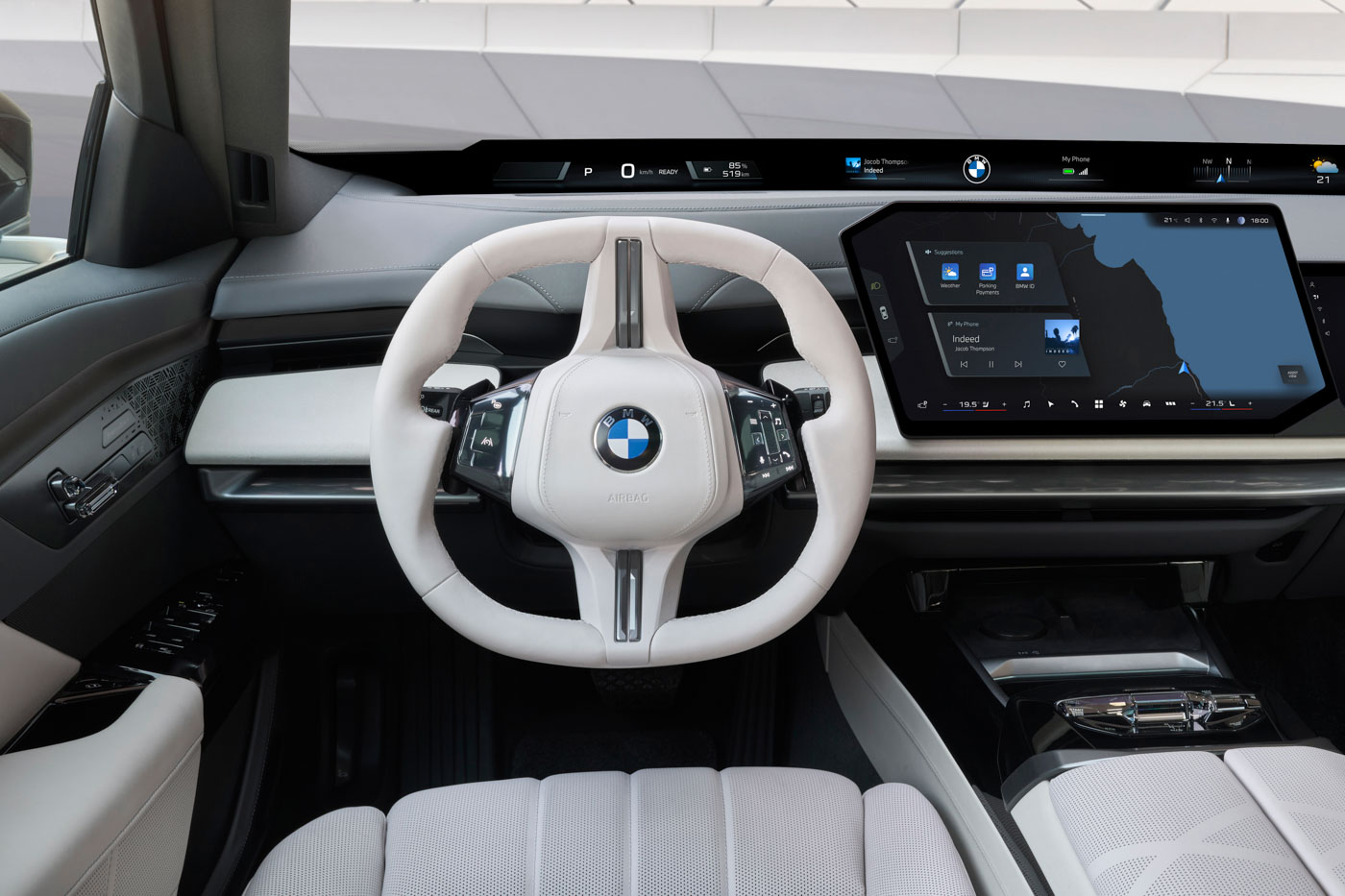
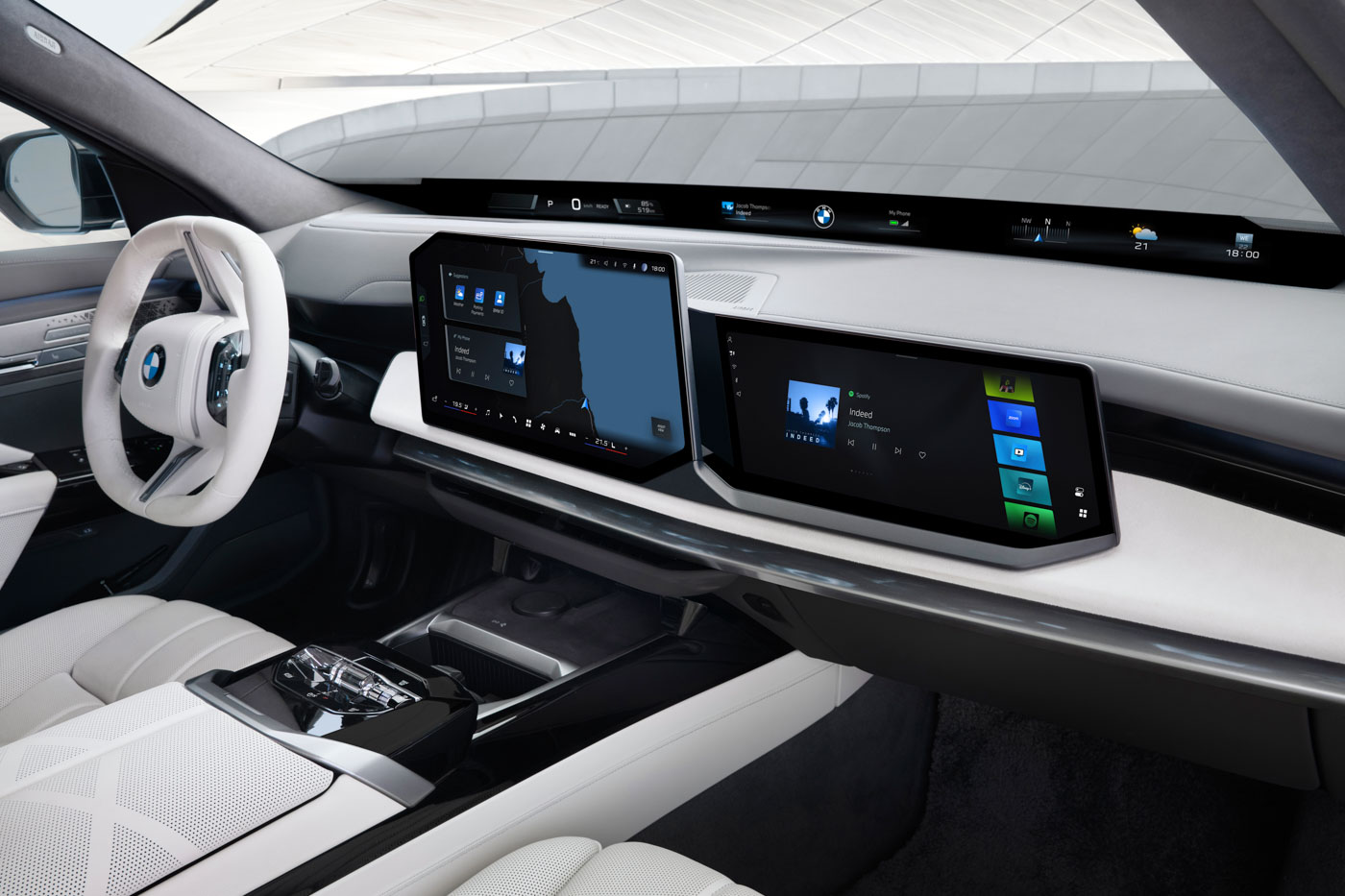
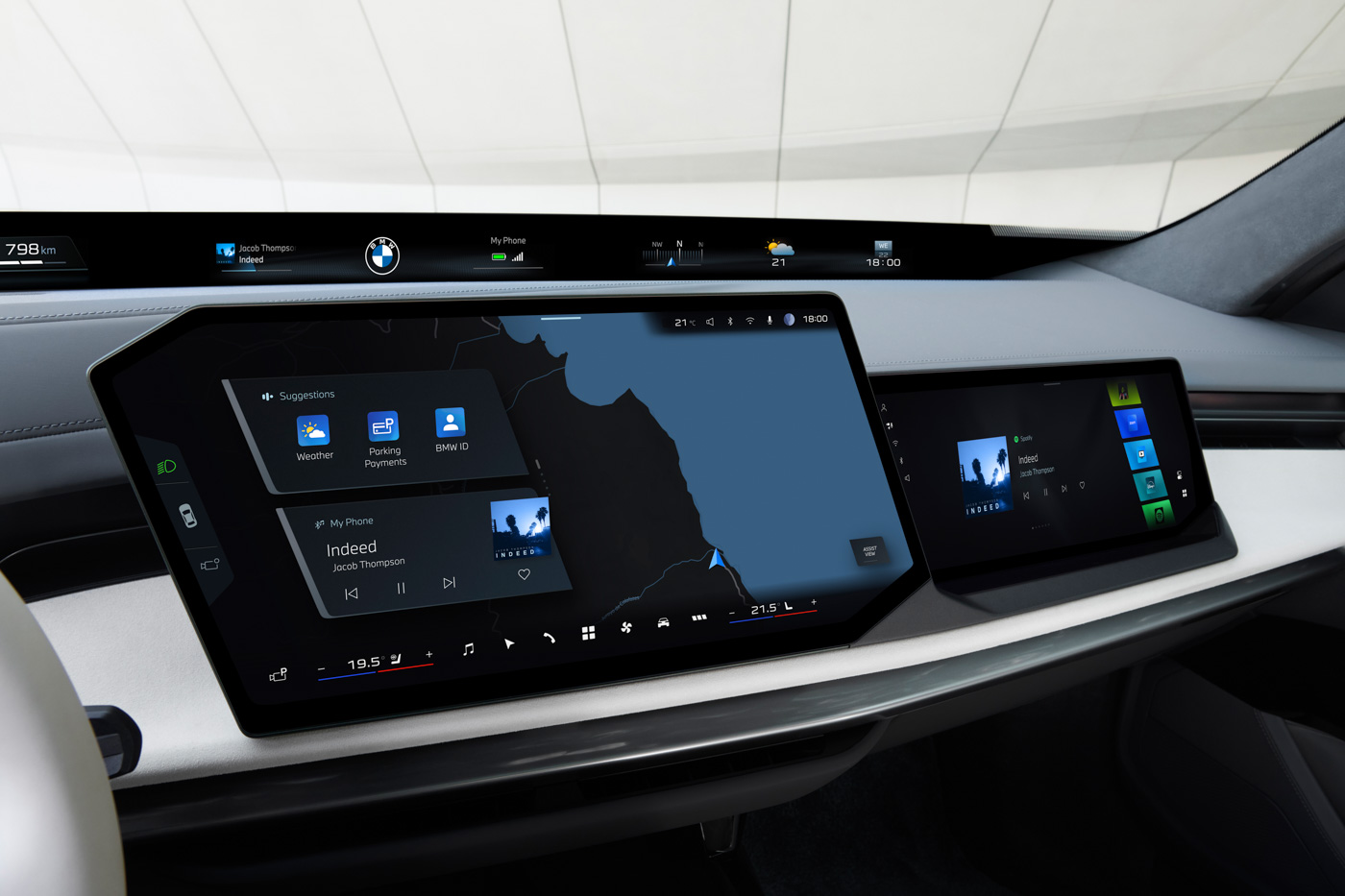
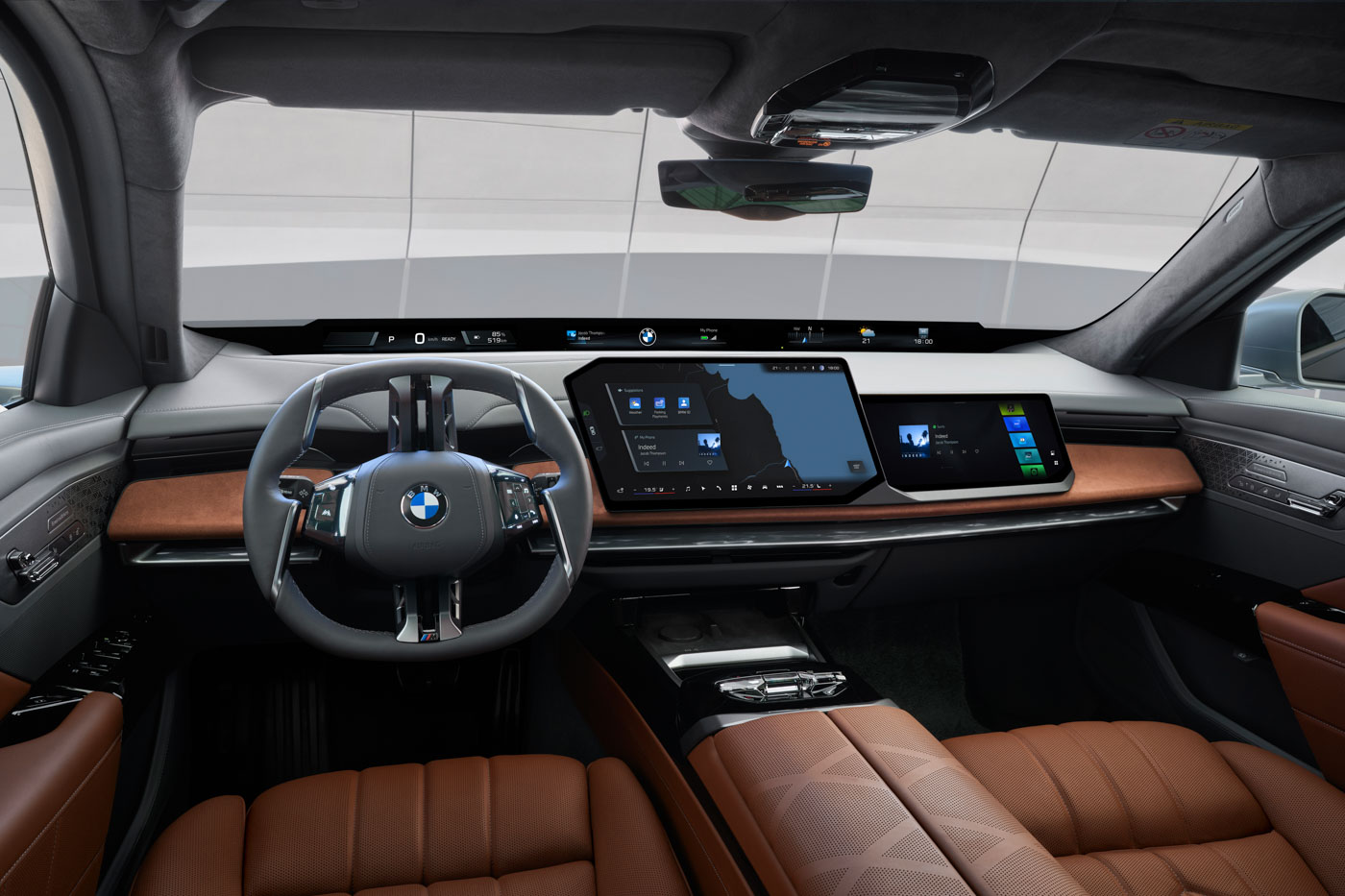
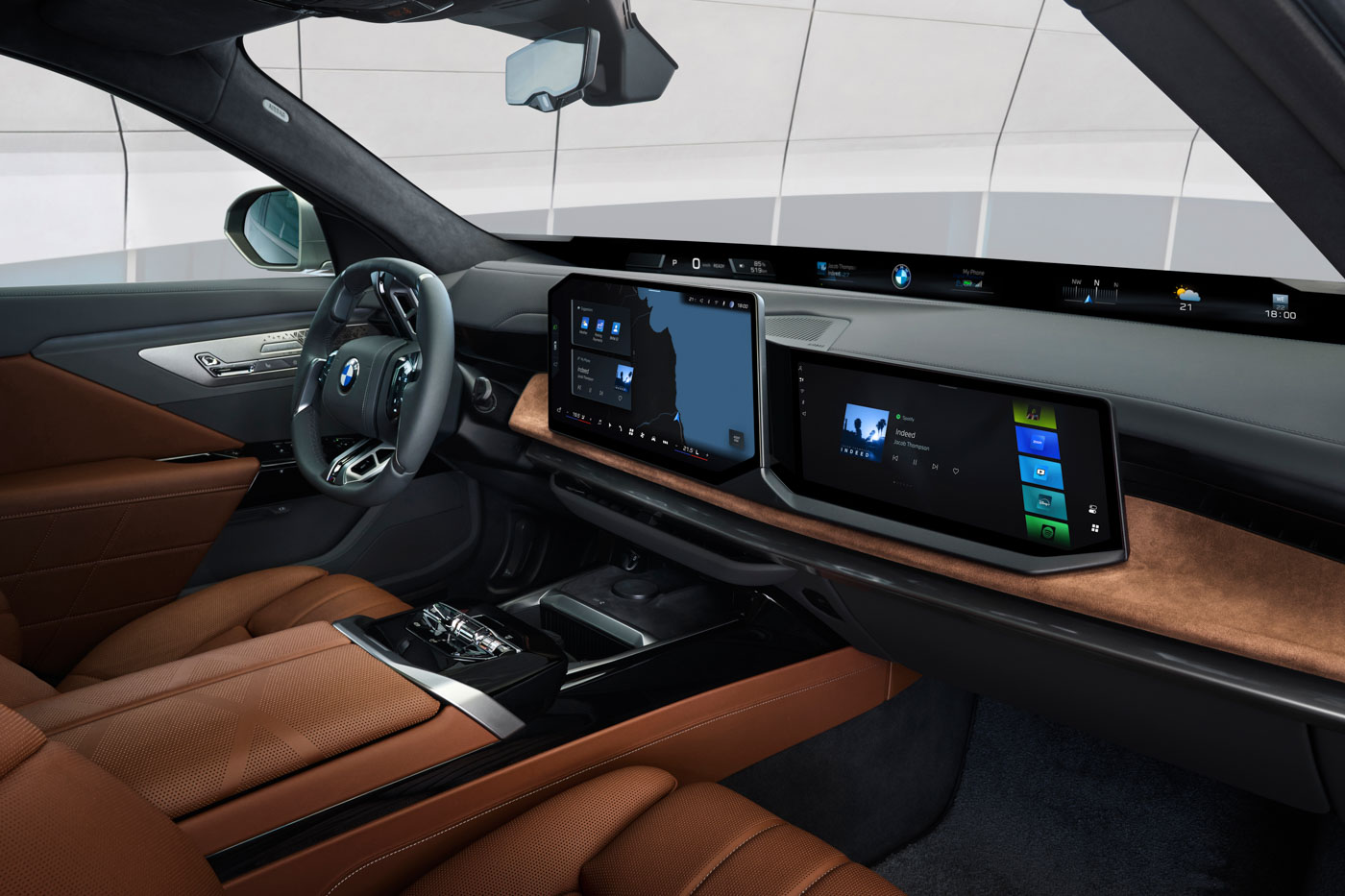
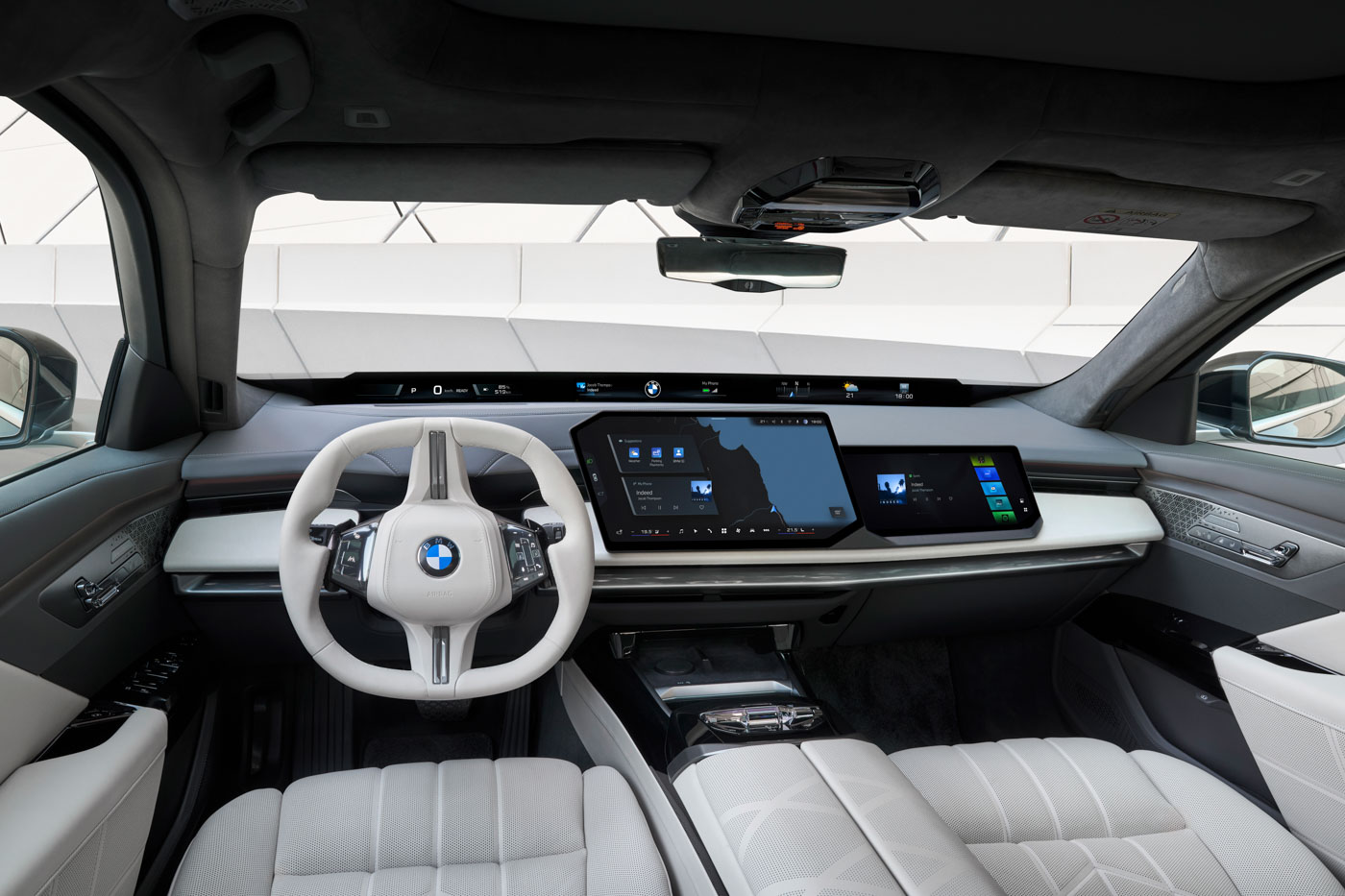
While we were not allowed to enter the car, images from its official unveiling reveal that the new BMW i7 adopts much of the interior technology introduced in the brand’s upcoming Neue Klasse models. The cabin now features a new 17.9-inch parallelogram-shaped central touchscreen paired with BMW’s Panoramic iDrive display. Notably, the setup is also complemented by a dedicated passenger-side display — marking a first for a BMW production car.
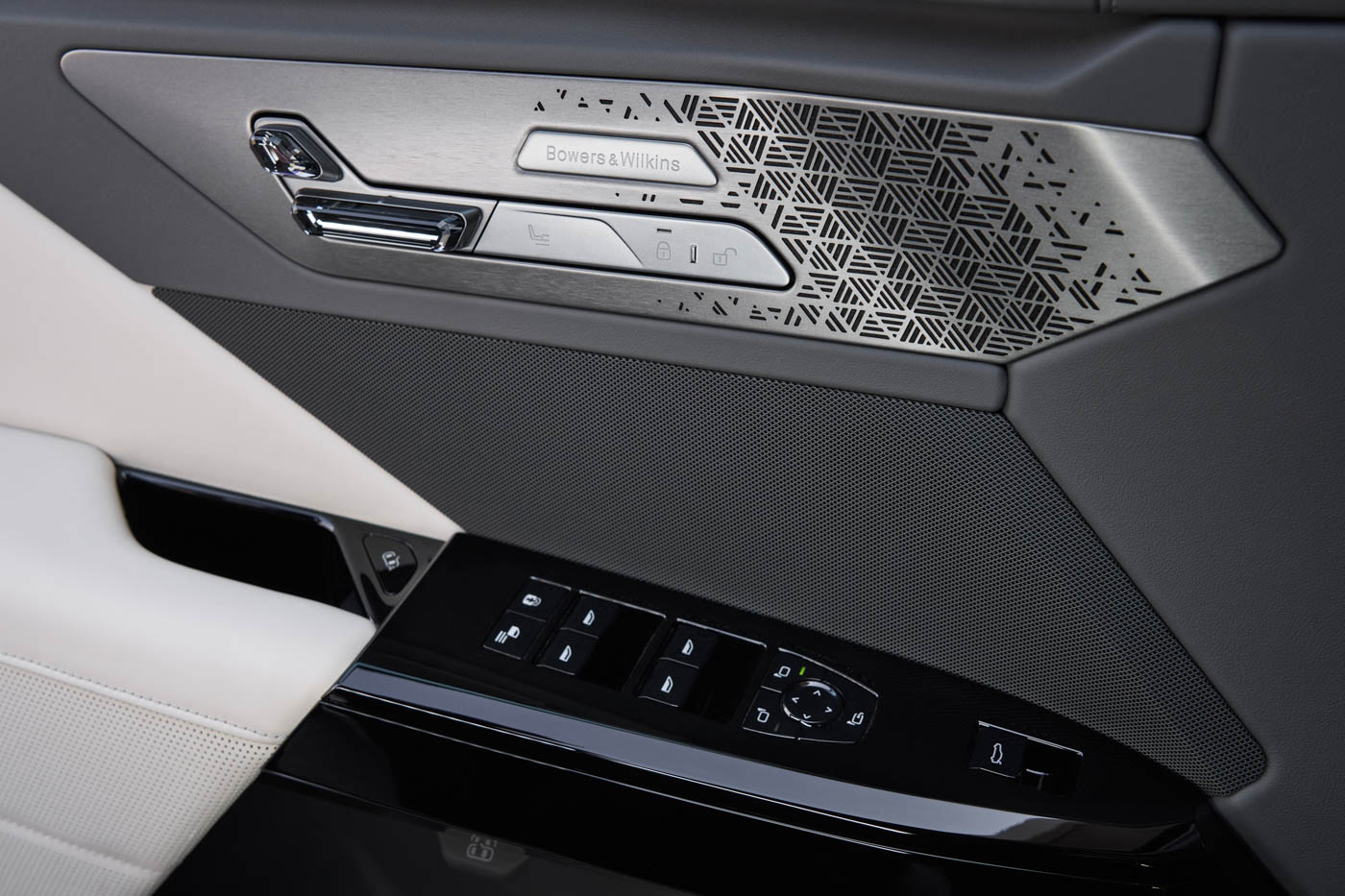
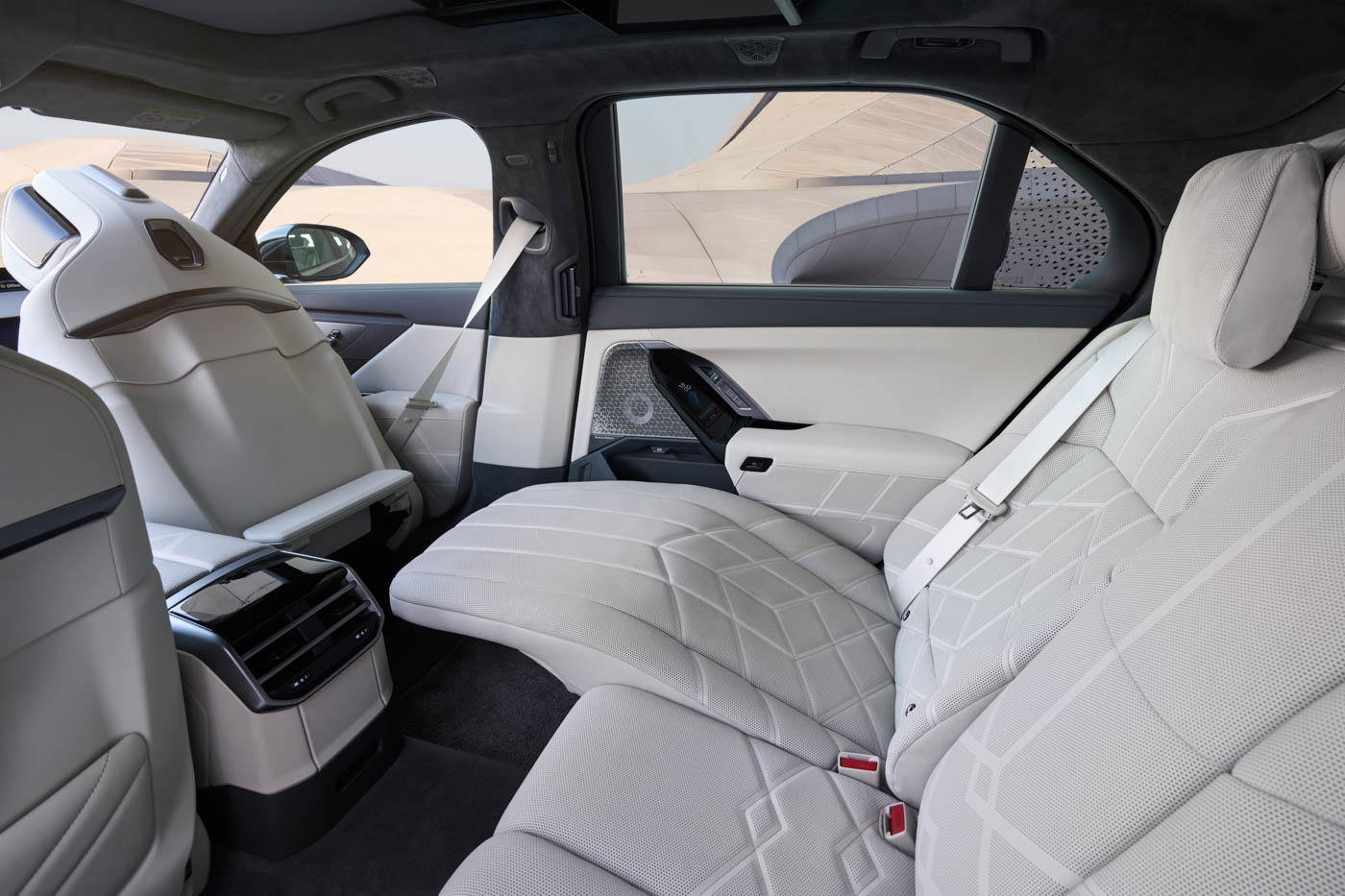
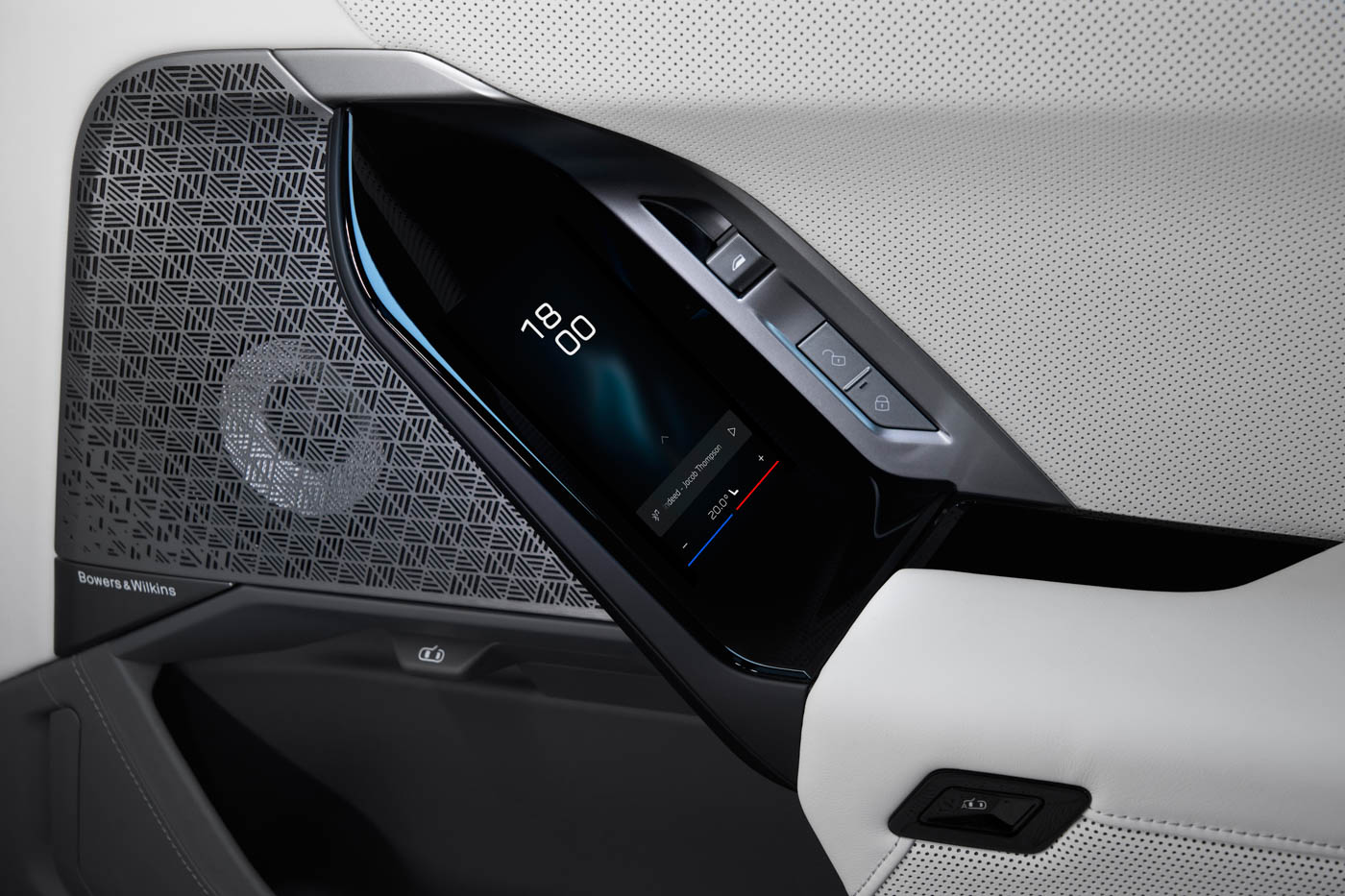
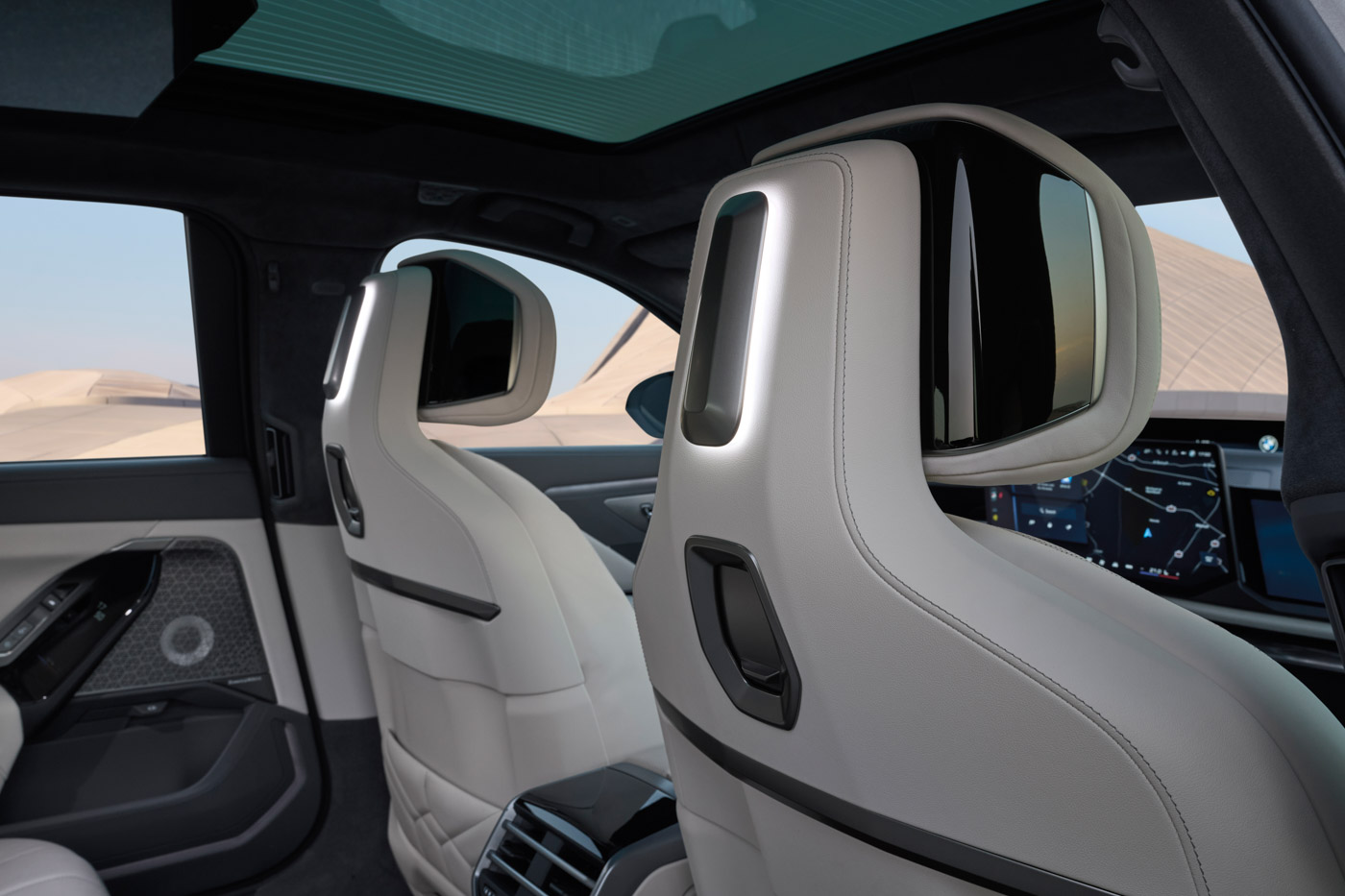
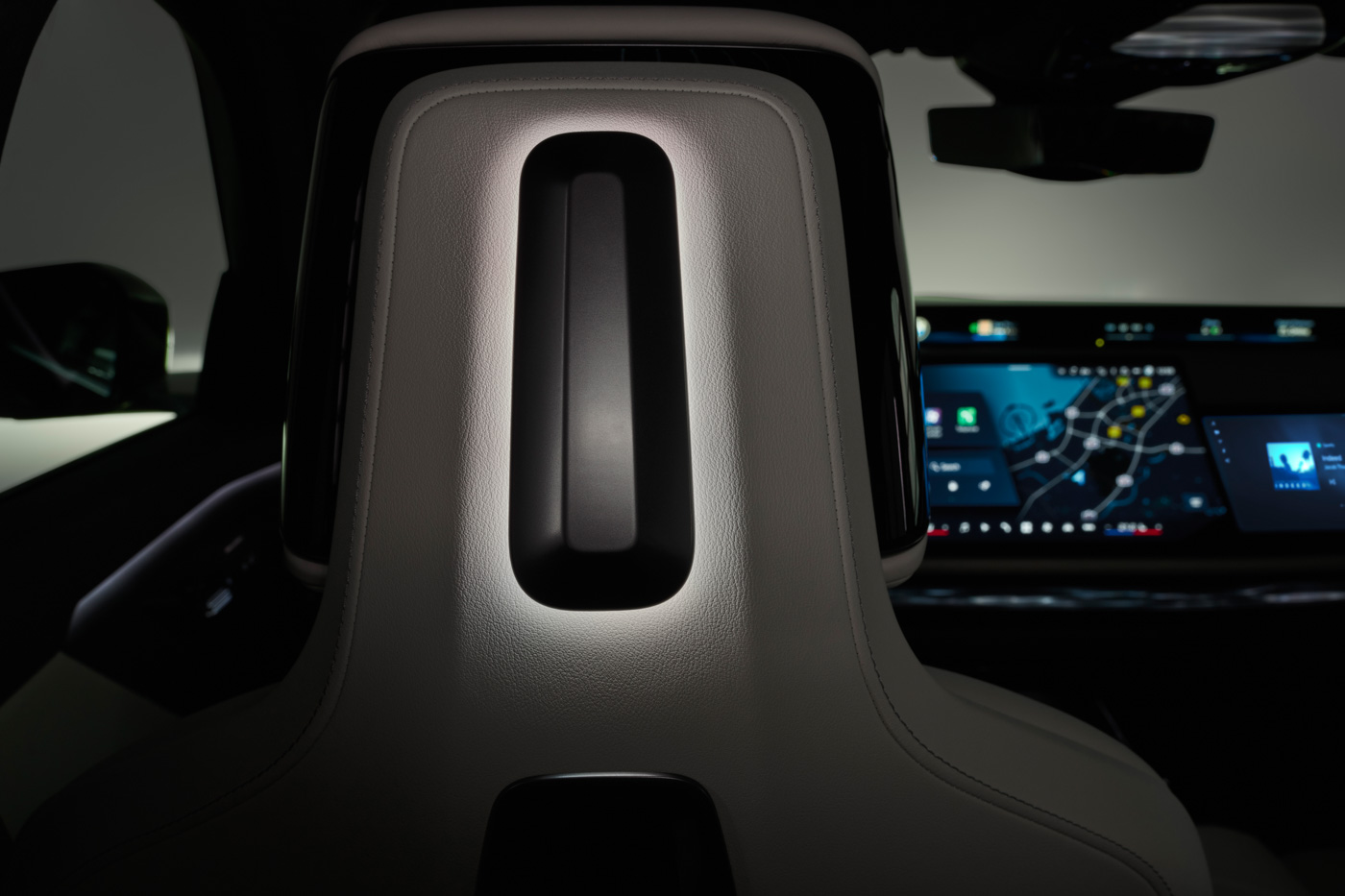
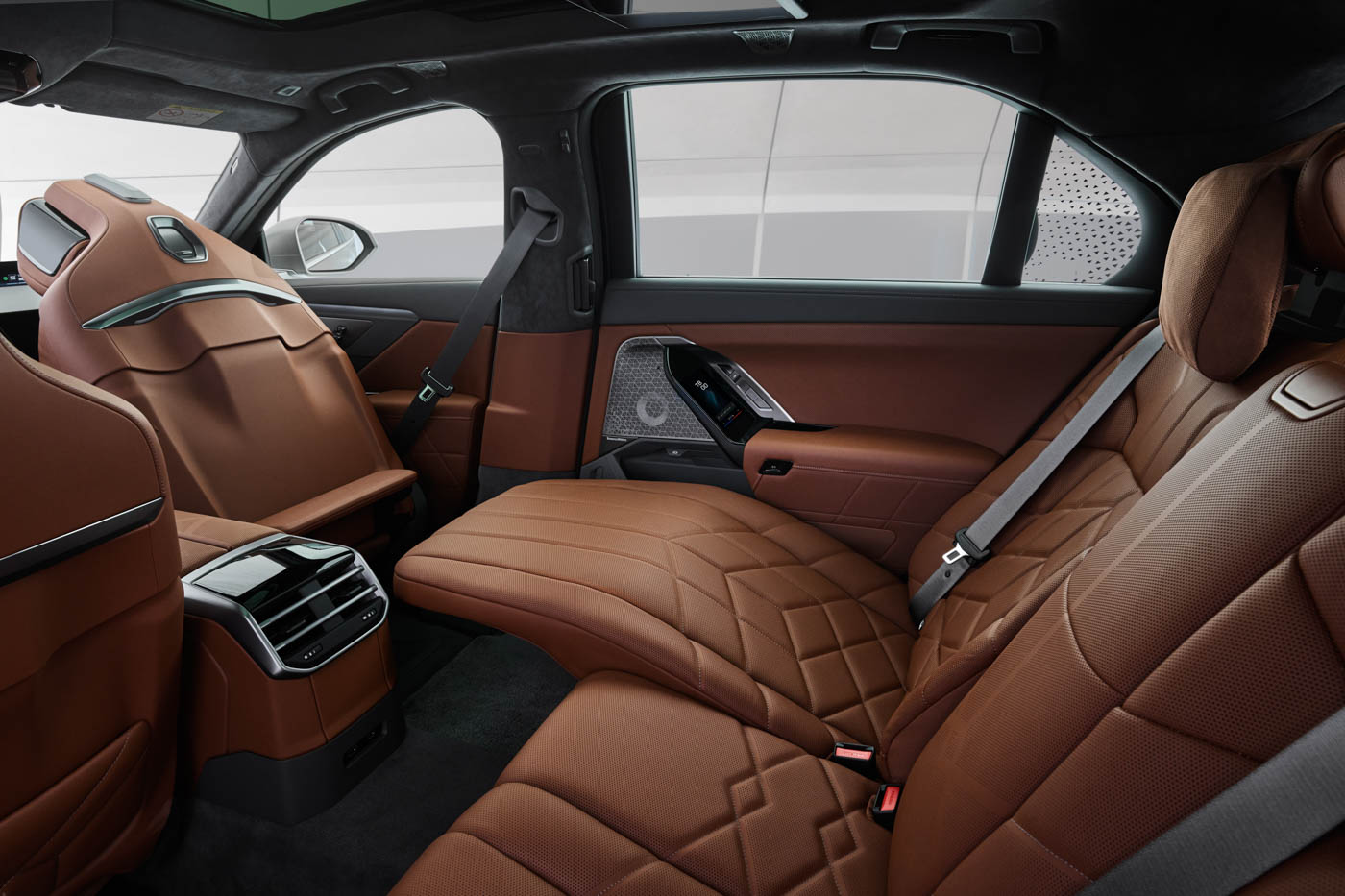
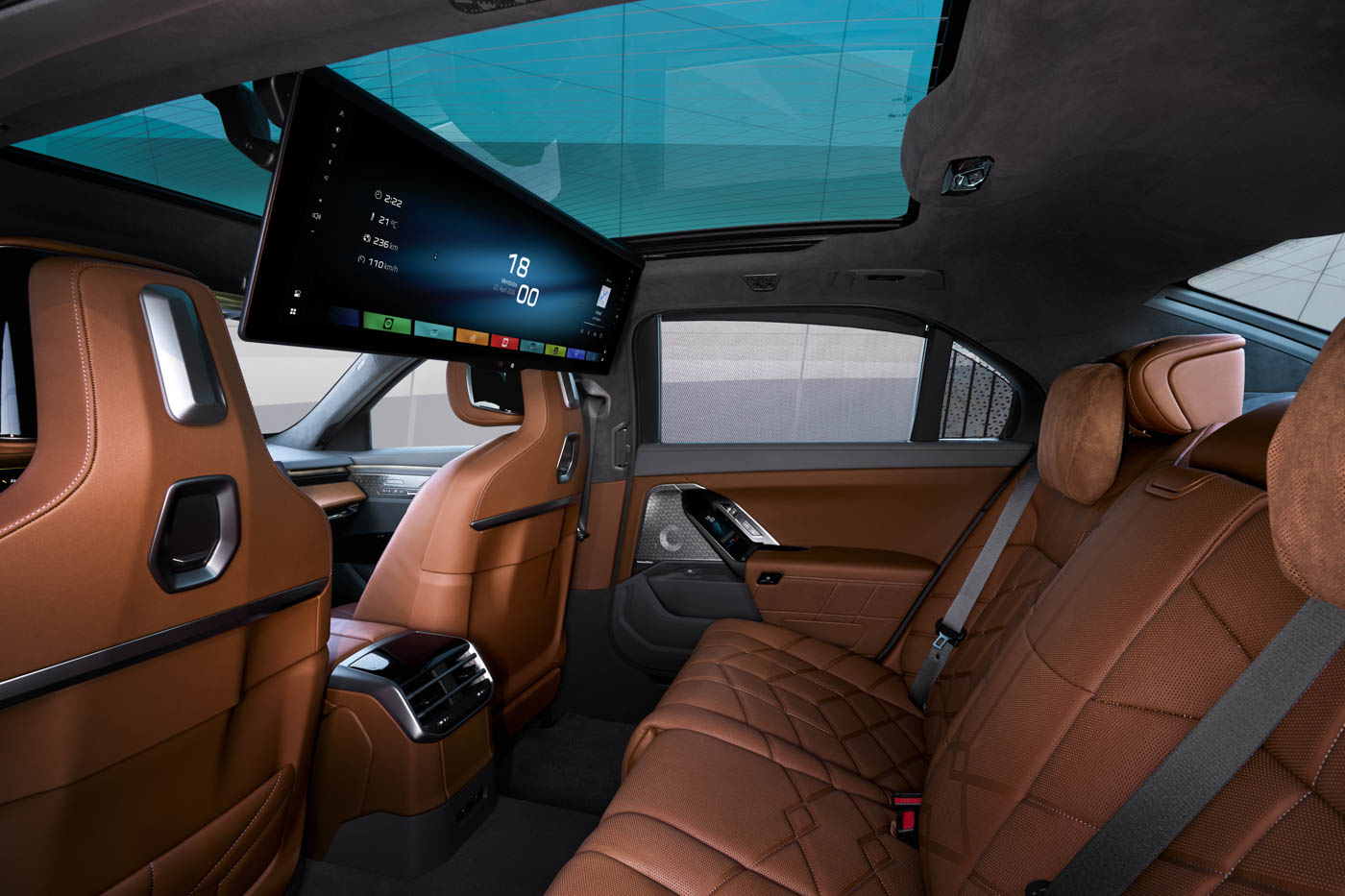
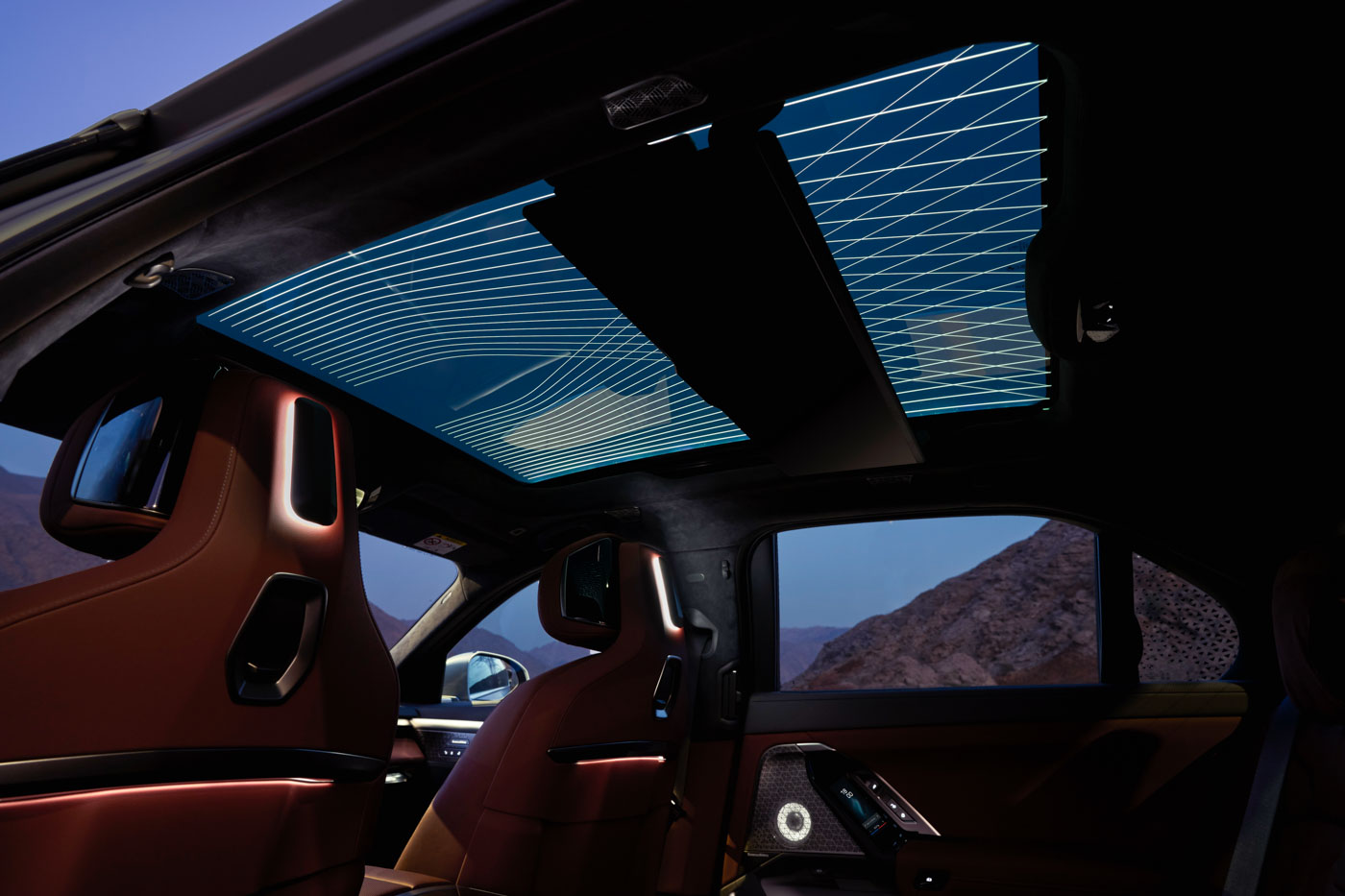
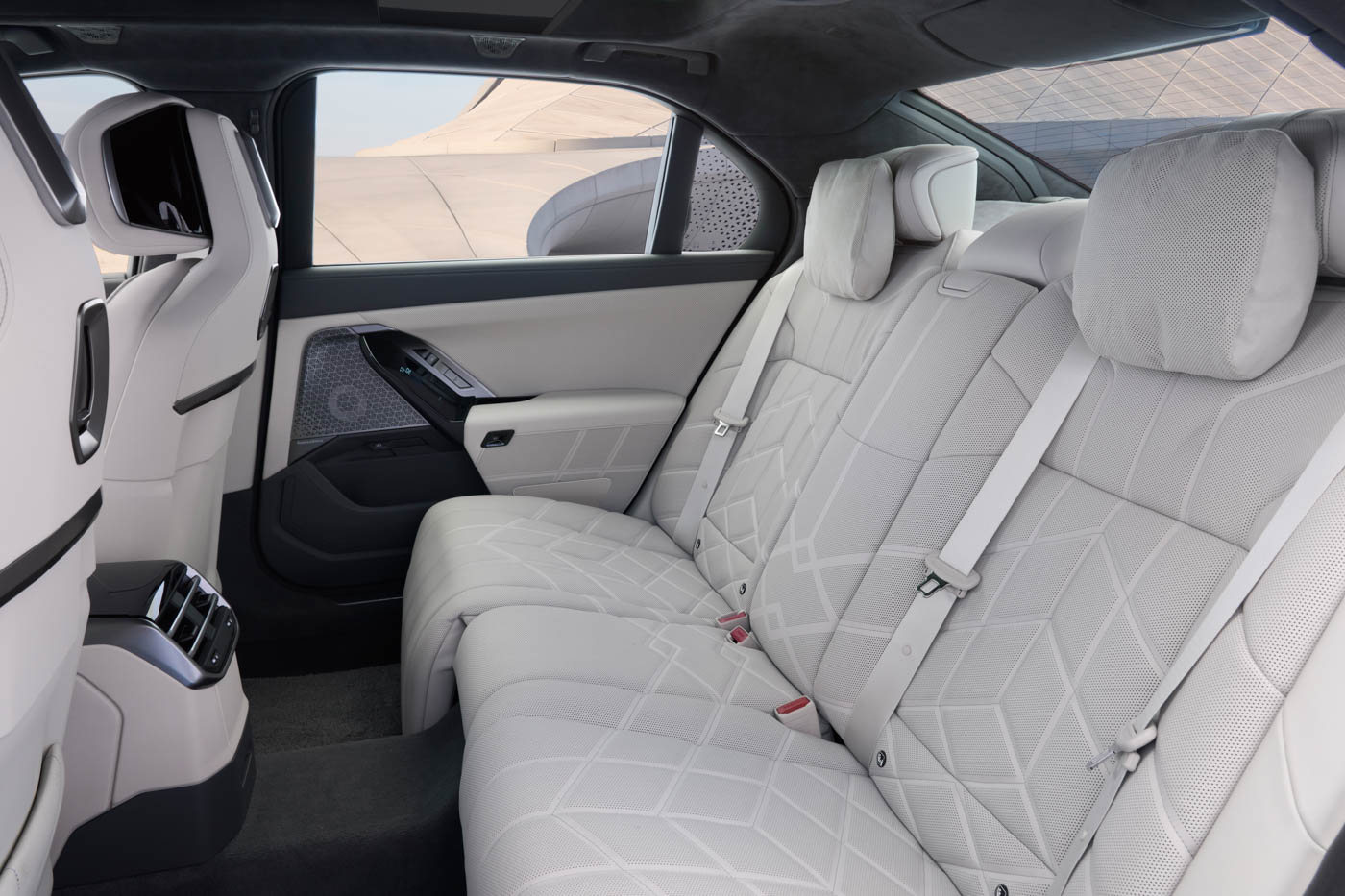
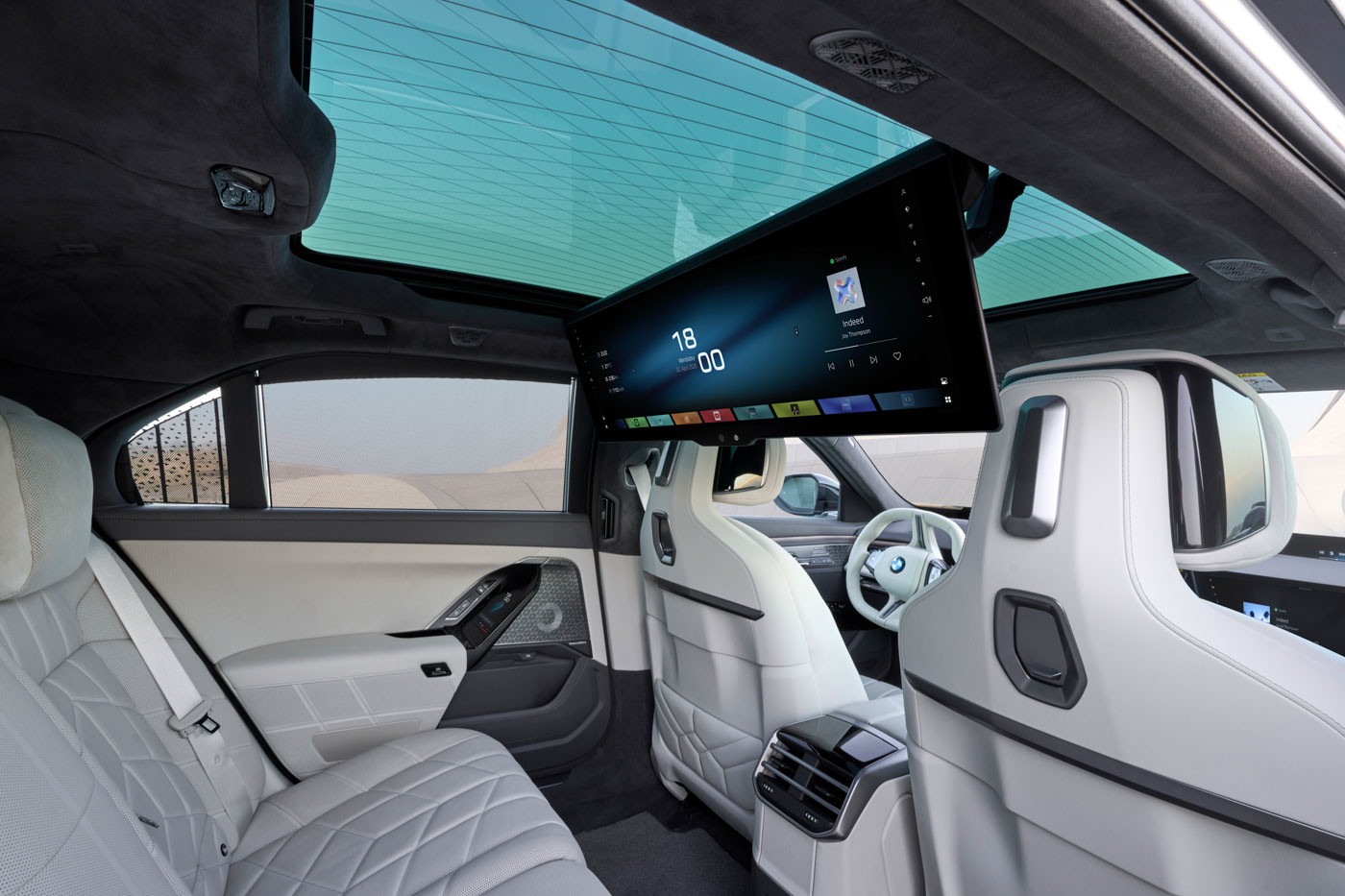
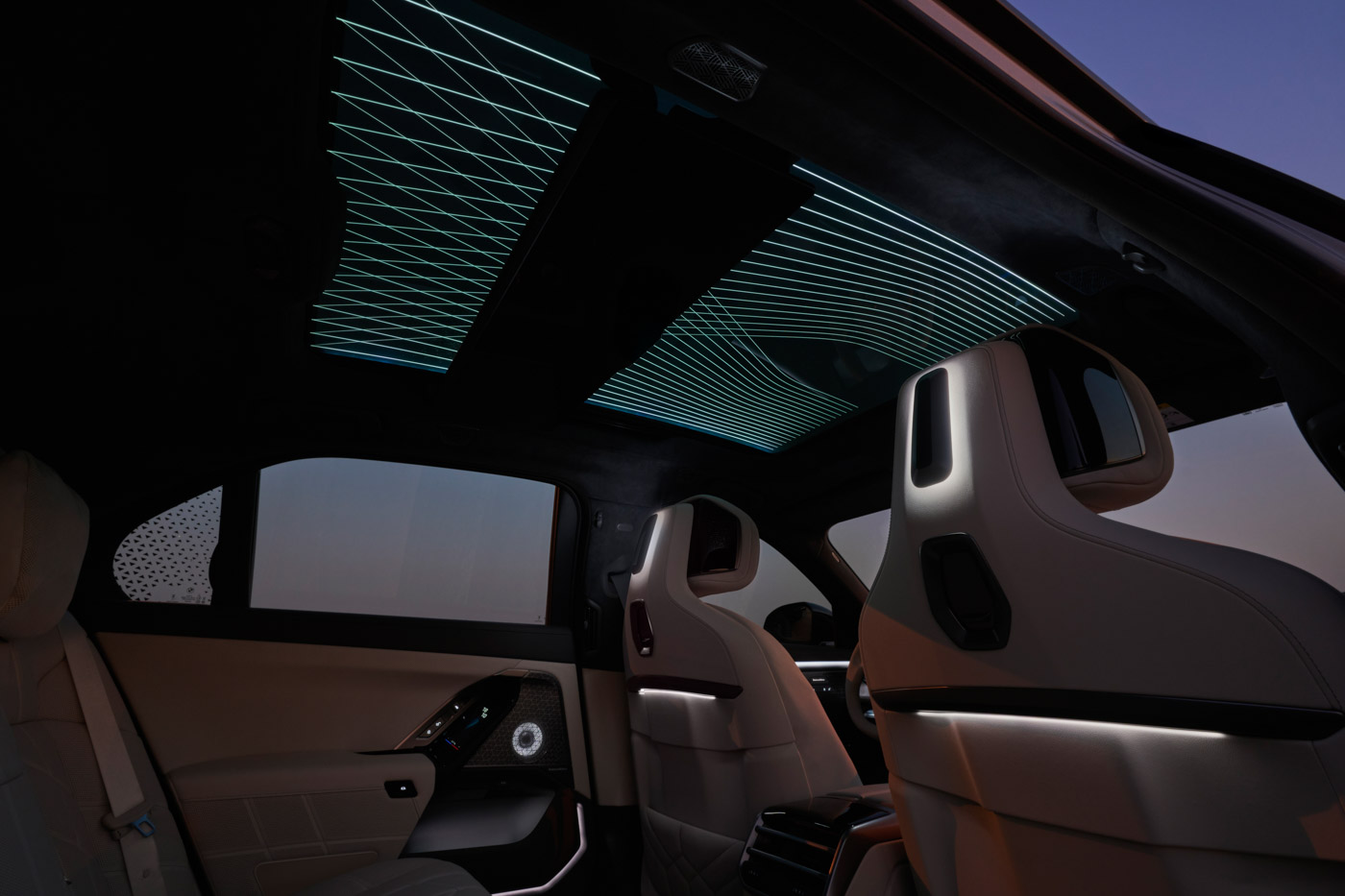
As expected from a 7 Series flagship, the rear cabin also receives several upgrades. Additional ambient lighting has now been integrated into the front seatbacks as part of what BMW calls its “Halo Light” system. The 31.3-inch 8K Theatre Screen, which folds down from the roof in Theatre Mode, now runs on BMW Operating System X and is integrated with the front infotainment system. Completing the experience is a new 36-speaker Bowers & Wilkins audio system with Dolby Atmos, featuring speakers embedded into the headrests and seat exciters designed to create a more immersive “4D” sound experience.
ALSO READ: BMW’s Neue Klasse tech is also heading to MINI and Rolls-Royce
Underneath the skin, the new BMW i7 continues to ride on a 400-volt architecture, although BMW says the drivetrain and battery systems have been extensively revised. In the base 50 xDrive variant, it now adopts a dual-motor all-wheel drive (AWD) setup producing 455 hp and 660 Nm of torque. This replaces the previous rear-wheel drive eDrive50 variant, which featured just a singular electric motor.
Sitting at the top of the range is the i7 M70 xDrive, delivering a hefty 680 hp and 1,015 Nm through its dual-motor AWD system. Despite its limousine proportions, the flagship variant promises performance figures that rival many dedicated performance sedans.
A major part of the update comes from the new battery technology. The new BMW i7 now adopts BMW’s sixth-generation cylindrical battery cells, similar to those used in the all-new iX3 and i3. Interestingly, the cells are encased by Rimac in Croatia before being shipped to BMW’s Dingolfing plant in Germany, where the car is assembled.
RELATED: BMW partners with Rimac to develop high-voltage battery for the new i7
This increases the usable battery capacity from 101.7 kWh to 112.5 kWh. As a result, the new i7 50 xDrive now offers up to 708 km of WLTP-rated range — a significant jump from the 611 km range in the outgoing eDrive50.
Meanwhile, the more powerful i7 M70 xDrive delivers up to 650 km of range. While slightly lower than the base variant, it still marks a notable improvement over the previous M70, which managed up to 560 km on a full charge.
Just as before, BMW will continue offering the 7 Series with internal combustion powertrains as well. Depending on the market, buyers can still choose from mild-hybrid petrol (MHEV) and plug-in hybrid (PHEV) variants, giving the flagship sedan a broader appeal across different regions and customer preferences.
ALSO READ: The BMW iX3 Neue Klasse has landed in ASEAN – Thailand gets first dibs on BMW’s new electric era
On the safety and driver assistance front, the new i7 now supports enhanced Level 2 semi-autonomous driving functions, including hands-free driving at speeds of up to 130 km/h in selected markets across Europe.
BMW has also introduced a new “City Assistant” function capable of handling navigation-guided Address-to-Address journeys in urban environments. Another feature carried over from the new Neue Klasse vehicles is the addition of the brand’s new “Symbiotic Drive” system, which allows drivers to make subtle steering, throttle, or braking inputs without the assistance system abruptly disengaging or resisting the driver’s actions — resulting in a more natural driving experience.
ALSO READ: The Vision BMW Alpina looks like an 8 Series in a nice suit
GALLERY