Norway has released its 2025 automotive sales report, which revealed that a staggering 95.9% of new cars sold in the country last year were fully electric vehicles (EV). Not only does this set a new national record for EV registrations, but the overall sales figures last year also marked the highest number of annual new vehicle registrations in Norway’s history.
The Nordic nation recorded a total of 179,550 (+50,859 YoY) vehicles registered last year, of which 172,233 were EVs. This represents a significant increase compared to the year before, where 114,400 EVs were sold, accounting for an 88.9% market share.

The remaining 4.1% consisted of petrol-, diesel-, and hybrid-powered cars. Notably, non-electrified vehicles (petrol and diesel) accounted for just 2,260, or 1.3% of all cars sold in Norway last year.
One major contributor to Norway’s spike in EV adoption last year was the Value Added Tax (VAT) reforms taking effect on 1 January 2026, which are expected to raise the prices of new EVs. This led to a dramatic wave of last-minute new car registrations in December, where people were rushing to beat the upcoming price hikes.
In December alone, 35,188 new passenger cars were registered — a 157.7% increase compared to the same month in 2024. Electric vehicles made up 97.6% of December’s new car sales, highlighting just how dominant EVs have become in Norway’s market.
RELATED: Europe is considering pulling the brakes on its 2035 ICE ban

Norwegian Road Traffic Information Council (OFV) Director, Geir Inge Stokke, said, “We should be proud that Norway has reached the rather ambitious zero-emission target for new car sales.”
“At the same time, it is important to remember that around two out of three passenger cars on the road still run on fossil fuels, in addition to the fact that there are regional differences in new car sales. So even though this is an important milestone, we must continue working towards an emission-free vehicle fleet,” he added.

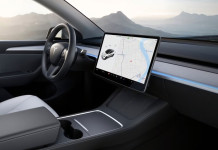
Tesla was one of the biggest beneficiaries of Norway’s surging EV demand. According to the report, nearly one in five new cars in Norway last year were Teslas, with 34,285 units registered and a market share of 19.1% — the highest the brand has ever achieved in the country.
Not only did they beat their own record, these figures also surpassed all previous annual records held by any single car brand in Norway. Tesla’s success there was in large thanks to the Tesla Model Y, which saw 27,621 new registrations in 2025.

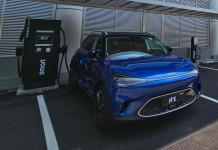
While Norway’s EV market continues to grow, the report also highlighted the rise of Chinese New Energy Vehicle (NEV) brands in the country. In 2025, 24,524 new cars with Chinese origins were registered, accounting for 13.7% of all new car sales, up from 10.4% the previous year.
Perhaps unsurprisingly, BYD claimed the largest share among Chinese brands, finishing 10th overall, led by the BYD Sealion 7. Although the top 10 is still dominated by European, American, and Japanese brands, the report predicts that these established players will face stiffer competition as Chinese manufacturers introduce more models in the coming years.
ALSO READ: China set to introduce world’s first mandatory EV efficiency standard

Beyond passenger cars, the report notes that vans, buses, and trucks are electrifying at a slower pace. Buses led this segment, with 56.3% of new registrations being fully electric, followed by vans at 45.2%. Trucks lagged behind, with only 17.3% of new trucks sold being electric, leaving diesel as the dominant powertrain.
Although Norway has reached its zero-emission target for new car sales, the job is far from over. The report adds that two out of three passenger vehicles in Norway are still powered by traditional fossil fuels.
Commenting on this matter, Stoke said, “Now it’s about keeping the pace up and ensuring stable framework conditions in the years to come. This development shows that policy works. Now we must ensure that it also applies in the next phase of the transition towards an emission-free vehicle fleet in Norway, with a particular focus on trucks.”