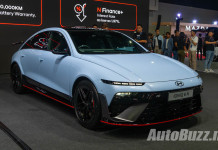
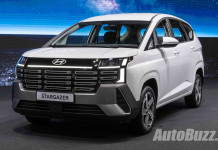
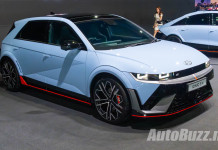
Hyundai has unveiled its “most ambitious growth strategy” at the company’s 2025 Chief Executive Officer (CEO) Investor Day in New York, outlining plans to boost manufacturing capacity, roll out new technologies, and expand its product lineup to drive sales. So how ambitious exactly are they talking about? Well, Hyundai says it’s targeting its annual sales to breach 5.55 million vehicles by 2030, with 60% of that — about 3.3 million units — coming from EVs.
One of Hyundai’s key strategies to achieve this goal is by expanding its product lineup to offer a wider range of vehicles with diverse powertrains, applications, regional focuses, and price points. Starting with Hyundai’s hybrid lineup, the company plans to introduce more than 18 models by 2030, including upcoming hybrid Genesis models starting from 2026.

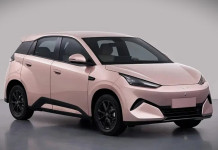
Its electric vehicles (EV) lineup of vehicles will also be expanded, with particular focus on regional offerings. Building on the Ioniq 5, Ioniq 6, and the Ioniq 9, the company will soon introduce the Ioniq 3, which is targeted at the European market. Following that, India and China will also receive EVs that are designed for their respective markets to benefit from localised supply chains.
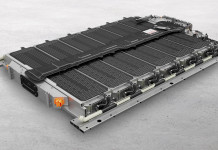
Meanwhile, Hyundai is also slated to introduce its first Extended Range Electric Vehicle (EREV) in 2027, targeting up to 600 miles (960 km) of range. Hyundai says its EREV will utilise batteries developed in-house and can achieve full EV power with less than half of the battery capacity, and improve efficiency.

The company’s enthusiast-focused Hyundai N lineup will also see seven new models to be introduced by 2030, with a target sales of over 100,000 units annually by then.
In North America, the brand will launch its first mid-size pickup truck before 2030, tapping into one of the industry’s largest segments. It is also broadening its portfolio of fuel cell systems dedicated to commercial applications.
To help further realise its 2030 sales goals, Hyundai has also pledged to expand its luxury arm, Genesis, by aiming to sell 350,000 cars by 2030. With a fresh vision of luxury SUVs in mind, supporting diverse powertrains, Genesis aims to build its presence in up to 20 European markets while reinforcing its core market presence in the US through local production (CKD) and EREV launches.
ALSO READ: The Hyundai Tucson may be the next car to receive the “N” treatment

Along with this, the company’s alliance with General Motors will also bring forth the introduction of five new co-developed vehicles consisting of electric commercial vans, compact vehicles, compact SUVs, and midsize trucks for the Central and South American region. With some of these models launching as early as 2028, Hyundai says that annual sales are expected to surpass 800,000 units once production is fully scaled.
A key factor in achieving its goals is also the transition to Software-Defined Vehicles (SDVs), with the first models set to arrive in Q2 next year. Built on the new Pleos technology stack, these vehicles will deliver advanced vehicle and infotainment features, enhanced safety, and greater convenience through continuous updates and personalisation, while also helping speed up development.
RELATED: Hyundai is going full ‘screen’ ahead — new Android Automotive operating system coming in 2026

SDV models will also allow the company to bring forth big improvements to battery technologies in future EV vehicles. With the help of Battery Management Systems (BMS), vehicles can perform real-time predictive diagnostics during driving, charging, and rest periods. From 2026, data from various vehicle environments will be collected to a cloud-based BMS for faster and more precise diagnostics.
Alongside this, Hyundai is also working to make these batteries more efficient, targeting by 2027 a 30% cost reduction, 15% higher energy density, and 15% shorter charging times.
GALLERY