Six months after its groundbreaking ceremony, Proton’s RM82 million electric vehicle (EV) production plant is now nearing its completion, with full-scale production slated to begin right on schedule in September. According to the national carmaker, the new building is now 90.4% complete, while equipment installation is at 83.5%, putting overall progress at 86.9%.
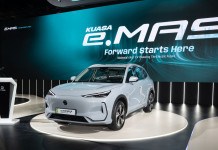
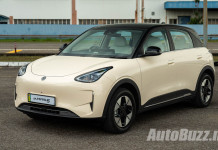
Once completed, the plant will produce multiple models from the Global Modular Architecture (GMA) platform, starting with the Proton eMAS 7 (stylised as e.MAS 7), then followed by the upcoming eMAS 5 (stylised as e.MAS 5). The latter, courtesy of its locally assembled (CKD) status, could become the first EV in Malaysia to be priced under the RM100,000 mark.

The plant is now in its final preparation stages ahead of full-scale production, having completed the Machine Try Out (MTO) phase recently. According to Proton Head of Manufacturing Engineering, Wan Yousry bin Mohamed, MTO is a critical milestone for the plant, where the first car body was trialled in the factory to “continuously check on [the] equipment readiness”.
“We are now in the final stages of preparing the zones for the TF equipment installation and integration. All equipment calibration and validation activities will be carried out progressively during these phases, ensuring we are fully prepared for the production launch,” he added.
READ MORE: Not just eMAS 7 – Proton’s new EV factory to CKD 3 GMA-based models

As announced during the groundbreaking ceremony, the new Proton EV plant was designed with scalability in mind, to allow for flexibility for future models and production volumes. The plant has a initial planned capacity of 20,000 units annually, but is capable of ramping up to 45,000 units per annum, depending on sales demand in Malaysia and overseas markets.
Key areas in the production line can be expanded with more stations, while tester lines are modular, thus capable of accommodating platform variations or multi-model production.
In the logistics area, key infrastructure such as digital traceability tools including manufacturing execution system (MES) and warehouse management system (WMS) are already in place to support future scale-up without significant redesign. The logistics flow and storage systems are also optimised to support both local and export markets.

The plant was built specifically for the production of EVs, which unlike traditional internal combustion engine vehicles, will require specialised areas for battery assembly, high-voltage, safety, and electrical testing. As part of their partnership, Geely has provided much of the technical guidance on production systems, helped with equipment selection, and also deployed experts to assist with installation and trial runs.
Additionally, Geely also facilitated overseas training for Proton staff to ensure that the plant aligns with global EV manufacturing standards, which would help with its long-term scalability.
ALSO READ: Proton eMAS 5 key details revealed – RWD, 325 km range, Apple CarPlay and Android Auto

To support the ramp-up before full-scale production, the plant will focus on hiring critical operational and technical roles in the immediate future. To date, the company has hired 30 non-executives with Malaysian Skills Certificate (SKM) and diploma background, with the immediate goal to fully train these key personnels before full-scale production begins in mid-September.
The ramp up of the plant’s operation will eventually lead to the creation of over 200 new jobs for the local community, specialising in EV industrialisation and technical services. To strengthen its local talent pipeline, Proton is also collaborating with Polytechnic Sultan Azlan Shah (PSAS) by providing technical syllabus input and supporting hands-on training initiatives.

“This plant symbolizes Proton’s transformation and our unwavering commitment to a sustainable, high-tech future. We are also laying the foundation for Malaysia’s leadership in the regional EV landscape by strategically expanding our EV offerings into new overseas markets.
“This is a monumental step for the company and for the nation, and we are excited to see our first Malaysian-made EVs to roll off the line and onto our roads,” added Wan Yousry.
RELATED: Proton sets up export company to focus on overseas markets – targets 60,000 annual exports by 2030