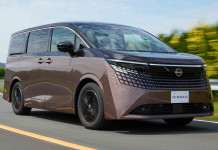
Despite looking very similar, this is not the Denza D9. This is the BYD Xia, as it’s known in China, and it’ll soon enter international markets as the BYD M9. According to CarNewsChina, BYD is preparing for the export of the M9, with Mexico likely to be the first global market for this MPV.
Measuring 5,145 mm long, 1,970 mm wide, and 1,805 mm tall, with a wheelbase of 3,045 mm, the M9 is shorter overall compared to the fully electric Denza D9 (along with a shorter wheelbase), while also being slightly wider.

Call it déjà vu, because the BYD M9 looks almost identical to the Denza D9 exterior-wise, save for a slightly different front bumper and grille design. Considering that Denza is BYD’s luxury sub-division, the BYD M9 certainly bears a lot of resemblance to its more “premium” sibling.
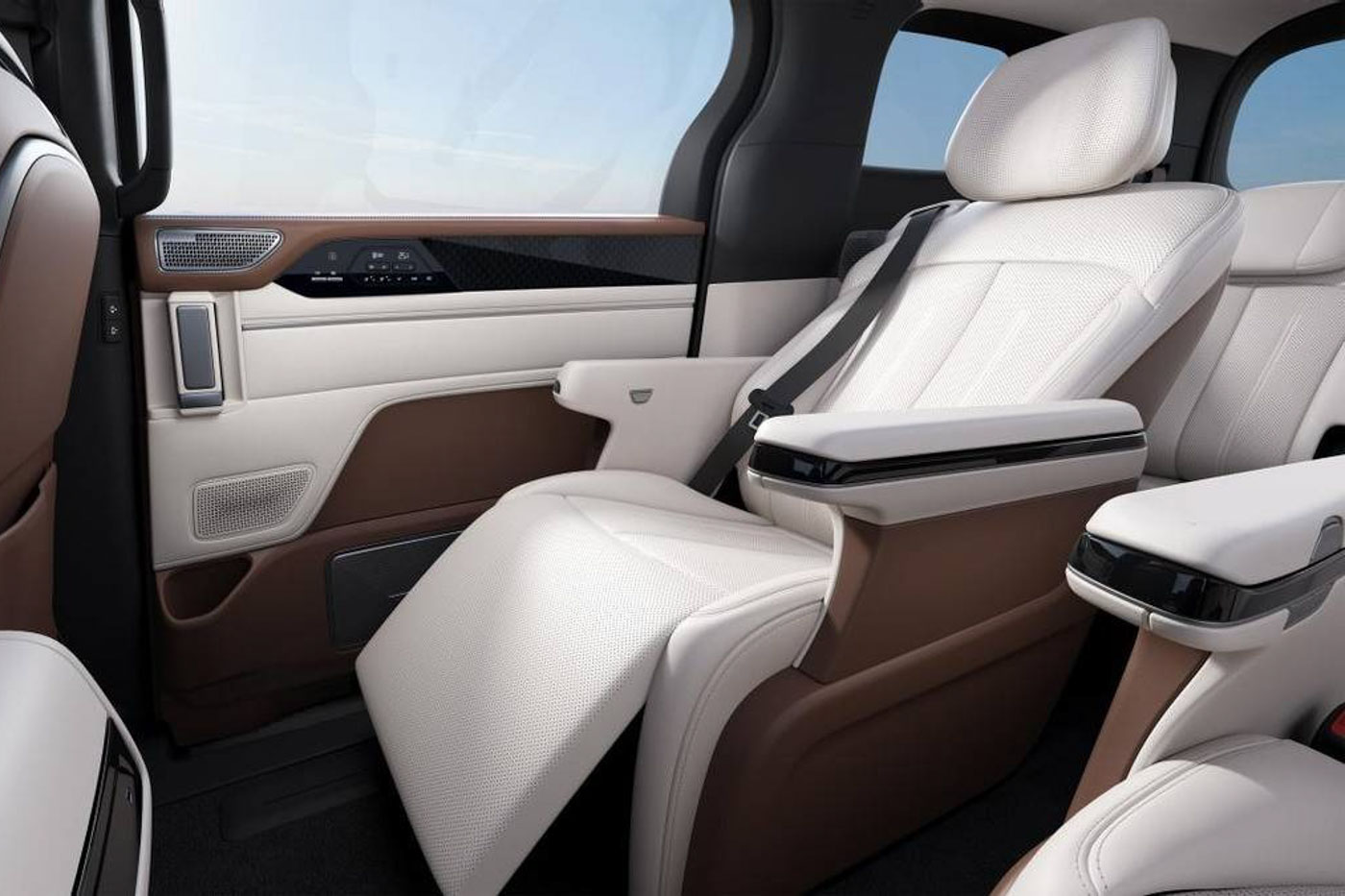
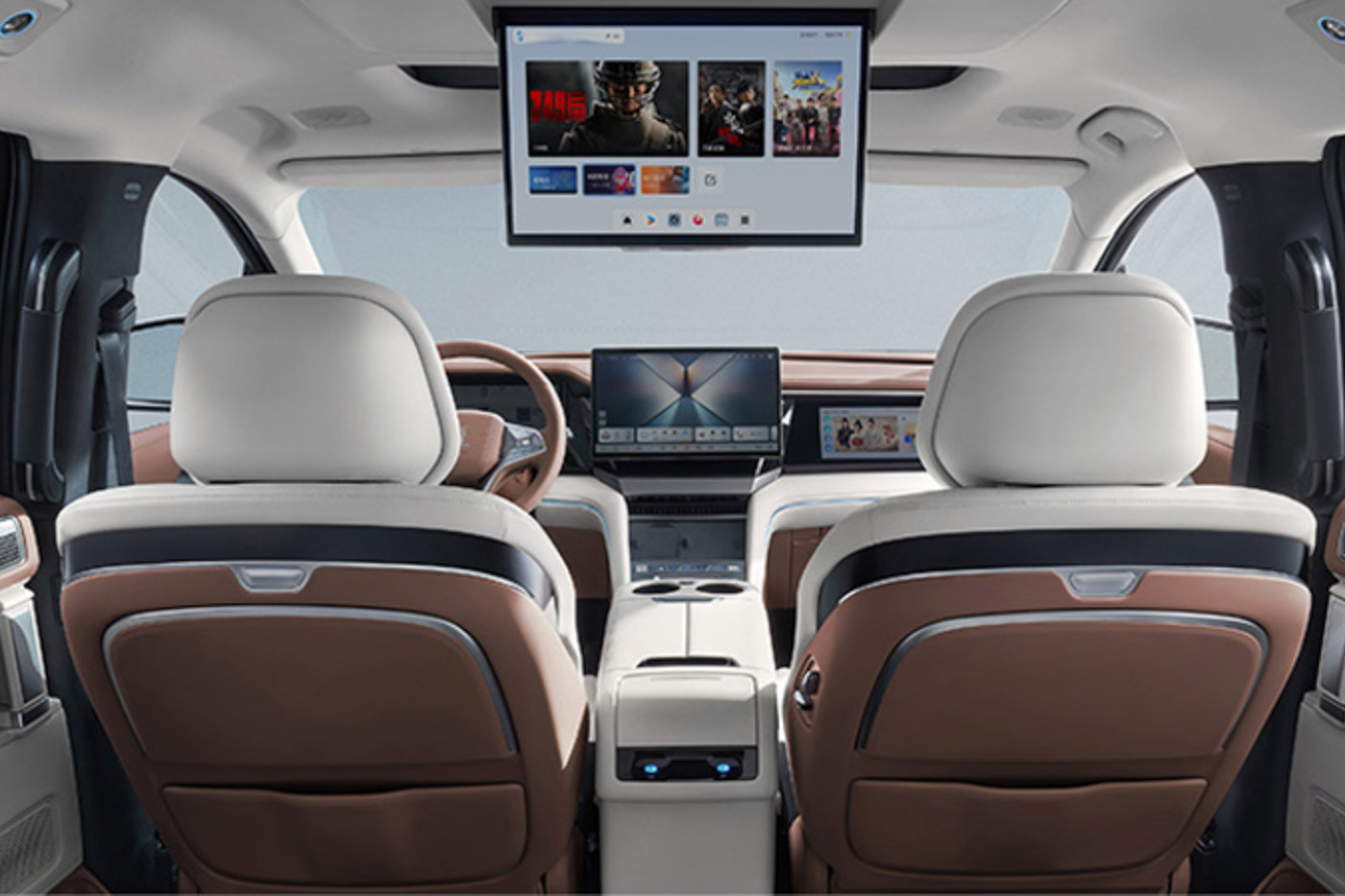
The interior of the BYD M9 is configured as a seven-seater in a 2+2+3 arrangement, featuring captain chairs in the second row.

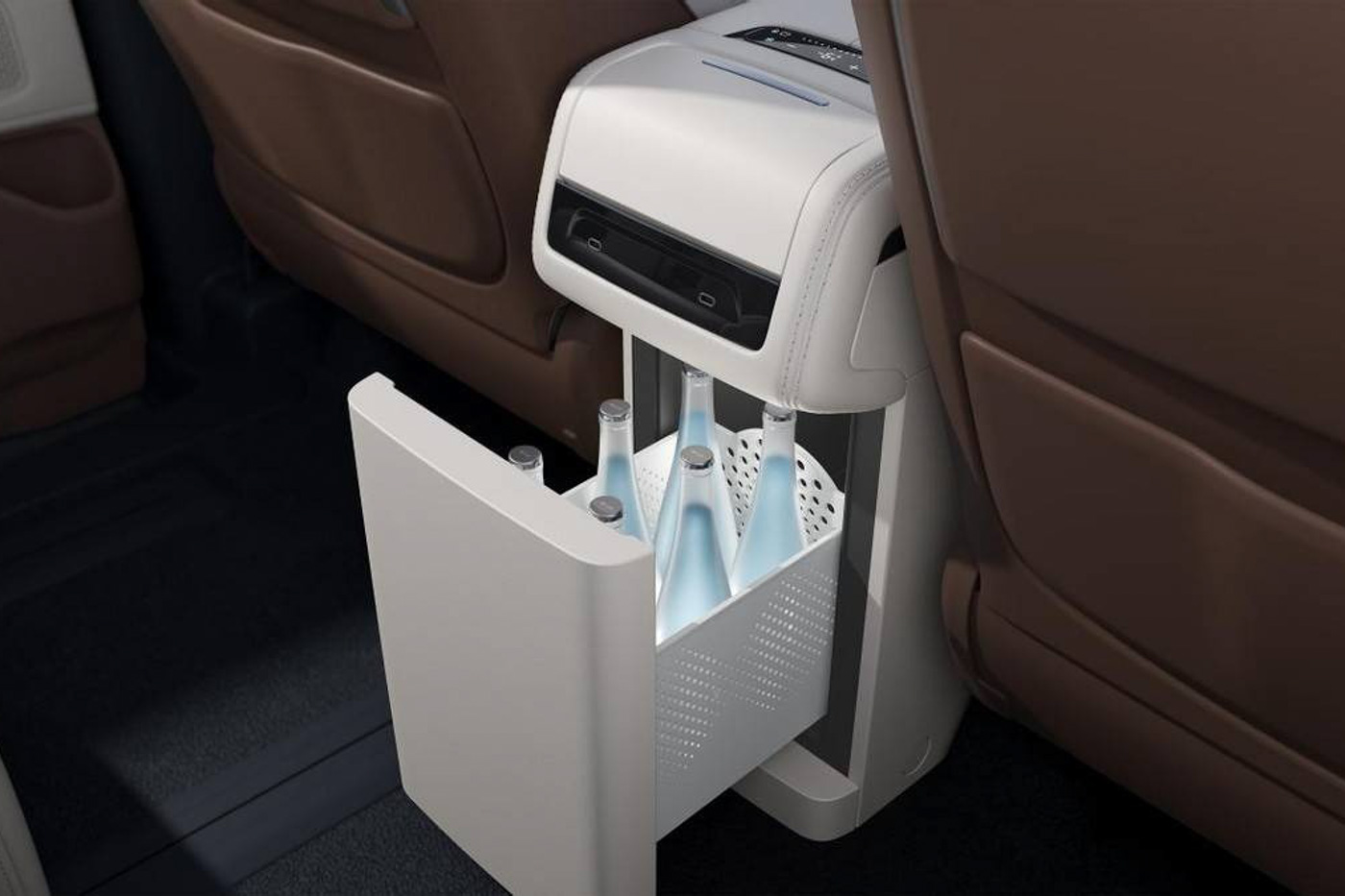
There, you get your usual luxury amenities such as a foldable table mounted on the back of the driver and front passenger seats, massaging seats, a refrigerator located in the centre console, and a ceiling-mounted 15.6-inch central display for rear passengers.
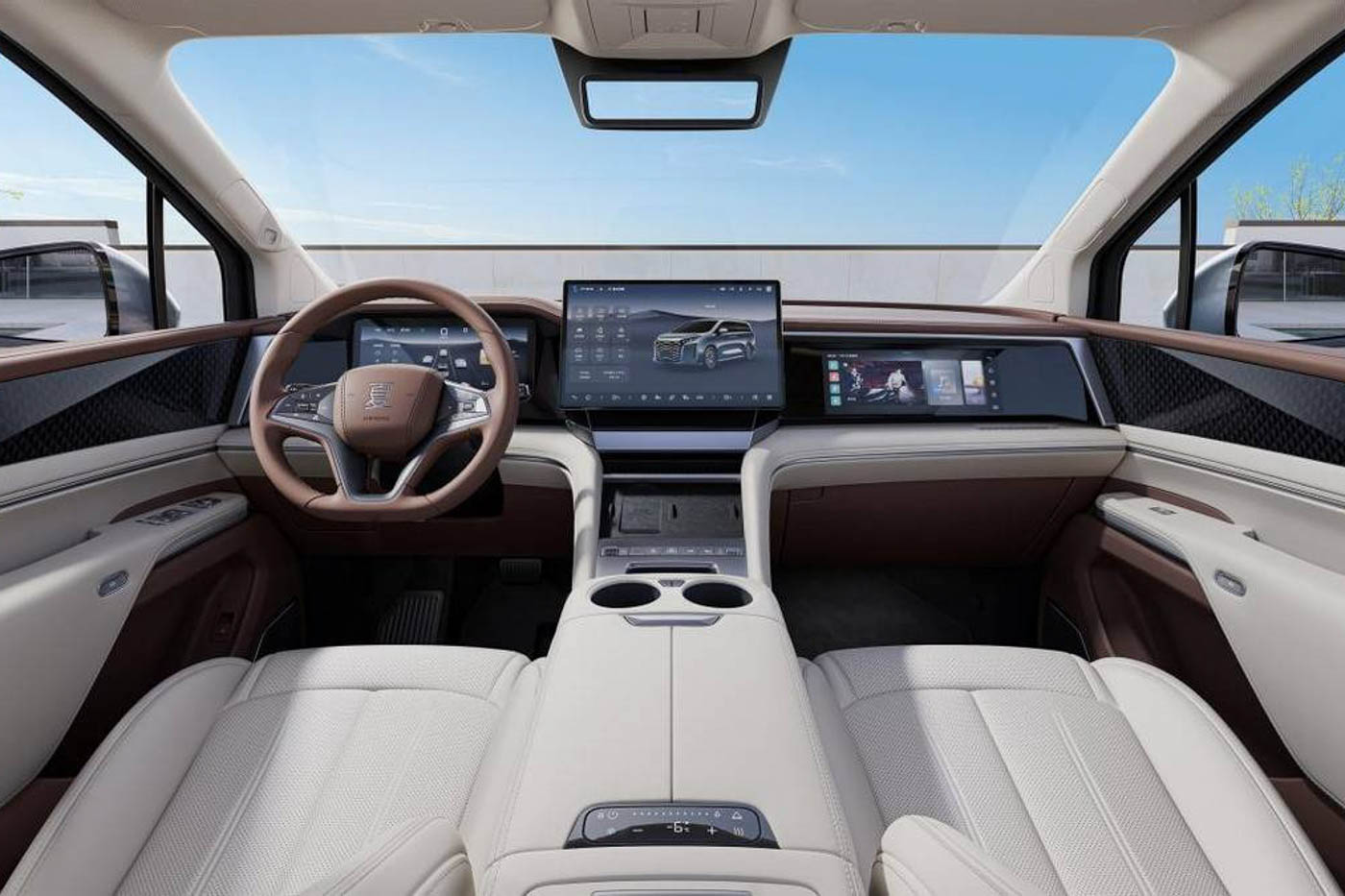
Upfront, the dashboard is home to a 15.6-inch central touchscreen infotainment display, while the driver gets a 12.3-inch full LCD digital gauge cluster. Other amenities for the driver and front passenger include two wireless charging pads and a dedicated 12.3-inch display integrated in the dashboard for the front passenger.
The biggest difference between the BYD M9 and the Denza D9 is their powertrains – the former available as a plug-in hybrid, while the latter an EV, at least for export markets. Powering the BYD M9 is a BYD DM-i 5.0 plug-in-hybrid (PHEV) powertrain that features a 1.5-litre turbocharged engine producing 156 hp and 225 Nm. That is then paired to an electric motor that generates 200 kW (271 hp) and 315 Nm.
BYD did not reveal the combined outputs for the M9, but notes that it’ll be able to sprint from 0-100 km/h in about 8.1 seconds. This powertrain can be paired with two BYD Blade battery pack options: a 20.4 kWh unit enabling a pure EV range of 100 km, or a larger 36.6 kWh pack extending the range to 180 km, both according to the more lenient CLTC test cycle.
In terms of safety systems, the BYD M9 is equipped with BYD’s God’s Eye advanced driving assistance system (ADAS). This ADAS system revolves around 31 sensors throughout the vehicle, including five millimetre-wave radars, 12 ultrasonic radars, and 14 high-definition cameras.
In China, the BYD M9 is offered in four variants, with prices ranging from RMB249,800 (approx. RM147k) to RMB309,800 (approx. RM182k). According to the publication, BYD is aiming for the BYD M9 to go on sale globally by Q3 of 2025. The question now is, will the BYD M9 make an appearance here in Malaysia as a more premium offering to the BYD M6?
ALSO READ: Gallery: Denza D9 Advanced FWD—Alphard level luxury from RM259k
GALLERY