Nissan has been navigating some challenging times recently, from job cuts and production slowdowns to an unsuccessful Honda merger and the departure of CEO Makoto Uchida, succeeded by Ivan Espinosa.
With new management at the helm, the Japanese carmaker introduced its Re:Nissan recovery plan, aiming to achieve savings of JPY500 billion (approx. RM14 billion) to secure profits and free up cash flow by 2026.

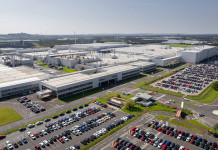
These drastic measures include a reduction of 20,000 jobs worldwide between 2024 and 2027. Following these job cuts, Nissan will also restructure its production process, decreasing the number of its plants from the current 17 to 10 by 2027. This restructuring involves the cancellation of the planned lithium iron phosphate battery plant in Kyushu, Japan.
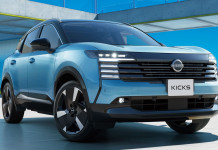
RELATED: Think the mundane Nissan Kicks needs a little more… kick? Impul has got you covered

Nissan is also targeting cost savings in its research and development (R&D) by reducing the average hourly labour cost by 20%, parts complexity by 70%, and streamlining its vehicle platforms from the current 13 to seven by 2035.
Following the planned R&D cost savings, Nissan will also push forward with efforts to reduce its vehicle lead development time from the current 37 months to just 30 months.

Future Nissan models to come through this new process include an all-new global C SUV, a compact SUV for Infiniti, and an all-new Nissan Skyline.
Globally, the Japanese carmaker is also revising its product strategy to be more market-focused and brand-oriented. According to the company, key markets including the U.S., Japan, China, Europe, the Middle East, and Mexico will each adopt a customised approach.

These customised approaches include expanding hybrid offerings and revitalising the Infiniti brand in the US, prioritising B- and C-segment SUVs in Europe, and focusing on new-energy vehicles (NEV) in China with exports from the Middle Kingdom to support global demand.

To this end, Nissan will continue its partnerships with other carmakers, such as the development of an all-new EV based on the next-generation Nissan Leaf for the North American market under the Renault-Nissan-Mitsubishi Alliance, as well as ongoing collaboration with Honda on EVs and vehicle intelligence.
All said, only time will tell if the plans announced by Nissan will alleviate its current woes, but one thing is certain: drastic situations often require drastic measures.
ALSO READ: Nissan Frontier PRO – first Nissan PHEV and electrified pick-up debuts in China