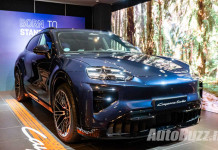
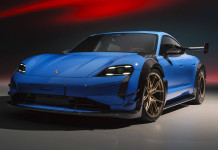
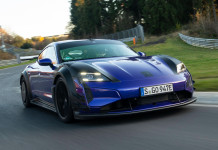
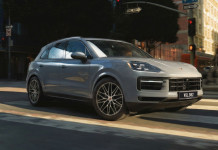
Many carmakers have been reluctantly making a beeline for the humble pie table at the motoring buffet. The much-touted transition towards an electric vehicle (EV) only future has slowly seen many retract their standing and quietly recommit towards internal combustion engine (ICE) development. Porsche is the latest.
Waning sales growth in EV segments is the main reason, and the jolt is being felt the most by luxury and premium brands. Porsche will be continuing ICE development and is looking to offer hybrid or combustion versions of models it had initially said will be purely electric – think Taycan and the all-new Macan.
RELATED: All-new 2024 Porsche Macan Electric launched in Malaysia – 4 variants, from RM430,000

“There is a clear trend in the premium luxury segment in the direction of combustion-engine cars, therefore we will react in our product cycle. We see steep ramp-up curves for the BEVs in China, but luxury is still missing within the segment,” explained Porsche’s CFO, Lutz Meschke, to Automotive News Europe.
China is a key market for the brand and yet they posted a 29% drop in sales there for September. Globally, the Taycan registered 3,394 units in Q3 2024, representing a 35% drop.
RELATED: The next Porsche 911 Turbo will be a hybrid, due in 2025

Porsche will be studying the possibility of introducing hybrid or combustion variants in models that were initially going to be electric.
“We are currently in the middle of making conceptual decisions. What is clear is that we are sticking with the combustion engine for much longer,” added Meschke.
RELATED: End of an Era: Porsche to discontinue petrol Cayman and Boxster for EV replacements

The second-generation Porsche Macan was launched as an all-electric model, but Porsche has now stated that the first-generation combustion models might continue to be sold alongside in certain markets. Development on combustion versions of the Cayenne and Panamera will continue as well.
As Porsche’s best-selling nameplate, the new Macan might be the first model to U-turn on the pure electric direction and be given combustion or hybrid powertrains.
RELATED: Porsche pulls back on EV ambition, to slow down EV production

Alongside this, Porsche is also working on a new electric SUV that will be positioned above the Cayenne EV. This new model might also end up receiving a hybrid powertrain. On the sports car front, that same redirection could be applied to the upcoming electric Boxster and Cayman.
Similarly, Lotus has also pulled the same manoeuvre and is going back on its promise to be fully electric by 2028. In fact, the brand is even open to plug-in hybrids, something it downright rejected due to the compromised performance experience when the battery is drained.

To counter it, the brand is looking to develop a ‘super-hybrid’ tech with 900V architecture that will charge the battery quicker than swapping it out.
It remains to be seen how that goes but for now, at least the Lotus Emira will be on sale for a few years.