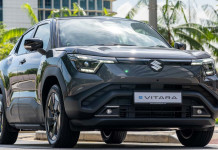
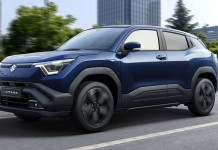
We all know Suzuki and Toyota were already in bed together for electrified vehicle development, but the duo have now decided to make themselves cosier under the sheets by strengthening their collaboration to include Suzuki developing a battery electric vehicle (BEV) SUV for Toyota.
This new electric SUV will be made at Suzuki’s plant in Gujarat, India, sometime in Q2 of 2025 and be launched worldwide. It is likely that the new BEV SUV will be based on the Suzuki eVX and Toyota Urban SUV concepts.

Suzuki’s former chairman Osamu Suzuki and Toyota’s former president Akio Toyoda started exploring business partnerships together in 2016, but this move marks the first BEV in the OEM relationship between the two and is testament to their initiatives in realising a carbon-neutral society.
Designed exclusively as a BEV, the SUV will reportedly possess ample cruising range and a 4WD system as well as a comfortable cabin. It will be underpinned by a platform jointly developed by Suzuki, Toyota, and Daihatsu, with each party contributing based on their strength.
RELATED: Toyota Yaris Cross launched in Thailand – From approx. RM101k, hybrid only, 3 variants
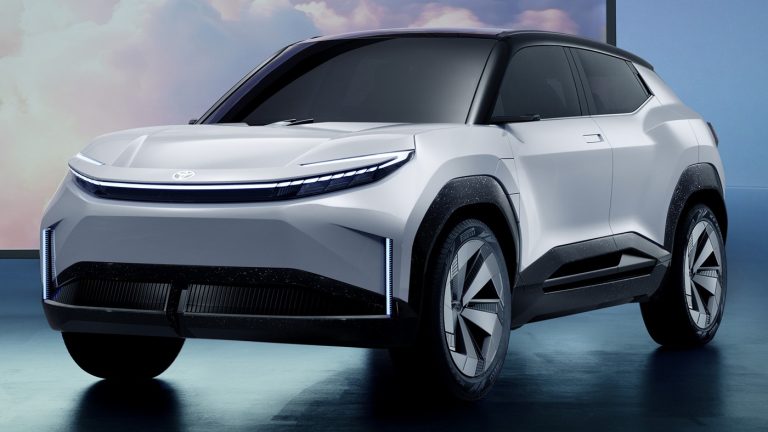
The Suzuki eVX concept first debuted in January 2023, followed by an update in October 2023. In Toyota’s corner, it introduced the Urban SUV concept that shared similar dimensions and styling cues to the Suzuki.
Measuring in at 4,300mm in length, the new BEV SUV will be positioned alongside the Suzuki SX4 S-Cross/Vitara and Toyota Yaris Cross. From a styling perspective, they should share the greenhouse and several body panels but will carry a distinctive front fascia.
Seeing as the concept carried a 60 kWh battery pack with a projected range of around 500 km, we could expect similar figures from the production version.

Both sides can trace their roots back to Enshu, in the western hemisphere of Shizuoka Prefecture, Japan. From manufacturing textile looms, both took on a paradigm shift of transforming their businesses into rolling out automobiles.
The collaborations span a diverse range of mobility requirements, such as production and mutual supply of vehicles, and the spread of electrified vehicles. This has resulted in their joint vehicles being launched in Japan, India, Europe, Africa and the Middle East.