The rise of EVs in Malaysia is plain for everyone to see. But while expensive, luxurious EVs are flooding the market, we still haven’t truly seen an EV for the rakyat just yet – affordable EVs like the BYD Seagull that have now flooded the Chinese market. For a nation that is so focused on electrification, that is actually kind of odd if you think about it. Because while the fancy EVs make headlines, it’s the cheap, daily runabouts that truly help move the nation.
In China, for example, “mini EVs” like the Seagull, Geely Panda, and Wuling Air are all common sights around city streets. The BYD Seagull, in particular, was a true runaway success – delivering 200,000 units in just a short seven months time since its debut. They’re almost like the Myvi or Axia of the EV world – cheap, no-frills, but still an effective transportation tool.
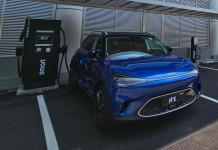
But here in Malaysia? The cheapest EV we can get our hands on now is the Neta V, at exactly RM100,000. Statistically speaking, that’s a price point that most Malaysians still can’t afford.

RM100k EV pricing in Malaysia – protectionism to blame again?
So why can’t we have cheaper EVs? Well, you have the Ministry of International Trade and Industry (MITI) to thank for that, as its guideline for Franchise Approved Permits (AP) specifically spells out that imported EVs cannot be priced more below RM100,000 on-the-road, despite the various tax breaks and import duty exemptions.
That means that even if cars like the BYD Seagull were to enter Malaysia as fully-imported models, they’ll have to be priced above the 100 grand benchmark too – at least until 2025. Given that these cars are designed as budget-focused mini EVs, that price tag just wouldn’t make much business sense, and building a whole assembly facility for these cars probably won’t either.
ALSO READ: Government working to reduce EV prices for the rakyat – Tengku Zafrul

When quizzed about the restriction, MITI minister Tengku Datuk Seri Zafrul Abdul Aziz said that the condition was introduced as a way to give local carmakers “time to prepare for EVs”, adding that it’s “to protect our local automotive industry for a while” as it relates to “a lot of employment, from jobs to suppliers”.
We’ll save the discussions about protectionism for another day, never mind the fact that even the US has slapped on exorbitant tariffs on China-made EVs in order to protect their own. But in this instance, it has probably played a part in expediting Proton and Perodua’s EV plans.
Proton struck first, having previewed the e.MAS7 fully electric SUV earlier this month before its official market introduction before the end of the year. But given that Proton now aims to compete against Honda and Toyota instead of Perodua, it’s safe to assume the e.MAS7 won’t be anywhere near a rakyat-friendly price point.

Perodua Myvi to be reborn as EV for the people?
That leaves the Perodua EV, which is on track for an official debut sometime next year. And based on everything that we know about the car so far, this could just be the EV that we, the people, have been waiting for; a Myvi reborn for the EV future, if you would.
Why so, you ask? Well, for one, its concept model that was displayed during the Malaysia Autoshow 2024, called “Perodua EMO-I”, was literally built into the shell of a third-generation Myvi. But more importantly, Perodua’s published “target specifications” for the model are also on the more moderate end of the scale, which could help keep costs – and thus its eventual sticker price – down.
And for those who are into conspiracy theories, there’s also the fact that Perodua will also be celebrating the 20-year anniversary of the Myvi in 2025, which is next year…
READ MORE: Perodua’s “affordable” EV to begin mass production in 2025 – developed with new global partner?

Cheaper EVs for the people, for the environment, and for the country
Not only are cheaper EVs easier on the wallet, they’re also a critical step in helping the nation achieve its green goals as laid out in the Low Carbon Mobility Blueprint (LCMB) 2021-2030 plan and National Energy Transition Roadmap (NETR).
Alongside the addition of more EV chargers nationwide, the lower price point will be another roadblock removed in convincing Malaysian road users to go electric – especially with the looming fuel price hikes as a result of subsidy rationalisation.

Of course, there’s also the fact that Malaysia aims to become the EV hub in the Southeast Asian region. Not only will the Perodua EV help develop our local workforce, it’ll also energise the local supply chain for an electrified future, creating a cascading effect that’ll result in more EVs being localised in Malaysia.
The truly isn’t a better time for something like the upcoming Perodua EV, or any low-cost national EV for the matter, to make a splash in Malaysia. Because well, after 2025, all bets are off.
RELATED: Proton e.MAS7 unveiled, Malaysia’s 1st EV to be on sale by end of 2024