Suzuki has just announced its technology strategy for the next 10 years, and in classic Suzuki fashion, it’s all about weight saving and efficiency, even when they’re staring down the barrel of electrification.
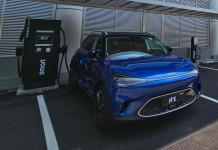
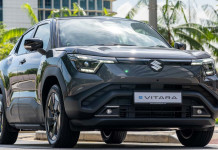
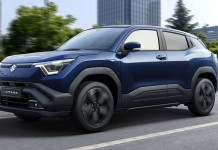
As you’d expect, electric vehicles (EVs) are a main part of the strategy. But Suzuki’s focus will be on lighter, smaller batteries, with president Toshihiro Suzuki saying that they’ll “use the minimum and necessary batteries without excess”.

Aside from just batteries, the Japanese carmaker will also be further refining its HEARTECT chassis architecture, with a focus on lightweighting since it not only reduces CO2 emissions while driving, but also require fewer resources during manufacturing – hence lower CO2 outputs too.
“Based on the philosophy ‘Sho-Sho-Kei-Tan-Bi’ (small, light, short, and beautiful), Suzuki will minimize the energy used and reduce CO2 emissions to the utmost limit. This is our technological philosophy,” Toshihiro Suzuki added. The new lightweight EVs will be gradually introduced from 2025 onwards.

Despite EVs being the headline, internal combustion engines are also part of Suzuki’s plans for the next decade, with the Z12E engine, first unveiled in November last year, forming the basis of its ICE models moving forward.
The small 1.2-litre mill boasts high thermal efficiency of 40%, as well as 48V mild hybrid technology to further minimise energy consumption. Moving forward, the engine will also be further iterated to utilise carbon-neutral fuel, as well as other “next-generation hybrid” technologies.
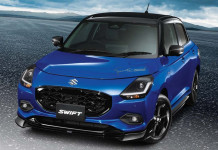
RELATED: 4th-gen Suzuki Swift debuts with mild hybrid 1.2L 3-cyl, CVT, optional AWD

All of Suzuki’s cars in the next 10 years will also focus heavily on software, in what the industry like to call “software defined vehicles” (SDV) these days. Wired and wireless OTA software updates are to be expected, which will enable new features to be added into their cars easily in the future, but SDVs will allow Suzuki to reduce development cost by sharing hardware components between models and variants, and using software to alter their equipment list and functionalities.
Moving forward, Suzuki also intends to transition into a “circular economy” framework, creating products that are easy to disassemble with the premise of recycling and reusing parts, in order to reduce the total amount of resources used and thus reducing environmental impact.
ALSO READ: 2023 Suzuki Swift Sport Silver Edition launched in Malaysia – RM145,900