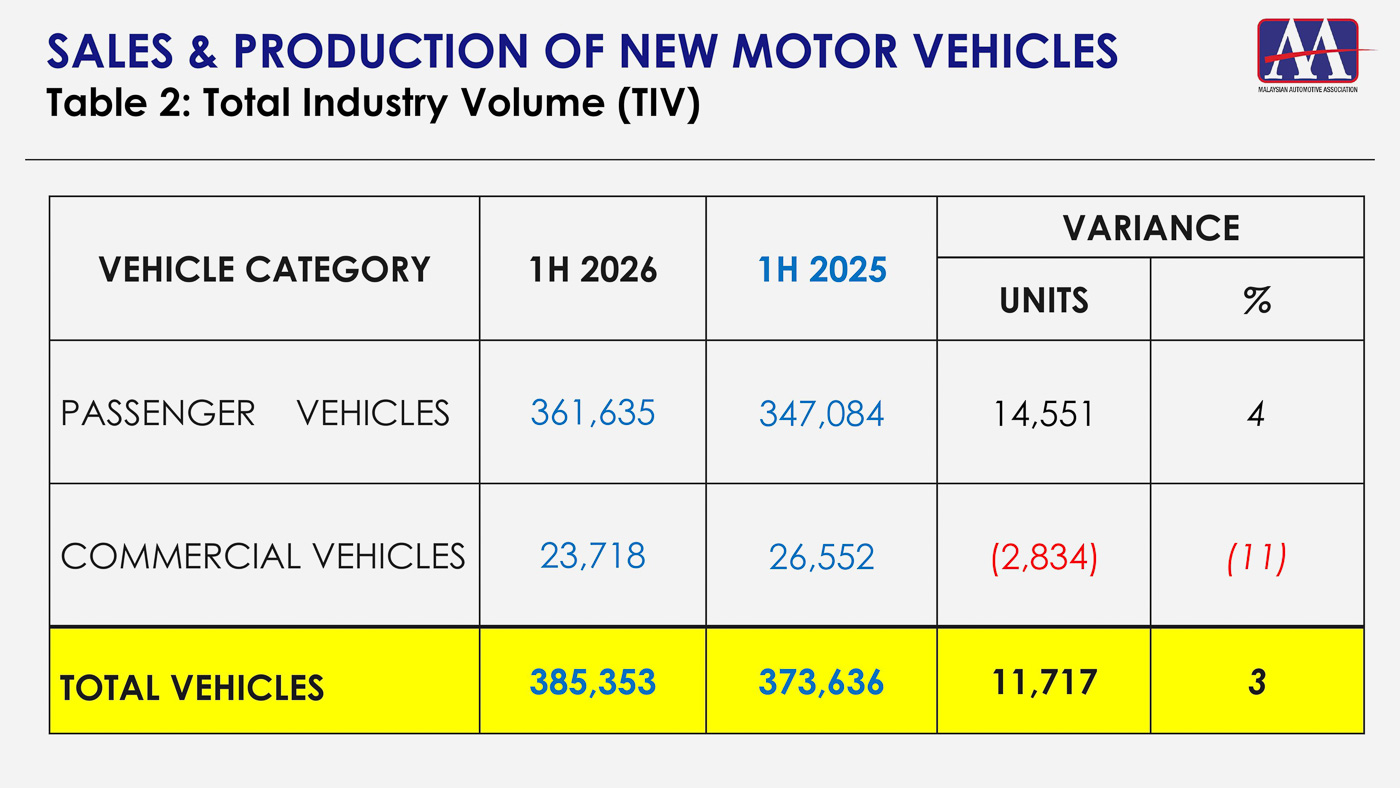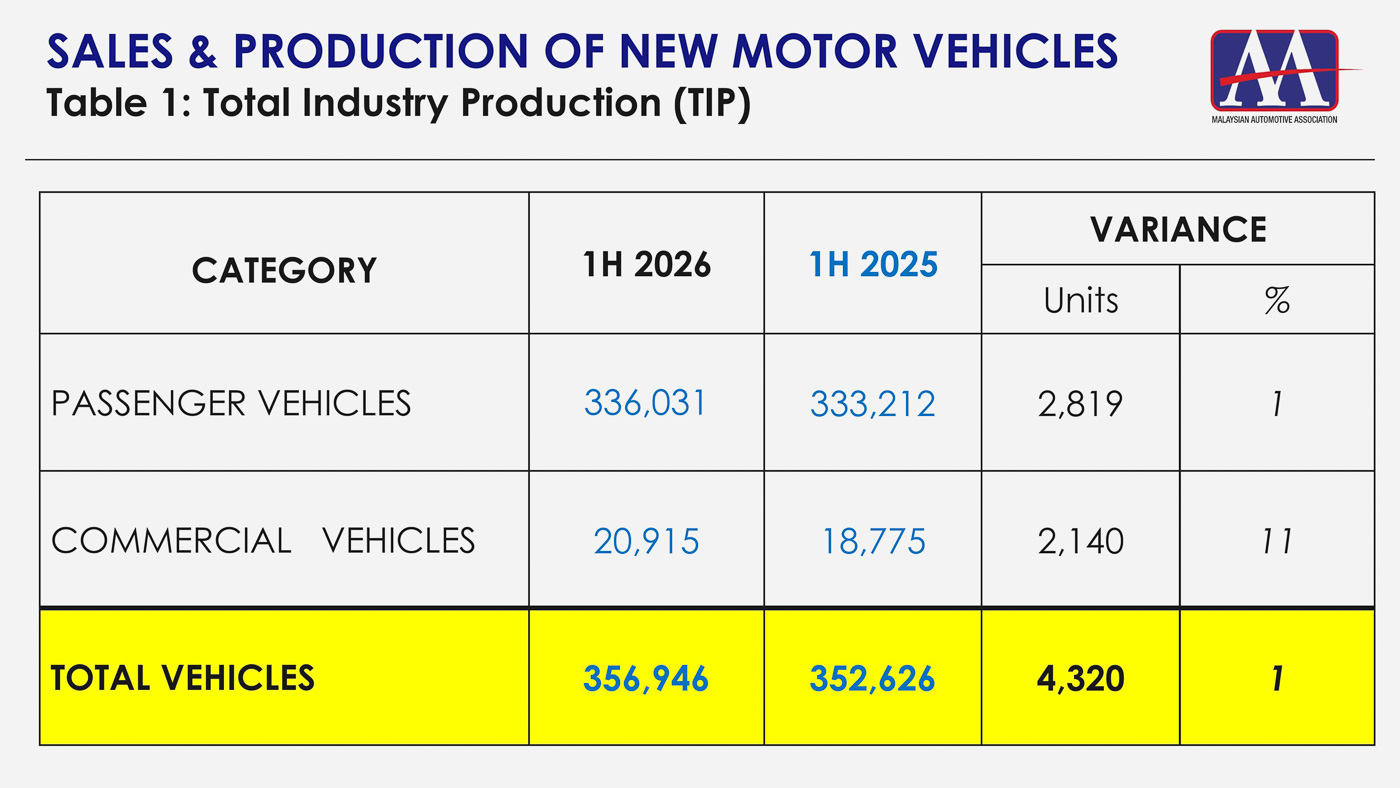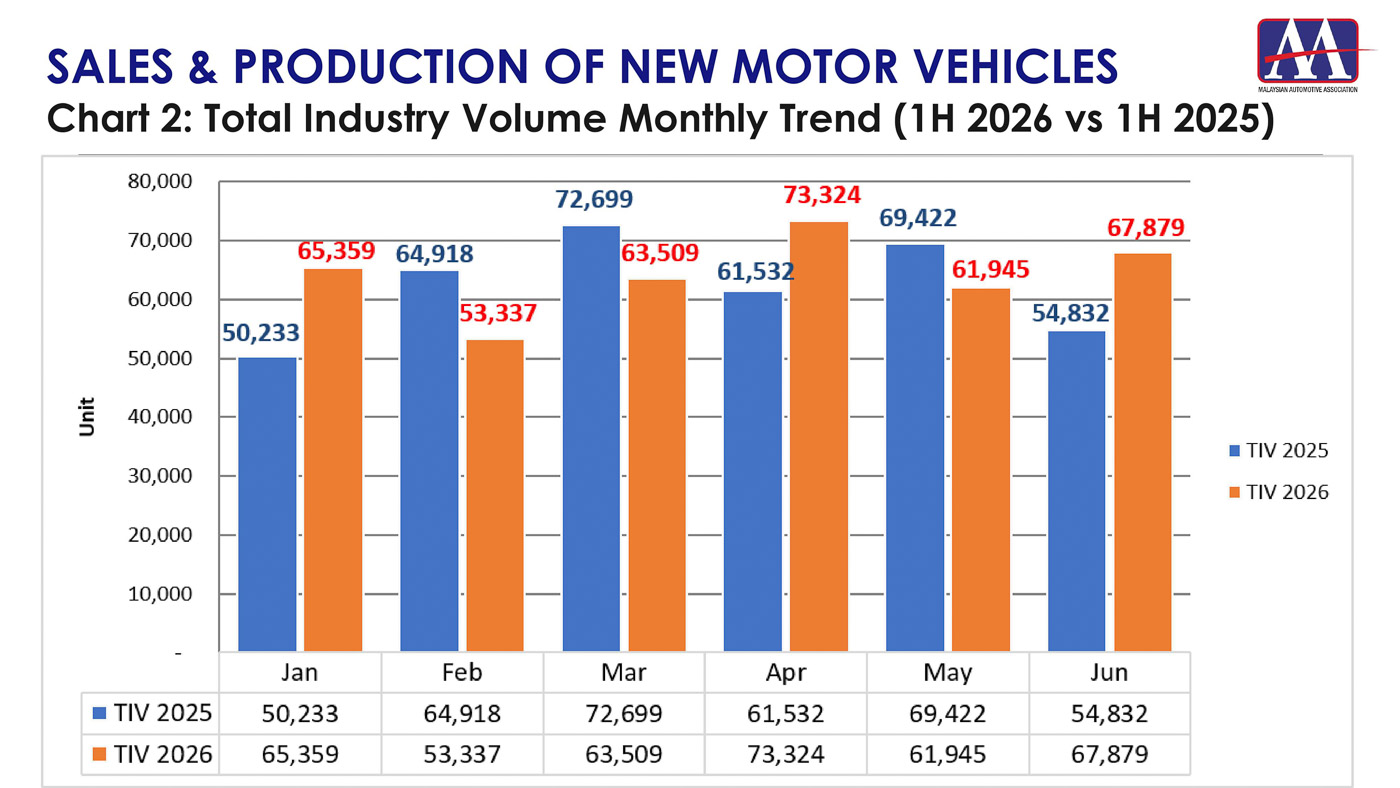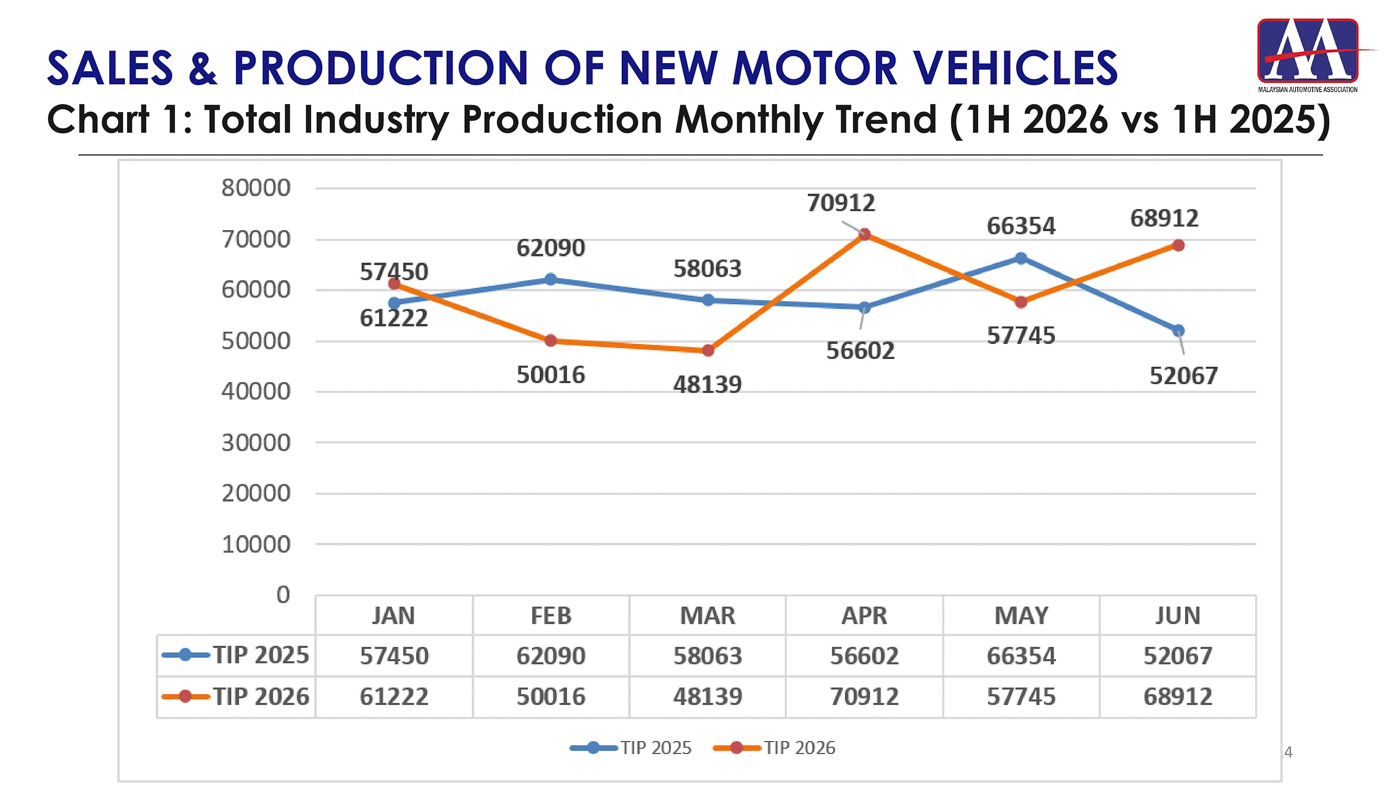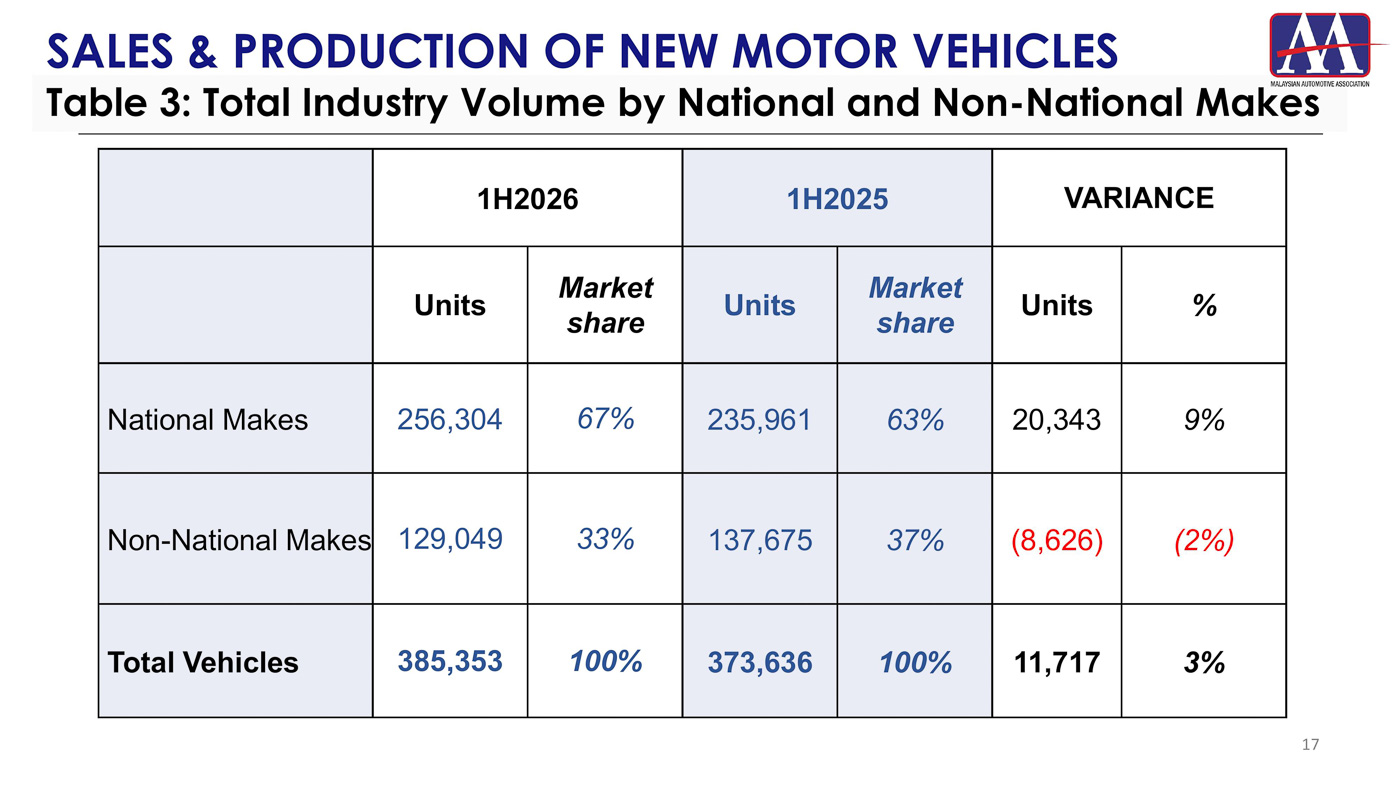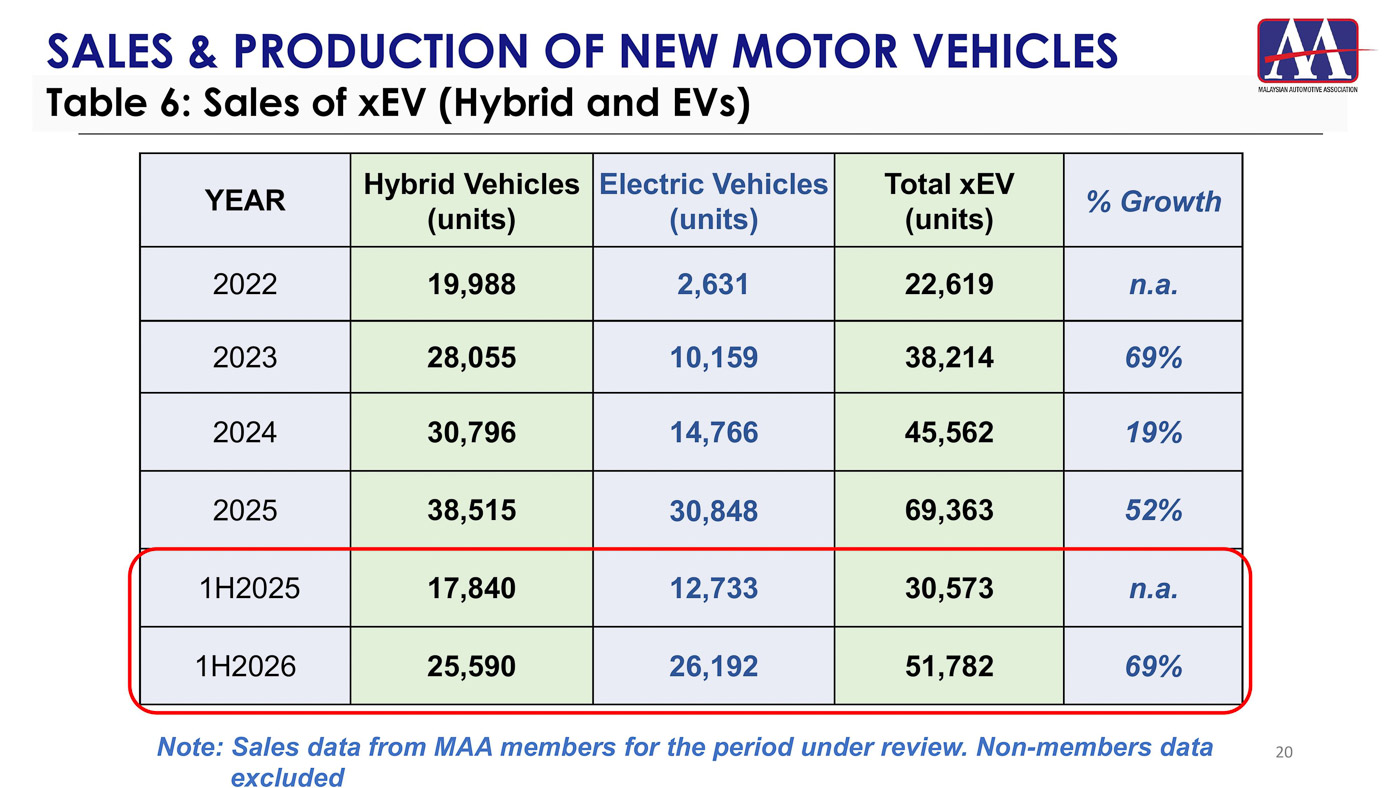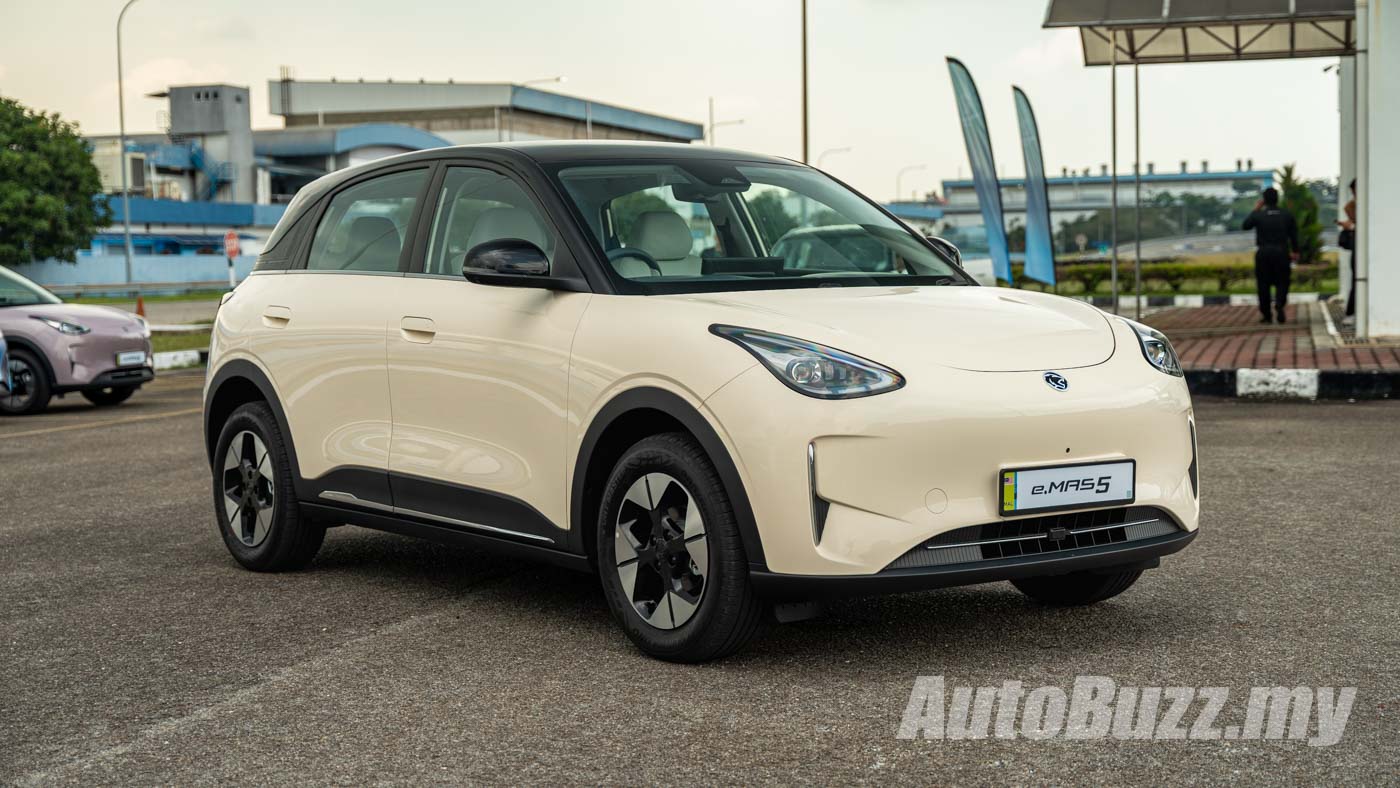
The adoption of electrified vehicles in Malaysia has been growing at an exponential rate. According to industry data from the Malaysian Automotive Association (MAA), xEVs (including PHEVs, HEVs, and BEVs) accounted for some 13.4% of all passenger vehicles sold in the first half of 2026 (1H 2026).
The 51,782 units sold in 1H 2026 represents a significant 69% jump in xEV sales over the same period last year. Among those, pure EVs have also seen a whopping 106% year-on-year hike with 26,192 units, outselling hybrids for the first time in Malaysia.

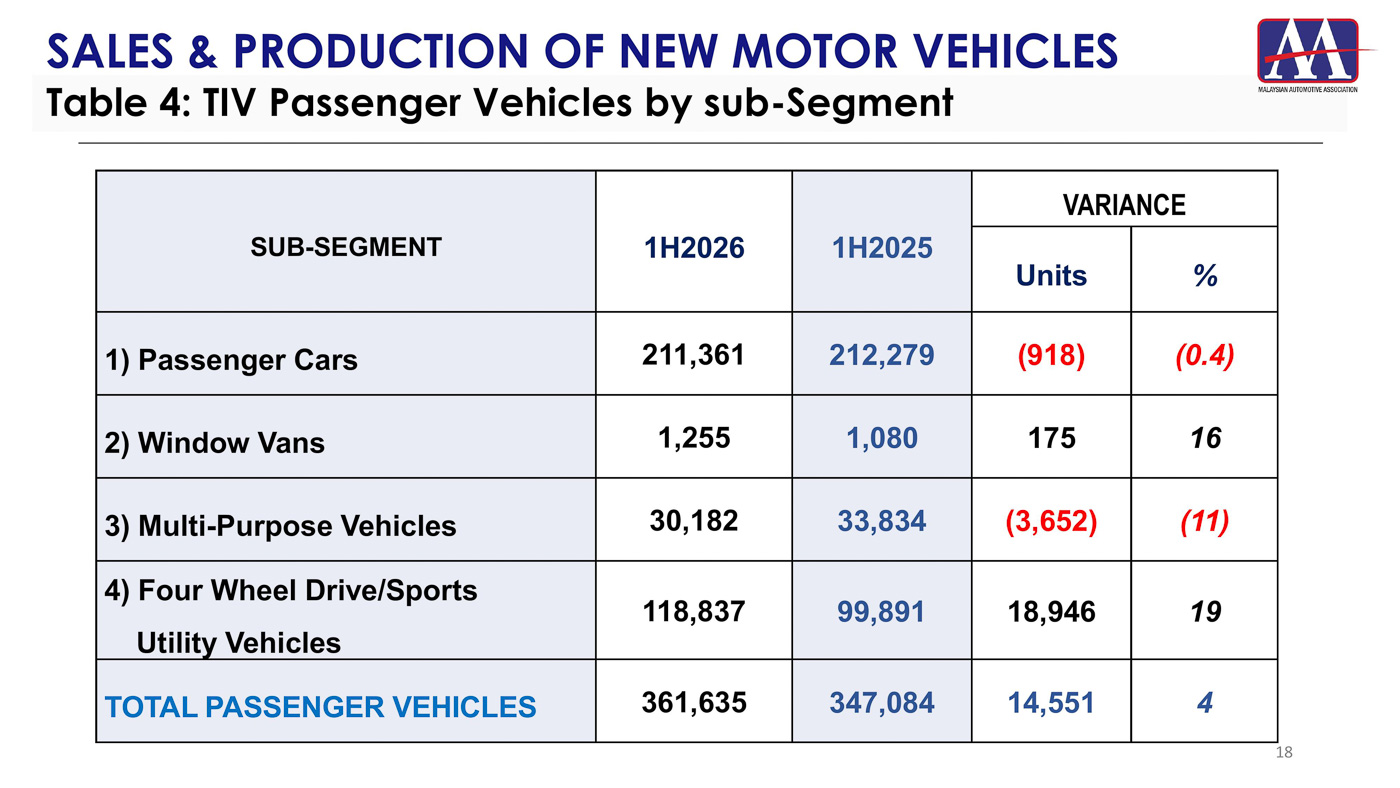
The sustained interest in xEVs have contributed to an overall 4% increase in passenger vehicle sales in the country (361,635 units in 1H 2026, compared to 347,084 last year).
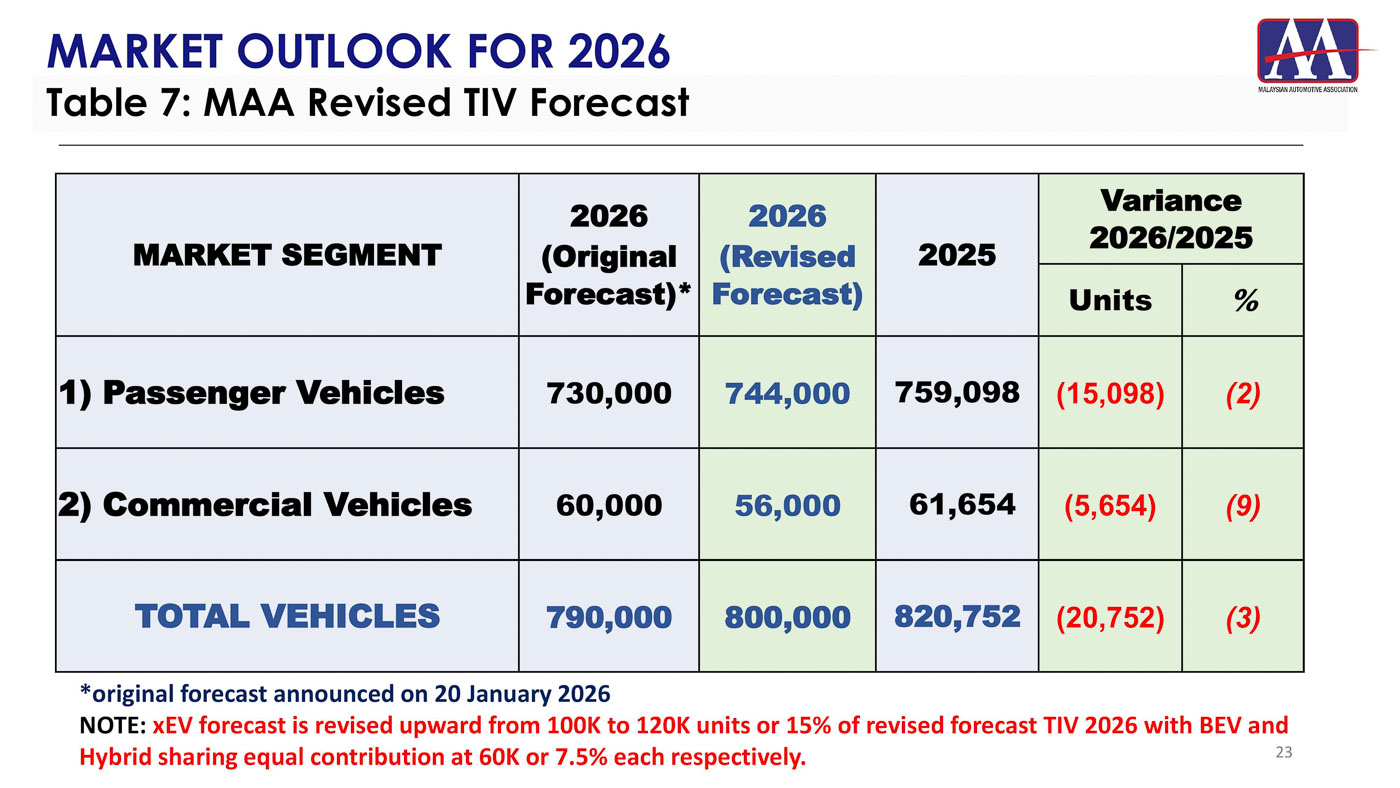
MAA expects the momentum to also continue into the second half of 2026, and as such, its forecast total industry volume for 2026 has now been revised up from 790,000 units to 800,000 units, with xEVs accounting for approximately 15% (or 120,000 units) of the total industry volume (TIV), split evenly between HEVs and BEVs.

Aside from electrified vehicles, higher demand for SUVs (+19%), mainly driven by Proton’s EVs and new model introductions, have also helped drive up the increased TIV in 1H2026, MAA president Mohd Shamsor bin Mohd Zain said at a press conference earlier today. The national makes have also increased their market share once again, with Proton and Perodua now controlling 67% of the market.
Adding to the list of reasons is the continued consumer confidence supported by stable employment and household income, despite global economic uncertainties such as the ongoing war in Iran, as well as the postponement of the implementation of P.U.(A) 402 (open market value calculations) and the New Customised Incentive Mechanism (NCM) until the end of 2026, allowing businesses to operate more freely thanks to gearter certainty to manufacturers and distributors.
That said, commercial vehicles, in particular pickup trucks, have continued to see declines in sales in 1H 2026 (-11%), but MAA said the introduction of the revamped BUDI Diesel fuel subsidy programme has shown promising signs for the sub-segment for the second half of 2026.
GALLERY