Beijing has been on a regulatory spree, recently proposing new standards to restrict one-pedal driving in EVs and introducing new safety rules for powered door handles. But this latest one could be the most controversial yet, as the government is proposing an update to the national standard that would mandate all passenger cars to default to a more relaxed driving modem in which the 0-100 km/h sprint takes at least five seconds, Carscoops reports.
The controversial rule is contained within a draft titled “Technical Specifications for Power-Driven Vehicles Operating on Roads,” which is part of a broader safety and road behaviour initiative in China. This new draft is intended to replace the current GB 7258-2017 standard, which did not impose any such acceleration restrictions.

This would mean, by default, cars won’t be hitting those bonkers century sprint times anymore, like the Xiaomi SU7 Ultra’s face-melting 1.98 second 0-100 km/h run. However, this proposed regulatory update will not neuter performance, as drivers can still manually select a quicker setting to bypass the five-second default.
The main catch is that this override must be done every single time they start their car, provided the vehicle is technically capable of doing so, of course.
RELATED: China to introduce new safety rules for powered door handles – no outright ban
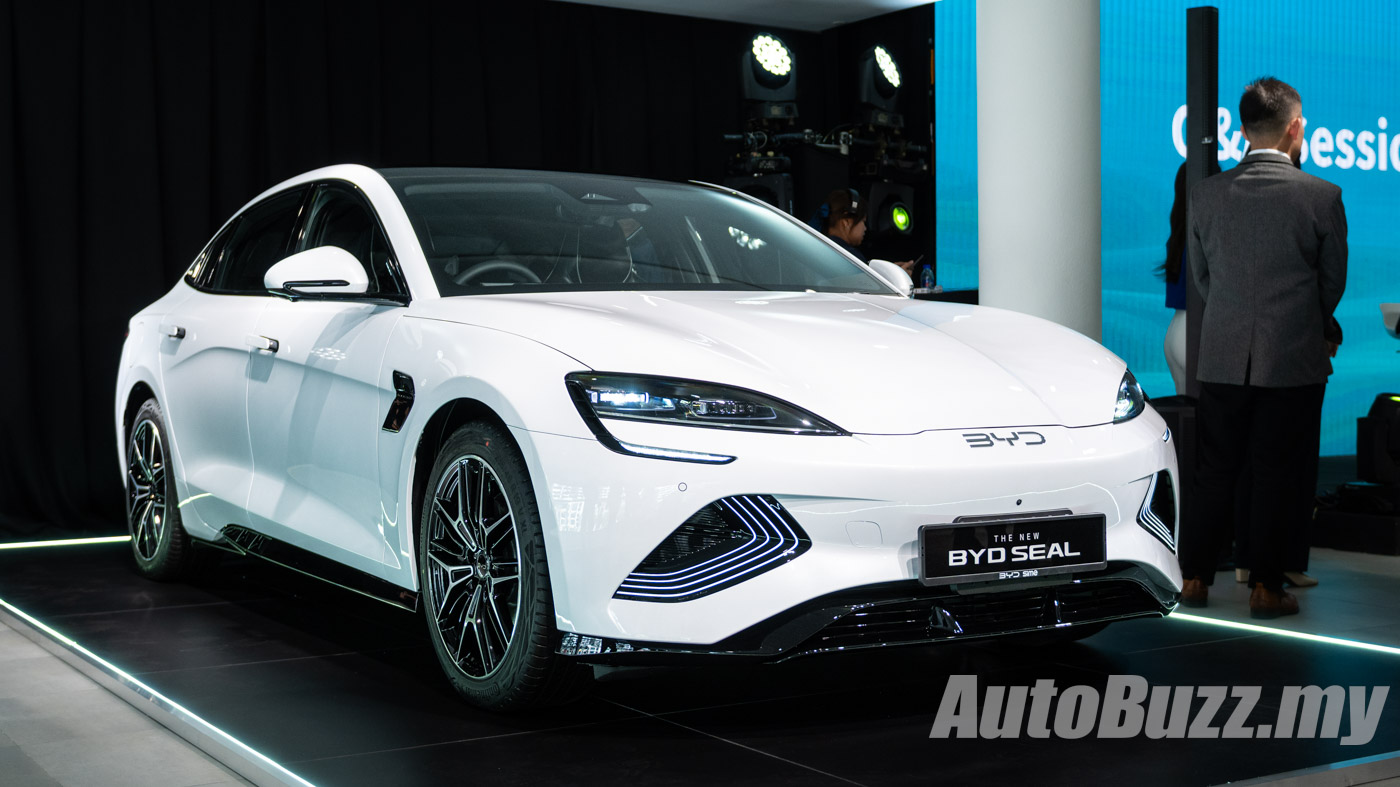
The restriction will work through software calibration, similar to an EV’s Eco mode, which limits power delivery. While a five-second century sprint is certainly not slow by normal standards, the regulation primarily targets electric cars like the aforementioned Xiaomi SU7 Ultra and the BYD Seal Performance variant, the latter of which even proudly displays a “3.8S” badge on its tailgate, showing off its century sprint times.
Separately, a different regulatory draft is also proposing that passenger vehicles six meters or longer must be equipped with an overspeed alarm function that triggers when the speed exceeds the maximum permissible limit, capped at 100 km/h.
It is likely this proposed ruling is targeted at stretched limousines, as some of the largest Chinese vehicles, such as the Zeekr 009, measure only around 5.2 meters long. These affected vehicles would include the type of car represented by the previous-generation Rolls-Royce Phantom Extended Wheelbase, and specialised domestic models like the Hongqi L5. It’s highly likely that only new vehicles entering production will be subject to this overspeed alarm rule.
ALSO READ: China pulls the handbrake on shady EV exports with new regulations