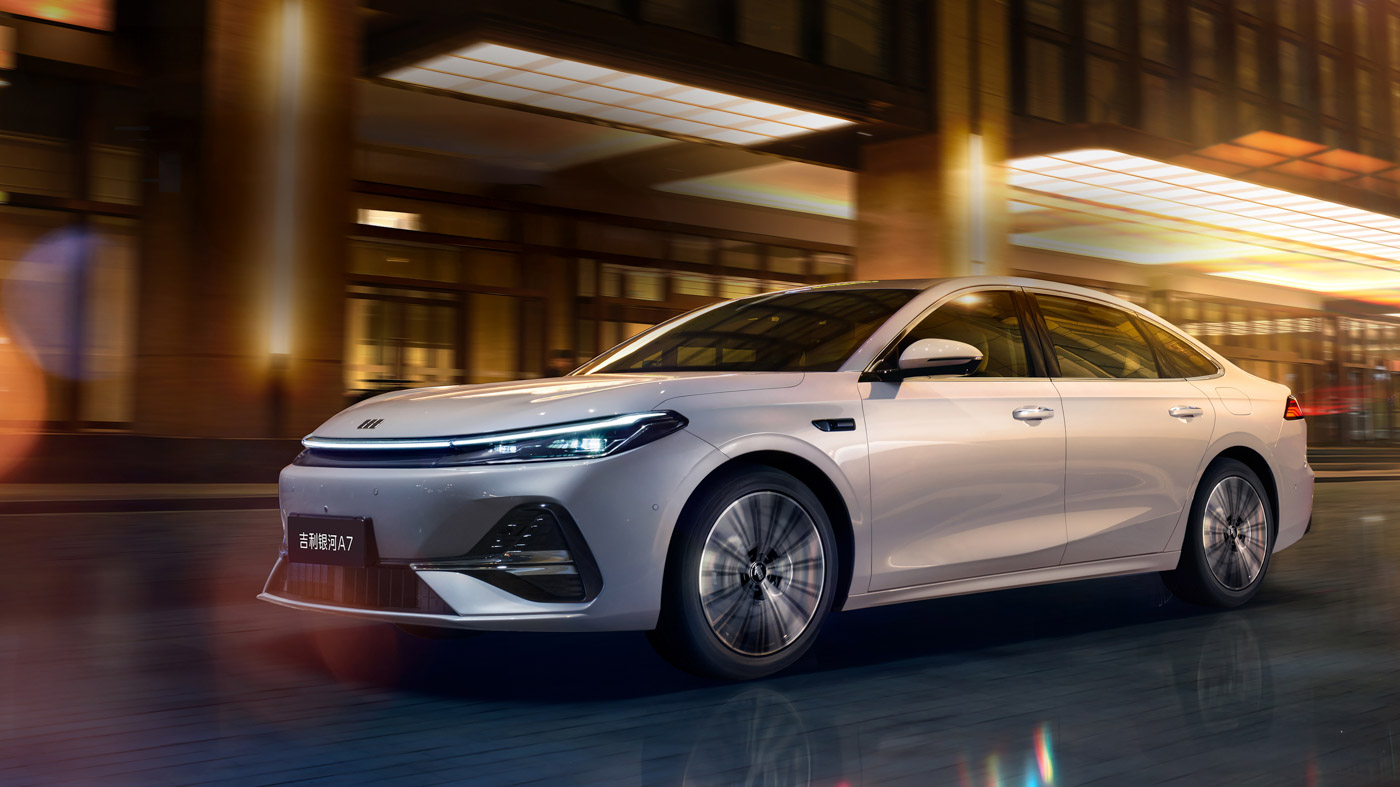
Geely has just unveiled the all-new Galaxy A7 plug-in hybrid electric vehicle (PHEV) in China, with an impressive fuel efficiency of just 2.0 L/100km and a claimed range of 2,100 km – and no, it’s not the comeback of a Samsung smartphone.
The Galaxy A7 is a new D-segment PHEV executive sedan under the Geely Galaxy sub-brand. It measures similarly to the Toyota Camry and the Honda Accord at 4,918 mm in length, 1,905 mm in width, and 1,495 mm in height, with a 2845mm long wheelbase.
Positioned as the smaller sibling to the Galaxy Star 8, the A7 is expected to ride on Geely’s EM-i platform, which was also seen in the Galaxy Starship 7 that was on display at Auto Shanghai 2025.
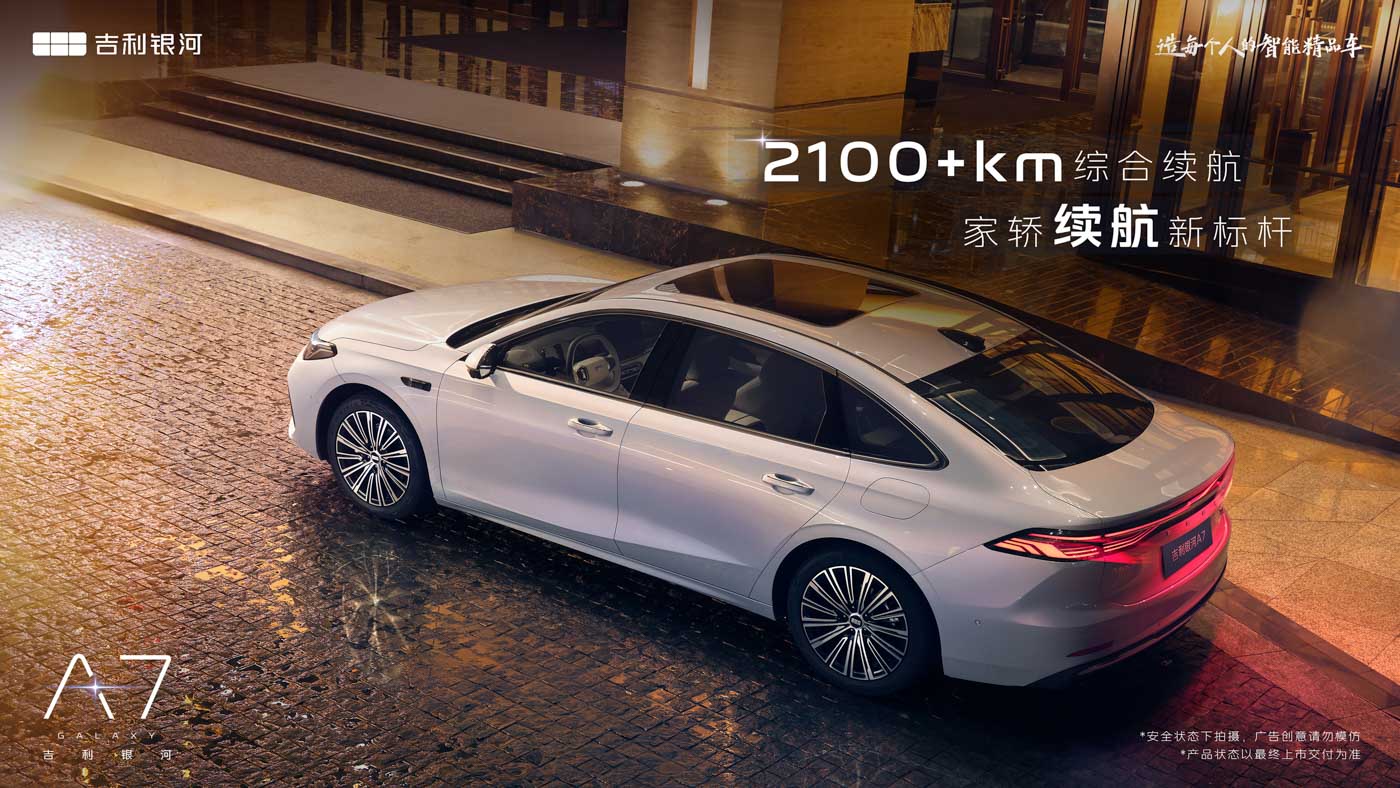
At first glance, the Galaxy A7 presents a sleek, executive looking silhouette with bold and strong bodylines—fitting for a car in this segment. It’s a star contrast to the more rounded design of the Proton eMAS 7 (stylised as e.MAS 7), and both its front and rear lightbars add a modern, high-tech touch that’s become a staple in today’s market.
ALSO READ: The Geely Galaxy Starship 7 shown in China could be Proton’s first PHEV model!

Step inside the Galaxy A7 and things start to feel a little familiar – especially if you’ve spent time in the Proton eMAS 7. The overall layout has been carried over, but has been souped up with wooden trims on the dashboard and centre console. The wireless charger has been repositioned just below the air-con vents for easier access. Similar to the eMAS 7, the steering wheel here is in a unique two-spoke design, while the sunroof gives the cabin an open feel.
The PHEV powertrain in the Geely Galaxy A7 consists of a 1.5-litre engine paired with an electric motor. No information has been made available yet, but based on what we’ve seen in the Starship 7, we can expect the engine to produce 111 hp and 136 Nm. Together with the electric motor that produces 218 hp and 262 Nm, total combined system output should be around 329 hp and 398 Nm.

As mentioned above, Geely claims the PHEV system on the Galaxy A7 can produce a total range of 2,100 km or achieve a fuel consumption rating of 2.0 L/100 km – impressively low for a car this size.
Would you welcome the Galaxy A7 PHEV to our shores? With its sleek design, cutting-edge hybrid tech, and impressive range, it wouldn’t be a stretch to imagine it reviving the Perdana nameplate. After all, that was Proton’s last venture into the D-segment executive sedan space. And with over 2,100 km of range, it’s just the kind of car that could ferry executives coast to coast.
ALSO READ: Geely tested the Proton eMAS 7’s Aegis Gold Brick battery pack… By crushing it with a tank