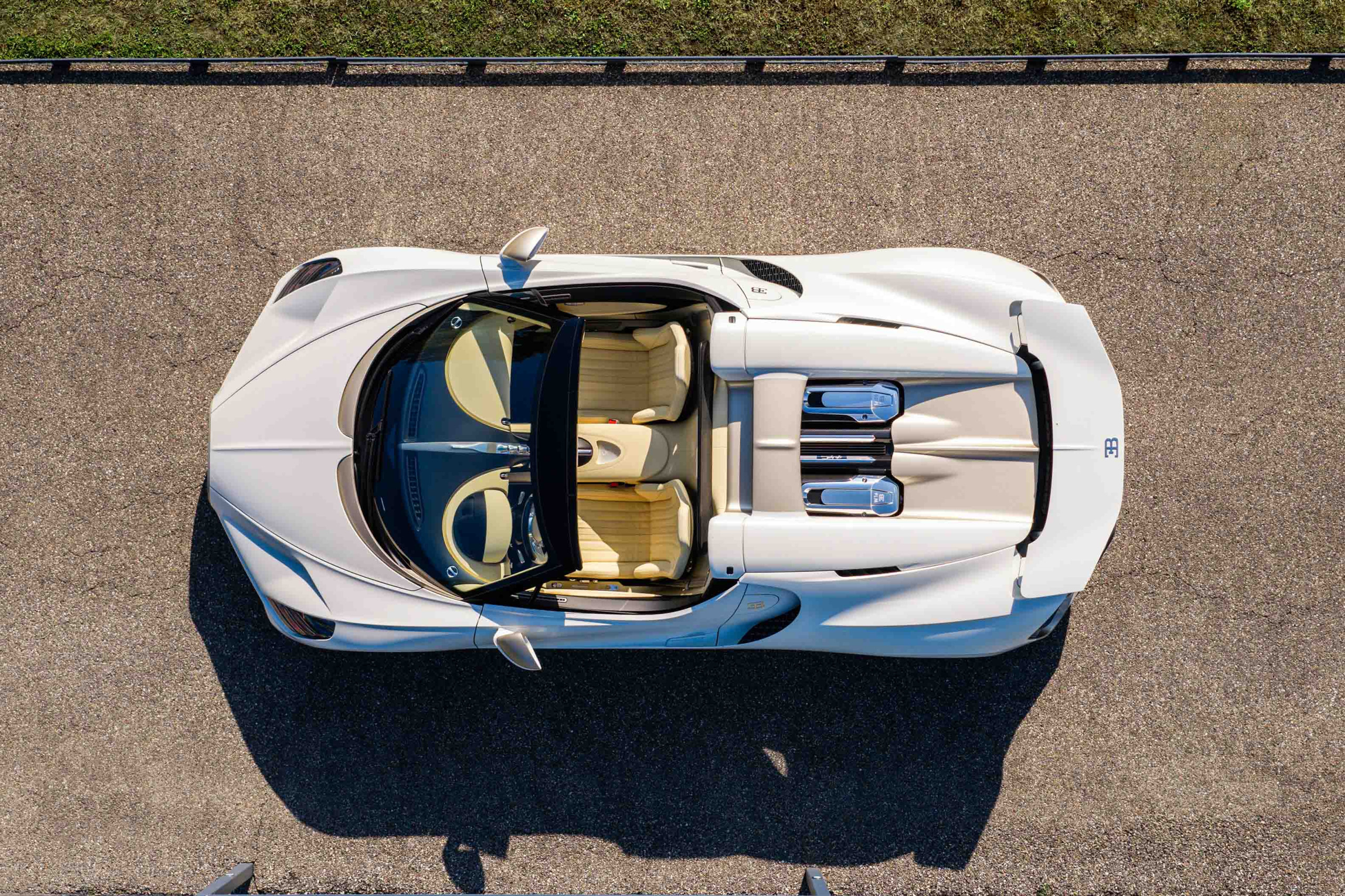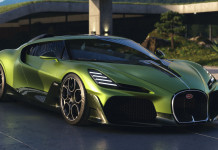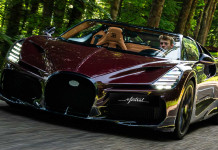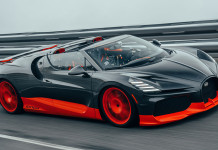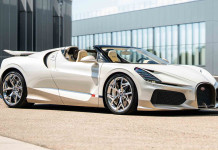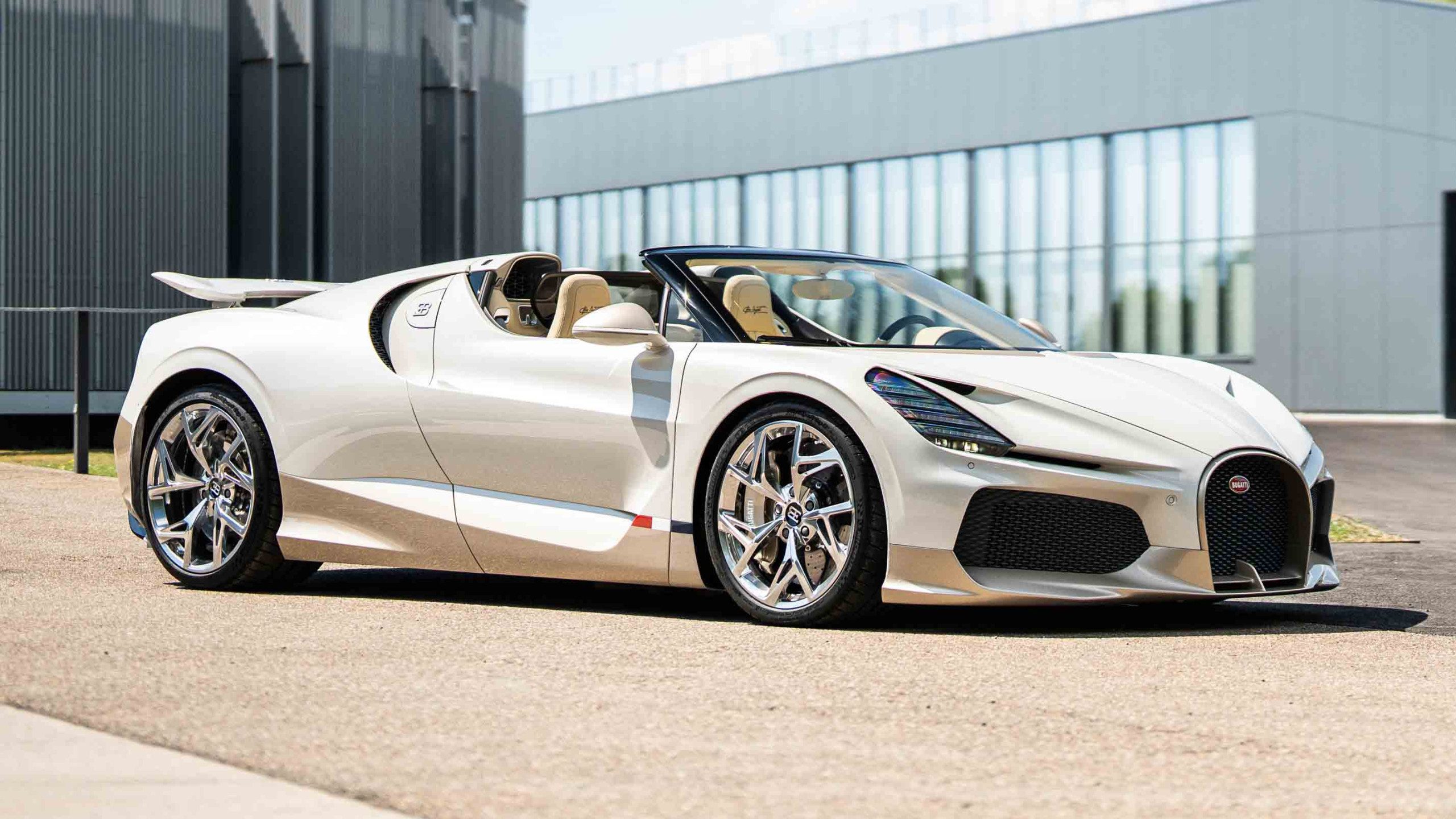
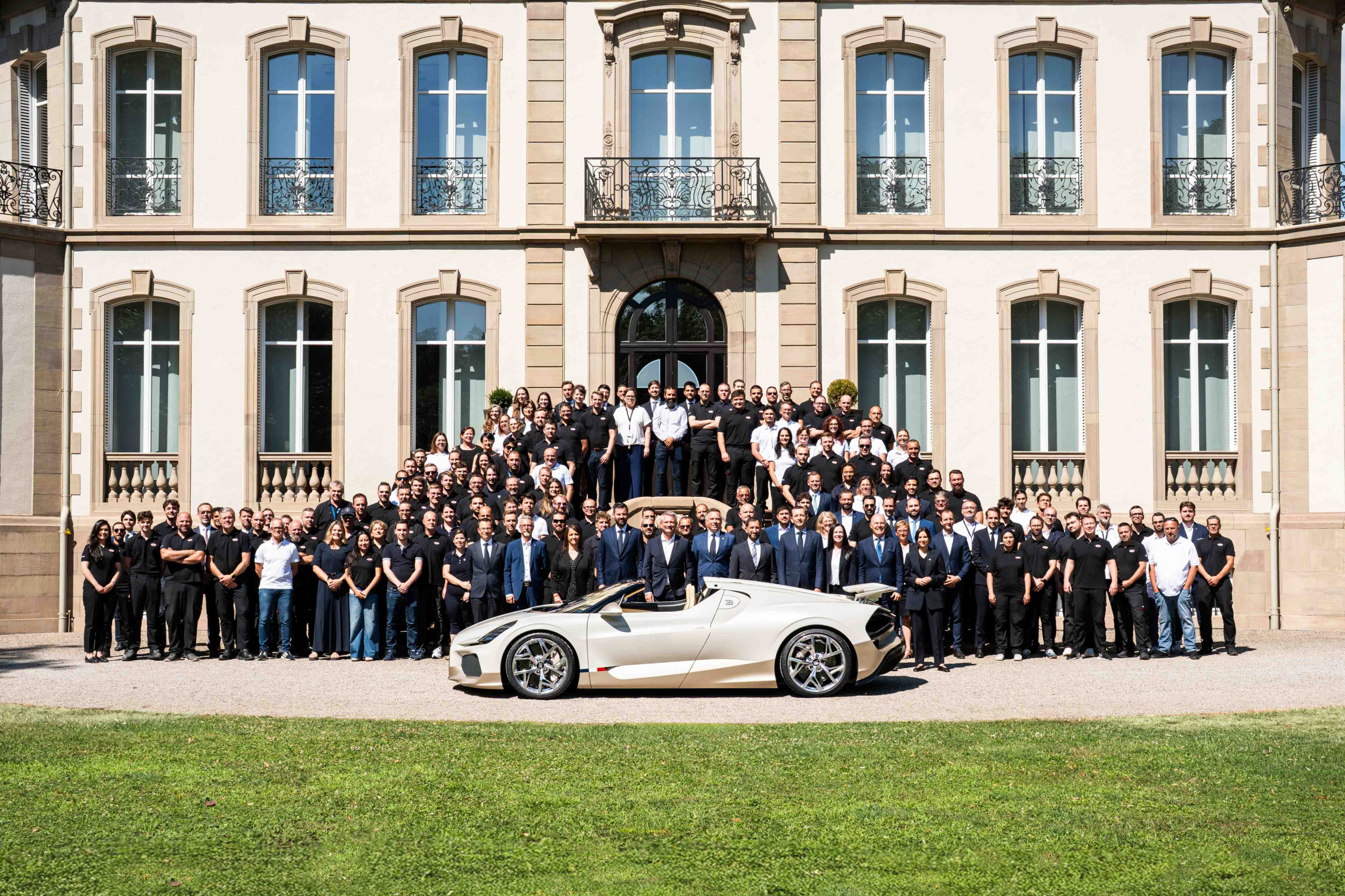
Bugatti has built its last W16 Mistral. The final example rolled out of the Molsheim atelier this week, bringing an end to a 99-unit production run and, with it, the road-going career of the W16 engine itself. After nearly two decades powering the Veyron, the Chiron, and now the Mistral, the W16 story is officially over.
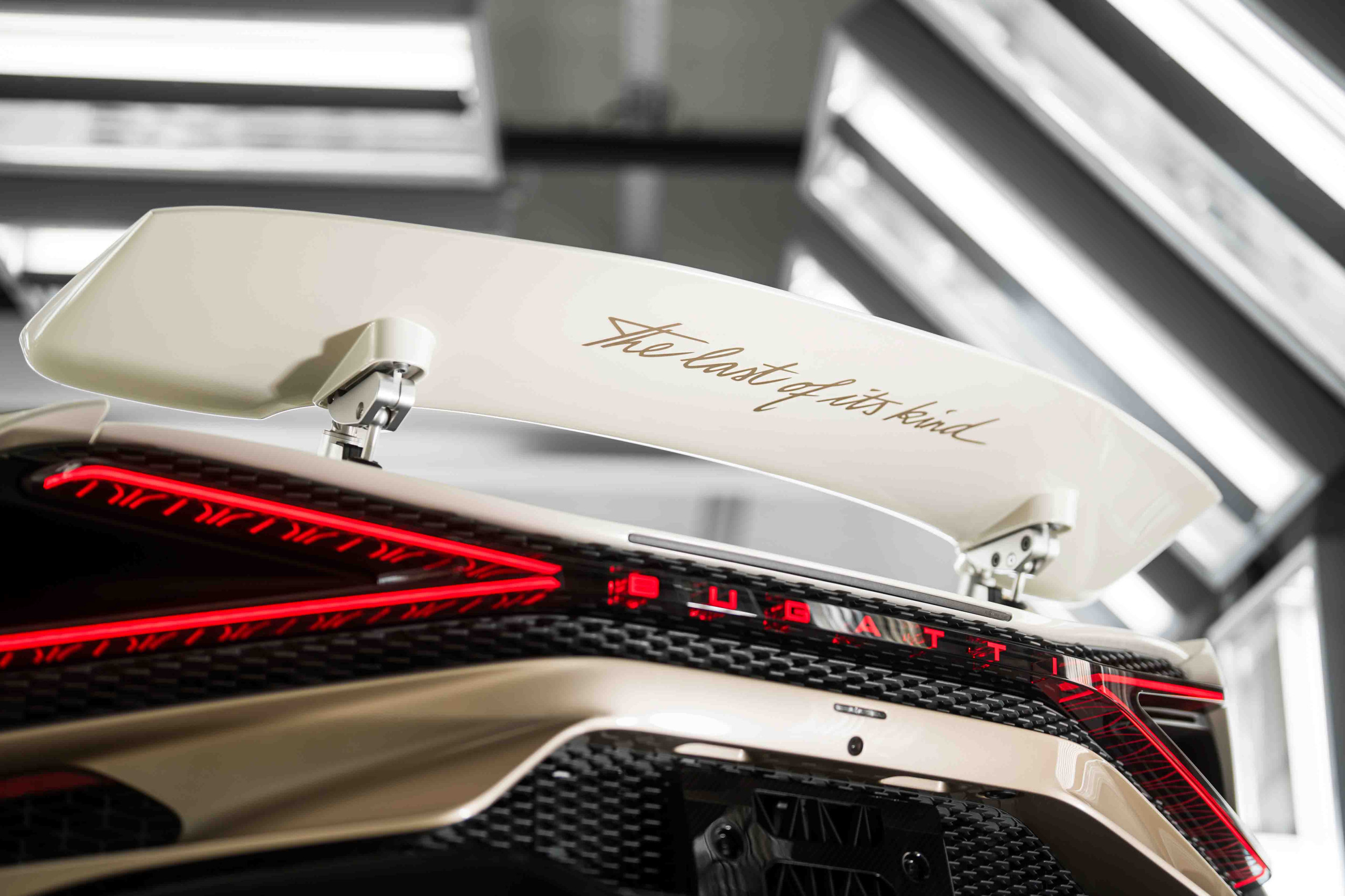
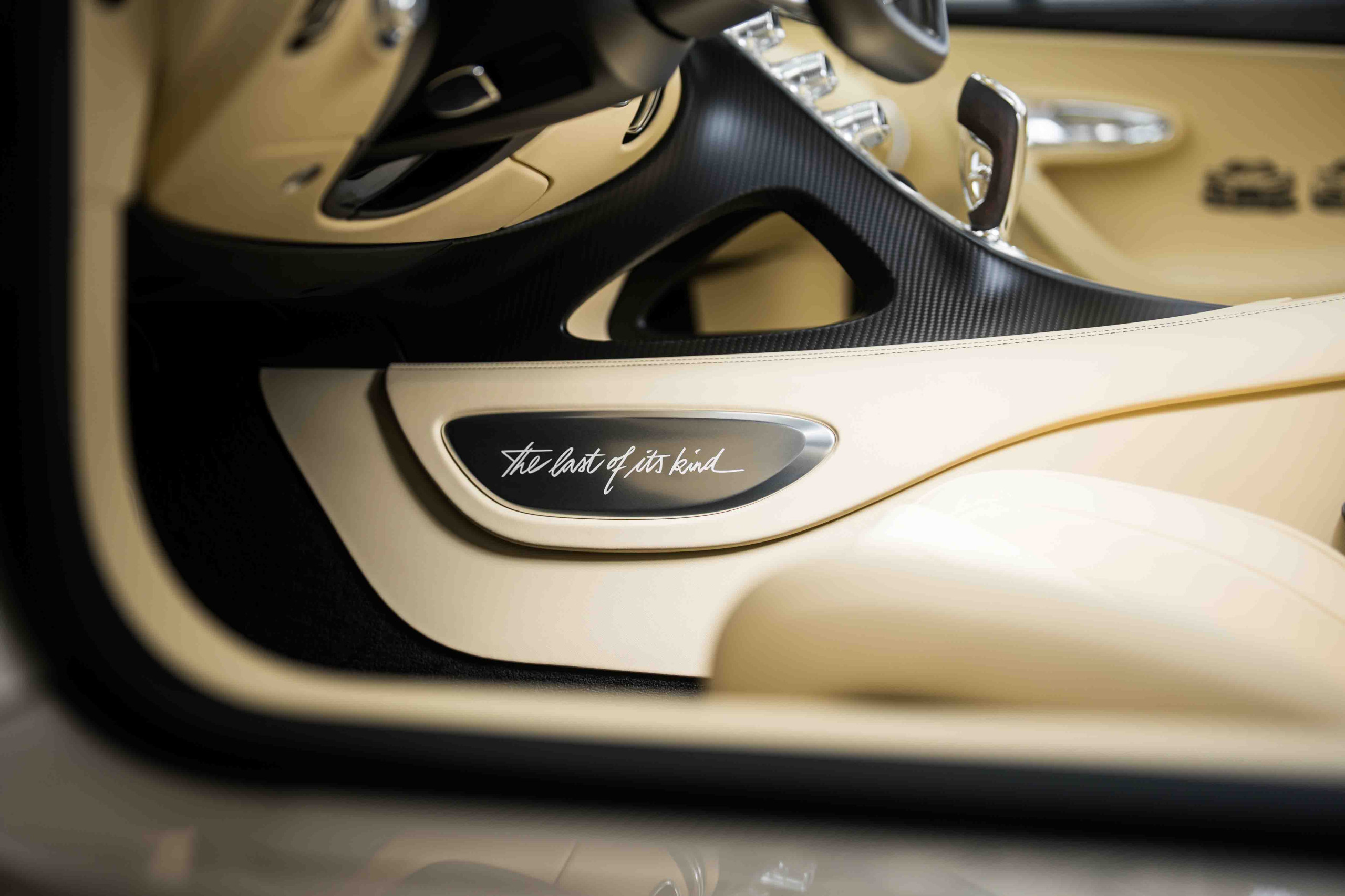
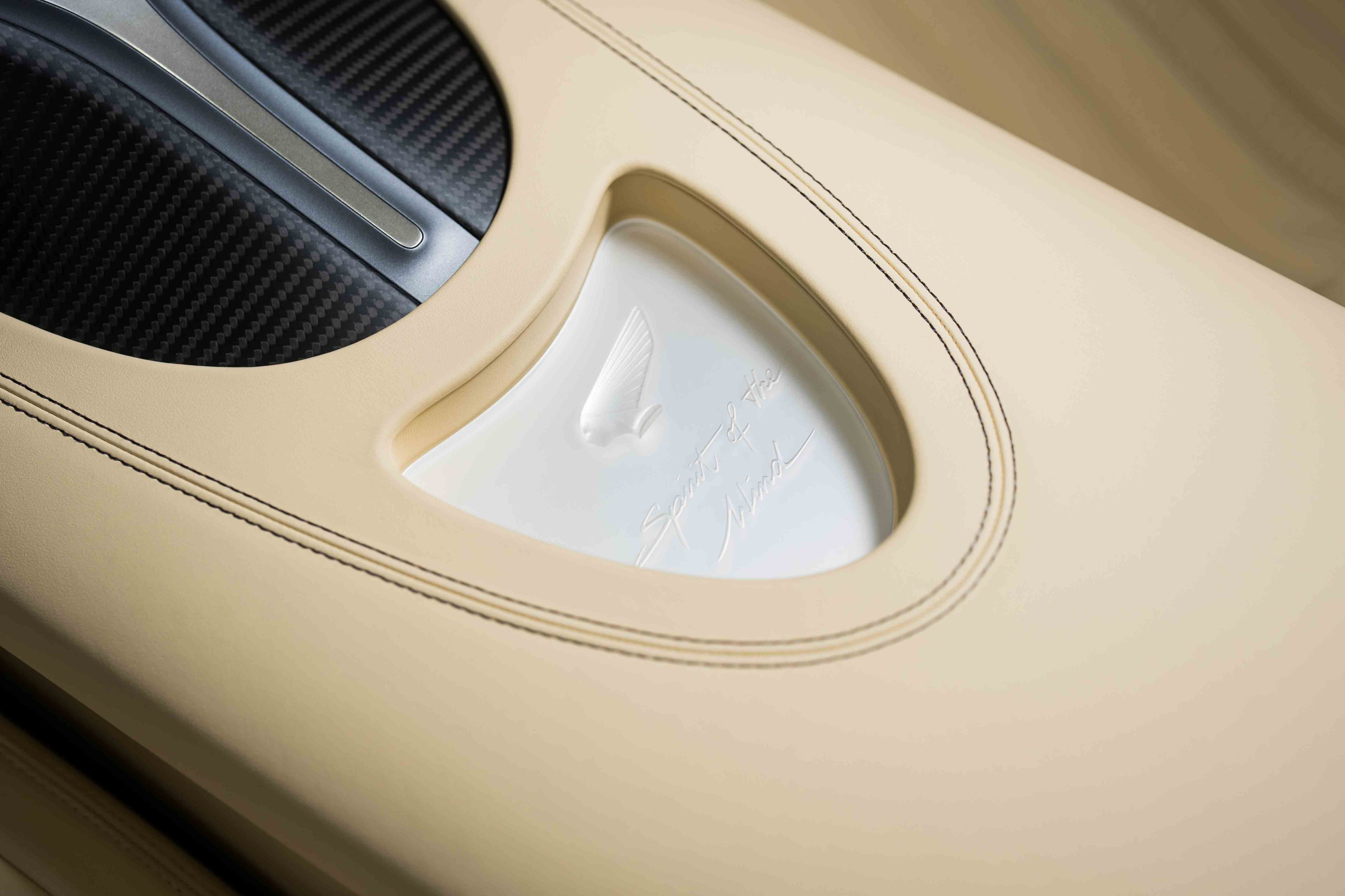
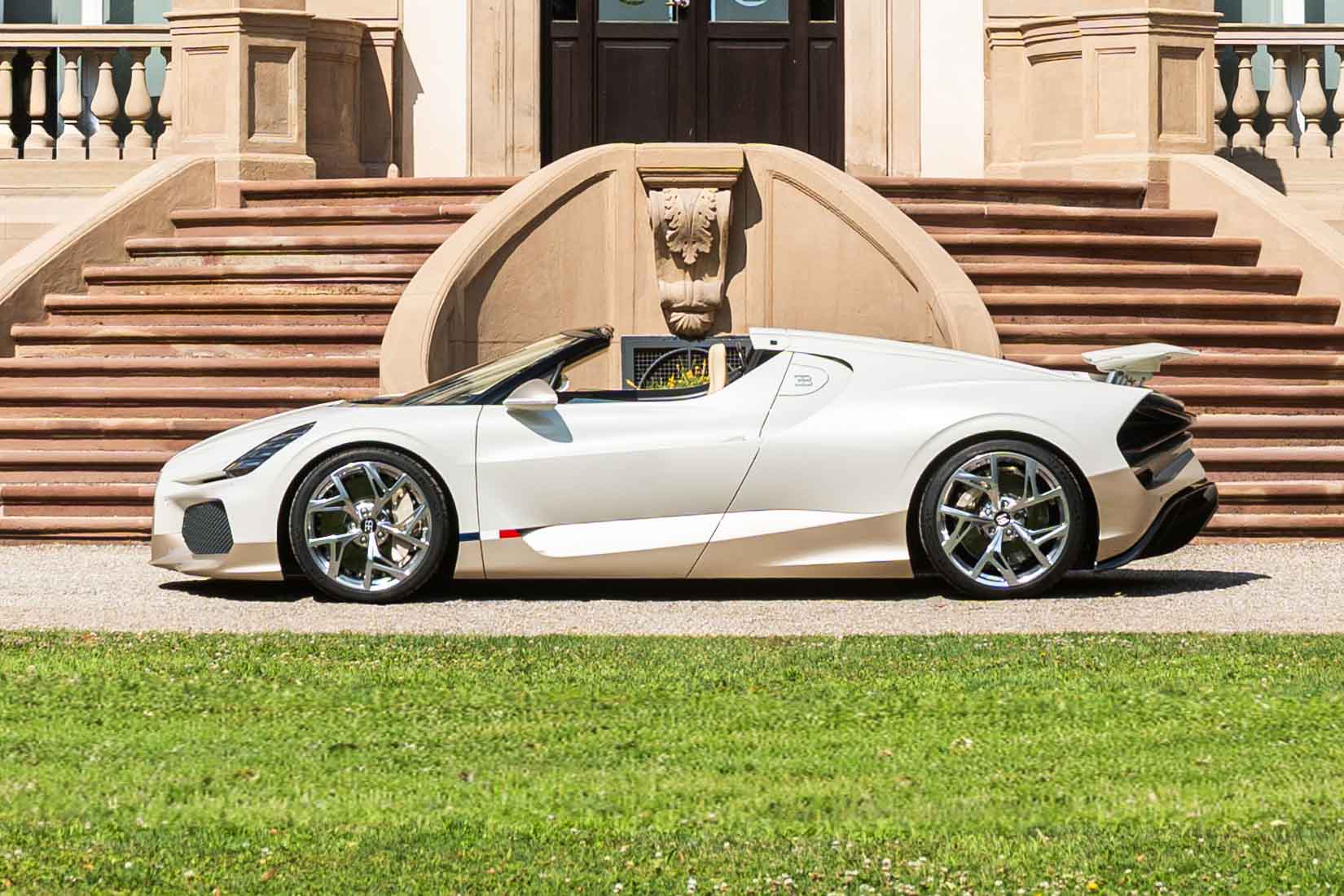
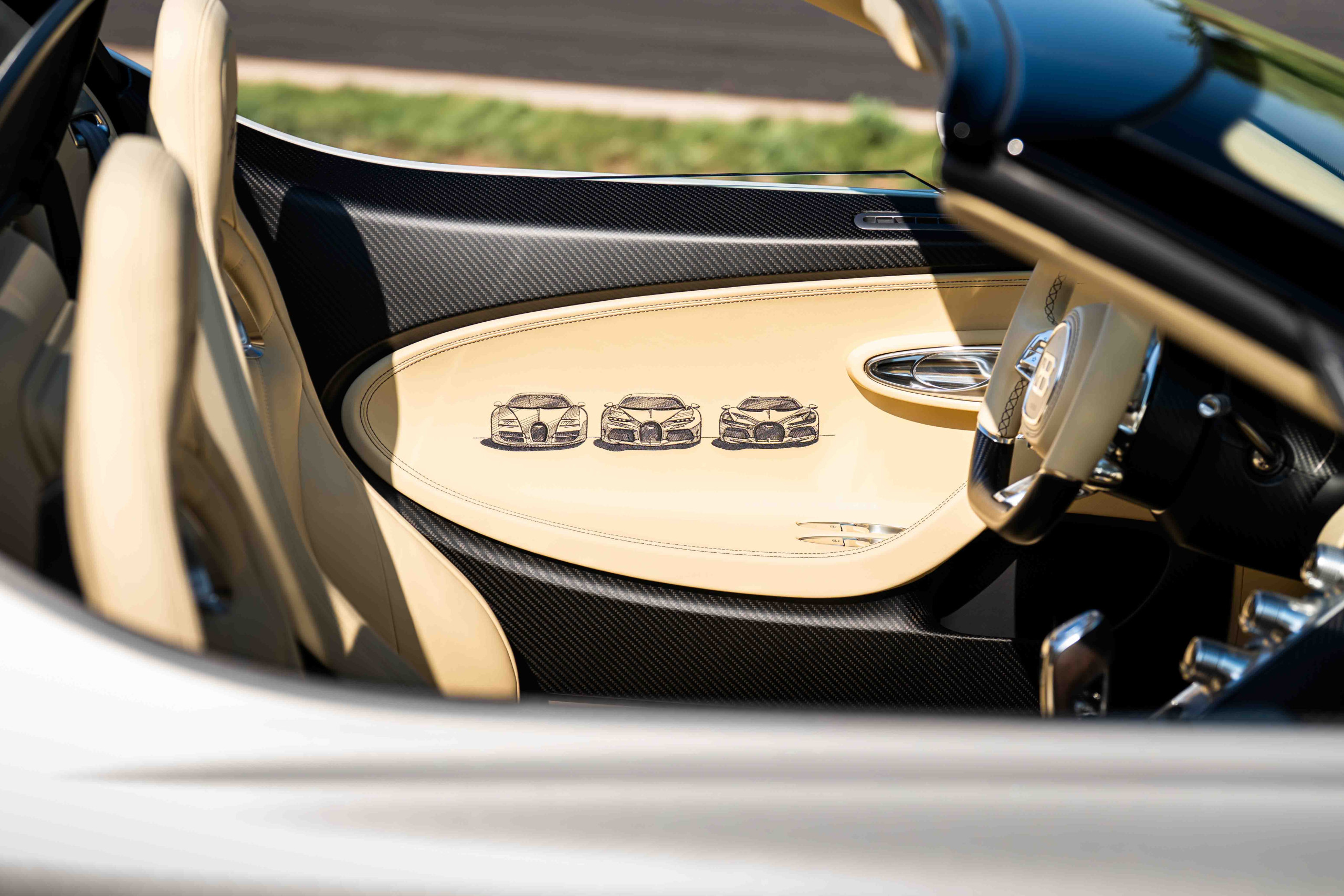
The final Bugatti Mistral is finished in a two-tone “Pearl” and “Sparkle” livery, paired with “Magnolia” and “Grey Carbon Matt” on the inside. A dedication plate in the cabin reads “the last of its kind,” paired with a silhouette of the car — a reference to the phrase Bugatti has used to describe the Mistral since it was unveiled.
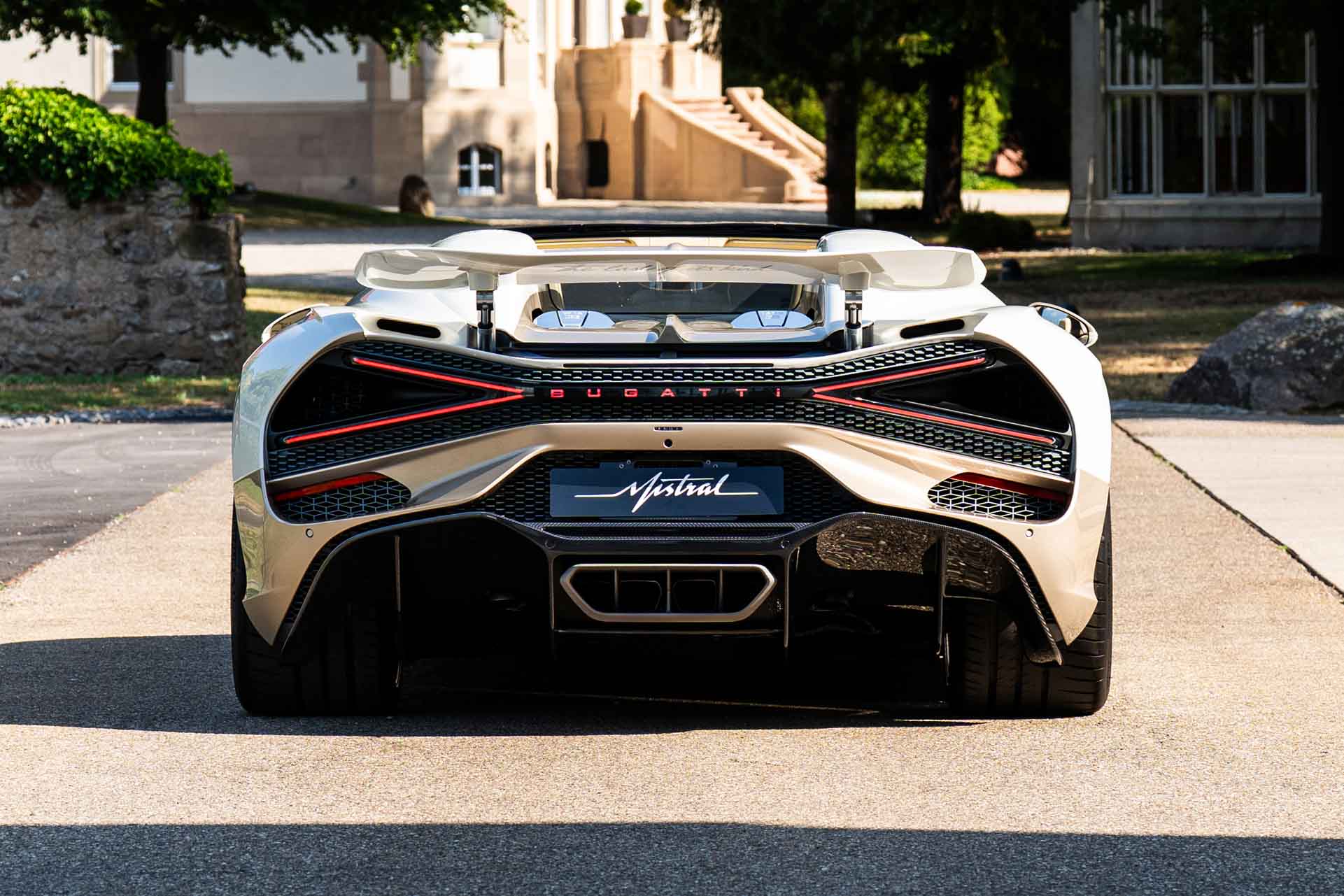
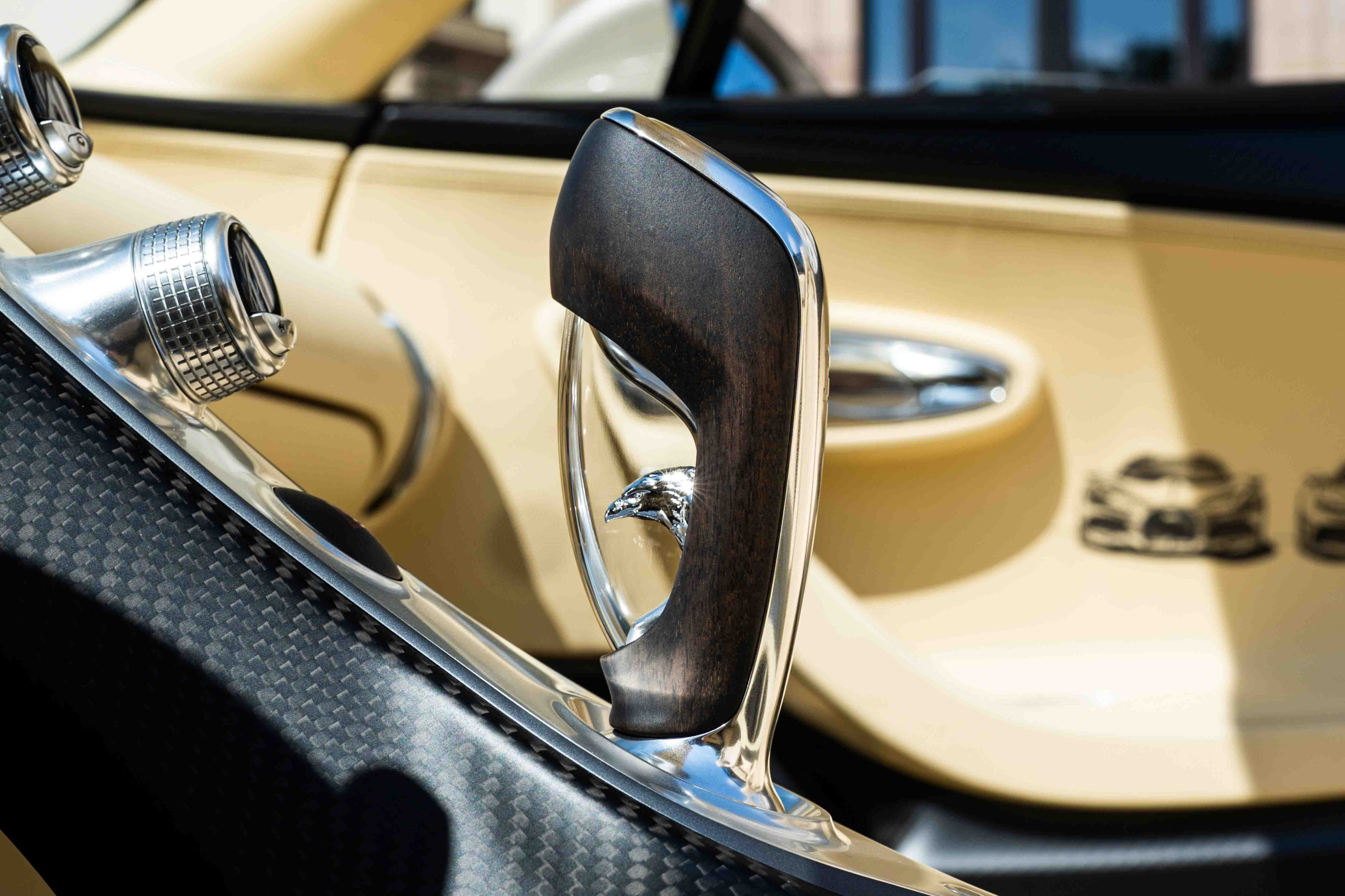
The details go deeper as you step into the car. Ettore Bugatti’s signature is stitched into the headrests, rendered in aluminium along the door sills, and worked into the engine cover in place of the usual Bugatti badge. Instead of Bugatti’s usual Rembrandt-designed dancing elephant, this car gets a falcon head on the gear shift, a personal request tied to the customer’s home region in the Middle East.
Just as its W16 predecessors have done, the Mistral is equally as accomplished by being the fastest open-top production car in the world. Back in November 2024, Bugatti works driver Andy Wallace took the one-off W16 Mistral World Record Car to 453.91 km/h at ATP Automotive Testing Papenburg. This record still stands today.
ALSO READ: Bugatti Mistral roars to 454 km/h, setting a new world speed record for open-top cars
To understand how Bugatti got here, let’s go back to where it all began. The story begins with the former Volkswagen AG chairman, Ferdinand Karl Piëch. He famously sketched his idea for an ultra-powerful engine on a Shinkansen during a trip in Japan back in 1997. And actually, the original vision was to make an 18-cylinder engine.
After Volkswagen Group purchased Bugatti, they unveiled several concepts with a naturally aspirated V18. But they weren’t exactly feasible for production due to the engine’s size and weight. They then settled on the now-famed W16 layout that’s achieved by sticking two Volkswagen VR8 V8 engines and sharing a single crankshaft.
With the help of four turbos, the legendary W16 powertrain debuted in the Bugatti Veyron, producing up to 1,001 hp. Unveiled in 2005 at the Geneva Motor Show, it made the Veyron the world’s first production car to break the 1,000 hp mark. It received its first power bump with the Veyron Super Sport in 2010, producing 1,200 hp — enough to set a production-car speed record of 431.072 km/h.
ALSO READ: TMJ takes delivery of a bespoke Bugatti Mistral for the royal garage
The engine was redesigned for the Chiron, pushing output to 1,500 hp, then further improved with the Chiron Pur Sport, producing 1,600 hp. Bugatti went on to build several special and limited-run editions, but 1,600 hp remained the ceiling for the W16 engine.
So what’s next? Bugatti’s answer is a clean break from turbocharging altogether. The W16’s successor is an 8.3-litre naturally aspirated V16, co-developed with British engineering firm Cosworth — the first time an outside partner has built the core engine for a modern-era Bugatti. Debuted in the Tourbillon, Bugatti’s first plug-in hybrid hypercar, it’s paired with three electric motors for a combined 1,800 hp.
ALSO READ: Bugatti Tourbillon debuts – 8.3L V16, 1800hp, 0-100 km/h in 2.0 seconds
Bugatti has officially described the W16 Mistral as the “final roadgoing swansong” for its legendary quad-turbocharged 8.0-litre W16, signaling the end of an engine that defined the marque for nearly two decades. However, the launch of Programme Solitaire, Bugatti’s ultra-exclusive coachbuilding initiative for bespoke one-off commissions, showed that the company was still willing to work with the outgoing W16 platform, as demonstrated by the Brouillard.
While Bugatti has said it will no longer be making more standard-production W16-powered vehicles, its Programme Solitaire leaves open the possibility that the iconic engine could make another appearance in a future one-off commission or even a non-series, track-only special. That, of course, is all just guesswork, so don’t keep your hopes up too high.
ALSO READ: The iconic Bugatti W16 engine lives on… but only through one-off commissions
GALLERY