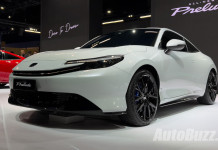
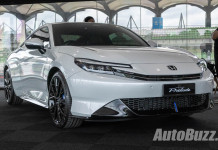
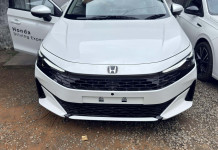
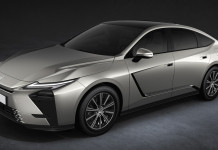
Following Honda’s major reassessment of its electric vehicle (EV) strategy announced earlier this year, the Japanese carmaker is now doubling down on hybrid technology. During its 2026 Business Briefing, Honda unveiled two new hybrid prototypes as part of a broader plan to launch 15 new hybrid models by 2030.
At the centre of it all were two key concept models, the Honda Hybrid Sedan Prototype and the Acura Hybrid SUV Prototype, both designed to preview the next generation of Honda’s hybrid system architecture.

The sedan represents the brand’s direction for efficient, electrified passenger cars, while the SUV under the Acura name highlights a more performance-oriented and premium interpretation of its hybrid technology.
While information regarding the new prototype models remains scarce, Honda says that the next-generation hybrid system will also be built on a next-generation platform, with some of them given a newly developed electric all-wheel drive (AWD) unit.
ALSO READ: Honda Malaysia extends hybrid battery warranty coverage to 10 years

Beyond the prototypes, Honda also outlined its broader hybridisation strategy, which focuses on expanding its hybrid lineup across multiple segments, including D-segment models and above. The company aims to improve efficiency, lower costs, and accelerate hybrid adoption in key global markets where hybrids continue to see strong demand.
Honda is also making strides in advanced driver assistance system (ADAS) technology. Similar to its hybrid roadmap plans, the company plans to fit its next-generation ADAS to more than 15 models over the span of five years.
ALSO READ: The Honda Super-One packs 95 hp, simulated 7-speed gearbox, and 274 km range

Honda and its joint venture partner, LG Energy Solution, will convert part of the EV battery production lines at L-H Battery Company, a joint venture with LG Energy Solution, to hybrid battery production. Honda will also increase the local content of assemblies and component parts of motors and inverters by more than four times the current level, to prepare for the expansion of hybrid vehicle production, reducing the risk of a supply shortage and mitigating the impact of U.S. tariffs.
As for its previous EV ambitions, Honda says it will continue to strive for carbon neutrality by 2050 and will be carefully observing the market to adapt based on regional demand trends. For the long term, Honda aims to accelerate a multi-faceted approach to achieving carbon neutrality, which will include EVs, hybrid vehicles, carbon-neutral fuels and carbon-offset technologies.
At the same time, Honda says it will continue laying the groundwork for a highly competitive next-generation EV platform for the future. As part of this, the company has adopted a new domain-based electrical and electronic (E&E) architecture that can flexibly respond to differing regional requirements, evolving customer needs, and changing market conditions.
Honda says the unified software architecture will enable more efficient development processes while allowing the company to deliver new features and services to customers more quickly. Beyond this, the carmaker also aims to introduce new mobility and in-cabin experiences through the wider application of intelligent technologies. Its upcoming ASIMO OS will not only be used for future EVs, but will also be applied to hybrid models to further enhance the overall ownership experience.
RELATED: Honda kills off 3 EVs in strategy rethink as it braces for up to USD15.7 billion in losses