China is one of the world’s largest car markets, and more so for luxury cars. However, Porsche appears to be feeling the pinch as domestic Chinese luxury brands like Denza and Zeekr offer comparable vehicles at more accessible prices than established German marques.
Porsche’s sales in the Middle Kingdom took a 24% nosedive in 2024, with only 79,283 cars sold. Things didn’t exactly bounce back for Porsche because in Q1 2025, their sales plummeted further by 42%, coming in at a mere 9,471 delivered.

These less-than-stellar sales numbers aren’t down to China losing its taste for the iconic Porsche 911 and its sporty siblings. Instead, the real issue seems to be Stuttgart’s struggle to put up a proper fight in China’s booming fully electric (EV) market.
Speaking at Auto Shanghai 2025, as cited by Automotive News Europe, Porsche CEO Oliver Blume noted the relatively low EV sales in China, hinting at a potential exit from the Chinese domestic EV market in the near future. “We will see in the next two to three years whether Porsche exists as an electric brand here,” Blume stated.
RELATED: EV Porsche Cayenne set to debut this year, but ICE model is here to stay too

This comes at a time when Chinese carmakers like Xiaomi are offering EVs that are cheaper and – in some cases – more powerful than Porsche offerings, such as the Xiaomi SU7 Ultra with a whopping 1,548 hp, priced from just RMB529,900 (approx. RM311k).
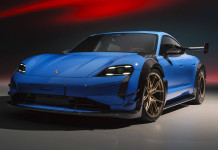
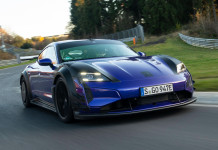
In comparison, the most powerful Porsche Taycan in its Turbo GT guise, starts at a hefty RMB1.998 million (approx. RM1.17 million) for its 1,034 hp output. Stacked against the Xiaomi SU7 Ultra, the latter appears to be a genuine bargain.
Despite this, Blume dismissed the Xiaomi SU7 Ultra as a direct rival, arguing that the more affordable EV cannot match Porsche’s “driving ability”.

These are bold words from a brand whose sales are slumping compared to the rapid success of the Xiaomi SU7 Ultra, which hit its annual sales target of 10,000 units within just two hours of its release, as reported by Cnevpost.
So, how does Porsche intend to address its declining sales? Will they perhaps invest in a China-specific model, similar to Audi’s approach with its China-exclusive AUDI sub-brand and the AUDI E5 Sportback?

Nope – the CEO of Porsche clarified that the company has no plans to release a more affordable EV to compete with domestic Chinese brands, stating that the company will not chase volume and will maintain prices deemed “appropriate for Porsche”.
Given Porsche’s reluctance to lower its brand’s prestige with a cheaper EV to compete with local Chinese models or to engage in price wars, the only clear option – as its CEO suggested – is to wait and see over the next two to three years if the brand can maintain its EV presence in China.
Despite the current stance, the upcoming electric Porsche Cayenne and the all-electric successor to the Porsche 718 might provide the boost Stuttgart needs to revitalise its sales in China’s ultra-competitive EV market. Only time will tell if Porsche EVs can survive there.