Horse Powertrain, the Geely–Renault joint-venture powertrain company, has announced a new “Future Hybrid Concept” powertrain which will be making its debut in 2027. As reported by IT Home, the new powertrain will come under Horse’s X-Range family, and is designed to let carmakers deploy hybrid powertrains on dedicated EV platforms, without the need for separate architectures.
The company appears to be targeting the carmakers who have invested heavily in EV platform development, but are now walking back their electrification promises. By enabling hybrids to slot directly into an EV platform, this could lead to simplifying development, reducing costs, and potentially redefining how future electrified models are engineered.

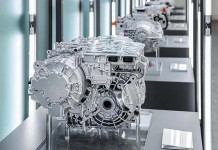
The Future Hybrid system combines the engine, gearbox, electric motor, and power electronics into one tight, ready-to-install package. The two variants are designed with different priorities in mind. The performance version uses a P1+P3 dual-motor setup, where the P1 motor sits on the engine to assist and recover energy, while the P3 motor is placed after the transmission to directly drive the wheels for stronger acceleration. This version measures 740 mm in width.
The ultra-compact version uses a single P2 motor, positioned between the engine and transmission, which also supports low-speed EV driving. This shrinks the width to just 650 mm. Both systems pair with a 1.5-litre four-cylinder engine and a dedicated hybrid gearbox. Thanks to the compact layout, the powertrain shortens the front overhang by about 150 mm compared to a typical hybrid setup, allowing it to bolt straight onto an existing EV subframe with minimal changes to the body or production process.
ALSO READ: Next-gen Mercedes-Benz CLA could feature Geely-sourced MHEV powertrain

The report also highlights the powertrain’s versatility, noting that a pure EV platform can be quickly adapted into a hybrid (HEV), plug-in hybrid (PHEV), or even a range-extended EV (REEV) with minimal changes to the vehicle’s structure. The design also allows carmakers to retain key front-end components typically used in EVs, such as the HVAC system and PFAS-free air-conditioning system — reducing both cost and environmental impact.
As revealed earlier this year, one of the system’s standout advantages is its ability to run on multiple fuel types, from E85 ethanol to M100 methanol and even synthetic fuels, thanks to its pre-combustion chamber ignition technology. Horse Powertrain has also stated that the system was “designed to be used and operated anywhere in the world”.
The report also notes that Horse Powertrain is developing a three-cylinder variant, which is expected to shave a further 70 mm off the unit’s width, improving packaging efficiency and making it more suitable for smaller vehicles.