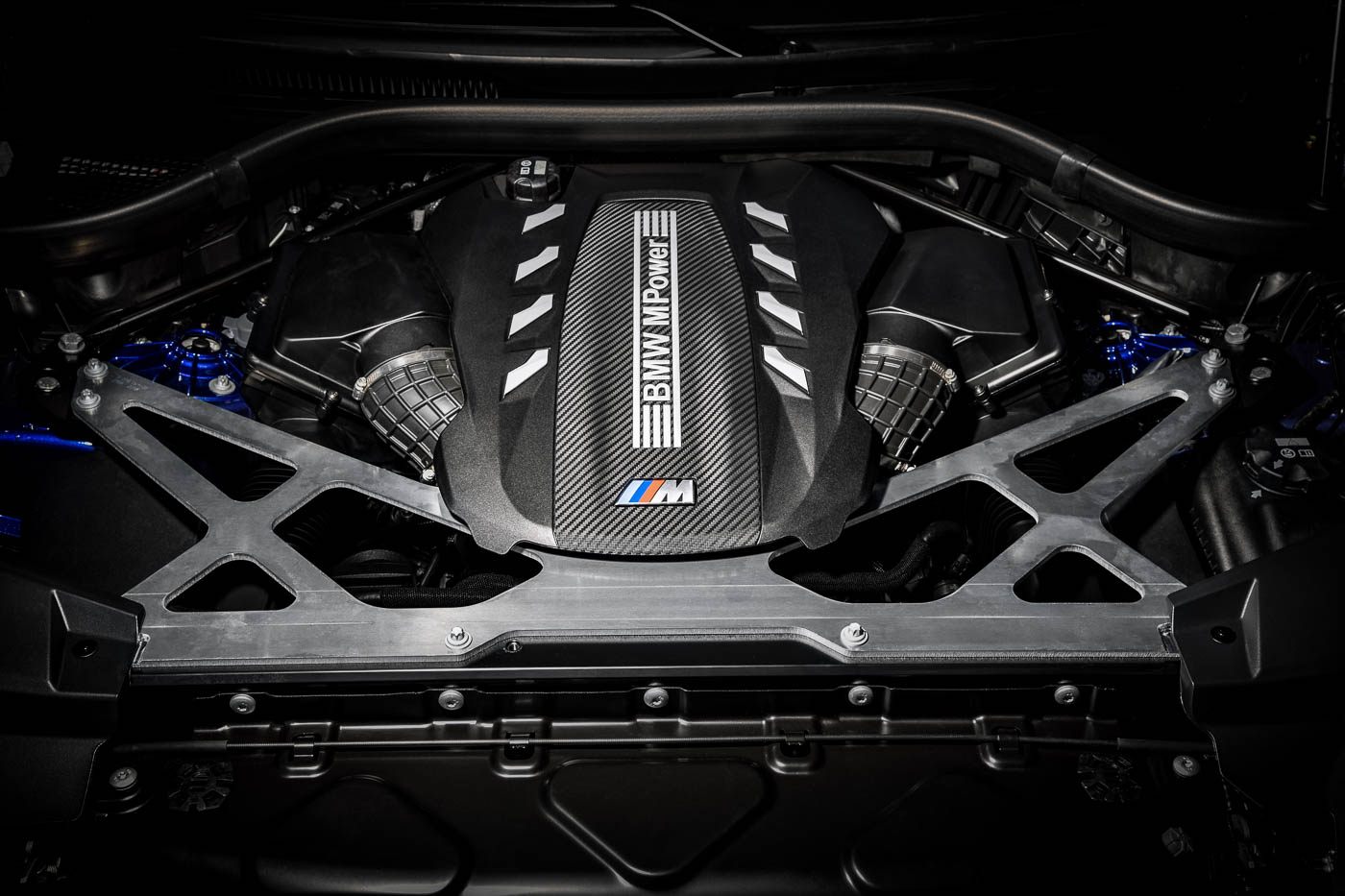
BMW enthusiasts can finally get their good night’s sleep, because the Munich carmaker has said that the high-performance straight-six and V8 engines for the M sub-brand will continue to live on, even in the face of tougher EU7 and 8 emissions regulations in the future.
This was according to BMW M Boss Frank van Meel, who told Autocar at Goodwood Festival of Speed that the new performance engines will also not be losing power, despite a more rigorous emissions testing procedure. The boss added that the challenge with the big engines was not actually to meet the regulations, but rather to “keep performance”.

He explained, “The whole story is about driving with lambda one [when the air-fuel ratio for combustion is perfectly matched] so you have to keep that, and there’s no cooling. Normally, if you are in high-performance situations, you cool using the fuel. With EU7, that’s impossible, so you need to find different ways of avoiding temperature build-up.”
“The combustion process has to be improved in regards to heat build-up and also the cooling, and those are the challenges. Of course you can [reduce] performance to avoid this temperature increase, but you don’t want to – that’s where we started. The new balance of performance is that we drive lambda one, but we don’t want to lose performance.”
ALSO READ: BMW M’s manual gearbox to live on thanks to sufficient demand, at least for now

In response, the company has made some “very interesting” tweaks to their engines – which van Meel is not willing to reveal just yet, but will discuss in detail in due course.
“The six-cylinder in-line engine is our legacy, and the V8 has got a long history in racing, so we intend to keep going,” said Van Meel.
RELATED: 2025 BMW M5 launched in Malaysia – 4.4-litre hybrid V8 with 727 hp priced from RM1.248 million

According to the publication, emissions levels for cars in the Euro 7 regulations are unchanged from the current 6e specifications, but they will be tested over a broader and harder range of scenarios that are said to better reflect real-world driving.
Cars tested under EU7 regulations must also remain compliant for 10 years or 200,000 km, which is twice as long as currently. Brake and tyre emissions will also be monitored for the first time. The EU7 regulations will come into force in 2026.
ALSO READ: A new limited-run BMW M special edition model is in the works

While some carmakers like Mercedes-AMG have opted to downsize their engines to comply with the new stricter regulations, BMW is vehement about keeping true to their roots. When asked whether BMW M would consider downsizing to three- or four-cylinder mills and electrification to reduce emissions, van Meel simply said: “No.”
He added that the smaller engines cannot meet M’s “very specific mindset” for how it wants performance cars to drive, especially in terms of torque delivery, rev ranges, and the weight of its cars. “I couldn’t imagine putting a four-cylinder in an M5.”
ALSO READ: Lotus wants to give the Emira a bigger V8 engine… to beat emissions regulations