After an all-out commitment to electric vehicles (EVs), Lotus is making a U-turn and will now adopt a more flexible approach to electrification. The solution? A new in-house developed plug-in hybrid (PHEV) powertrain dubbed the “Hyper Hybrid”.
This strategic shift was confirmed by Lotus CEO Feng Qingfeng during the company’s Q1 2025 earnings call, where the company also reported a 42% year-on-year decline in global vehicle deliveries. According to Feng, the “Hyper Hybrid” is built on an advanced 900V architecture and features a dual-motor powertrain.

While Feng has not yet revealed the specific internal combustion engine for the PHEV powertrain, the CEO states the system supports fast charging that takes 12 minutes to recharge from 10-80%, and offers a pure EV range of up to 300 km with a combined range of 998 km.
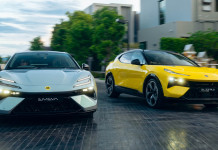
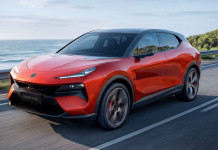
The first model to receive this new powertrain will be a variant of the Lotus Eletre, with Feng stating that the hybrid Eletre will be unveiled in late 2025, with customer deliveries scheduled for the first quarter of 2026.
RELATED: Lotus wants to give the Emira a bigger V8 engine… to beat emissions regulations

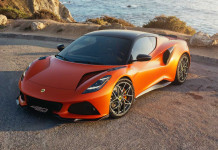
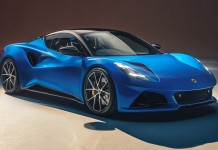
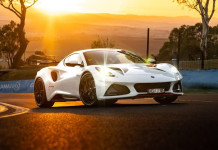
While the “Hyper Hybrid” system is confirmed for Lotus’s larger vehicles, questions now turn to the brand’s sole-petrol-powered offering, the Emira, which recently made headlines over speculation that it might receive a new V8 engine to – ironically – comply with upcoming emissions regulations.
As the backbone of Lotus’s sales in 2024, accounting for over 5,000 of the 12,134 cars delivered, the Emira could also receive the electrification treatment. Speaking to Auto Express, Lotus Europe CEO Matt Windle has hinted at an electrified variant with a powertrain similar in fashion to the McLaren Artura.

This could mean the Emira receiving the “Hyper Hybrid” treatment itself. Alternatively, a more straightforward path could be to use hybrid versions of the engines already utilised in the Emira, as electrified variants of both the 2.0-litre four-cylinder from Mercedes-AMG and the 3.5-litre V6 from Toyota already exist.
Lotus’s pivot to hybrids makes business sense, but it sure does challenge the brand’s “add lightness” philosophy. Modern PHEVs are powerful but heavy, and you don’t have to look too much further than the all-new BMW M5 to see that. Can Lotus engineers defy this trend to create a hybrid that still delivers the brand’s legendary agile feel? One thing’s for sure, though, it definitely won’t be as heavy as pure EVs.
ALSO READ: Lotus Emira updated for 2025 with new V6 SE variant, performance and mod-con upgrades