Xiaomi’s first SUV, the YU7, has now officially launched in China as the taller version of the SU7 that debuted last year. And if you thought the SU7 was popular, the YU7 has just completely blown it out of the water with 315,900 orders in just 72 hours since launch, according to CarNewsChina.
The popularity of the Xiaomi YU7 could be down to the SUV body style, or just because it’s plain cheap for what it offers. The entry-level Standard rear-wheel-drive (RWD) variant starts at RMB253,500 (approx. RM149k), followed by the Pro all-wheel-drive (AWD) variant at RMB279,900 (approx. RM164k). Even the range-topping Max high-performance AWD start at just RMB329,900 (approx. RM194k).

For comparison, the rivalling XPeng G7 does start at a cheaper price at RMB235,800 (approx. RM139k), but it doesn’t have the same supercar-beating figures as the Xiaomi. The Tesla Model Y? That’s at least RMB10,000 more at RMB263,500 for the rear-wheel drive variant.
On that note, the Standard variant features a single rear-mounted electric motor producing 320 hp and 528 Nm, propelling it from 0-100 km/h in 5.88 seconds (one-upping Tesla by 0.02 seconds). It is fitted with a 96.3 kWh lithium iron phosphate battery that enables a range of 835 km (CLTC).

The Pro variant on the other hand, houses dual-electric motors powering all four wheels. It produces a combined 496 hp and 690 Nm that allows for a sprint time of 0-100 km/h in 4.27 seconds. Fitted with the same battery as the standard, it boasts a slightly shorter range of 770 km (CLTC).
As for the Max, the performance-oriented variant sprints from 0-100 km/h in 3.23 seconds thanks to a combined output of 691 hp and 866 Nm from its dual motors. The Max houses a larger 101.7 kWh ternary lithium battery that allows for a range of 760 km (CLTC).
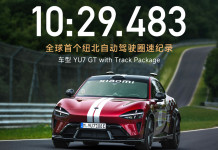
ALSO READ: Xiaomi SU7 Ultra is now officially the fastest 4-door production car to lap the Nurburgring

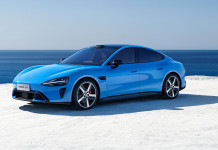
Not only does it have supercar-rivalling performance, the Xiaomi YU7 even gets the looks of one, with many online calling it the love child between a Ferrari Purosangue and a McLaren 720S.
Its sleek, low-slung, and curvaceous design helps it achieve an impressive drag coefficient of just 0.245 Cd. This aerodynamic efficiency is made possible by 10 through-flow air channels, 19 optimised vents, and over 40 airflow refinement zones. The YU7 comes standard with 19-inch wheels and can be upgraded to 20-inch wheels – though that may result in lowered range.

Inside, Xiaomi’s HyperVision Panoramic Display instantly stands out. It utilises three mini-LED displays which measure 1.1 metres wide with 108 PPD resolution and 1,200 nits of peak brightness. This is paired with a 16.1-inch infotainment display along with a 25-speaker sound system with Dolby Atmos.
The seats are upholstered in Nappa leather, complemented by an advanced electrochromic panoramic sunroof that reportedly blocks up to 99.85% of light. Rear passengers also get a touchscreen behind the centre armrest for climate controls, along with a 4.6-litre smart fridge below it for added comfort.

The YU7 boasts a ‘Four-in-One Domain Control Module’ that integrates the assisted driving, digital cockpit, central vehicle control, and telematics systems into a unified electronic architecture that runs on a Snapdragon 8 Gen 3 chip—just like a flagship Android smartphone.
Assisting this is the Nvidia Drive AGX Thor platform delivering 700 TOPS (trillions of operations per second) to handle a wide range of advanced driver assistance features. It manages data from a LiDAR sensor, 4D millimetre-wave radar, 11 cameras, and 12 ultrasonic sensors.
Xiaomi claims parts of the chassis use AI-developed “2200 MPa Xiaomi Ultra-high-strength steel”, forming an “embedded roll cage”. Stronger than conventional steel, it helps the car meet all C-NCAP and C-IASI crash standards.
ALSO READ: The Xiaomi YU7 SUV is apparently partly developed by AI
GALLERY