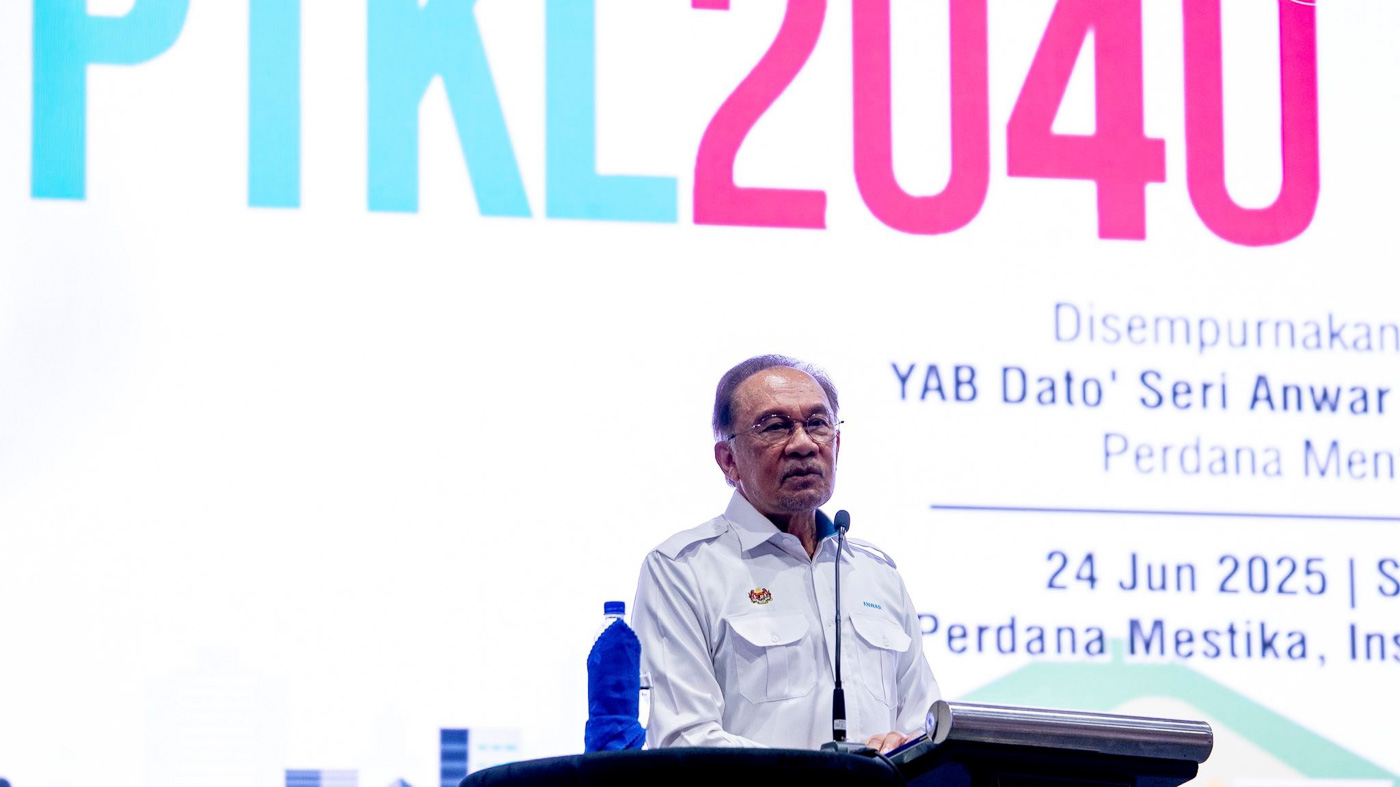
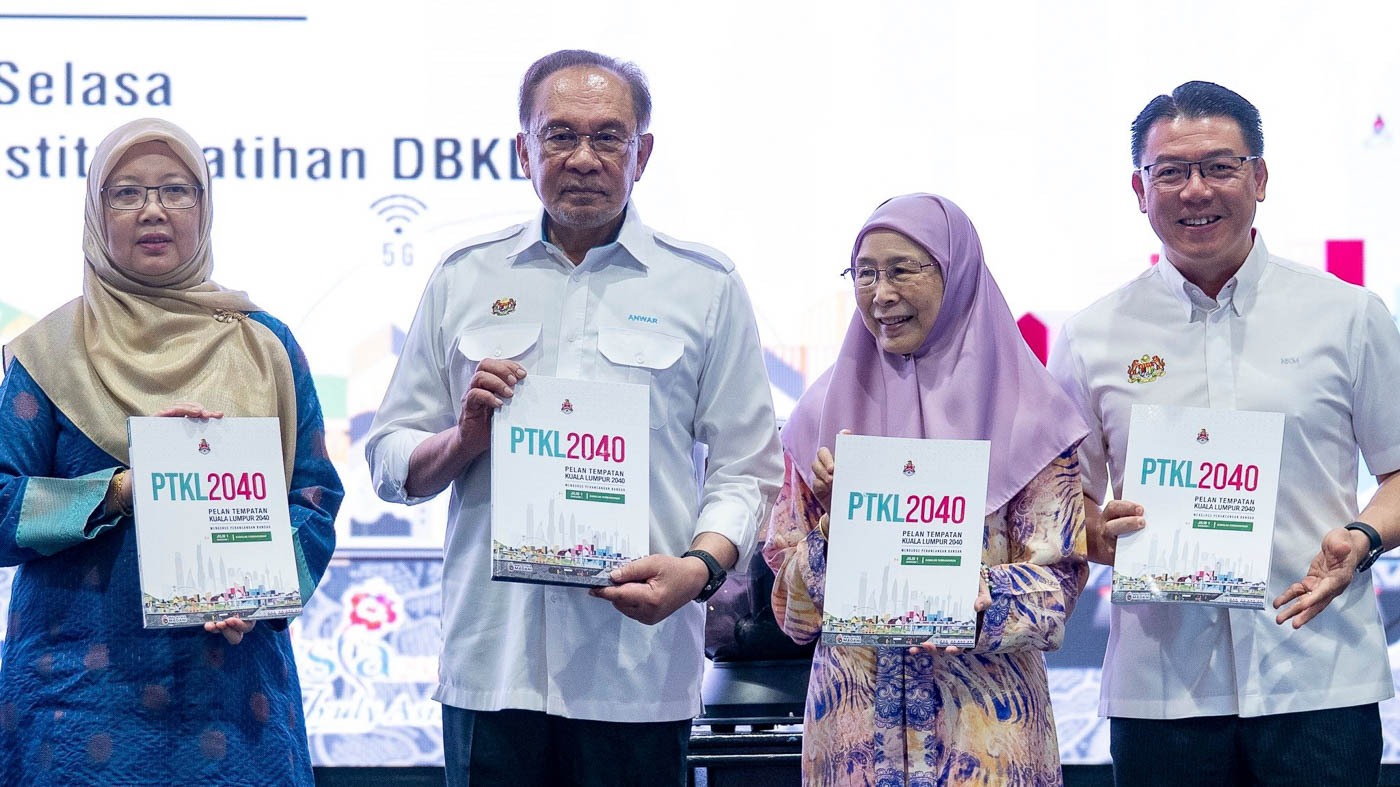
Public transport will be the backbone of future development in Malaysia’s capital city, and not private cars, Prime Minister Datuk Seri Anwar Ibrahim announced today at the launch of the Kuala Lumpur Local Plan 2040 (PTKL2040).
As reported by Malay Mail, the Prime Minister said that new infrastructure projects under the Transport Ministry, including Mass Rapid Transit (MRT) and cycling routes, will be key to realising the paradigm shift.
“In this local plan, the city hall’s priority is not private vehicles, but public transport. We make decisions in favour of the majority. That’s why I said new projects identified under the Transport Ministry, such as the MRT and others, are meant to form the backbone of the city, ensuring comfort for everyone,” Anwar said during his speech at the PTKL2040 launch today.
Expanding on Anwar’s remarks, Kuala Lumpur Mayor Datuk Seri Maimunah Mohd Sharif said that the plan aims for public transport usage to be up to 70% by 2040, and will be supported by the Traffic Master Plan that will include more pedestrian and cycling routes.
RELATED: Speed limit devices to be fully mandatory on heavy vehicles in Malaysia starting 2026

“Initiatives such as micromobility and covered green pathways are direct examples of how this plan is being translated into action,” Datuk Seri Maimunah Mohd Sharif said in her speech, adding that the city council (DBKL) is also developing the Urban Digital Twin Kuala Lumpur programme that will enable real-time updates of development data.
“This will ensure that our policies and actions are based on facts, not perceptions, a practice that reflects the values of accountability and integrity, and marks a reform in governance at DBKL,” she added.
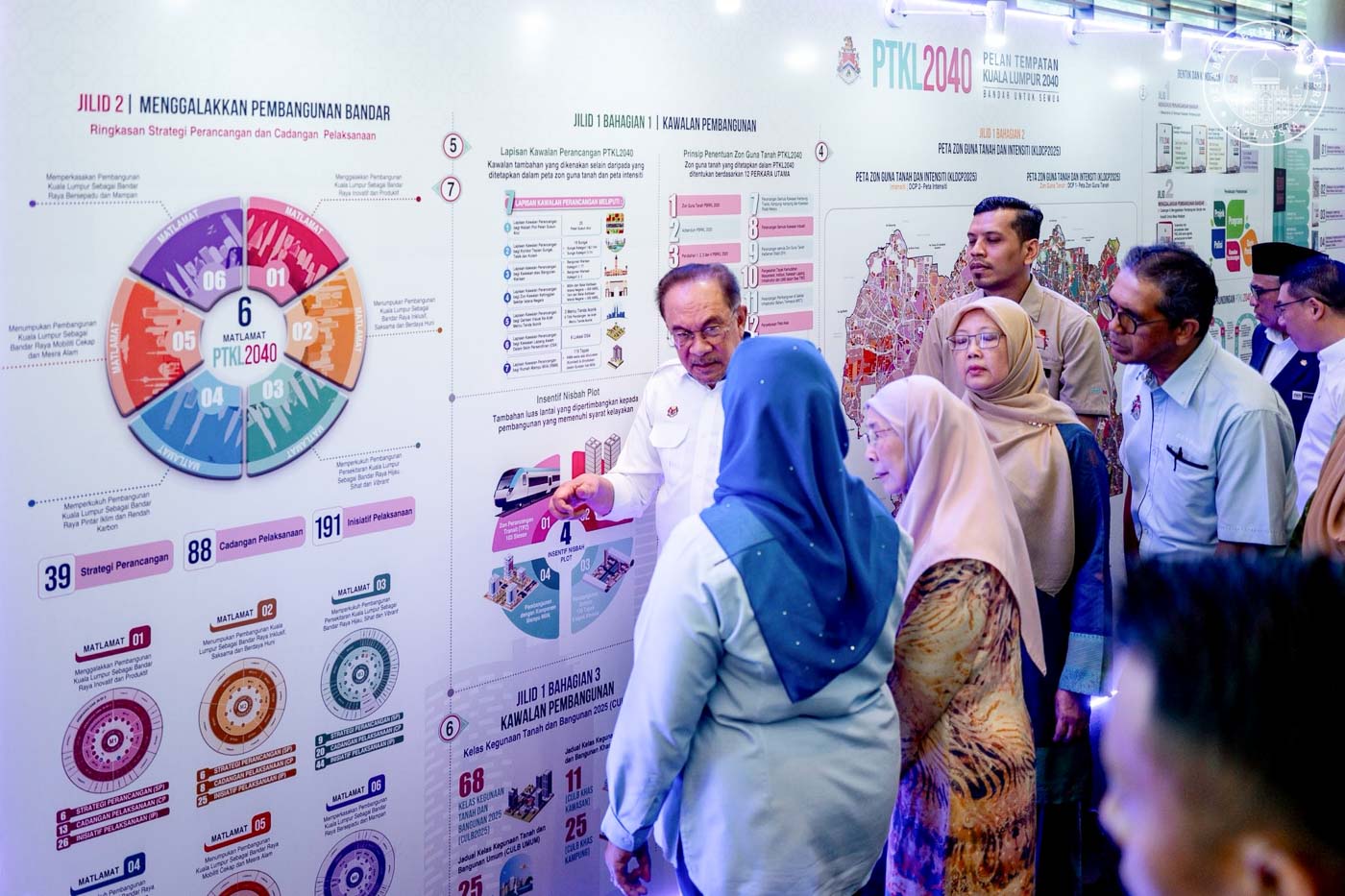
PTKL2040 was gazetted in May this year, and came into effect on June 11. The plan is based on 12 development principles, including site suitability, basic amenities, utility networks, and environmental harmony, to ensure new developments do not burden existing systems.
The new local plan will ensure that Kuala Lumpur will be on course to becoming a more “friendly and human-centric” city, in line with the Malaysia Madani framework. A minimum target of 20 sqm of open space per resident ensures that the city will not become too overly dense, while a 254 km Green Connector network – incorporating community parks – is also in the plans to promote healthy and active lifestyles.
ALSO READ: Penang to have 600 EV charging bays by end of year – 344 currently active