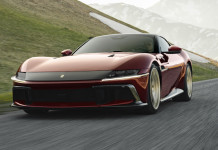
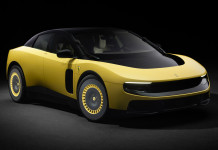
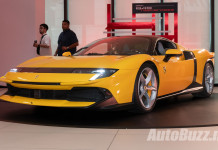
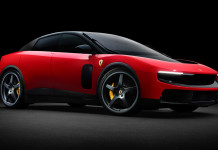
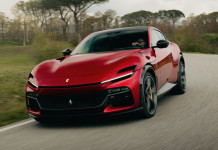
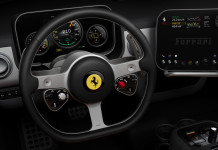
Even though Ferrari’s first fully-electric (EV) model has not even made its debut yet, you’d be naive to think that plans for a second – or even third – model are not already underway. That said, according to a Reuters report, the second EV Prancing Horse is now on shaky grounds, apparently because there’s “zero” demand for one.
Ferrari’s first EV, set to be unveiled on October 9, 2025, was always meant to be a low-production showcase of its electrification technology. The second model was reportedly planned as a series-production model, although according to the newswire, an anonymous source said that weak demand for that has forced Maranello to delay its launch, initially slated for 2026, back to at least 2028.

By all measures, Ferrari is certainly no stranger to electrification. The Prancing Horses introduced their first hybrid with the LaFerrari back in 2013 followed by its first series-production hybrid, the SF90 Stradale, in 2019 – both models receiving widespread praise from critics and fans alike.
However, going full EV seems to be a different story altogether. As expected, many vocal enthusiasts expressed disapproval when Ferrari first announced its EV plans, with some arguing about “soul” and “character”, and others – perhaps somewhat more reasonably – about the potential added weight from the EV batteries, which would result in a worse driving experience.
RELATED: Mark your calendars, Ferrari is launching its first EV on October 9th, 2025

Nevertheless, Ferrari is still charging full steam (electrons?) ahead with its EV supercar, that will reportedly cost around EUR500,000 (approx. RM2.4 million) when it’s launch. The new EV model – to be built at Ferrari’s new facility – is also a part of a three-stage plan with the grand finale scheduled for sometime in spring (March to June) next year.
First deliveries to customers are expected to arrive in October 2026.
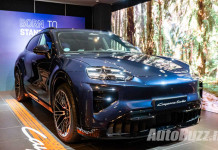
The latest development from Maranello is yet another example of sportscar makers scaling back their electrification plans, of which many cite shifting market sentiments and weakening demand as the main reason. Most recently, Porsche has announced that it will be slowing down on its electrification plans, instead continuing development of its internal combustion engines – at least for the immediate future.
ALSO READ: Porsche EV sales in China is so bad, the company might stop selling them entirely