Why would you ever need 1,305 hp in a four-door sedan? We don’t know either, but BYD’s ultra-luxury subbrand Yangwang seems to think that’s something that its customers want, and so they did it anyway with the all-new Yangwang U7.
With four motors in total, the supercar-rivalling electric sedan boasts a total output of 1,305 hp and 1,584 Nm of torque. What does that mean in real-world performance terms? According to the Chinese carmaker, that’s 0-100 km/h done in 2.9 seconds, onward to a top speed of 270 km/h.

Giving the quad-motor setup the juice it needs to go that fast is a 135.5 kWh BYD Blade lithium iron phosphate (LFP) battery pack, which has an CLTC-rated EV range of 720 km. Additionally, dual-input DC fast charging is supported with a 500 kW max charging output, which enables the massive battery to be recharged from 30-80% in just 30 minutes.
Aside from the fully electric (EV) model, the Yangwang U7 will also be offered in a plug-in hybrid (PHEV) variant, which essentially swaps the large battery for a smaller 52.4 kWh one, and tacking on an engine alongside. Like its U8 SUV sibling, the Yangwang U7 will also be configured in a range-extender PHEV setup, which means the engine has no mechanical linkage to the wheels; it’s there merely to charge the batteries and power the motors.

That means the Yangwang U7 PHEV boasts the same output figures as its EV counterpart. and in true sports car fashion, it features a 2.0-litre turbocharged boxer engine to keep its centre of gravity low down.
Despite its smaller battery, BYD says the Yangwang U7 still has a CLTC-rated pure electric range of 200 km. Working together with the engine and a 60-litre fuel tank, the Yangwang U7 PHEV has a cumulative range of 1,000 km. And even when the battery is completely empty, the engine can still churn out enough (electric) power to propel the super-sedan from 0-100 km/h in 4.1 seconds.

The Yangwang U7’s party piece is known as the DiSus-Z body control and suspension system, the top-of-the-range setup in BYD’s DiSus system, and even more advanced than the DiSus-X used on the U9 supercar. The DiSus-Z system utilises linear actuators in place of regular dampers.
Those actuators can detect road surface changes as small as 10 micrometres, and can be adjusted to a precision of 1 mm. Together with an ultra-fast computer, the DiSus-Z systems gives the YangWang U7 an exceptionally comfortable ride on bumpy roads, and can even adjust itself automatically in the event of a flat tire by lifting the punctured tire’s side.
Of course, being a Yangwang model, the U7 also gets the privilege of BYD’s top-of-the-line God’s Eye A-spec advanced driver assistance system (ADAS), which is supported by three LiDAR sensors, five millimetre-wave radars, 12 HD cameras, 12 ultrasonic radars, and L2+ self-driving capabilities.
READ: BYD’s new “God’s Eye” ADAS system wants to keep you safe using AI

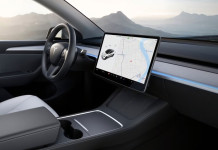
The inside of the Yangwang U7 is also reminiscent of the U8. The panels are furnished with Nappa leather, carbon fibre, and wood trims. Each and every seat in the car is decked out with screens, too. The centre of the dashboard sees a 12.8-inch OLED infotainment screen, followed by a 6-inch copilot entertainment screen, 23.6-inch instrument panel, and 12.8-inch rear multimedia screens.
Buyers will be able to opt between a four-or five-seater configurations, too.

For now, we still don’t know what the exact pricing detail for specific variants yet, but BYD said that the starting price of the Chinese marque’s new upcoming car will be at RMB628,000 (approx. RM383k).
The Yangwang U7 will be the latest addition to BYD’s top-of-the-line line up joining the Yangwang U8 SUV priced at RMB1,098,000 (approx. RM669k) and flagship Yangwang U9 at RMB1,680,000 (approx. RM1.1 million).
READ: We saw BYD’s Yangwang U9 ‘dancing’ and it’s incredible!