Simplify this, add lightness that… while Colin Chapman’s exact quote may have been lost to the annals of history, it appears that the carmakers recent portly products may have lost track of that adage as well. That’s something the electric Lotus Theory 1 concept aspires to restore.
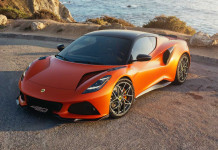
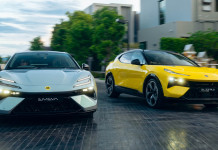
As the last petrol-powered Lotus, the Emira retains much of what we’ve come to love with the brand but the electric trifecta comprising the Evija hypercar, Eletre SUV and Emeya sedan are hardly light and tight though they pack plenty of bite.
The Theory 1 coincides with the brand’s new design manifesto, or DNA, which stands for Digital, Natural and Analogue.

It sits on an all-wheel-drive EV platform and will speculatively make 986 hp that slings it from 0-100 kph in 2.5 seconds and onto a top speed of 320 km/h. The 70.0 kWh battery should deliver around 402 km of range and together with the electric motors, is designed as a stressed member of the chassis. With the lighter rear pull-rod suspension and active rear wing mounted to the rear motor, the design negates the need for a subframe and brings it closer to the proposed 1,600 kg weight.
The Theory 1 shares a footprint close to the Ferrari 296 GTB at 4,490 mm long, 2,000 mm wide and 1,100 mm tall. Design-wise, the Theory 1 harks back to a typical wedged-shaped supercar designed with a slide rule but holding lots of aggressive aero beneath the smooth surfaces. The designers wanted to pay tribute to the iconic Lotus Esprit and did so with the glazed dome’s ending at the doors.
RELATED: The Lotus Elise’s EV successor is coming in 2026
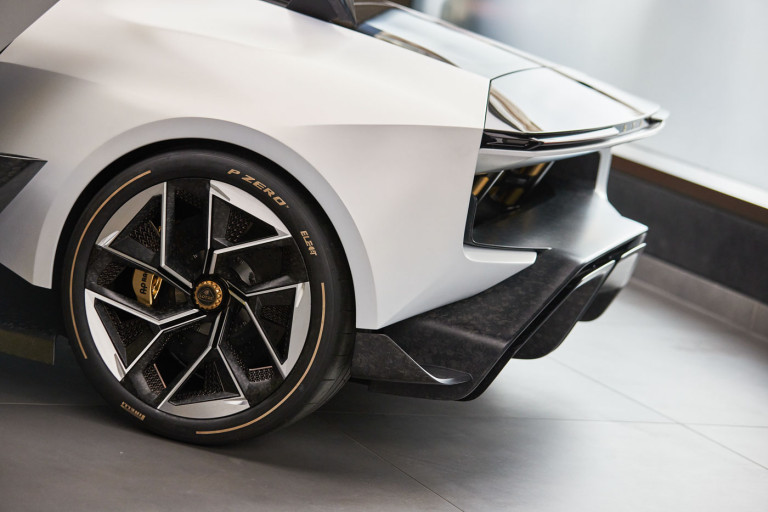
The wheels are 20-inch pairs in the front and larger 21-inch rollers in the rear, wrapped in Pirelli P Zero Elect tyres and protecting massive AP Racing carbon ceramic brakes.
That’s all right and good outside but the real highlight is the seating position reminiscent of the legendary McLaren F1, a central driving position with two passenger seats flanking it. The seats also house a rather peculiar technology supposedly enhances the driving experience by virtue of inflatable pods to deliver haptic feedback to “coach” the driver, simulating force feedback.
The pods are all part of what Lotus has christened “Lotuswear” and includes interactive lighting on the dash and a vibrating steering wheel to communicate driving feedback for the driver.

Perhaps that might be taking technology a little too far but the other tech is constrained to the usual sensors for the Level 4 autonomous driving functions. There’s a suite of four lidar sensors, six cameras, short- and long-range radar sensors and even ultrasonic sensors that run on the familiar Nvidia Drive platform to keep the car driving itself.
Don’t get your hopes up for a production version but you’ll definitely find design and technology elements of the Theory 1 creeping into future production models, such as the highly anticipated Lotus Type 135 that strives to evoke the nostalgia of the Elise and Evora.
ALSO WATCH: Lotus Emeya – The electric “Hyper GT” from RM555k
GALLERY