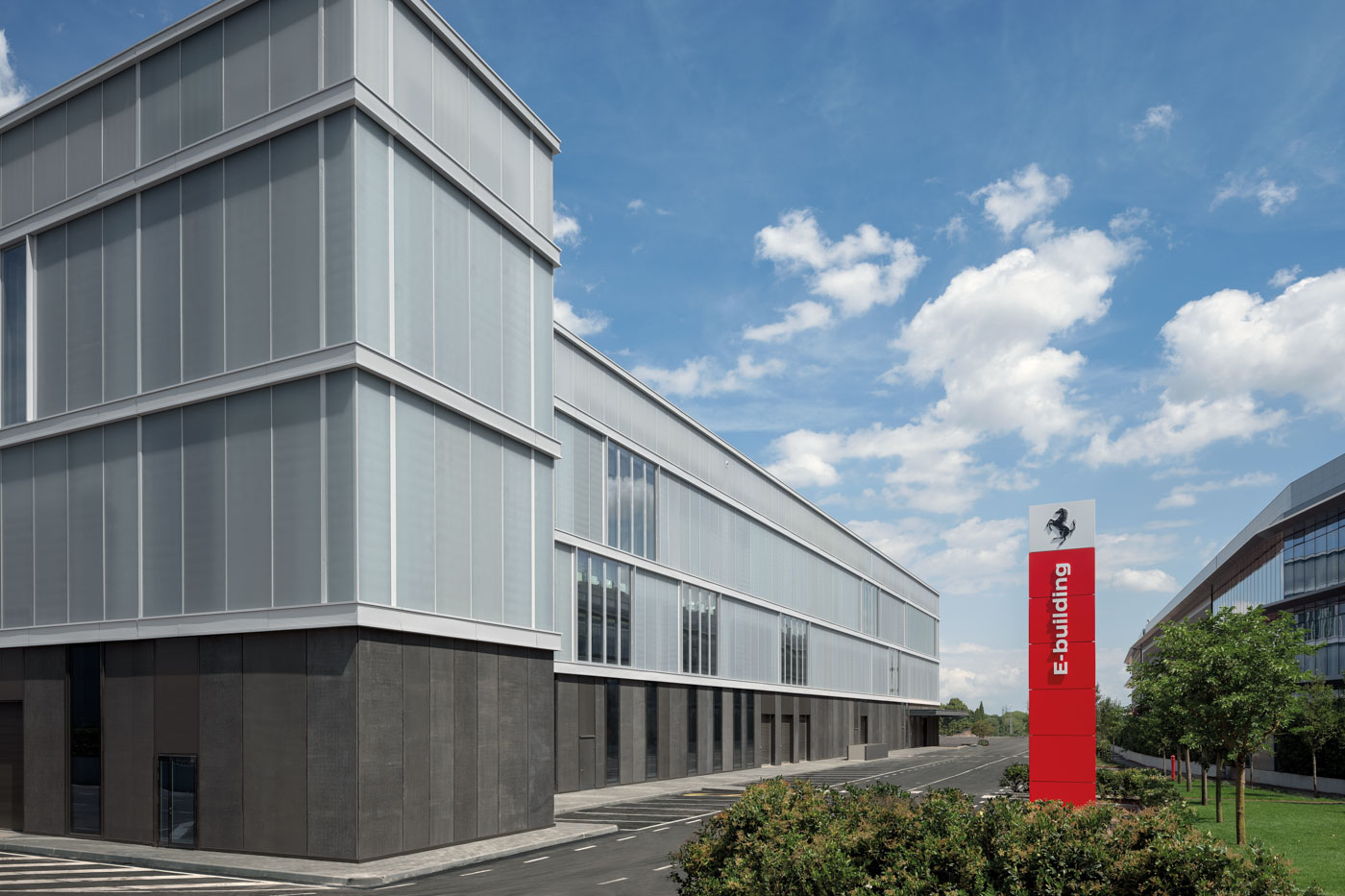
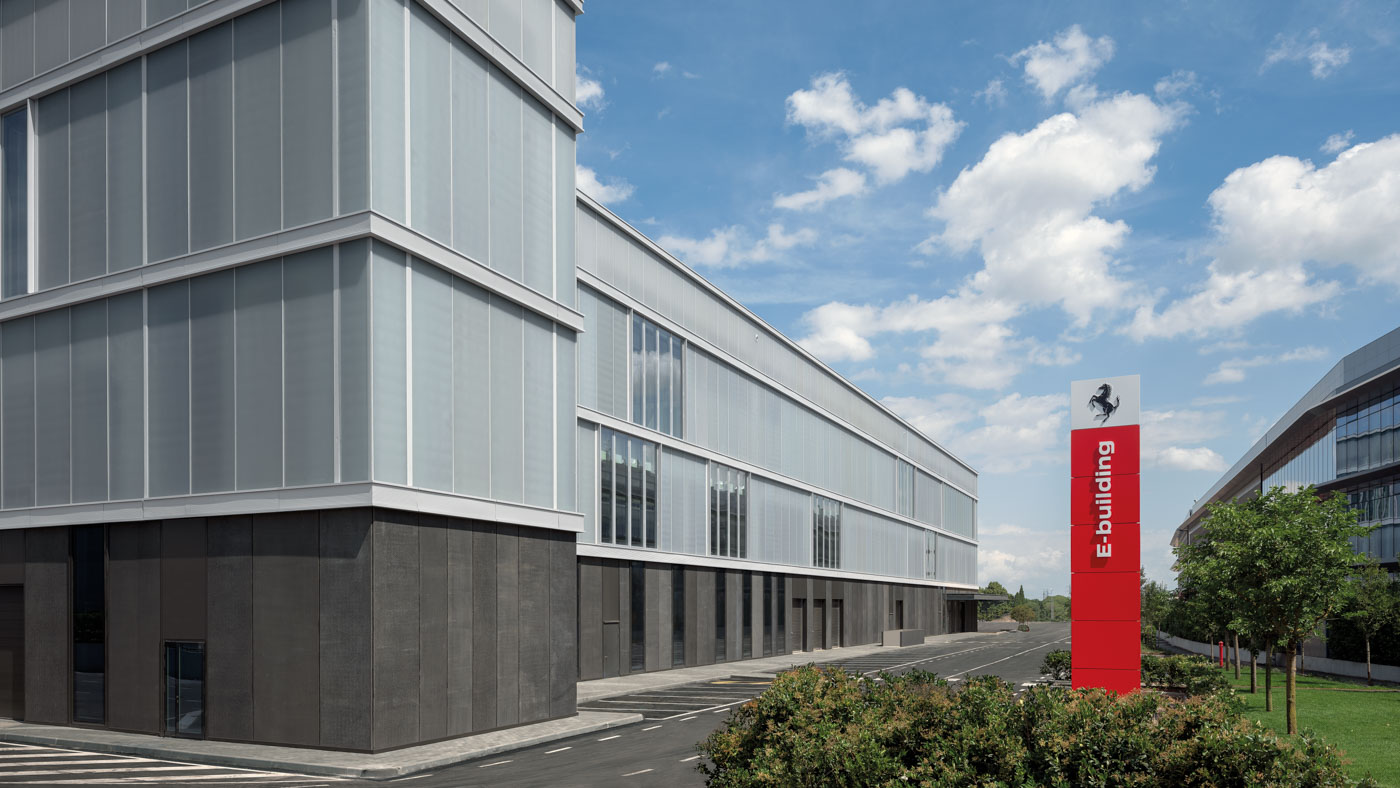
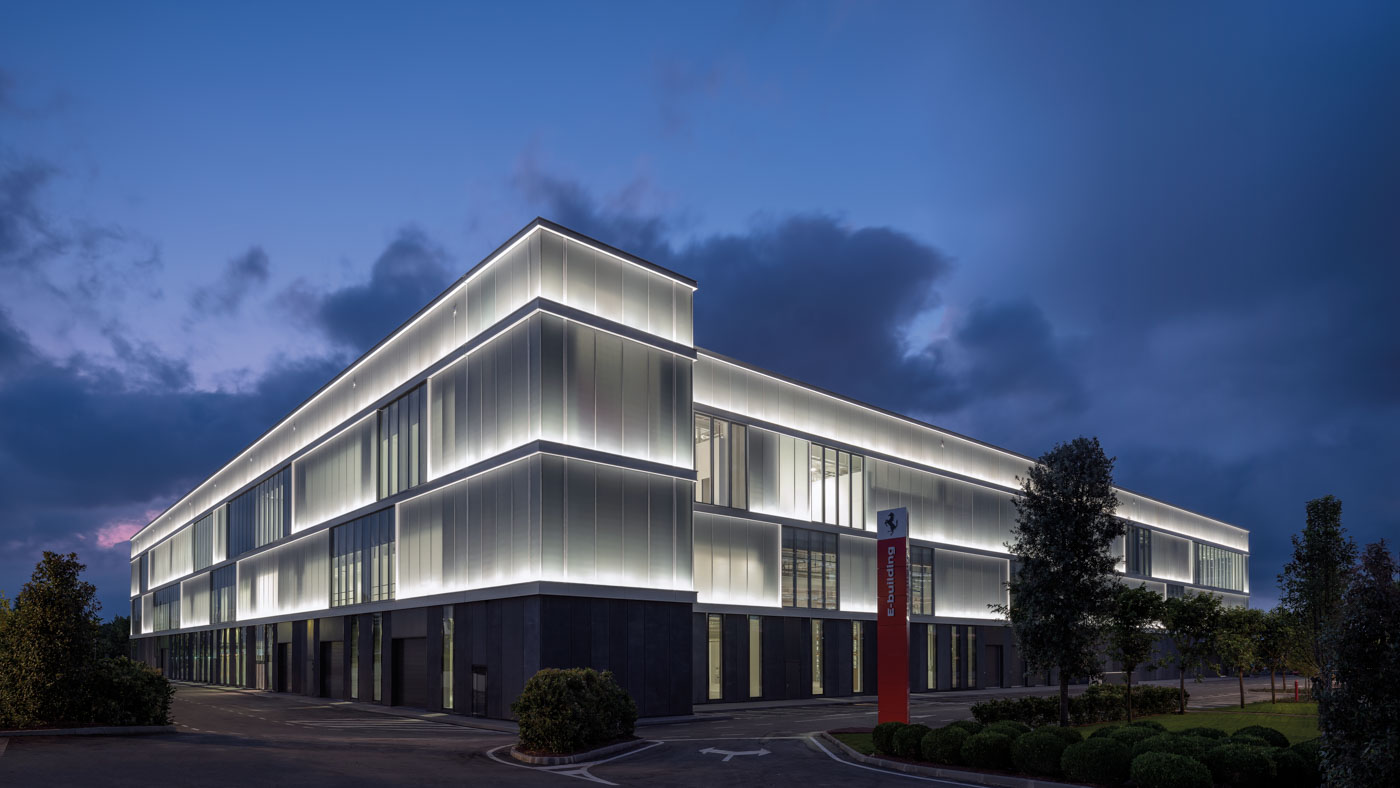
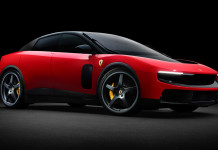
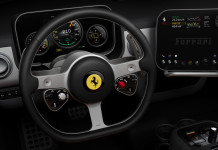
Ferrari has just opened the doors of its new e-building last week, which is situated north of the Ferrari campus in the brand’s “hometown” – Maranello, Italy. This new building houses a plant that will see the production of Ferrari models with all types of powertrains, including the good old internal combustion engine (ICE), hybrids, and fully electric vehicles (EVs). Yes, Ferrari is making its first-ever EV, and it will be making its debut at the end of 2025.
The Prancing Horse’s first EV is said to cost at least 500,000 Euros (approx. RM2.5 million), according to a report by Reuters. And if you think that is costly enough already, this price tag hasn’t taken into account features and personal touches which are typically responsible for 15 to 20% of extra cost.
Aside from its first EV, Ferrari’s second EV is also reported to be on its way, albeit still in its early stages of development. And if you are worried about Ferrari going electric, the carmaker ensures that they will continue to deliver Ferrari’s signature driving excitement. Now, back to the e-building.
Ferrari says its new plant is focused on sustainability. Through the e-building, the brand is also enhancing its production flexibility in line with its strategy of prioritising revenue quality over quantity.
RELATED: Ferrari Purosangue launched in Malaysia, from RM5 million – 6.5L V12, 725hp
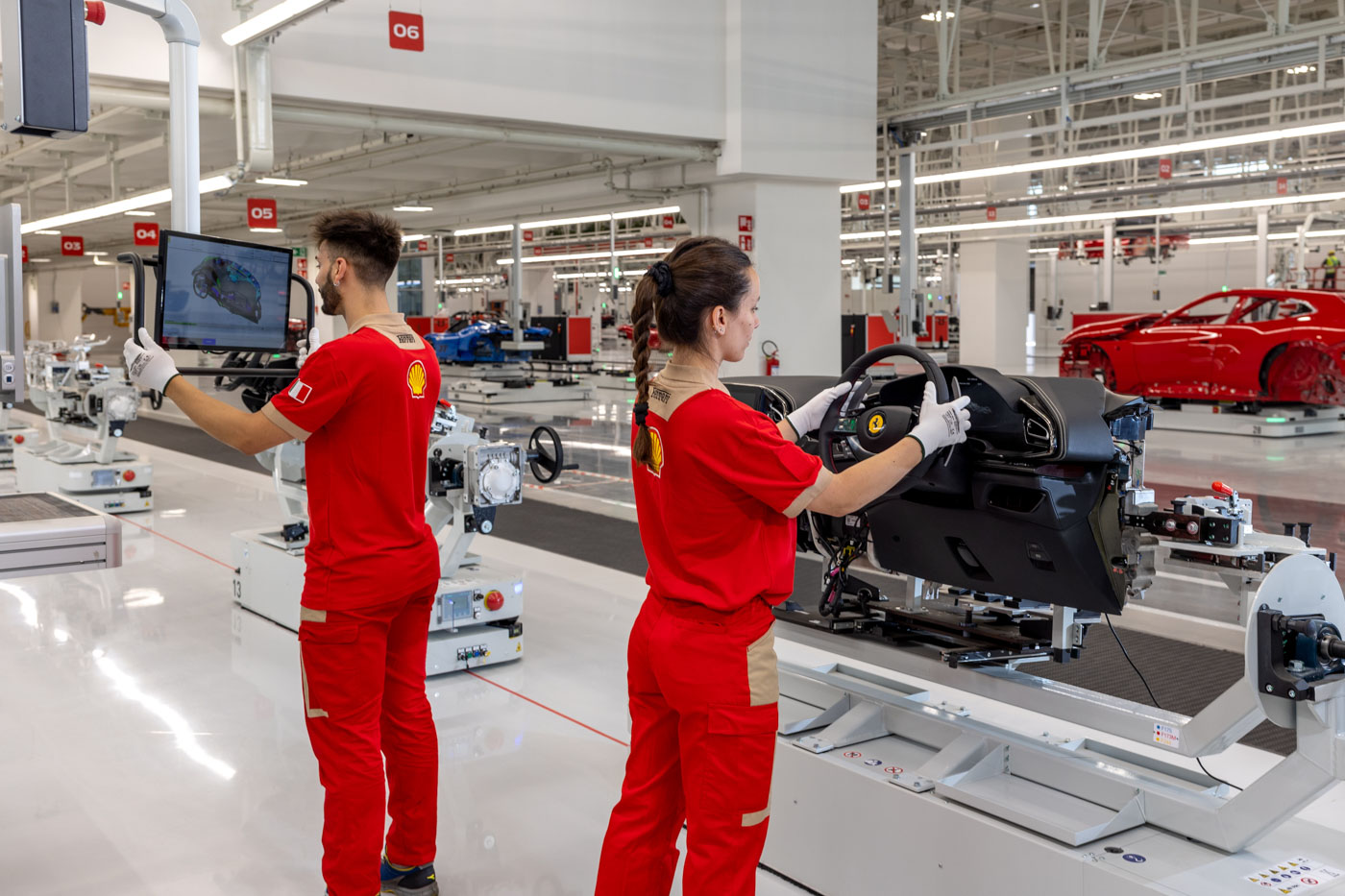
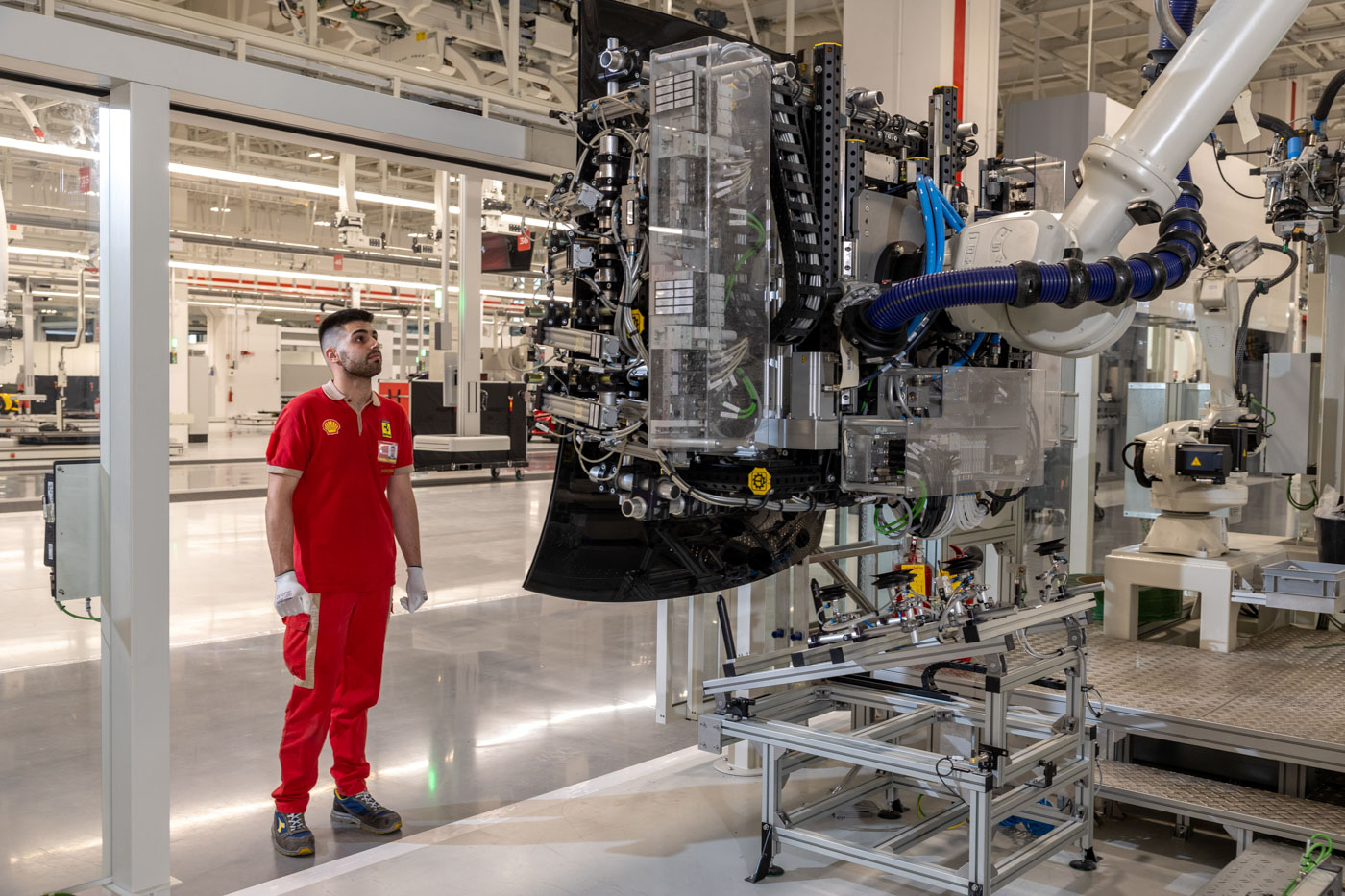
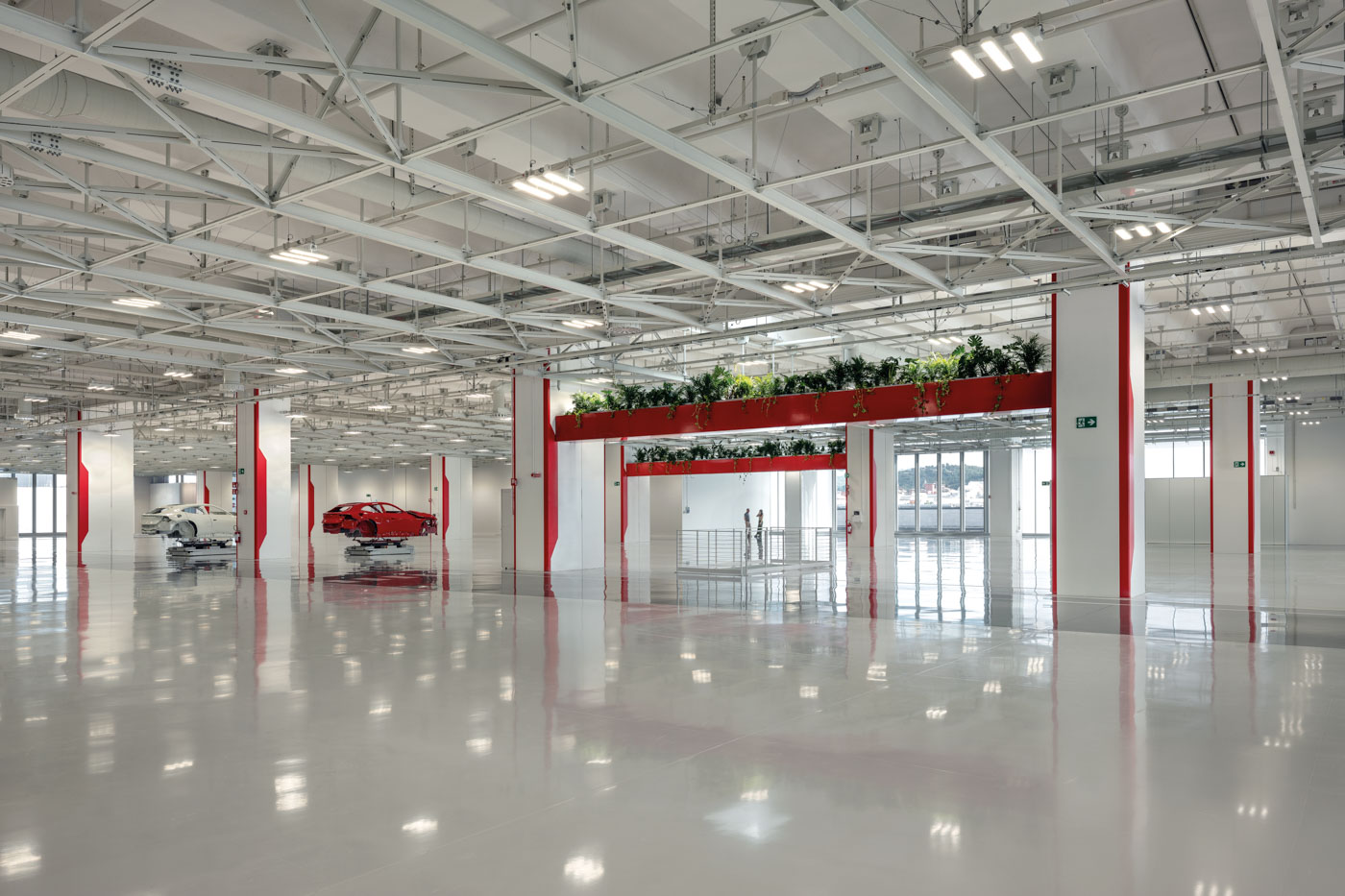
The integration of the production of its entire range in a single building will allow Ferrari to reorganise and reallocate all production activities more efficiently among its existing facilities in Maranello. This helps increase its ability to adapt quickly to production needs. Electrical components like high-voltage batteries, electric motors, and axles will also be produced in this building.
Ferrari’s e-building is designed to achieve the highest levels of energy performance. It is powered, among other sources, by more than 3,000 solar panels installed on the roof, producing 1.3 MW.
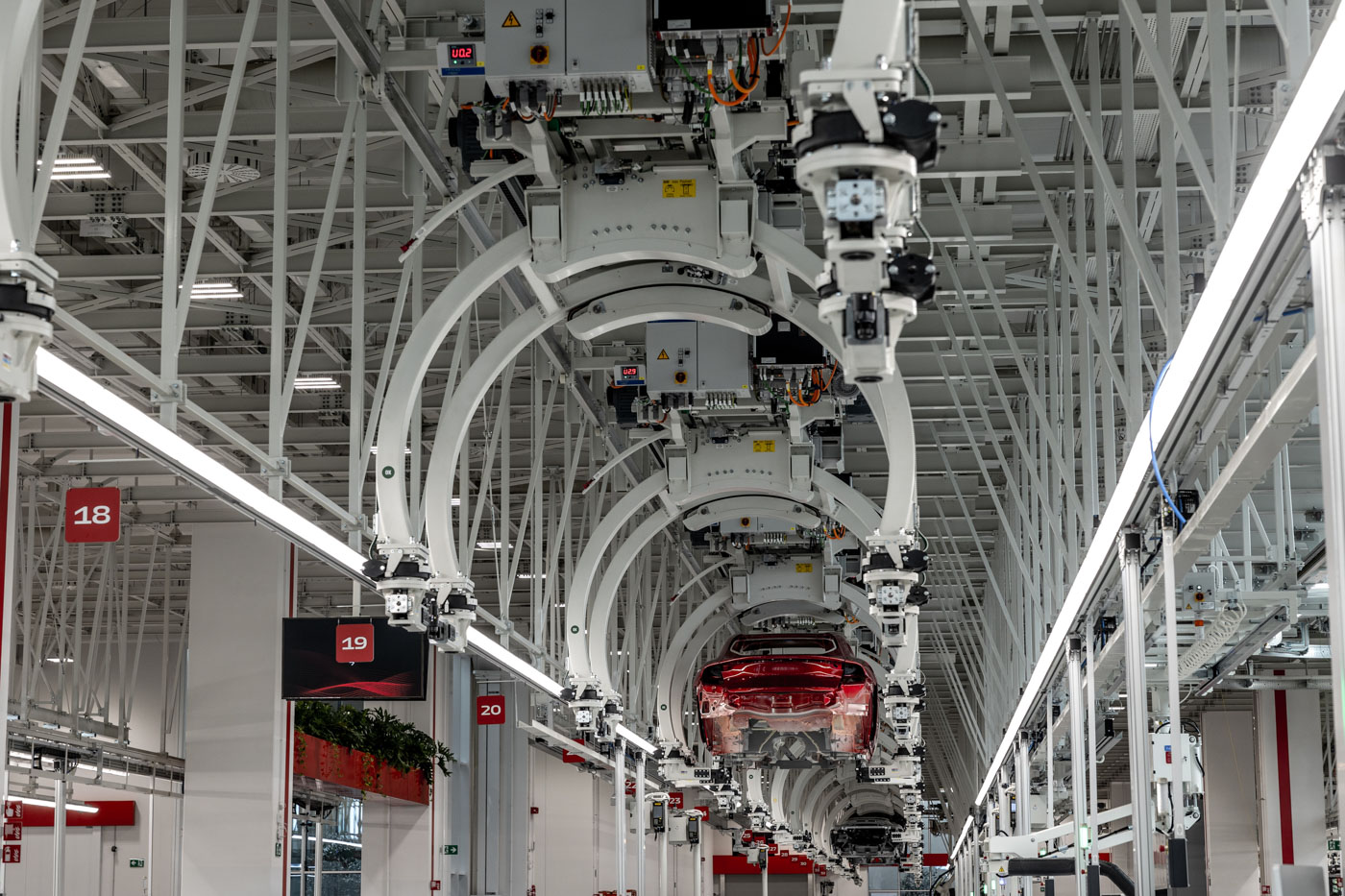
Several solutions have been adopted to reuse energy and rainwater in the production cycle. For example, more than 60% of the energy used for battery and motor testing will be recovered in accumulators and redirected to power new processes.
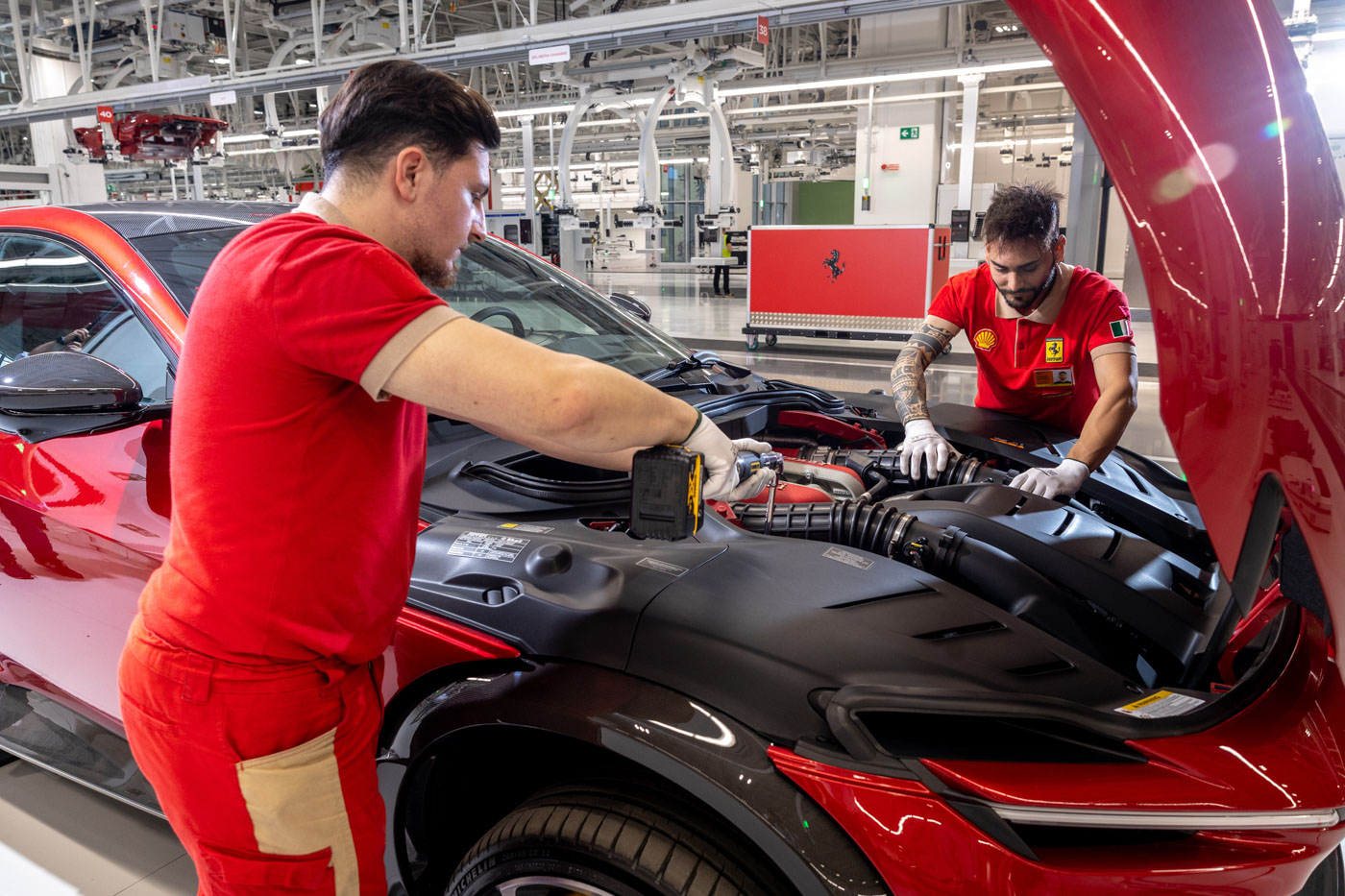
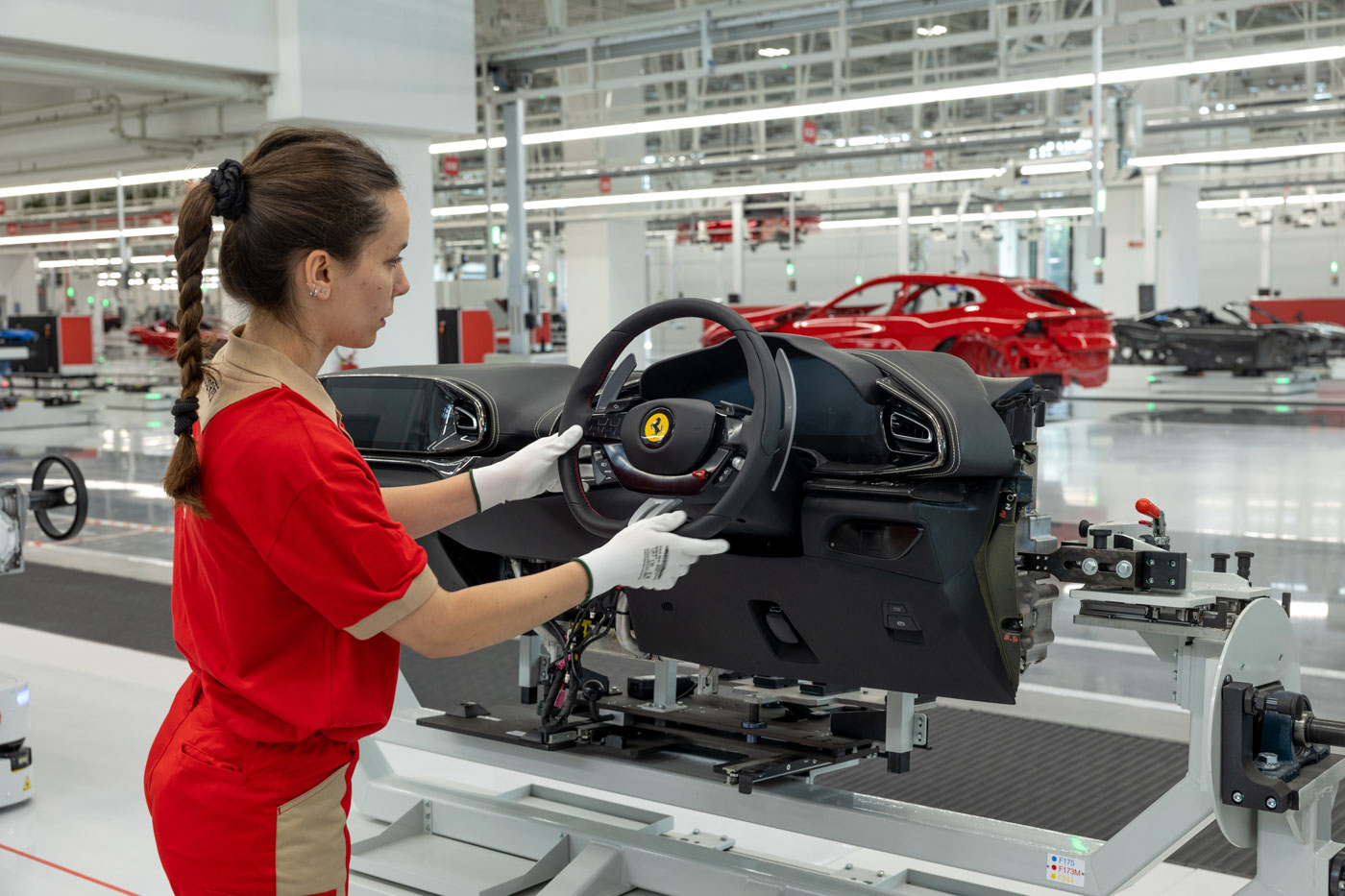
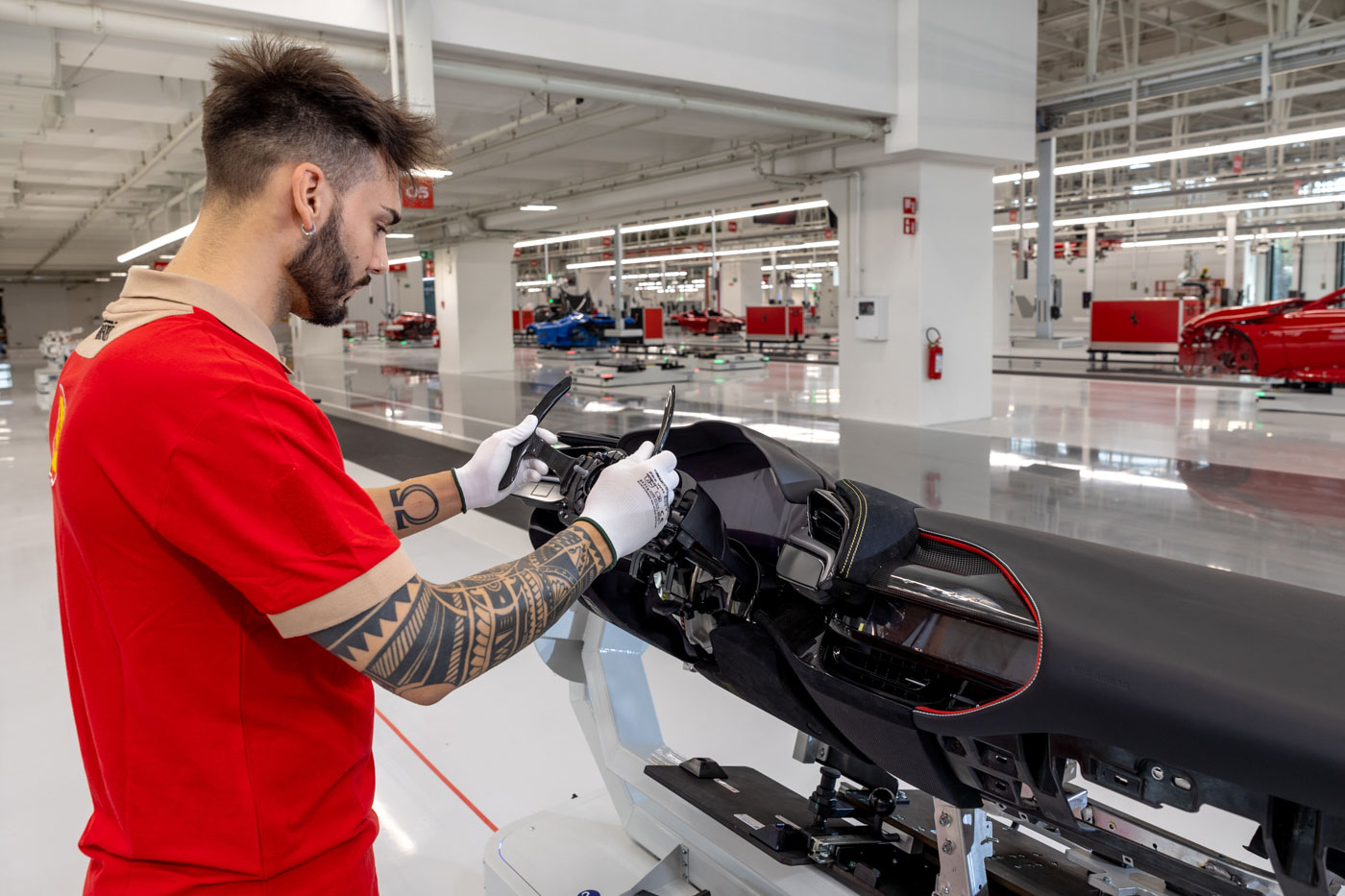
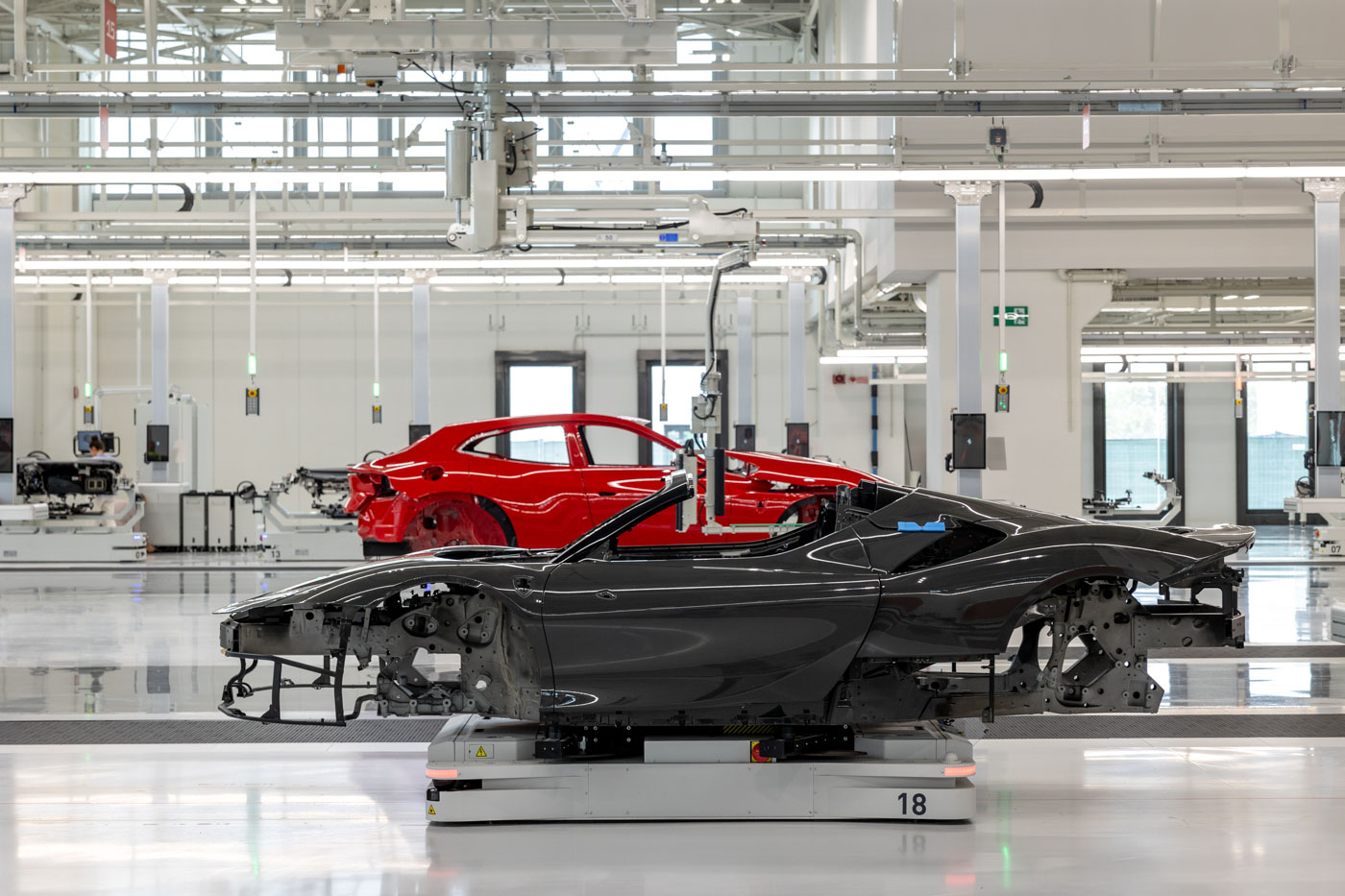
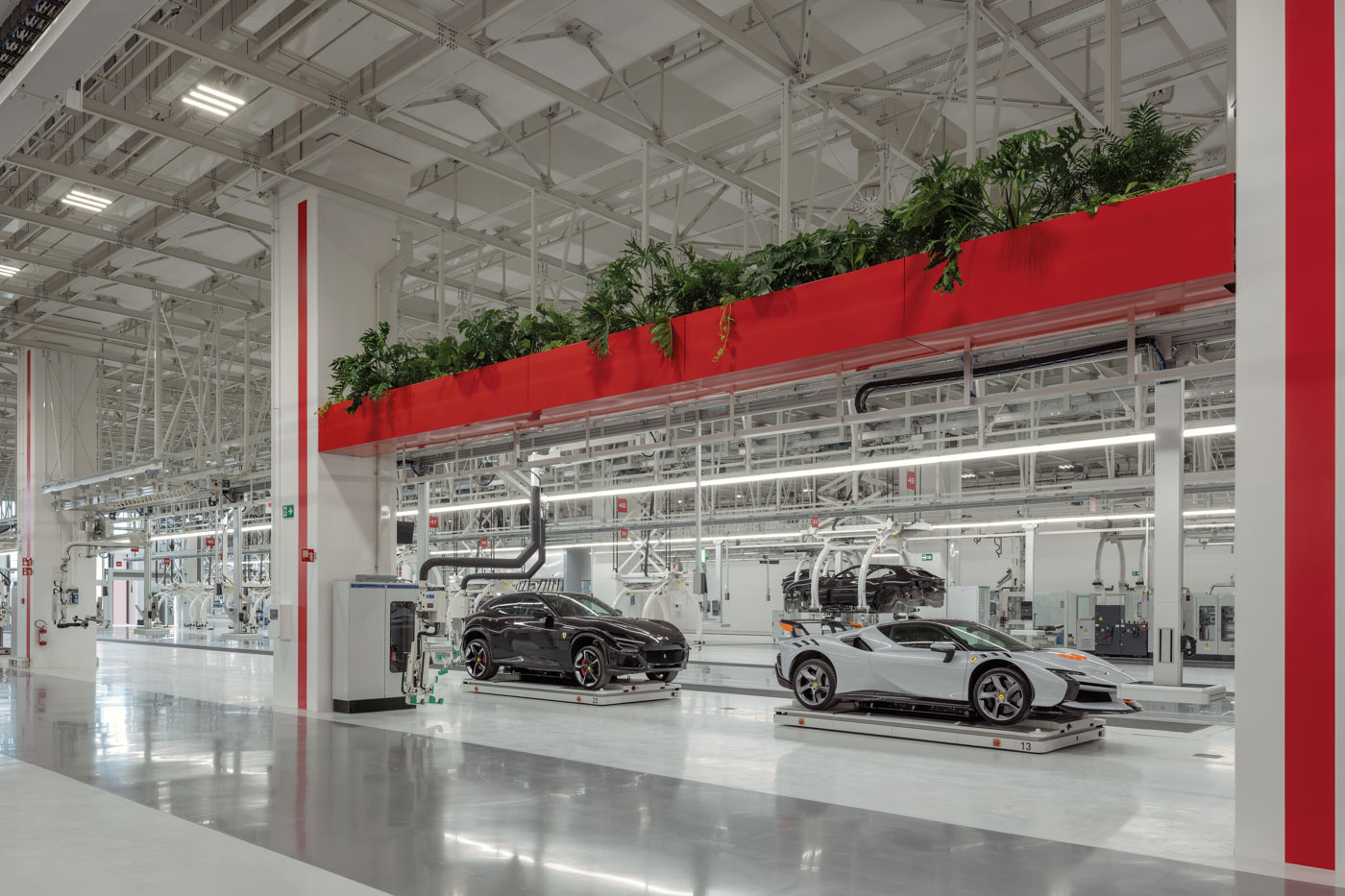
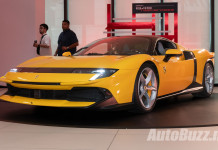
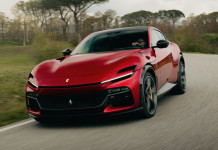
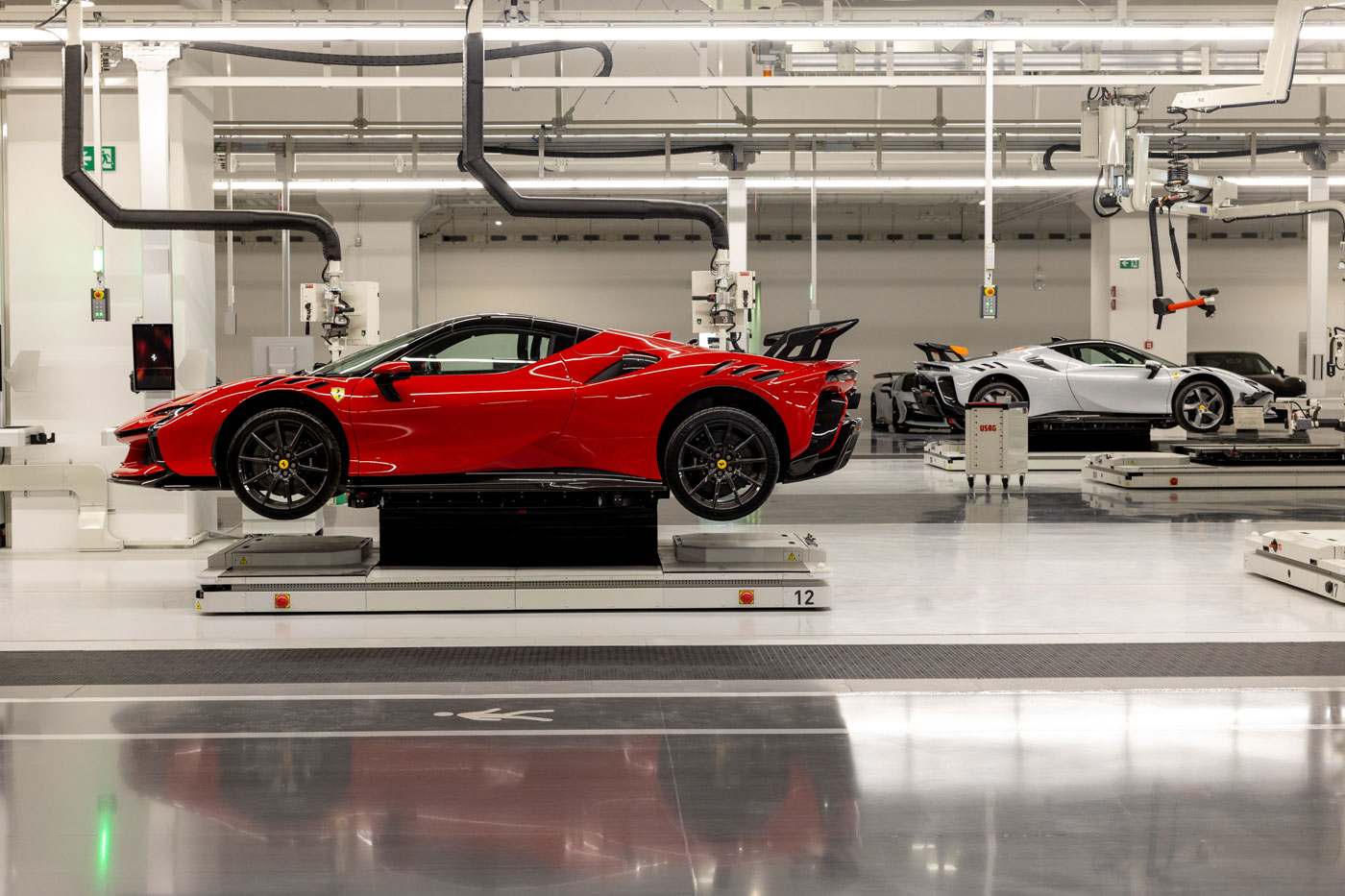
From the official images shared, we can see cars like the Purosangue (pure ICE) and SF90 (hybrid) being built in the same production line. We can also see the use of automated guided vehicles (AGVs) which allows for a flexible arrangement of the production line. With this flexible arrangement, it looks like integrating the production of its EVs with its pure ICE and hybrid vehicles shouldn’t be too difficult of a challenge for Ferrari.
ALSO WATCH: Ferrari SF90 XX Stradale & Spider – 1,030hp road legal race car
GALLERY