With the rising crude oil prices as a result of the ongoing Iran war, it’s no surprise that unsubsidised fuel prices here in Malaysia have also seen a significant hike. Some eagle-eyed road users, however, has noted that our fuel prices (unsubsidised RON95 currently RM4.02, approximately 60% higher than pre-war prices) are rising at a rate faster than that of crude oil (currently approximately 30% higher than pre-war prices).
As it turns out, the fuel prices at the pump are determined from more than just per-barrel prices of crude oil, and the Ministry of Finance has helpfully published a set of infographics on its Facebook page to break down the price hikes.
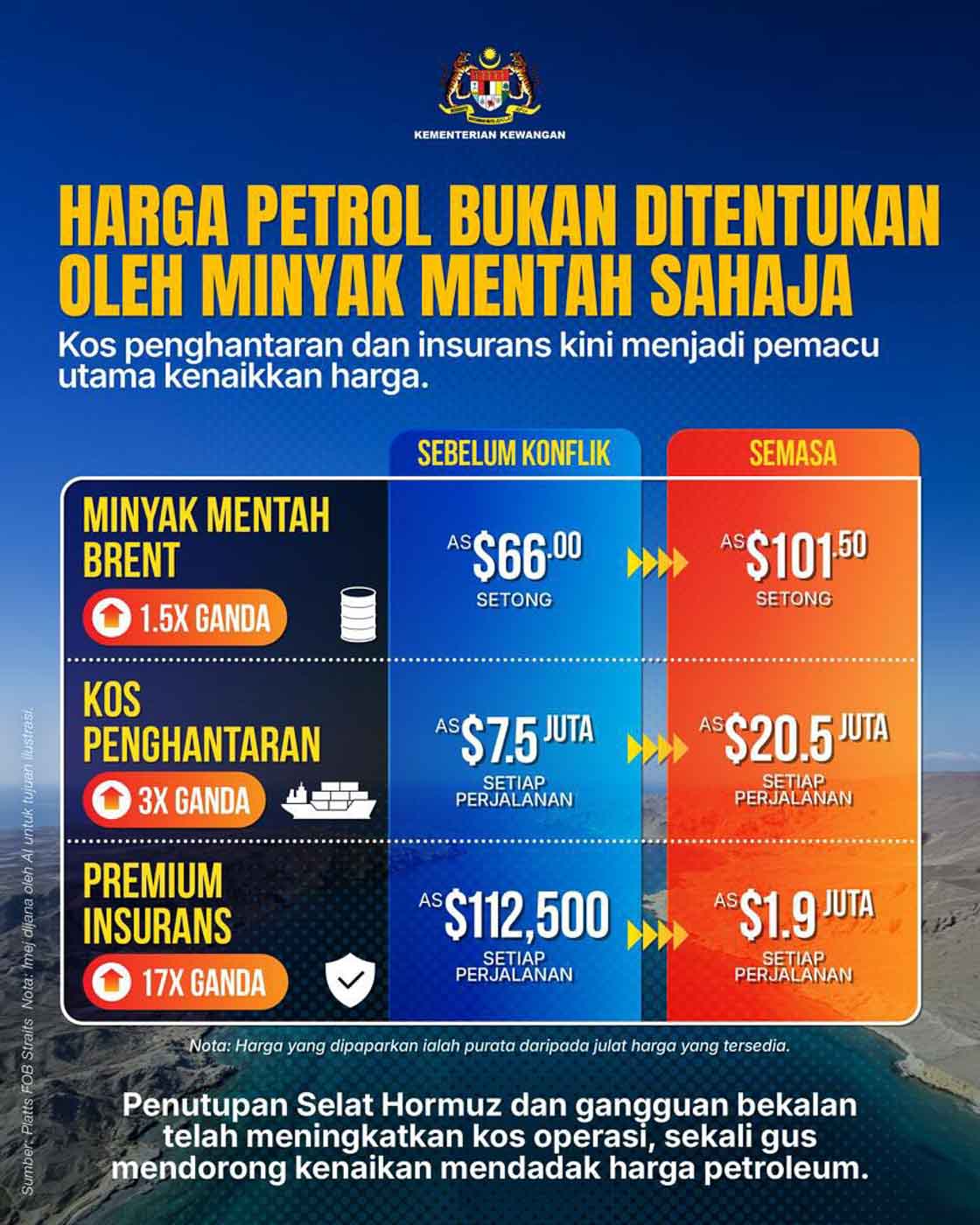
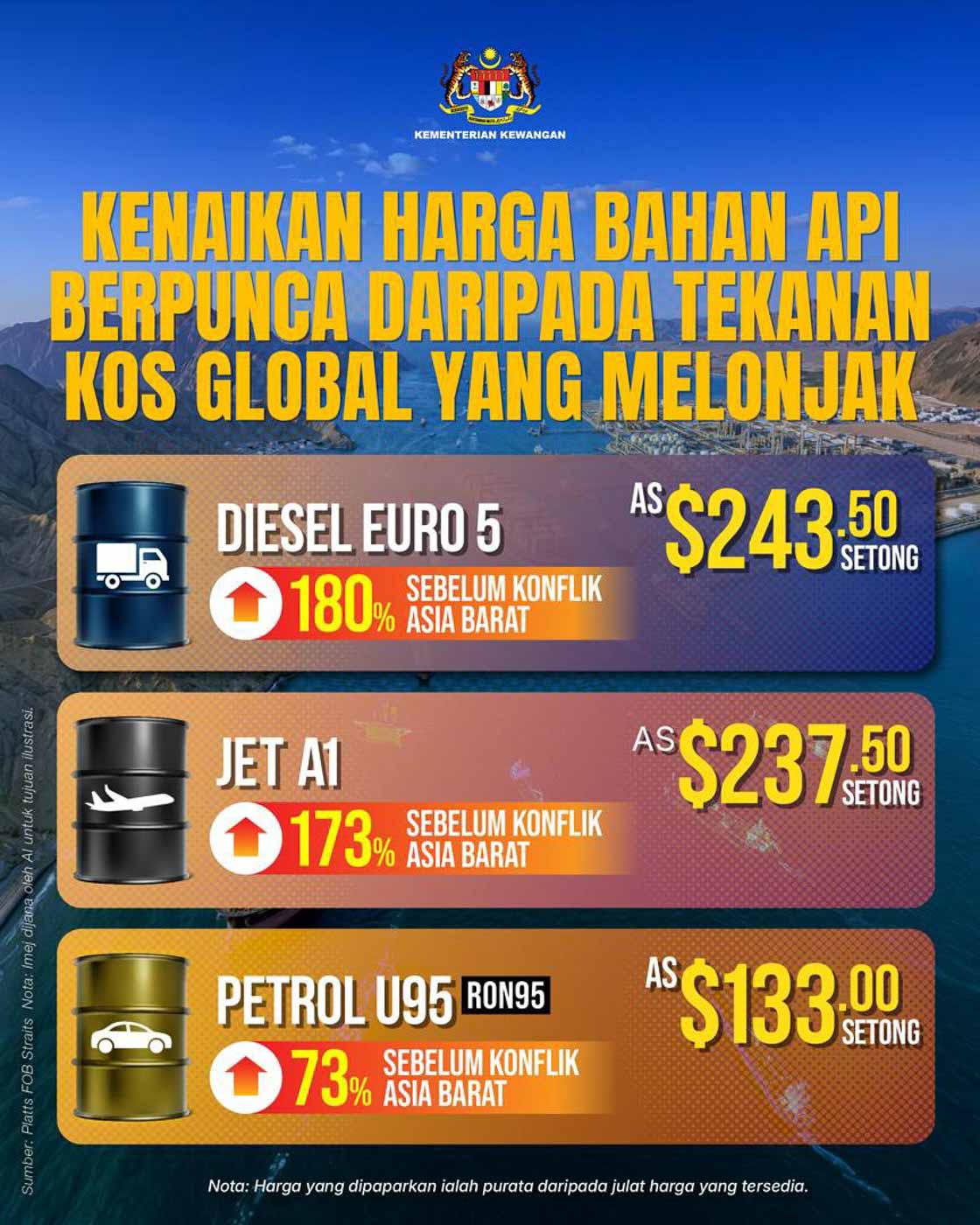
Aside from the crude oil prices, the fuel prices at the pumps have also been heavily impacted by the rise in fees and prices across the entire supply chain, as a result of the heightened risk due to the ongoing conflict. As an example, insurance premiums have increased by as much as 17 times the amount before the start of the conflict, the ministry claims.
On the other hand, delivery costs have also tripled since the start of the war, driven by increased fuel prices as well as longer travel routes due to detours to avoid conflict areas.
RELATED: How much do you need to drive daily to use 300L of petrol a month?

Despite the extraordinary circumstances experienced by every nation worldwide, the Ministry of Finance has reiterated the government’s measures to help alleviate some of the impact of rising fuel prices, particularly the Budi Madani RON95 (BUDI95) subsidy scheme that caps fuel prices at RM1.99 per litre, although the quota has been temporarily reduced to 200 litres per month compared to 300 litres when the programme was first introduced.
Additionally, the Budi Diesel cash assistance has also been increased to RM400 for the month of April (after already raising to RM300 in March), double the amount of the programme’s original amount back when it was announced at the end of 2025.