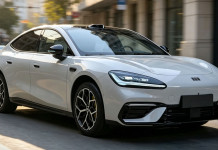
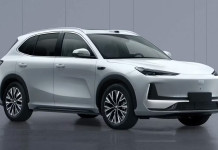
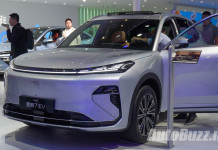
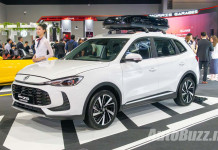
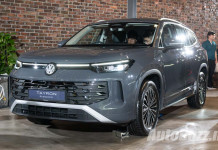
Geely has launched its next-generation i-HEV “Intelligent Energy” hybrid powertrain, and it is allegedly so efficient that it boasts a thermal efficiency of 48.4%. The system effectively converts nearly half its fuel into motion rather than just heating the engine bay, a feat that has officially earned Geely a Guinness World Record, as reported by CarNewsChina.
For comparison, that 48.4% is slightly higher than the 46.5% figure claimed by the plug-in hybrid powertrain featured in the Proton eMAS 7 PHEV. This is achieved thanks to an AI-based energy management system, which Geely affectionately calls ‘AI Cloud Power 2.0’.

With this AI in place, the system micromanages the fuel-to-electricity ratio by identifying ambient temperature, humidity, and even the road’s inclination. This wizardry reportedly boosts energy efficiency by 10%, with Geely claiming the system is 12% more frugal than “global benchmark models,” though it was predictably quiet on what those benchmarks actually are.
Despite the focus on extreme frugality, the powertrain still packs 313 hp (230 kW) from the electric drive. In a move surely aimed at winning the world’s most efficient school run, it manages a 0-30 km/h sprint in 1.84 seconds. While you won’t be winning many drag races, you will be doing it silently; the system supports EV-only mode up to 66 km/h and handles over 80% of typical driving on electric power alone.
RELATED: Russia’s Volga is making a comeback with rebadged Geely models, assembled in a former VW plant

The fuel consumption is the real headline, however, with a Guinness-certified figure of 2.22L/100 km. To prove this isn’t just a fragile lab experiment, Geely claims the unit survived 15,000 hours of bench testing, which is roughly equivalent to driving 4.8 million kilometres, or about six trips to the moon and back, should you find a petrol station on the way.
The Xingrui and Xingyue L will be the first models to feature the i-HEV powertrain in 2026. The architecture supports 1.5-litre and 2.0-litre engines, all paired with the ’11-in-1′ electric drive unit. While this integrated motor technology is shared with the Proton eMAS 7 PHEV, Geely’s i-HEV application focuses on a self-charging configuration rather than a plug-in setup.
This pivot back to hybrids marks a broader shift in China, where manufacturers like Chery and Changan are realising that smaller, cheaper batteries are a practical alternative to the heavy, expensive units found in pure EVs. And more excitingly, we could even see this powertrain integrated into future Proton models. Given the extreme volatility of the global fuel supply, as demonstrated by the ongoing conflict in Iran, a vehicle that treats every drop of petrol as a luxury could be the way forward for the automotive industry.
ALSO READ: Geely EX5 Max+ launched in Thailand with 450 km range – a preview of the next Proton eMAS 7 update?