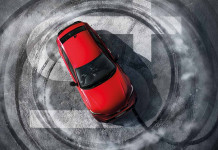
It is no secret that Mazda is developing the next-generation MX-5, currently referred to by enthusiasts as the “NE”. While reports suggest the car could share a platform with a future Toyota GR86 sibling, recent interviews with two Mazda executives by AutoRAI indicate that the powertrain remains the biggest point of contention.
Mazda’s head of design in Europe, Jo Stenuit, stated that the next-generation MX-5 is still a few years away. The company is currently exploring various powertrain options to ensure the roadster survives in an era of tightening regulations.
While the current ND-generation model has thrived with pure internal combustion engines, Stenuit is certain the NE will feature some form of electric assistance, noting that a mild-hybrid setup is the bare minimum on the table.

The challenge remains the “weight penalty” inherent in electrification. For a car defined by its agility, adding a battery pack poses a significant hurdle. However, Mazda Chief Technical Officer, Ryuichi Umeshita, has hinted at a different route to preserve the car’s lightweight recipe: a 2.5-litre naturally aspirated engine. By increasing displacement, Mazda aims to meet stricter emissions standards without the bulk of a hybrid system or the complexity of turbocharging.
While a 2.5-litre engine is heavier than the 1.5- and 2.0-litre mills found in the current ND, Mazda believes this right-sizing approach, paired with their upcoming Skyactiv-Z technology, is the lesser of two evils.
Remarkably, internal targets suggest Mazda still aims to keep the NE’s kerb weight below the 1,000 kg mark and maintain a compact footprint of under four metres in length.
RELATED: The next-generation Toyota GR86 could have a Mazda MX-5 sibling

There is one final trick up Mazda’s sleeve: synthetic carbon-neutral fuels. According to Mazda Motor Europe Director of Research and Operations Christian Schultze, using synthetic fuels would allow Mazda to manage emissions while retaining the mechanical purity of a petrol engine without a drastic overhaul of the MX-5’s powertrain.
However, the introduction of synthetic fuels introduces new challenges, mainly surrounding availability. While e-fuels are a “drop-in” solution that can use existing petrol stations, global production is currently almost non-existent.

Because there is little commercial demand, the industrial scale required to make these fuels affordable for the average driver hasn’t been reached. Therefore, if Mazda plans to go down the route of synthetic fuels, it must rely on a massive global shift in energy production to support it.
Regardless of how Mazda decides to power the NE-generation MX-5, the project is clearly more than a simple generational leap. If they succeed in navigating these weight and regulatory concerns, the car will prove that ‘Jinba Ittai’, the iconic feeling of oneness between car and driver, can indeed survive the green revolution.
ALSO READ: Mazda CX-6e goes global with European debut – 258 hp RWD EV, up to 484 km range